REVIEW · WASHINGTON DC
Arlington Cementary & Guard Ceremony with Iowa Jima Memorial
Book on GetYourGuide →Operated by LetzGo City Tours · Bookable on GetYourGuide
Cemetery silence hits hardest in the morning. I like the Changing of the Guard setup that prioritizes a good viewing position, and I love that the route doesn’t stop at just one headline site. You also get the emotional stop at JFK, then finish at the Iwo Jima Memorial for major WWII scale and photo-worthy views. One consideration: this is still a walking tour with uneven surfaces and stairs, so if your back gets cranky, think twice.
This experience is built for timing. With early access to Arlington, you get a calmer pace before the big crowd shows up, plus a skip-the-line entry via a separate group entrance. The benefit is practical: you spend more time looking and listening, less time figuring out where to go.
Guide quality can make or break Arlington, and the names attached to this tour are a strong signal. Mr Onge, William, and Daniel are all listed as guides, and the consistent praise is that the explanations stay clear and personal. If you can, I’d pick an early start time (8 a.m. has been called out as especially comfortable).
In This Review
- Key highlights worth planning around
- The smart reason to go early: you get clarity, not chaos
- Meeting at the Welcome Center and getting through security right
- The Tomb of the Unknown Soldier: what the Changing of the Guard teaches you to watch
- JFK and the Eternal Flame: a gravesite visit that stays personal
- The Greek-style Amphitheatre: why presidents and cemeteries mix
- Navy Memorial Plaza and the value of guided comparisons
- Marine Corps War Memorial (Iwo Jima): huge scale with real WWII context
- Walking comfort, shoe choice, and who should skip this
- Price and value: what you’re really paying for
- Who this tour suits best
- Should you book the Arlington Cementary and Guard Ceremony plus Iwo Jima tour?
- FAQ
- How long is the tour?
- How much does it cost?
- Where is the meeting point?
- What time should I arrive?
- What is included in the tour?
- Is transportation included?
- Do I need an ID to enter Arlington National Cemetery?
- Does the tour run in bad weather?
- Is there a cancellation deadline?
Key highlights worth planning around
- Prime ceremony positioning at the Tomb of the Unknown Soldier: You’re guided into a spot meant for a strong view of the Changing of the Guard.
- The JFK stop is more than a photo: You’ll visit the gravesite and the Kennedy family memorial, plus the Eternal Flame area.
- Greek-style Amphitheatre history: You’ll see the amphitheatre where every U.S. president has stood for official events over the past century.
- U.S. Navy Memorial Plaza: The tour includes the largest Navy memorial in the USA.
- Iwo Jima scale at the Marine Corps War Memorial: Big WWII storytelling and excellent viewpoints.
- A guided route that saves time: You skip the usual wrestling match with crowds and entry lines.
The smart reason to go early: you get clarity, not chaos
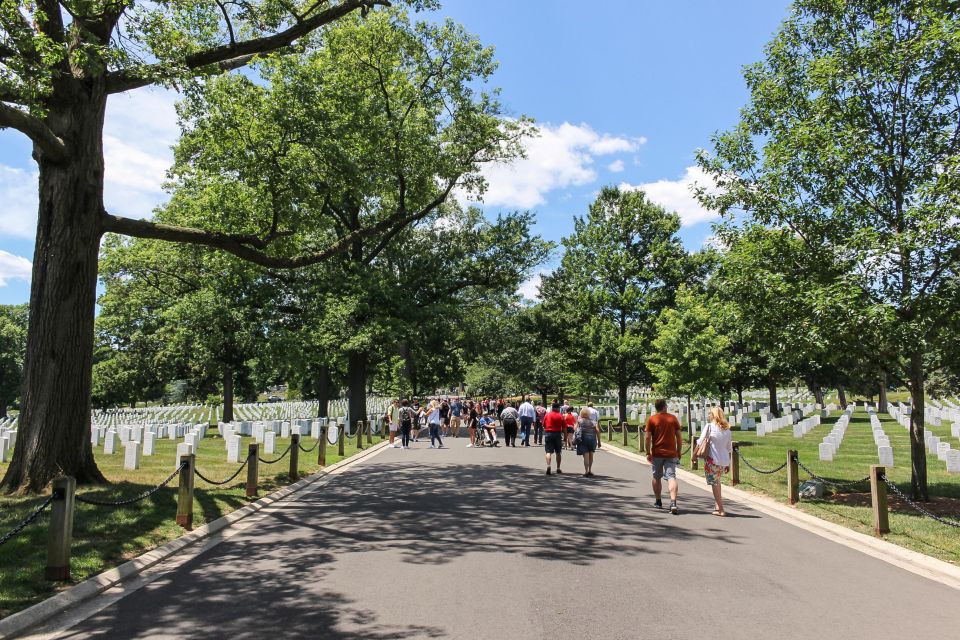
Arlington National Cemetery can feel like a lot at once. The grounds are meaningful, but the site is also huge, and if you show up when the crowds are thick, your day can turn into a shuffle. This tour is designed to reduce that. Starting with early access helps you keep the focus on what you’re seeing, not on where you’ll stand for the next ten minutes.
I also like the structure: the tour is only about 150 minutes, so it doesn’t pretend you’ll learn everything. Instead, it picks the major moments people come for and gives you guided context at each one. That’s the sweet spot when you want substance without turning your whole day into a sprint.
Finally, there’s the quiet factor. The Changing of the Guard is solemn, and the atmosphere works better when you’re not wedged between groups who are still hunting for their bearings. Early timing keeps the moment respectful and easier to actually watch.
You can also read our reviews of more tours and experiences in Washington Dc.

Meeting at the Welcome Center and getting through security right
You’ll meet at the Arlington National Cemetery Welcome Center (1 Memorial Ave, Fort Myer, VA 22211). The key detail is that you should arrive about 15 minutes early so you can check in with the guide before you go anywhere near security.
That matters because group access is handled by the organized tour. The cemetery entrance rules are strict, and if you miss check-in, you can end up locked out of the flow the tour depends on. Also plan to travel light. Oversize luggage, large bags, strollers, and mobility devices like scooters are not allowed (and the tour notes it’s not suitable for wheelchair users and people with mobility impairments).
One more practical point: you’ll need photo ID if you’re 16 or older. Bring a passport or a valid U.S. photo ID. This isn’t optional, and it’s the kind of thing that can derail a morning if you leave it at home.
The Tomb of the Unknown Soldier: what the Changing of the Guard teaches you to watch
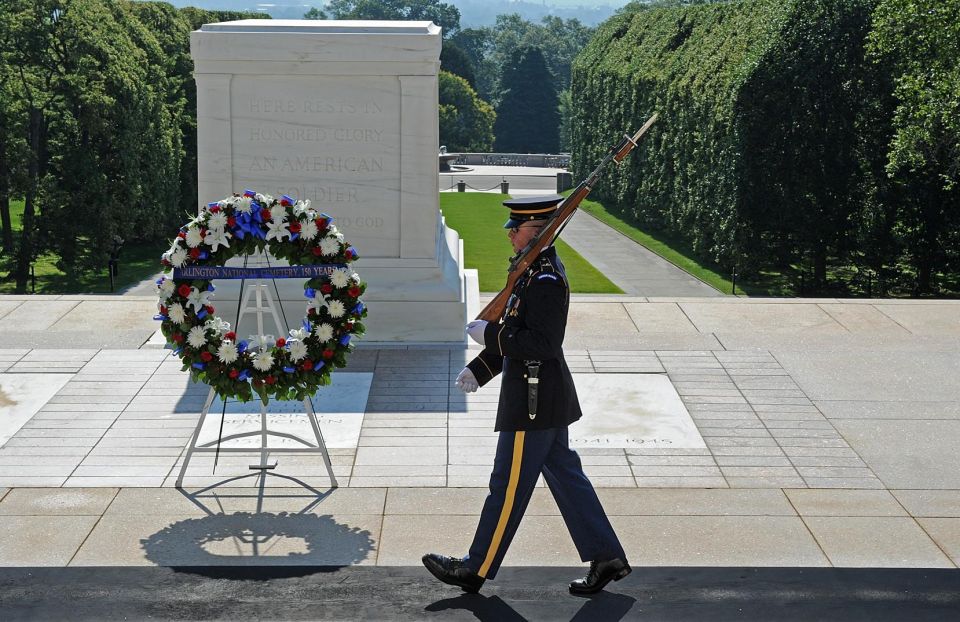
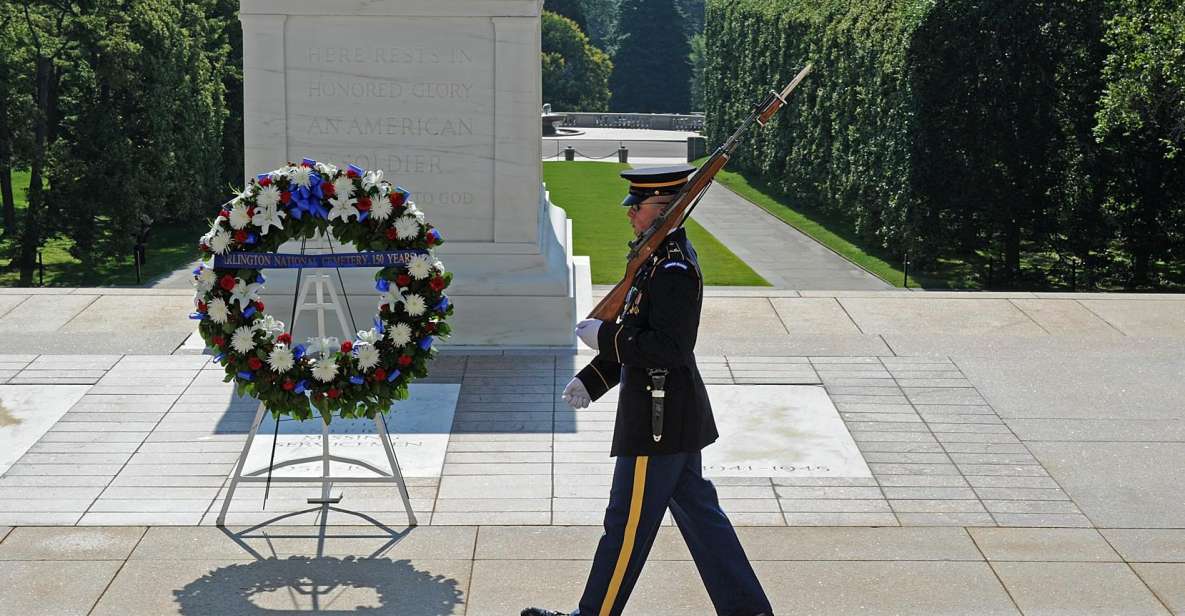
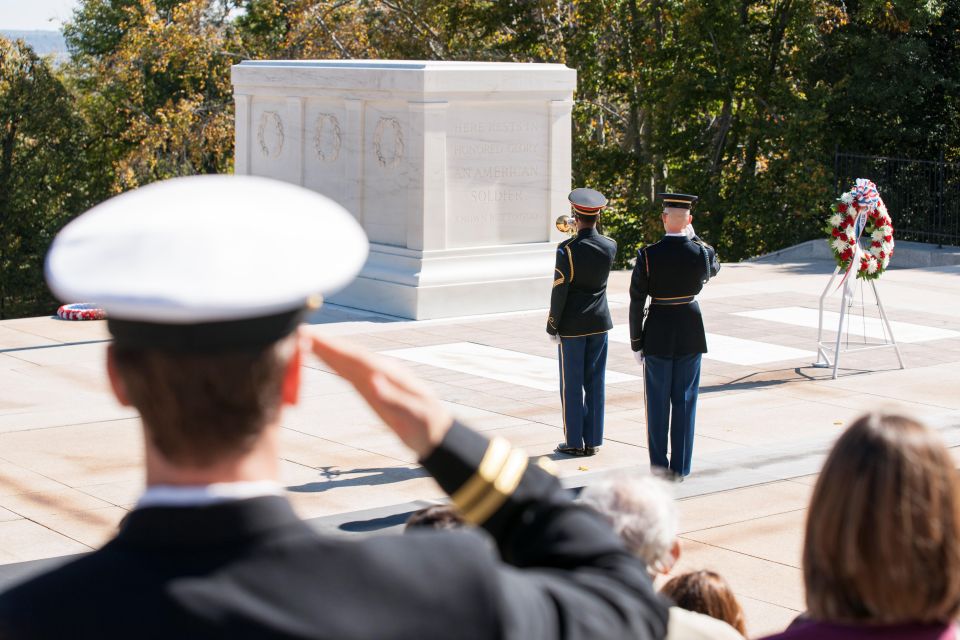
The Changing of the Guard at the Tomb of the Unknown Soldier is the kind of event where you can either rush past it or actually pay attention. This tour is built to help you do the second one.
You’ll witness the ceremony, and the big advantage here is that the guide works to get you into a best-location viewing setup. That’s not just comfort. It’s how you catch the details that make the ritual feel exact and disciplined.
When I think about why this stop hits so hard, it’s the contrast: Arlington is full of markers and names, but this moment is different. It’s an empty space filled with meaning. The ceremony pairs precision with silence, and the guided explanation helps you connect what you’re watching to the bigger idea of national remembrance.
Tip for your experience: dress for stillness. The ceremony is not a quick walk-and-go. Once you’re placed, you’ll likely be standing while the ritual plays out, so keep layers in mind and avoid shoes that punish you after 20 minutes on hard ground.
JFK and the Eternal Flame: a gravesite visit that stays personal
After the ceremony moment, the tour shifts tone in a way that makes sense. You’ll visit the gravesite of President John F. Kennedy, including the Kennedy family memorial and the area with the Eternal Flame.
This is the stop that tends to feel the most human. The Eternal Flame is small, but it carries a lot of weight, and the guide’s stories help you understand why it’s such an enduring symbol rather than just a landmark you pose beside.
The way the tour handles this is also smart: it doesn’t speed through JFK as a checklist item. You get time to look, then listen to the significance. That matters because at Arlington, context is half the experience. Without it, you’re left scanning names. With it, you’re watching history turn into memory.
If you’re someone who likes quiet reflection, this is where you’ll likely slow down. If you prefer constant action, you might find it less exciting than the big-photo memorials, but it’s exactly why many people rank Arlington as more than sightseeing.
The Greek-style Amphitheatre: why presidents and cemeteries mix
One of the more distinctive included stops is the Greek-style amphitheatre where every president has stood for official events over the past 100 years.
It’s easy to think of Arlington as purely military rows of headstones. But the amphitheatre reminds you this place also functions as a civic stage. It’s where state and military honor intersect, and the guide’s explanation helps connect the design and symbolism to the rituals of national remembrance.
You’ll get guided time here (with a shorter walk and photo chances). In a tour this length, the amphitheatre works as a bridge: it connects the Tomb ceremony’s solemn discipline to the broader public ceremony role Arlington plays.
Don’t treat it like a quick photo target. Spend a minute or two looking at how the space is meant for speeches and formal moments. Even if you’re not into architecture, this helps you understand why the cemetery feels so formal even when you’re just walking through it.






Navy Memorial Plaza and the value of guided comparisons

After JFK, the tour brings you to the U.S. Navy Memorial Plaza, noted as the largest Navy memorial in the USA. This is one of those stops where self-guided exploring can feel confusing. What am I supposed to notice? Where do I look?
A good guide fixes that. Here, the guide helps you connect the memorial’s parts to the Navy’s story and to how Arlington honors service across branches. You’re also moving through a cemetery environment where the meaning comes through contrasts: headstones, memorials, and the way each service is represented in different visual languages.
Even if you’re not a Navy person, you’ll likely appreciate the planning behind the stop. It keeps the day from becoming only one-note WWII and one-note presidential memory. Instead, you see Arlington’s broader mission: honoring multiple eras and roles under one roof of national remembrance.
There’s also a practical payoff. The Navy stop breaks up the day’s emotional density, while still staying within the same theme of service and sacrifice.
Marine Corps War Memorial (Iwo Jima): huge scale with real WWII context
The finale is the U.S. Marine Corps War Memorial, commonly associated with Iwo Jima imagery. This is the massive WWII memorial on the route, and it’s the part where your camera will start earning its keep.
But scale alone isn’t the point. The guide shares the story behind one of the most famous World War II moments, and that context changes how you see the memorial. Without the explanation, it’s impressive artwork. With it, it becomes a condensed lesson on courage, cost, and why the Marine Corps remembers that moment so strongly.
This is also where the tour’s design shines. You get photo stops and a longer guided walk time around the memorial area, which gives you the chance to see it from more than one angle and actually take in the size. If you care about photography, this is your best window.
One more thing I like about ending here: it leaves you with a visual anchor. Arlington can feel like walking through history, but the Iwo Jima memorial gives your brain a final, memorable image to carry with you.
Walking comfort, shoe choice, and who should skip this
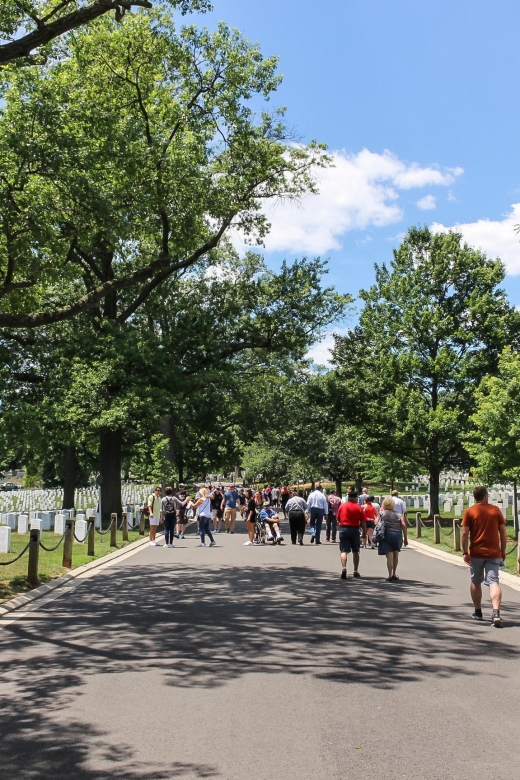
This tour is short, but it’s not easy on the body. Expect walking over uneven surfaces, cobblestones, hills, inclines, declines, and stairs. The tour also notes it’s not suitable for people with back problems and it does not recommend mobility scooters or similar devices.
So here’s my straightforward take: wear supportive shoes you’ve already tested. Plan for a morning where your legs work, not where you just float along. If you’re prone to back pain, this is the kind of place where a stiff day can turn into a miserable day.
If you’re fit enough for moderate walking, the route is manageable within 150 minutes. If you’re not, consider a different format or a less walking-heavy option.
Price and value: what you’re really paying for
At $52 per person for about 2.5 hours, you’re paying for more than access. You’re paying for:
- A guide who can connect the ceremony and memorials to meaning
- A ceremony viewing setup that helps you see what matters
- Stops that cover major anchors: Tomb of the Unknown Soldier, JFK, Navy, and the Marine Corps War Memorial
- Early access plus skip-the-line entry via a separate group entrance
What’s not included is the stuff that can quietly add cost: transportation and food/drinks. So if Arlington is tough for you to reach without a car, factor that into your real budget. The tour itself is fairly priced for the density of stops and guided time, but getting there is still on you.
Who gets the best value? People who:
- Want the biggest Arlington hits in a tight window
- Prefer guided context over wandering alone
- Care about the ceremony and want a good viewing plan
Who might not? If you already know Arlington well and just want a self-paced day, you might not need the guided piece. But for first-timers, this tour’s focus is exactly where the value lives.
Who this tour suits best
This works great for:
- First-time visitors to Arlington who want the high-impact sites without overplanning
- People who like structured storytelling and clear explanation
- Anyone who wants a morning that feels orderly and respectful
It’s less ideal for:
- Anyone with significant mobility limits, back problems, or discomfort with uneven ground
- People who want zero waiting and minimal standing (the ceremony requires it)
- Folks who are hoping for a long, flexible linger-and-stroll day
Should you book the Arlington Cementary and Guard Ceremony plus Iwo Jima tour?
If you want the ceremony, JFK, the Navy memorial, and Iwo Jima covered in about two and a half hours, this is a solid buy. The best reason to book is simple: the tour is set up to reduce the two biggest hassles at Arlington—finding the right place for the ceremony and losing time figuring out what you’re looking at.
If you’re physically able to handle walking on cobblestones and slopes, and you’re okay with a schedule that prioritizes a few major sites, you’ll probably leave feeling like you understood more than you photographed. If not—if your back or mobility is a concern—skip this version and choose a gentler option.
FAQ
How long is the tour?
The tour duration is about 150 minutes.
How much does it cost?
It costs $52 per person.
Where is the meeting point?
Meet at the Arlington National Cemetery Welcome Center, 1 Memorial Ave, Fort Myer, VA 22211, outside the cemetery at the main entrance area.
What time should I arrive?
Plan to arrive about 15 minutes before the scheduled start time for check-in with your guide.
What is included in the tour?
It includes the Changing of the Guard, access to Arlington Cemetery, a guided visit to the gravesite of President John F. Kennedy (plus the Kennedy family memorial), the Greek-style Amphitheatre, the largest Navy memorial in the USA, and the U.S. Marine Corps War Memorial (Iwo Jima Memorial).
Is transportation included?
No. Transportation is not included.
Do I need an ID to enter Arlington National Cemetery?
Yes. Visitors age 16 and older must present valid photo ID upon entering.
Does the tour run in bad weather?
Yes, it operates in all weather conditions.
Is there a cancellation deadline?
You can cancel up to 24 hours in advance for a full refund.