REVIEW · WASHINGTON DC
DC Monuments and Capitol Hill Tour by Electric Cart
Book on Viator →Operated by Intrepid Urban Adventures - USA · Bookable on Viator
Skip the slog across the National Mall.
This open-air electric cart tour pairs classic landmarks with a relaxed rhythm, so you can see a lot without spending your whole day walking. You’ll roll through the big “must-sees” and get narrated stops for photos and quick looks at major monuments, from the Lincoln Memorial to the U.S. Capitol.
I especially like the small-group setup (max 7 per electric cart) because it feels personal enough to ask questions and get your bearings fast. The local guide storytelling matters too, and names you may hear show up often—people mention guides like Ellen, Lorenzo, Reggie, Courtland, and Donte (also written as Dante)—with a consistent theme: clear explanations and good photo pauses.
One thing to consider: it’s an efficient tour, not a slow stroll. Most stops are brief, and the carts are not heated, so cold weather (and wind) can be a factor since you’re out in the open.
In This Review
- Quick hits before you book
- Electric carts make DC monuments feel doable
- Where the tour starts: 450 F St NW and an easy orientation
- Smithsonian edge to Capitol Hill: getting the big picture
- The National Mall museum run: architecture plus quick context
- Washington Monument and Holocaust Memorial: two stops with weight
- Tidal Basin area: Jefferson and MLK Jr. in one run
- Lincoln Memorial: the longest stop for a reason
- Korean War and Vietnam Veterans Memorials: brief, but not forgettable
- White House and Capitol address: Pennsylvania Avenue views
- Small-group pacing: what you gain (and what you won’t)
- Price and value: is $55.61 worth it?
- Who this tour fits best
- Should you book? My call
- FAQ
- How long is the DC Monuments and Capitol Hill tour by electric cart?
- How many people are on each electric cart?
- Do I need to pay for admission at the stops?
- Is the tour open-air, and what should I wear?
- Does the tour run in bad weather?
- Can I cancel for a refund?
Quick hits before you book

- Electric Red Roadsters: quiet, eco-friendly rides that cut down walking time across the Mall
- Small group, max 7: more personal interaction than big bus crowds
- Real photo time: longer stops at headline sites like the Lincoln Memorial
- Tons of landmark coverage in 2 hours: you get an overview plus the “where to go next” map in your head
- Local guide narration: stop-by-stop context for sites like the Capitol, Washington Monument, MLK Jr., and the Vietnam Veterans Memorial
Electric carts make DC monuments feel doable
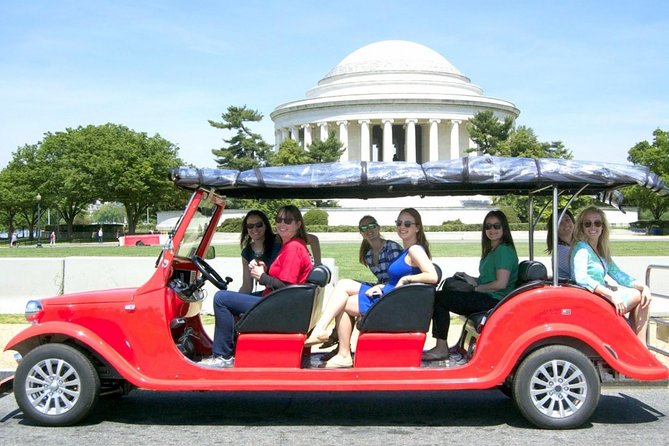
Washington, DC is amazing, but the logistics can be exhausting. The National Mall is long, sidewalks can be crowded, and the sightseeing loop can turn into hours of walking before you even reach the big monuments. This tour solves that in a simple way: you ride most of the time on a quiet all-electric cart designed for viewing.
The cart is open to the environment, so you feel the air and the weather—good for photos and atmosphere, less good when it’s windy or cold. Still, for a short visit, I think the tradeoff is worth it. You get a clear line of sight to the key memorial alignments and the sweeping views across the Mall.
Also, this isn’t “tour-by-van.” The route is built around the monument grid: you’re moving through the same corridor most first-timers want, but with less foot fatigue. It’s the kind of tour that helps you decide what you want to return to on your own.
You can also read our reviews of more tours and experiences in Washington DC.



Where the tour starts: 450 F St NW and an easy orientation

Your meeting point is 450 F St NW, Washington, DC 20001, and it’s close to public transportation. If you’re driving, street parking is suggested, and there’s LAZ Parking Capital One Arena Garage nearby (601 F Street NW).
The tour experience itself starts right after you check in. You’re asked to arrive about 10 minutes early to join the group for the first leg. That early timing matters because you want to settle in, get seated, and start listening to your guide’s plan without rushing.
If you like to take your first day in DC seriously, this is one of the best ways to do it. You’ll get your mental map laid out fast: where the monuments are relative to each other, where the best “walk back later” options are, and how Capitol Hill fits into the larger Mall story.
Smithsonian edge to Capitol Hill: getting the big picture
The tour begins near the Smithsonian Institution complex and immediately puts you on the right axis of the National Mall. You’ll cruise through the monument zone while your guide sets the context—why these buildings are here, what each era tried to represent, and what to notice when you look at the skyline.
A quick early highlight is the National Law Enforcement Officers Memorial stop. It’s free to visit, and it gives the tour a human, civic start before you jump into the “bigger than life” icons.
Next up: a view of the U.S. Capitol. You get an up-close sense of scale—especially if you’ve only ever seen the dome in photos. Your guide shares what makes it historically and politically significant, and it’s a useful moment to anchor the rest of the day: this is still the center of DC’s government story even as you move across the Mall.
Even when stops are short, the ride time matters. You’re not trapped in one spot. You’re traveling along the same sightlines you’ll want later when you’re picking museum plans or deciding what you want to revisit on foot.
The National Mall museum run: architecture plus quick context
Part of the route is built from drive-by passes of the museum giants along the Mall. Even if you don’t enter every building (food, time, and ticket priorities are real), you still get a lot out of seeing the exteriors in motion and hearing what the guide emphasizes.
Expect passes by major anchors like:
- National Gallery of Art (neoclassical architecture and long-running collection themes)
- National Museum of Natural History (the iconic dome and famous exhibits people talk about)
- National Air and Space Museum (aircraft and spacecraft in the public imagination)
- National Museum of American History (artifacts tied to the nation’s story)
- Museum of African American History and Culture (a major cultural landmark on the Mall)
I like this approach because it prevents decision fatigue. After you ride through, you usually come away with a short list: what you’d actually pay time to see, what you can skip, and what you might want to photograph from a specific angle.
It’s also a good way to spot landmark silhouettes while you still have energy. If you try to do everything on foot first, you often miss the “why that building looks that way” details. Here, you get quick context while the landmarks are still in your line of sight.
Washington Monument and Holocaust Memorial: two stops with weight
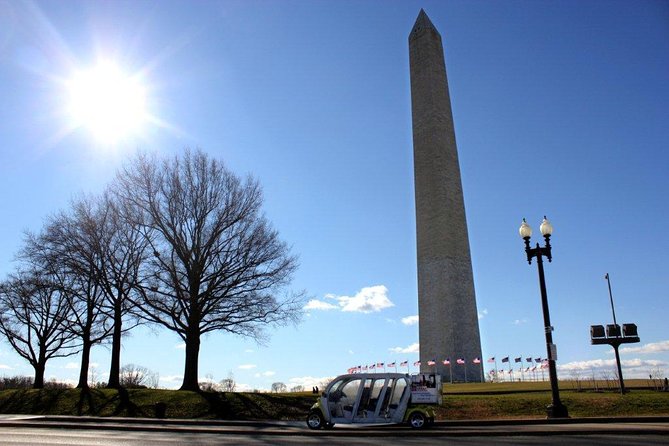
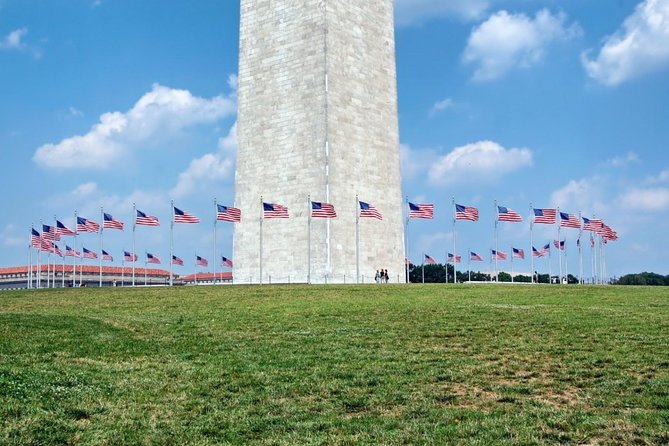
When you reach the Washington Monument, you’ll have a short stop (about 5 minutes) to absorb the tower and snap photos. The guide’s storytelling here is about leadership and legacy—exactly the kind of framing that helps the monument feel more than just a big white needle against the sky.
From there, you move toward the Holocaust Memorial Museum area. Even without long time inside, you’ll see it as a serious, memory-focused stop rather than just another structure on the route. The way it’s framed matters because this is one of the places in DC where the meaning can’t be treated as background.
This is where I’d call the tour’s balance out loud: it includes solemn sites and major political sites, not just the Instagram-friendly ones. You still keep the efficient pace, but the guide doesn’t flatten the tone.



Tidal Basin area: Jefferson and MLK Jr. in one run
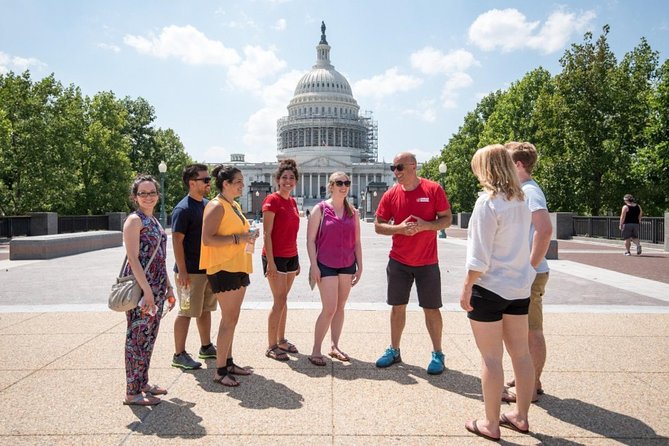
As you pass through the monument zone around the Tidal Basin, you’ll hear stories connected to Thomas Jefferson and Martin Luther King Jr. The narration also mentions how lighting can make these buildings look especially striking—so even if you’re on a bright day, pay attention to how the guide points your eyes toward columns, domes, and symmetry.
The stop for Martin Luther King Jr. Memorial is about 10 minutes. It gives you enough time to take in the key design element (the Stone of Hope is highlighted) and to get your photos without feeling like you’re constantly re-rerouting your legs.
Then you continue the circuit toward the “main event” you came for: the Lincoln Memorial.
Lincoln Memorial: the longest stop for a reason

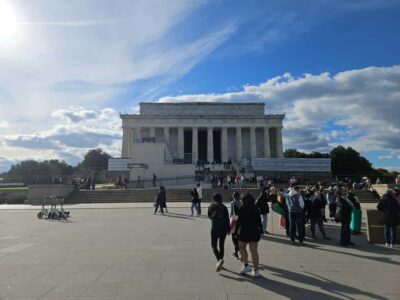
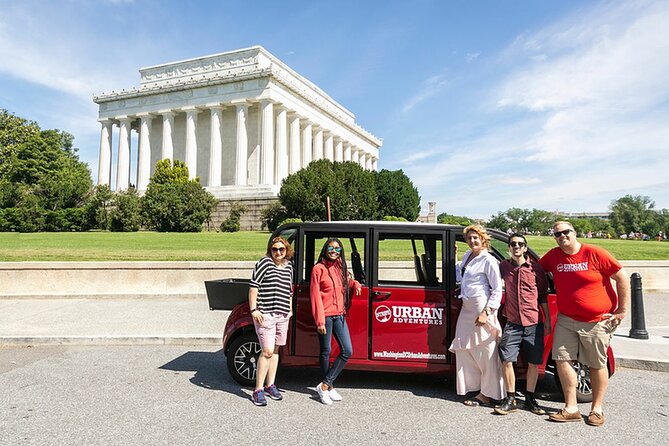
If you only had time for one monument in DC, the Lincoln Memorial is usually it. On this tour, you get the generous time slot—about 30 minutes—which is noticeably longer than most other stops.
That extra time matters because the Lincoln Memorial isn’t just a quick photo. It’s a place where you often want a minute to read the setting, line up images, and take a slower look at the statue and surrounding architecture. With 30 minutes, you can do the essentials without feeling rushed.
This is also a strong spot to compare your first impressions with what your guide has been saying. When someone explains what to notice before you arrive, you tend to see more once you’re there.
Korean War and Vietnam Veterans Memorials: brief, but not forgettable
After Lincoln, the tour continues through memorial areas for:
- Korean War Veterans Memorial (short stop, about 5 minutes)
- Vietnam Veterans Memorial (about 15 minutes)
The time here is designed for impact without turning into a long detour. You’ll still get clear views and enough time to focus on the key elements while your guide provides context for why these memorials are emotionally and historically significant.
If you want a deeper visit later, this is a great way to decide. The tour gives you the “what this is” and the “where to go back” information. Then you can choose to spend more time on your next pass, whether that’s a return visit or a separate planned walk.
White House and Capitol address: Pennsylvania Avenue views
Toward the end, you’ll pass the White House area and head along Pennsylvania Avenue. The tour keeps camera-ready momentum here, with photo stops timed so you can capture the iconic civic corridor.
Along the drive, you may see landmarks such as the Old Post Office Building, the National Archives, and the Navy Memorial, plus other historic federal buildings that shape the feel of DC’s government core.
Even if you’ve seen these in photos before, the perspective changes when you’re traveling the corridor in real time. It helps you understand distance and placement—what feels close on a map often isn’t, and what looks small can dominate the skyline when you approach it.
Small-group pacing: what you gain (and what you won’t)
This tour is built around a 2-hour overview. That means you’ll see a lot, but it’s not meant to replace days of walking and museum entry.
Here’s what the pacing typically feels like:
- some stops are brief (often 5 minutes)
- a couple of bigger photo moments get more time (notably Lincoln at 30 minutes)
- much of your learning happens during the ride as the guide connects the dots between stops
One practical note from the kind of feedback I’ve seen: sound levels can vary. If traffic noise is loud on your day, you may need to angle toward your guide or ask a question so you catch every detail.
Also, group seating can vary. Even though each cart holds a max of 7, the operator notes that groups may sometimes be split across separate carts to manage seating. It’s usually still a small-group feel, but it’s worth keeping in mind.
Price and value: is $55.61 worth it?
At $55.61 per person for about 2 hours, the value comes from what you’re paying for:
- guided storytelling
- electric transport across the Mall
- multiple major monuments and memorial areas
- intentional photo stops (not just drive-bys with no time to get pictures)
- a small-group format that avoids the herd feeling
If you’re comparing to spending the whole day walking, the cart can save your energy for the parts you’ll actually want to linger in later—museums, viewpoints, and neighborhood wandering. If you’re comparing to big hop-on buses, the tighter routing and shorter time-to-start often make a difference, especially if you want your DC plan to begin with a clear orientation loop.
Two things aren’t included: food and drinks, and there’s no hotel pickup or drop-off. So I’d treat it like a guided motion tour—then eat and explore on your own schedule afterward.
Who this tour fits best
This is a smart match if:
- you’re short on time and want a hit list of major landmarks
- you’d rather reduce walking and save legs for museums
- you’re traveling with kids or older adults who need more “sit-and-see” moments
- you want a guided overview so you can plan the rest of your DC day better
It’s less ideal if:
- you want long stops at every monument or museum
- you prefer slow, reading-heavy sightseeing with lots of independent exploration
- you’re extremely sensitive to cold, since the cart is open and not heated
Should you book? My call
Yes—if you want a fast, friendly way to get oriented to DC’s core sights, this electric cart format makes a strong case. The mix of Capitol Hill views, the National Mall museum passes, and timed stops at MLK Jr., Lincoln, and the Vietnam memorial gives you a solid foundation for the rest of your trip.
If you’re the type who hates time pressure, build your day so this tour is your first stop. Then use what you learn to choose where you’ll spend your real time later. Think of it as your DC “map plus meaning” session, delivered in a smooth, eco-friendly ride.
FAQ
How long is the DC Monuments and Capitol Hill tour by electric cart?
The tour is about 2 hours.
How many people are on each electric cart?
Each electric cart is limited to a maximum of 7 people.
Do I need to pay for admission at the stops?
The tour lists admission ticket free for the monument stops included in the route.
Is the tour open-air, and what should I wear?
The electric carts are open to the environment and not heated, so dress in layers, especially in colder weather.
Does the tour run in bad weather?
It runs year-round and goes ahead rain or shine unless conditions are dangerous. Decisions may be made at the meeting point, and the tour may delay up to 30 minutes if weather improves.
Can I cancel for a refund?
Yes. You can cancel up to 24 hours in advance for a full refund. If you cancel less than 24 hours before the start time, the amount paid isn’t refunded.