REVIEW · WASHINGTON DC
Washington DC Monuments by Moonlight Tour by Trolley
Book on Viator →Operated by Historic Tours Of America · Bookable on Viator
Night in DC hits different. This trolley tour strings together the capital’s most famous monuments in one easy loop, with live narration that turns the lights on the landmarks into real stories.
I really like the way the open-air trolley format keeps you moving without burning your feet on uneven sidewalks. And unlike some quick bus tours, you get real moments at key sites, not just pass-by views.
The main drawback is simple: you have to be on time. Check in 30 minutes early, because once the trolley departs, missing the pickup usually means missing the tour.
In This Review
- Key things to know before you go
- Why this moonlight trolley tour works in Washington, DC
- Getting on board: Union Station or the Washington Welcome Center
- The ride includes more than the timed stops
- First big photo moments: Supreme Court, Capitol Hill, and the U.S. Capitol
- Lincoln Memorial: a timed stop that’s actually worth it
- Vietnam Veterans Memorial and the Korean War Veterans Memorial
- Washington Monument and White House pass-by views
- Tidal Basin: the route’s turning point for night lighting
- FDR Memorial stop: waterfalls, sculptures, and time to wander
- Martin Luther King Jr. Memorial: time to see it without rushing
- How the live guide turns the loop into a real DC story
- Comfort and practicalities you should plan around
- Price and value: what $48.95 buys you
- Who this tour fits best
- Should you book the Washington DC Monuments by Moonlight Tour by Trolley?
Key things to know before you go
- Live narration every minute: You get constant guided commentary, including sound effects.
- Timed stops for photos and quick looks: Think Lincoln Memorial, Vietnam Veterans Memorial, and Korean War Veterans Memorial.
- Tidal Basin at night: MLK Jr. Memorial and the FDR Memorial are built into the route.
- Two departure options: Union Station or the Washington Welcome Center, depending on what you choose.
- Cold-weather reality: The trolley is heated in winter, but you’ll still want warm layers for stops outside.
Why this moonlight trolley tour works in Washington, DC
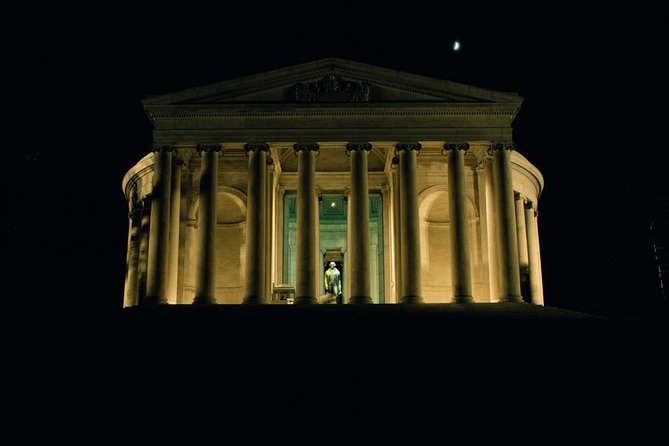
If your mental picture of Washington, DC is mostly daytime selfies and museum lines, this tour offers a smarter way to get your bearings. At night, the monuments glow, the streets feel calmer, and the big landmarks line up like a story board. You’re not trying to “do everything.” You’re getting the core sights and the context that makes them click.
I also like the pacing. The tour is about 2.5 hours, so it fits into a typical trip schedule without eating your whole evening. It’s long enough to matter, but short enough that you’re not stuck making decision after decision once you’re tired.
Then there’s the guide. This isn’t just someone reading facts off a screen. It’s live narration with sound effects, and it tends to keep the group engaged the whole ride. In the same way you remember a great teacher, you’re more likely to remember what you saw because you also learned why it exists and what it represents.
You can also read our reviews of more tours and experiences in Washington DC.
Getting on board: Union Station or the Washington Welcome Center
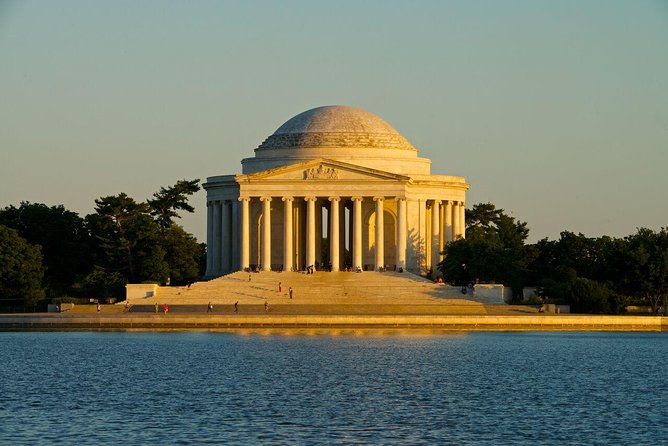
You start from one of two points, and this is worth planning for. If you picked Union Station, you board at the front of Union Station, in Columbus Circle bus departure lane, the second lane, at 50 Massachusetts Ave NE. If you picked the Washington Welcome Center, you board at 1001 E St NW.
Two practical tips can save a lot of stress:
- Arrive early enough to breathe. You check in 30 minutes before departure, and that window is there for a reason.
- Double-check the exact address you bought. There are multiple DC landmarks near each other, and even a small mix-up can cost you your seat.
The trolley itself is open-air, but it uses plastic windows that roll up or down. That means you’ll get airflow when it’s comfortable and some weather protection when it’s not. Winter? The trolley is heated, which makes a big difference when you’re riding at night and not just walking for a few minutes.
The ride includes more than the timed stops
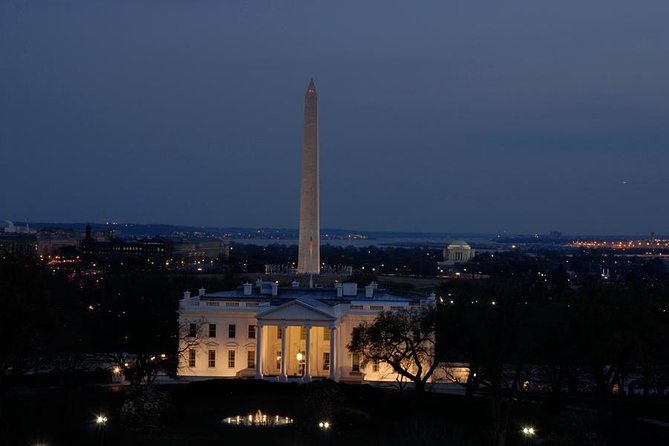
Even when you’re not getting off the trolley, you’re seeing a lot. The route is set up so you’ll get views from the street at night of major landmarks such as the White House, Capitol Hill, the Washington Monument, and the dome of the U.S. Capitol. You also pass by the Supreme Court Building and the Library of Congress.
If you’re the type who wants to see the famous places but hates long walking loops, this is a good match. You’re basically getting a guided tour of the city’s “greatest hits” while still having a chance to pause at select memorials.
And because the trolley is open-air, you can usually get decent photos from your seat when the lighting cooperates. Still, don’t plan on perfect shots every time. Night photography depends on phone settings and how quickly people move around you.
First big photo moments: Supreme Court, Capitol Hill, and the U.S. Capitol
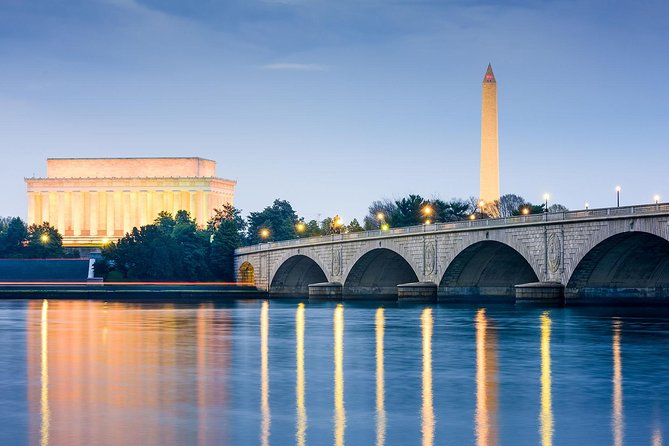
Early on, you’ll get photo opportunities that feel like DC 101 but with better mood lighting. The trolley route is built around classic viewpoints:
- Supreme Court area photo time from the trolley
- Capitol Hill photo opportunity from the trolley
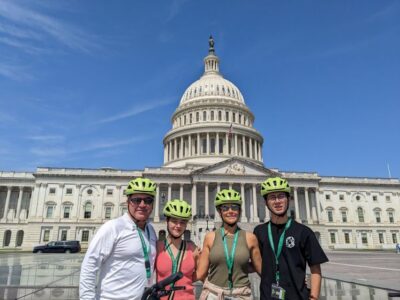
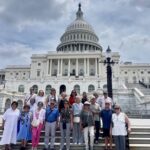
- U.S. Capitol photo opportunity from the trolley
This part is valuable because it gives you scale. In daylight, these buildings can look “just big.” At night, the domes and government buildings take on a different presence. You get the sense of the city as a symbol, not just a place you’re passing through.
One small consideration: you’re on a moving vehicle, so treat these as quick, grab-and-go moments. If you want calm, detailed photos, the later stops are where you’ll usually be happier.
Lincoln Memorial: a timed stop that’s actually worth it
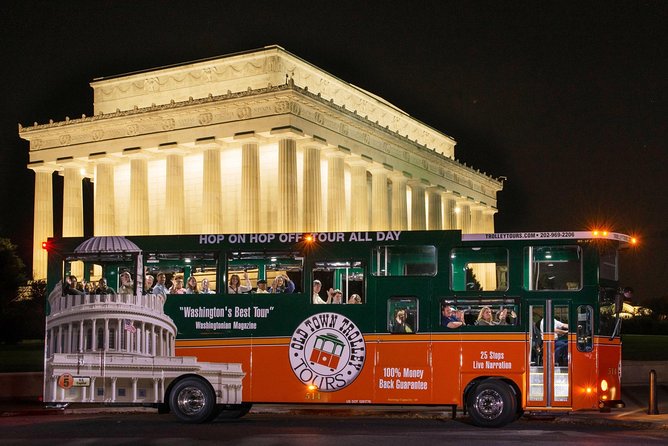
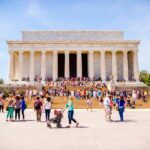
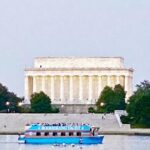
Lincoln is one of the main reasons people choose moonlight tours, and this one makes it a real priority. You’ll have a dedicated Lincoln Memorial stop, with time to get out and look around.
This matters because the Lincoln Memorial isn’t just a stop. It’s a meeting point for perspective. You can take in the way the monument sits in its setting and how the lighting changes the look of the statue area compared to daytime.
You’re not stuck for hours here, though. The timing is designed to keep you moving through the other memorials while still giving you a chance to see Lincoln close enough to feel like more than a picture.
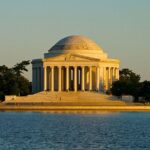


Vietnam Veterans Memorial and the Korean War Veterans Memorial
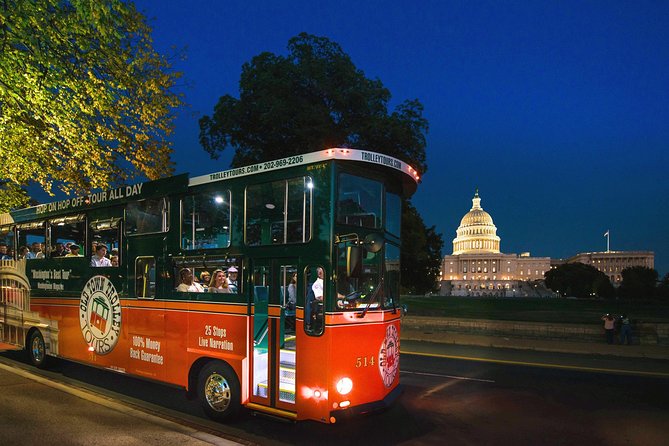
After Lincoln, the tour continues into the memorials that hit hard in the best way: quiet, reflective spaces that don’t need a lot of explanation once you understand what you’re looking at.
You’ll have a short stop at the Vietnam Veterans Memorial, then time at the Korean War Veterans Memorial. These memorials can feel especially powerful at night because they’re less chaotic. The atmosphere is calmer, and the guide’s commentary helps you connect the names and symbolism to the larger U.S. story.
A practical note: at night, the ground can feel uneven and lighting can be inconsistent. If you’re visiting in winter or you’re sensitive to slippery surfaces, wear shoes with solid traction and move slowly during transitions between trolley steps and walking paths.
Washington Monument and White House pass-by views
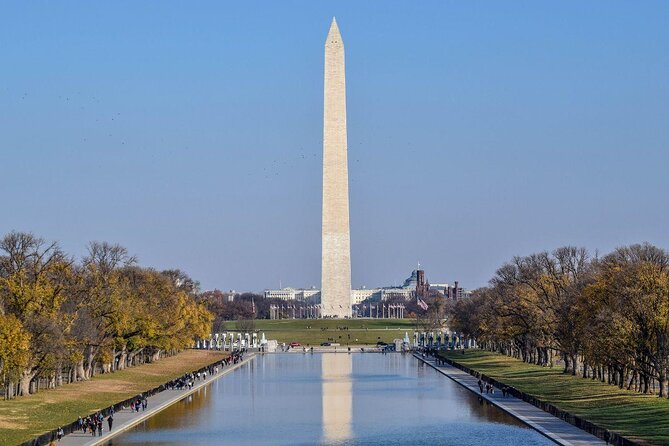
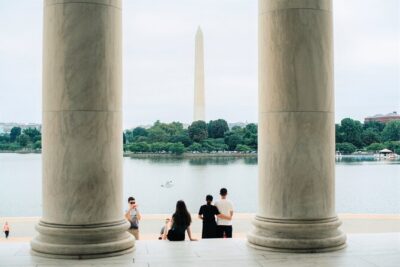
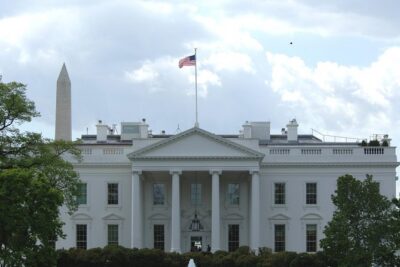
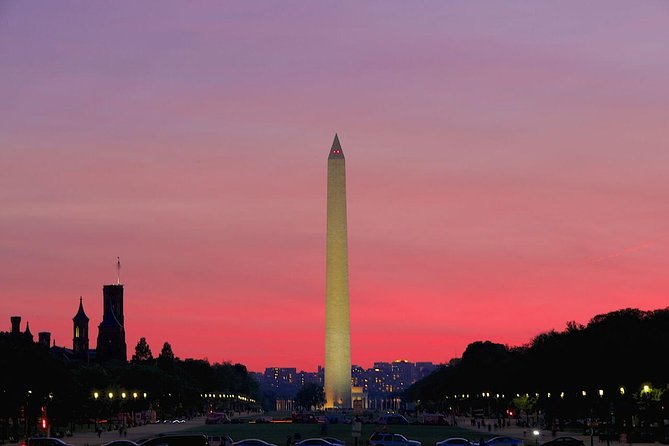
Between the memorial stops, you get pass-by views that help you connect the map in your head. The Washington Monument and the White House are high on the list of what people want to see, and the trolley route gets you those iconic silhouettes without forcing you to navigate traffic or park hassles.
This is where the value of doing a guided loop shows. You’re seeing the landmarks in a logical order that makes sense geographically, which helps you remember where things are relative to each other when you continue your trip.
Tidal Basin: the route’s turning point for night lighting
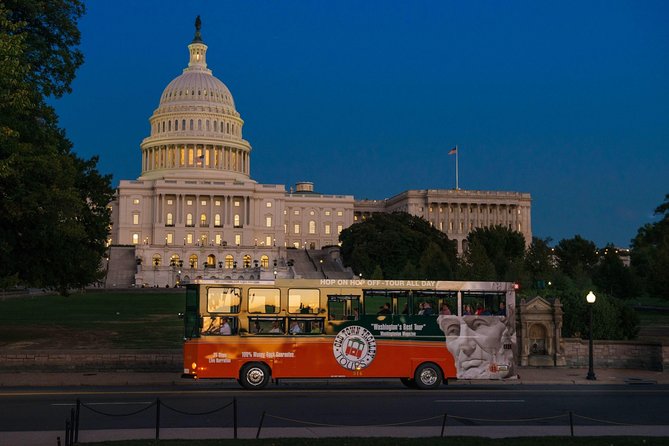
As you move toward the Tidal Basin area, the tour shifts gears. You’ll get a quick stop there that focuses on the MLK Jr. Memorial and the FDR Memorial area. Even if that initial moment feels brief, it sets up what comes next: the big memorial spaces lit after dark.
The Tidal Basin region is one of the most visually rewarding sections of DC at night. The lighting and reflective atmosphere make the whole area feel more intentional than a quick day stop. If you like photos, this is usually where people start getting serious about them.
FDR Memorial stop: waterfalls, sculptures, and time to wander
The FDR Memorial stop is timed with about 15 minutes on site. You’ll also get the benefit of it being guided from the trolley, which helps you look for the details that you might otherwise overlook.
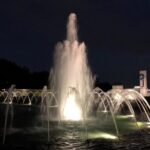
The memorial’s design, including the sculptural and water features, can look different under floodlights. The guide’s narration helps you understand the themes tied to Franklin Delano Roosevelt rather than treating it like a scenic walk.
One consideration for nighttime comfort: the paths can feel dim in spots. Take your time and watch your footing, especially if you’re carrying a phone, camera, or you’re traveling in cold weather.
Martin Luther King Jr. Memorial: time to see it without rushing
You’ll have time at the MLK Jr. Memorial as well, with about 15 minutes on site. This is another stop where the narration really matters. The guide helps you read the memorial’s meaning rather than simply walking past it.
At night, the MLK Memorial often feels less like a photo backdrop and more like a place to slow down. That’s exactly what you want from a moonlight tour: you’re not grinding through sites. You’re getting the chance to feel the message.
If you’re traveling with teens or adults who don’t love museums, this is where the tour tends to convert them. The memorial works even when you’re not in “history mode,” and the guide keeps the story clear.
How the live guide turns the loop into a real DC story
This is one of the best parts of the entire experience: the narration is live and it’s built around the sights you’re seeing in real time. The guide also uses sound effects, which can make dramatic moments land better when you’re watching the city at night.
You may also hear certain guide styles depending on who’s driving. Names like Smiley, MJ, Hollywood, and Bill have shown up as guide-driver standouts, and that usually tells you what to expect: a mix of humor, quick context, and a habit of keeping people engaged without dragging.
Also, some tours at night bring in lighter ghost-story type anecdotes. If you’re in the mood for spooky DC flavor, that playful element can be fun. If you’re not, it still usually stays tied to the city’s characters and landmark stories rather than turning into pure silliness.
Comfort and practicalities you should plan around
This tour is open-air, but it’s designed for DC weather. In colder months, the trolley is heated. You still need layers for the short periods outside the trolley at stops, plus extra warmth if wind is biting.
Other practical points that matter for your day:
- There’s no WiFi on board.
- Food and drinks are allowed, but alcoholic beverages are not allowed.
- There’s no restroom on board, so plan your timing.
- The tour includes a maximum of 52 travelers, which helps keep it from feeling like a cattle herd.
For families or anyone using a stroller, it helps that strollers are allowed if they’re collapsible, and they get stored up front. Keep aisles clear so nobody has to step around obstacles.
If you’re using a wheelchair, the tour is wheelchair accessible via trolleys with hydraulic lifts, but you should confirm the specific accessible vehicle by calling the number on your ticket at least 24 hours ahead.
Price and value: what $48.95 buys you
At $48.95 per person for roughly 2.5 hours, you’re not paying for a premium museum ticket. You’re paying for three things that add up fast in Washington:
- Logistics help: You don’t have to coordinate multiple rides or walk the whole night loop.
- Story help: Live narration with sound effects turns landmarks into meaning.
- Time help: You get timed stops where the lighting and mood are best.
The value is strongest if you’re short on time or you want an overview before you plan a second day. It’s also a good deal if your group includes different interests, because the trolley format gives you both pass-by views and chances to stop.
Where the price feels less perfect is if you’re already planning a very self-guided, on-foot monument night with a flexible route and you hate tour groups. But for most first-timers, or anyone who wants a clean structure, the cost tends to make sense.
Who this tour fits best
You’ll likely enjoy this tour most if:
- It’s your first time in DC and you want a quick orientation.
- You don’t want to commit to a full day of walking.
- You like monuments but also want the context behind them.
- You want a night plan that’s straightforward and low-stress.
It’s also a strong pick for families who need short stops, plus adults who want to see the famous sites in the right light.
Should you book the Washington DC Monuments by Moonlight Tour by Trolley?
I’d book it if you want the cleanest way to see DC’s top monuments at night without turning your evening into a navigation puzzle. The combination of live narration, multiple timed stops, and classic viewpoints from the trolley makes it a practical value play.
I’d think twice if you’re very late-spotting dependent, because check-in timing matters. Plan to arrive early, dress for cold stops even if the trolley is heated, and wear shoes that handle night surfaces.
If you want one guided night that gets you oriented fast, this tour is a solid choice.