REVIEW · WASHINGTON DC
District of Punk
Book on Viator →Operated by Off the Mall Tours · Bookable on Viator
One of DC’s best punk stories hides in plain sight. This tour strings together music-scene locations that shaped DC punk from the late-70s vibe into 80s hardcore and 90s post-punk, all with a guided walk you can actually follow. I love that it’s built around real street addresses and venues you can see from the sidewalk, and you’ll learn why the Gallery Place area mattered more than people expect.
My other favorite part is the ending at the MLK Jr. Memorial Library, where you’re pointed toward the DC Punk Archive and the paper trail that proves DC’s scene existed beyond hearsay. One drawback to consider: it’s only about 1.5 hours, so you’ll get strong context, but you won’t be hanging out in buildings for long stretches.
In This Review
- Key takeaways before you go
- District of Punk tour: what it is and why it feels worth your time
- Price and logistics: is $30 a fair deal?
- Where you meet, where you finish, and the walking rhythm
- Stop 1: 443 7th St NW and the DC Space connection
- Stop 2: The Lansburgh site and the 1980s venue machine
- Stop 3: 9:30 Club former site and how scenes keep evolving
- Stop 4: MLK Jr. Memorial Library and the DC Punk Archive
- The story the tour is really telling: politics, place, and how DC shaped punk
- What you get from the guide’s approach (and what you don’t)
- Small-group size: the secret sauce for a niche subject
- Who this tour is best for
- Before you go: practical tips that actually help
- Should you book District of Punk?
- FAQ
- Where does the tour start and end?
- How long is the District of Punk tour?
- What does it cost?
- When is the tour offered?
- Is admission included for the stops?
- What kind of ticket do I get?
- What happens if the weather is bad?
- How many people are in the group?
Key takeaways before you go
- A small-group walk (max 20) that stays focused on the story, not a long shuffle.
- Stop-by-stop locations tied to 70s/80s/90s punk energy across DC.
- Free admissions at each listed stop, so your ticket is really paying for the guiding.
- Ends at the DC Punk Archive at the MLK Memorial Library, a rare punk-specific collection.
- Mobile ticket for easy access on the day.
- Best with good weather, since this is a walking tour.
District of Punk tour: what it is and why it feels worth your time
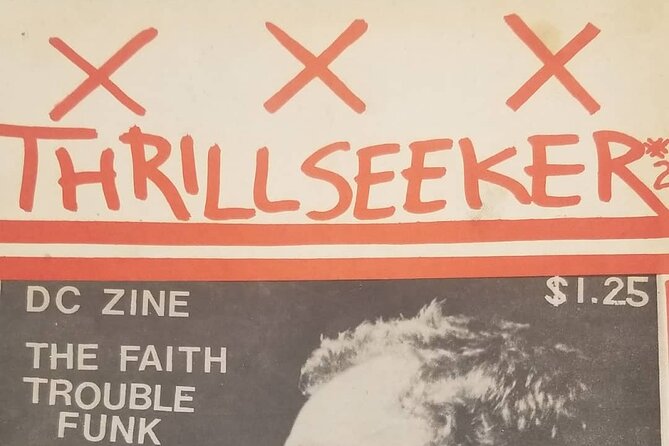
This is a Washington DC punk history walk that treats punk like a city-shaped thing, not a generic genre label. You start downtown near Gallery Place Chinatown Station, then work your way through key club and venue sites linked to the DC scene.
The tour’s big idea is simple: punk in DC was reacting to local politics and culture as much as to music trends elsewhere. In the 1980s, the Reagan administration was reinstating the Selective Service, and cultural attitudes were shifting under pressure. Punk grew as an answer to what felt like a soulless system. That context matters because it explains why DC’s scene didn’t just copy punk from elsewhere—it developed its own tone, habits, and communities.
I also like how the tour sets expectations: you’re not being sent to a lecture hall. You’re on foot, using the city itself as the “text.” That makes the story easier to remember after you leave, because you can picture the building in your head.
You can also read our reviews of more tours and experiences in Washington DC.
Price and logistics: is $30 a fair deal?
The price is $30 per person, for an experience that runs about 1 hour 30 minutes. When I size up value for tours like this, I look for two things: how much guidance you get per minute, and whether the ticket covers more than basic entry.
Here, the guidance is the product. Admission at the stops is listed as free at each location, so you’re paying for a guided narrative that connects the sites into one timeline. If you’re the type who likes learning why a place mattered instead of just taking photos, $30 is a very reasonable ask for DC—especially for a niche subject.
Two logistics notes you’ll want to double-check before you lock it in:
- The tour notes it’s offered on the 2nd Saturday of the month starting March 2025 at 1pm, but the start-time info shown with the experience lists 10:30am. Your booking confirmation should clarify the exact time.
- The tour has a maximum of 20 travelers, which usually keeps the pace human and the questions from getting lost in the crowd.
Where you meet, where you finish, and the walking rhythm
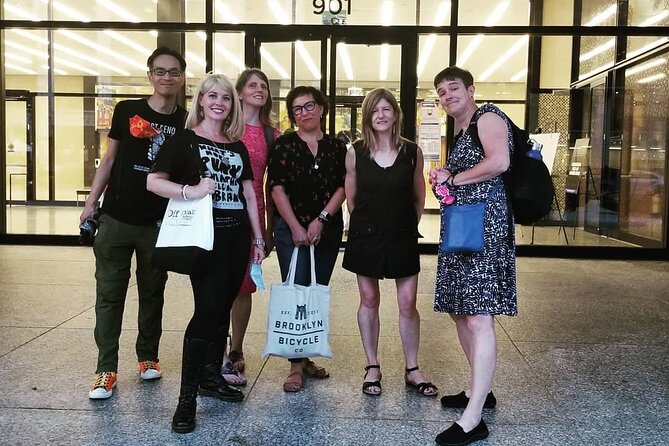
You meet at Gallery Place Chinatown Station, Washington DC 20001. The tour ends at the Martin Luther King Jr. Memorial Library, 901 G St NW, Washington DC 20001, the location of the DC Punk Archive.
Expect a stop-and-go rhythm: roughly 15 minutes per earlier stop, then a shorter final stop time at the library. This structure works well if you want something you can fit into a day without burning your whole afternoon. It also means the tour can stay light on museum logistics and keep you moving through the areas where the story actually happened.
Because it’s a walking tour, good weather matters. If the forecast is messy, the operator may cancel and offer a different date or a full refund, so it’s worth keeping an eye on plans as the day gets close.
Stop 1: 443 7th St NW and the DC Space connection
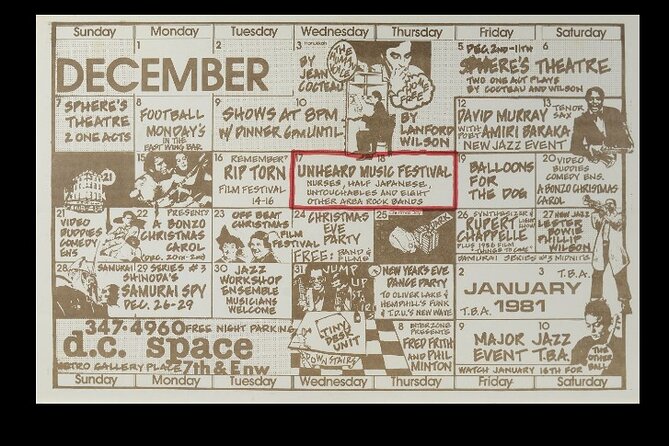
Your first stop is 443 7th St NW, listed as the former DC Space. This is described as the first club to host the Unheard Of Music Festival, which immediately signals the theme: DC’s punk story wasn’t small-time or purely local—it had ambition and visibility.
What you’ll likely appreciate here is the framing. Standing at a former club site teaches you to think about infrastructure: scenes need spaces, organizers, and repeatable places to gather. You’re not just hearing that punk happened—you’re seeing where a community could meet, where energy could spill out, and where the scene could build momentum.
A small practical drawback: since this is a former space, there’s only so much you can read from the exterior. The value comes from the guide’s explanation, not from the building itself looking like an 80s punk venue today.
Stop 2: The Lansburgh site and the 1980s venue machine
Next you head to The Lansburgh, the former location of the Lansburgh Center, described as a popular venue for punk shows in the 1980s.
I like this stop because it connects punk to venue culture in a way that feels real. A punk scene isn’t only bands and flyers. It’s also schedules, booking habits, and the way a city routes crowds through specific halls. When you learn that the Lansburgh Center was hosting punk at a time when the national conversation felt tense, the scene starts to make more sense in context.
Another good point: the tour keeps you anchored in DC neighborhoods that people might walk by without noticing. The whole point is to train your eye. You start noticing how the same corners of the city can carry totally different identities decade after decade.



Stop 3: 9:30 Club former site and how scenes keep evolving
Stop three is the 9:30 Club area, visited via the former location of the first 9:30 Club. Today, the 9:30 Club is one of DC’s most iconic performance venues, and this stop is where you can feel the long arc.
The “former location” detail matters. It’s a reminder that music institutions don’t appear fully formed. They move, retool, and sometimes change addresses, but the audience habits and the scene networks can persist. By the time you reach this point, you’ve already learned the punk story wasn’t a one-year event—it’s part of a longer relationship between DC and loud, DIY-leaning communities.
Again, the exterior won’t show you everything. But if you’re the kind of traveler who enjoys connecting the present to what came before, this is where the tour’s pacing really pays off.
Stop 4: MLK Jr. Memorial Library and the DC Punk Archive
You end at the Martin Luther King Jr. Memorial Library. The key reason this stop is special is simple: the library holds the D.C. Punk Archive, described as the only collection of punk ephemera documenting the DC scene.
This matters for two reasons. First, it’s a tangible way to respect the scene as something real—paperwork, artifacts, and evidence instead of just stories passed around. Second, it flips the usual expectation. You’re ending a punk tour in a civic landmark tied to civil rights history, which gives the experience a thoughtful tone without pretending punk is something it isn’t.
In my view, this ending is one of the strongest “you get something extra” moments on a DC tour. Even if you don’t become an archive person overnight, you’ll leave with a better sense of why local music history deserves preservation.
The story the tour is really telling: politics, place, and how DC shaped punk
Yes, the tour covers locations. But the locations are the proof points for a bigger story: DC punk formed partly as an answer to a government and culture that felt emotionally flat or coercive. When the national mood turns tense—like it did when Selective Service was back in play—counterculture tends to sharpen its edges.
The tour also treats DC as a city with its own internal geography. It points to anchors around Gallery Place and beyond, rather than suggesting every punk path leads through only a few famous cities. That approach makes the experience feel less like a trivia scavenger hunt and more like learning how a scene works.
If you’re into the evolution angle, there’s also a useful timeline thread that shows up in the tour’s framing: DC’s punk culture is described in stages, from earlier roots through the 1980s hardcore era and into post-punk in later years. That sweep helps you avoid the common mistake of thinking punk is one sound and one decade.
And if you like hearing names and details from a guide, the tour experience has been led by Katie from Off The Mall Tours, who has been credited with walking through those major scene phases—70s feel, 80s hardcore, and 90s post-punk—through the lens of DC locations.
What you get from the guide’s approach (and what you don’t)
You get 1.5 hours of cool information built around walking and observing. The itinerary is short on stops and heavy on meaning. Each location acts like a chapter heading.
What you don’t get is a long sitting session or a heavy museum experience at each site. Since the admissions at the listed stops are free but the locations include former venues, you’re being guided toward interpretation, not just browsing.
That can be a plus if you’re tired of tours that pile on facts with no emotional hook. It can be a minus if you want hands-on archive time at the library. The tour ends there, and it’s clearly the home of the Punk Archive, but the experience described doesn’t promise extended time inside the collection.
Small-group size: the secret sauce for a niche subject
With a maximum of 20 travelers, you’re more likely to get actual attention from the guide. That matters on niche tours like this, because questions tend to be specific: what kind of venue was it, what kind of bands played there, what does the neighborhood connection really mean.
A smaller group also helps the pacing. You move through the area without feeling like you’re trapped in a marching line, and the guide can keep the story coherent from stop to stop.
Who this tour is best for
I’d book District of Punk if you fit one or more of these:
- You like music history, but you want it tied to real places you can stand on.
- You’re curious about DC beyond monuments and museums.
- You enjoy learning how local scenes form, including the role of venues and neighborhood anchors.
- You’re interested in the way punk intersected with the politics and culture of its era.
If you only want a high-speed photo tour, you might find the tone more thoughtful than sightseeing-only. If you want a full-on music museum visit, plan something else in addition to this, since it’s a walking route that focuses on context.
Before you go: practical tips that actually help
Bring comfortable shoes. You’re walking between downtown stops, and the tour is only about 90 minutes, so there’s no room to slow down a lot.
Wear layers. DC weather can shift quickly, and the tour requires good weather to run. If rain hits, you may be offered a different date or a refund, so keep an eye on communications as the date approaches.
Also plan for city navigation. The tour starts at Gallery Place Chinatown Station and ends at the MLK Memorial Library. You’ll want a little buffer so you’re not arriving at the exact minute with your phone map struggling.
Should you book District of Punk?
Yes, if you want a smart, street-level way to understand a side of Washington DC that most people miss. For $30, you get a tight story arc across multiple eras, you visit several named venue sites, and you finish at a place dedicated to preserving punk ephemera—the DC Punk Archive.
I’d skip it only if you’re expecting a long indoor museum experience or you hate walking tours in general. Otherwise, this one’s a great match for travelers who like music history with addresses attached, not just abstract genre talk.
FAQ
Where does the tour start and end?
The tour starts at Gallery Place Chinatown Station in Washington DC and ends at the Martin Luther King Jr. Memorial Library, 901 G St NW.
How long is the District of Punk tour?
It runs about 1 hour 30 minutes.
What does it cost?
The price is $30.00 per person.
When is the tour offered?
Starting in March 2025, it’s offered on the 2nd Saturday of the month at 1pm. The booking information also lists a 10:30am start time, so check your confirmation.
Is admission included for the stops?
The stops are listed with free admission.
What kind of ticket do I get?
You’ll use a mobile ticket.
What happens if the weather is bad?
The tour requires good weather. If it’s canceled due to poor weather, you’ll be offered a different date or a full refund.
How many people are in the group?
The tour has a maximum of 20 travelers.