
REVIEW · WASHINGTON DC
We the People Tour: The Essence of Liberty
Book on Viator →Operated by LIBERTY TOURS DC · Bookable on Viator
Four hours, and the founding story feels close. The We the People Tour: The Essence of Liberty strings together Washington DC’s best-known civic sites—starting at the United States Capitol, working your way past the White House, and then moving through major memorials that explain how America has argued, fought, and reinvented itself over time. I especially like the energy and care guides bring, with names like Brian McCauley and Danny showing up in past groups, plus the way they tailor attention so you don’t miss the emotional beats. I also like the practical value: most stops are free to enter, so you can focus on seeing instead of budgeting time for extra ticket lines.
The main consideration is pace. Most outdoor memorial and landmark stops are timed around 15 minutes, so if you want long reading time or lots of photos without hustle, you’ll need to decide what matters most to you early on.
In This Review
- Key things you’ll notice on this tour
- Value check: free memorial entrances plus one big included museum
- Starting at 701 15th St NW: a 10:00am plan for a short, focused day
- Stop 1: United States Capitol—where the rules begin
- Stop 2: The White House—president and power in one sightline
- Stop 3: National World War II Memorial—56 pillars of remembrance
- Stop 4: Jefferson Memorial—founding ideas you can actually see
- Stop 5: Martin Luther King Jr. Memorial—Stone of Hope and a specific message
- Stop 6: Korean War Veterans Memorial—recognition that stays specific
- Stop 7: Lincoln Memorial—arguments about race that never really ended
- Stop 8: Vietnam Veterans Memorial—names, context, and a guide who knows how to help
- Stop 9: The National Archives Museum—where documents become proof
- How guides change your whole experience: fun, care, and smart pacing
- Pace and timing: what 15 minutes per stop really means for you
- Who should book this tour?
- Should you book We the People Tour: The Essence of Liberty?
- FAQ
- How long is the We the People Tour: The Essence of Liberty?
- What time does the tour start?
- Where is the meeting point?
- What language is the tour offered in?
- Are admission tickets included?
- Is a mobile ticket provided?
- Is there a limit on group size?
- Can I cancel and get a full refund?
Key things you’ll notice on this tour

- Capitol-to-National Mall flow: you cover the core sights in one straight shot through Washington DC’s most important corridor.
- Mostly free admission stops: the Capitol, White House, World War II, Jefferson, MLK, Lincoln, and Vietnam sites are listed as free entry.
- Two ticketed inclusions: the Korean War Veterans Memorial is ticketed, and the National Archives Museum is a major 1.5-hour included stop.
- Human storytelling with real-world care: guides are praised for fun, accommodation, and especially thoughtful handling of solemn moments.
- A manageable group size: the tour caps at 56 people, which usually helps everyone keep moving.
Value check: free memorial entrances plus one big included museum
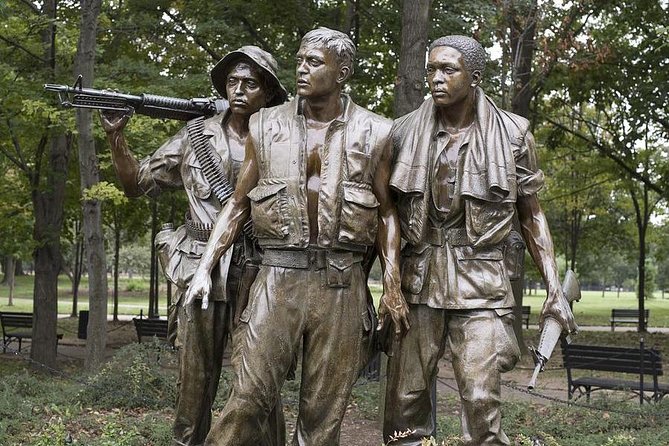
This is the kind of tour that makes financial sense without turning into a shopping marathon. On your route, most of the landmark stops are listed with free admission tickets, which is rare on a DC itinerary. That matters because DC crowds can eat time fast. If you aren’t paying entry fees at every stop, you can spend your energy on looking closely and asking questions.
The one “real ticket” moment on the route is the National Archives Museum, and it’s also where you’ll spend the most time (about 1 hour 30 minutes). That balance is smart. You get the outdoor “walk-and-look” experience for the memorials, then you get a longer, indoor focus on documents and records—something you can’t really replicate just by wandering.
You can also read our reviews of more tours and experiences in Washington DC.



Starting at 701 15th St NW: a 10:00am plan for a short, focused day
Your tour starts at 10:00 am at 701 15th St NW, Washington, DC 20005, and it ends in a different location. That end-detail matters because you’ll want to plan your next stop or ride accordingly instead of assuming you’ll finish back where you began.
This is a 4-hour, approx. experience. That timeframe is tight, in a good way, if you’re trying to get the “big DC picture” quickly. The trade-off is that you won’t have time to treat each monument like a private museum wing. Think of it as a guided ordering system: you’ll see the key sights, then you can return later if one particular stop grabs you.
Stop 1: United States Capitol—where the rules begin
You kick things off at the United States Capitol, the home of Congress. Even if you’re not going inside, the building is a major “origin point” in DC’s layout. It’s located on Capitol Hill at the eastern end of the National Mall, and it’s tied to the District’s street-numbering system and quadrants—small geography fact, big “wait, this is all planned” feeling.
Why this first stop works: it sets the theme. The Capitol isn’t just a pretty landmark. It’s the seat of the legislative branch, so your brain starts framing the rest of the tour as a story of laws, debates, and political change. Expect about 15 minutes here—enough time to orient yourself to what you’re looking at and to get the essentials without dragging.
Stop 2: The White House—president and power in one sightline
Next up is the White House, the official residence and workplace of the U.S. president. It’s located at 1600 Pennsylvania Avenue NW, and it has been the presidential home since John Adams in 1800. The phrase White House is also used as a stand-in for the president and advisors—meaning you’re looking at a building that also represents decision-making.
In 15 minutes, you’re mostly getting the big-picture view: where it sits, why it matters, and how it fits the “essence of liberty” theme. If you’re a first-time visitor, this stop is how you start connecting the public speeches and policies you’ve heard about to a real physical place.
Stop 3: National World War II Memorial—56 pillars of remembrance

The National World War II Memorial is built for scale and symbolism. It sits on the National Mall near the Reflecting Pool area, on the former site of the Rainbow Pool. What makes it especially memorable is the structure: 56 pillars paired with small triumphal arches surrounding a square and fountain.
The emotional payoff here comes when you notice the memorial’s design language—how it turns history into something you can walk around. This is one of those stops where the guided explanation can change the feel of what you’re seeing. You get about 15 minutes, so plan to look up and around, not only straight ahead.



Stop 4: Jefferson Memorial—founding ideas you can actually see

Then you land at the Jefferson Memorial, dedicated to Thomas Jefferson. The focus is his role as the main drafter and writer of the Declaration of Independence, plus the many other offices he held across the early United States.
The site also nods to Jefferson’s later work: he founded the University of Virginia in Charlottesville. That’s a detail worth remembering because it connects liberty to education and institutions, not only political paperwork.
Again, you’re looking at roughly 15 minutes. With that kind of time limit, the best use is to listen for the meaning behind the design and the people being honored—so when you later re-read Jefferson in a book, you’ll know what the memorial was trying to point you toward.
Stop 5: Martin Luther King Jr. Memorial—Stone of Hope and a specific message

The Martin Luther King, Jr. Memorial covers four acres in West Potomac Park by the National Mall. It includes the Stone of Hope, a granite statue carved by sculptor Lei Yixin. The inspiration ties directly to King’s words from the I Have A Dream speech: out of the mountain of despair, a stone of hope.
This stop hits best when you let the detail slow you down for a moment. You’ll have about 15 minutes, but you can still do something simple: read the connection the memorial makes between suffering, perseverance, and the idea of hope as something solid.
If you tend to skip reading plaques at monuments, this is one where you’ll want to pause and actually take in at least the core message.
Stop 6: Korean War Veterans Memorial—recognition that stays specific
The Korean War Veterans Memorial is located in West Potomac Park, southeast of the Lincoln Memorial and just south of the Reflecting Pool. It’s dedicated to those who served in the Korean War.
This is a quieter-feeling stop for many people because the Korean War doesn’t always get the same level of attention as WWII or Vietnam. That’s exactly why it’s worth including. The tour lists its admission as included, and you’ll have about 15 minutes—enough time to ground yourself in the names of conflicts and the idea that every war leaves real people behind.
Stop 7: Lincoln Memorial—arguments about race that never really ended
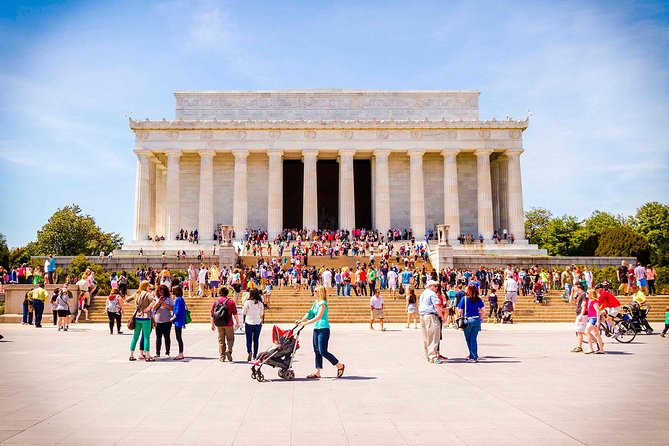
Next is the Lincoln Memorial. It’s built to honor Abraham Lincoln, with architect Henry Bacon and the main statue designed by Daniel Chester French. Dedicated in May 1922, it has long been a symbolic center tied to race relations since the 1930s.
This stop is special because it turns an individual president into a wider American conversation. You’re not just looking at a famous figure; you’re stepping into a place that has repeatedly hosted national meaning.
You’ll get about 15 minutes. If you’re going with kids or time-crunched family, Lincoln is one of the easiest places to connect history to present-day questions—because you can frame the theme in one simple idea: the liberty Lincoln is associated with has had to be fought for over and over.
Stop 8: Vietnam Veterans Memorial—names, context, and a guide who knows how to help
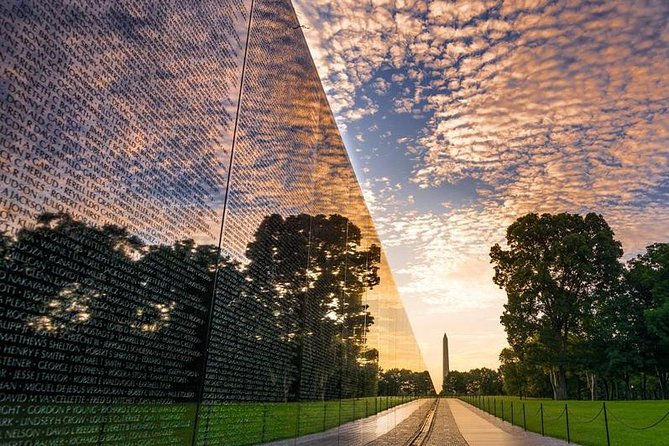
The Vietnam Veterans Memorial is a 2-acre national memorial honoring service members and those who died in service, as well as those unaccounted for during the war. The memorial complex includes the Vietnam Veterans Memorial Wall, The Three Soldiers, and the Vietnam Women’s Memorial.
There’s also the important context of controversy: issues around the original construction led to additions within the memorial complex. That matters because it reminds you that even memorials can reflect ongoing debates about how a nation tells its own story.
This is the stop where the tour guide can make a noticeable difference. In past experiences with guides such as Brian McCauley, groups were helped to get an etching of a childhood friend’s name and to take time to pay respects right there. Even if you aren’t doing an etching, the lesson is the same: take it slow enough to let one person’s name land with you.
You’ll have about 15 minutes. That’s not long. So when you arrive, pick one approach: either focus on finding a name area to read carefully, or focus on the emotional layout first. Both can work, but trying to do everything at once is how you leave feeling rushed.
Stop 9: The National Archives Museum—where documents become proof
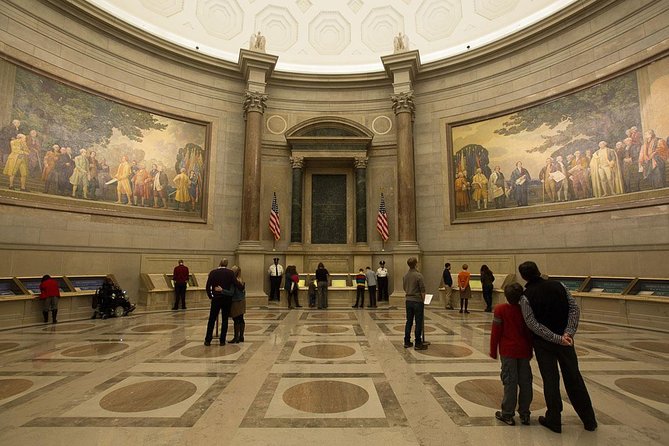
The tour’s longest stop is the National Archives Museum, with admission included and about 1 hour 30 minutes on the clock. This is where your “liberty” theme becomes something physical.
The National Archives and Records Administration (NARA) is responsible for preserving and documenting government records and increasing public access to the documents that form the National Archive. It maintains legally authentic copies of acts of Congress, presidential directives, and federal regulations. It also transmits Electoral College votes to Congress.
Why this is a great anchor after the memorials: memorials can tell you what people felt and fought for. The National Archives shows you how the country made decisions—through records you can trace.
If you like reading but hate noisy museums, plan to slow down here even if your legs want to move on. This is the place where your questions get answered with primary sources.
How guides change your whole experience: fun, care, and smart pacing
The best part of this tour is often the guide. In the feedback I’ve seen, guides like Brian McCauley and Danny are praised for being great fun while still staying focused on what matters. That balance matters because DC can be both impressive and tiring. A guide who can keep energy up helps you pay attention instead of zoning out.
I also like that guides are described as highly accommodating. One set of experiences mentions “front door service” at each monument for older parents, which is exactly the kind of practical help that can turn a potentially frustrating day into an easy one. You’re dealing with a lot of curb edges, stairs, and long sight corridors. When the guide helps you get as close as possible before you start walking, you’re less drained by logistics and more ready for the story.
And yes, guides also handle solemn moments with care. That Vietnam Memorial story—helping someone create an etching and paying respects—shows the difference between “touring” and supporting your group in a meaningful way.
Pace and timing: what 15 minutes per stop really means for you
Here’s the reality of a short DC highlights tour: you’re not soaking in every plaque. You’re moving in a deliberate sequence, with about 15 minutes at each landmark and memorial, and then a longer block at the National Archives Museum.
So, how do you make 15 minutes feel like more?
- Decide one thing you want to remember at each stop: a person, a symbol, or a design feature.
- Take a quick photo, then spend the second half of your time standing quietly and listening.
- If you’re traveling with others, set a simple rule: one person reads the main plaque while the others look around, then swap.
Weather is also a factor. The tour requires good weather, and if it gets canceled due to poor weather, you should expect either a different date or a full refund.
Who should book this tour?
You’ll likely enjoy this tour if you:
- Want a first-time DC sweep of the most important civic and memorial sites in one morning.
- Prefer a structured walk with explanations, not a map scramble.
- Are traveling with family members who need easy-to-follow pacing and close access at stops.
- Appreciate the link between liberty as an idea and liberty as something documented and protected.
It’s also a solid fit if you like memorials and documents equally. The mix of outdoor memorials and the National Archives gives you both the emotional and the official sides of the story.
Should you book We the People Tour: The Essence of Liberty?
If you’re short on time and you want the clearest path to DC’s core “liberty” landmarks, I’d say yes. This tour’s value comes from its efficient structure: free admission for most stops, a long museum anchor at the National Archives, and guides who bring both humor and care—especially when the setting turns solemn.
I’d only hesitate if you’re the type who needs 45 minutes at every memorial to read every line and linger in silence. This tour works best when you choose priorities. If you do that, you’ll leave with context, names in your head, and a route that makes returning to your favorites feel easy.
FAQ
How long is the We the People Tour: The Essence of Liberty?
The tour is about 4 hours.
What time does the tour start?
The start time listed is 10:00 am.
Where is the meeting point?
The meeting point is 701 15th St NW, Washington, DC 20005, USA.
What language is the tour offered in?
The tour is offered in English.
Are admission tickets included?
Most stops are listed as free with an admission ticket free entry. The Korean War Veterans Memorial is listed as admission ticket included, and the National Archives Museum is also listed as admission ticket included.
Is a mobile ticket provided?
Yes, the tour includes a mobile ticket.
Is there a limit on group size?
Yes. The tour has a maximum of 56 travelers.
Can I cancel and get a full refund?
Yes. Free cancellation is available up to 24 hours in advance for a full refund. If you cancel less than 24 hours before the start time, the amount you paid will not be refunded. The experience requires good weather, and if it’s canceled due to poor weather you’ll be offered a different date or a full refund.