REVIEW · WASHINGTON DC
Pedicab Sightseeing Tour on the National Mall
Book on Viator →Operated by Wheel The People Pedicab Tours · Bookable on Viator
Pedicabs turn the National Mall into an easy win. I like on-demand stops that let you set the pace, and I really love how you get close to the monuments without fighting the big-bus crush. One thing to plan around: this is an outdoor walking-and-riding route that works best with good weather.
For me, the biggest value is the human one: a Washington, DC-licensed official guide with 15 years of experience, using the sights to teach you what to notice as you pass. If you’re doing this with a companion who has limited mobility, the tour can be a game-changer since they offer a complimentary folding wheelchair with advance arrangement.
Finally, I feel good about safety and legitimacy. You’re covered by $2,000,000 USD liability insurance, and the company operates under the proper National Park Service concession authorization.
In This Review
- Key Highlights at a Glance
- Why a Pedicab Works So Well on the National Mall
- Price and Value: What $121 Buys You Here
- Your Tour Game Plan: Duration, Pace, and On-Demand Stops
- Stop-by-Stop: White House to Einstein on the National Mall
- Stop 1: White House South Front (Pedicab or On Foot)
- Stop 2: Washington Monument Design and Construction Details
- Stop 3: National World War II Memorial and the “View You Feel”
- Stop 4: Martin Luther King, Jr. Memorial (Relief Pediment + Tidal Basin Context)
- Stop 5: Franklin Delano Roosevelt Memorial (Rooms of His Terms + Water Symbolism)
- Stop 6: Lincoln Memorial (River’s Edge, Symbolism, and the Seated Lincoln)
- Stop 7: Vietnam Veterans Memorial (Minimalism That Hits Close)
- Stop 8: Albert Einstein Memorial (Off the Main Flow, Still Worth It)
- The Real Benefit: Design Stories You Can Keep
- Accessibility and Comfort: Practical Support That Matters
- Weather, Timing, and the Smart Way to Book
- Who This Tour Fits Best
- Should You Book This Pedicab Tour of the National Mall?
- FAQ
- How long is the pedicab sightseeing tour on the National Mall?
- Is this tour private?
- What is included in the price?
- Are admission tickets required for the stops?
- What language is the tour offered in?
- Do they allow service animals?
- Is wheelchair or walker access supported?
- Is oxygen equipment allowed?
- What happens if the weather is poor?
- Is gratuity included?
Key Highlights at a Glance
- Private, group-only experience means no one else’s schedule hijacks your tour
- Licensed DC guide with 15 years experience keeps the stories grounded and practical
- Admission is free at each stop, so you’re not budgeting for ticket lines
- Flexible distance options at the White House (from the pedicab, or on foot)
- Close-up views of minimalist memorial design, especially Vietnam Veterans and Lincoln
- Accessibility support includes folding wheelchair by request and accommodations for walkers and oxygen tanks
Why a Pedicab Works So Well on the National Mall
The National Mall is gorgeous, but it’s also long. Even when everything is close on a map, in real life the spacing, crowds, and constant stopping add up fast.
A pedicab tour solves the main problem: you get transport that’s slow enough to take in details, but not so slow that you’re stuck in the same spot all day. You also don’t have to wait for a bus rhythm, and you don’t lose half your energy just getting your bearings. It’s an efficient way to see multiple monuments in about an hour without feeling like you’re speed-running DC.
And because this is a private tour, you can actually match your pace to your group. If someone needs a longer look or a brief rest, you’re not stuck watching the rest of the group fade into the distance.
You can also read our reviews of more shopping tours in Washington DC



Price and Value: What $121 Buys You Here

At $121 per person, this is not the cheapest way to see the Mall. But it’s priced like what it is: a guided, private, ride-and-learn experience with premium placement along key sights.
Here’s why the value makes sense:
- You’re not paying for admission fees at the stops—each monument listed is admission free.
- You’re paying for a licensed guide (not just a driver) who’s meant to interpret what you’re seeing.
- You’re buying time. With a tight route designed around major memorials, you’ll usually finish before you start getting tired and cranky.
The best “value move” is to go in with a clear expectation: this is a guided highlight circuit with the ability to make a few on-demand stops, not a deep research trip where you spend hours at one location.
Your Tour Game Plan: Duration, Pace, and On-Demand Stops
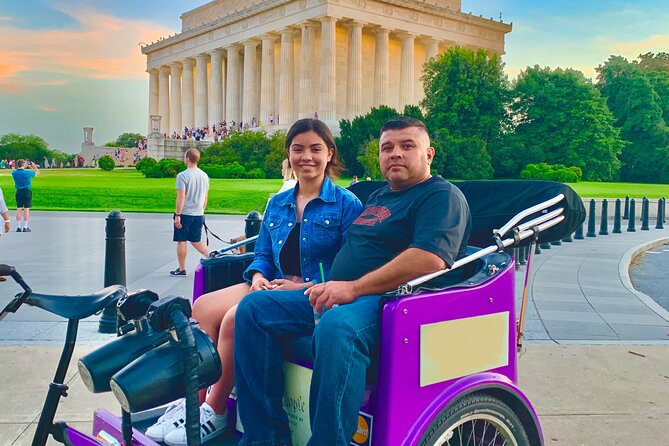
You should plan for about 1 hour to 1 hour 5 minutes, with the route built around eight major stops. Each stop is roughly 5 minutes, which means your guide will keep things moving and relevant.
That said, the best part is that you’re not locked into a rigid timetable. You can request on-demand stops and adjust distance as needed. At the White House, for example, you get two ways to view the South Front: either from the pedicab or on foot. That flexibility matters if your group is a mix of walkers and non-walkers.
A practical tip: if you want more time for photos or questions, use it early for the stop you care about most. With a set number of stops, late changes can shorten the later sites.
Stop-by-Stop: White House to Einstein on the National Mall

This route hits the key monuments people come to Washington for, but it’s also paced so you don’t feel like you’re only skimming the surface. Here’s what to expect at each stop, and what’s worth paying attention to.
Stop 1: White House South Front (Pedicab or On Foot)
You start with a view of the South Front of the White House, and you get options. You can take it in from the pedicab, or step a bit on foot when that works better for your group.
Why this first stop is smart: it helps you orient instantly. The guide points out things you might miss if you arrived cold, and you don’t lose time trying to figure out where to stand.
A consideration: because viewing is short and options depend on where you are positioned, it’s worth using this stop to ask your guide what angles are best for photos based on your group’s comfort level.





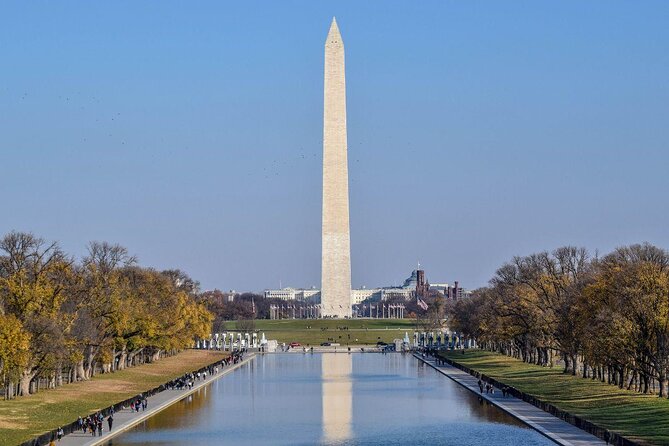
Stop 2: Washington Monument Design and Construction Details
Next up is the Washington Monument. This stop isn’t just about seeing the tall shape—it’s about understanding how it was designed, the materials used, and how it was built to reach that skyline impact.
You’ll also hear about a few controversial aspects of its history. That adds context without turning this into a lecture. It’s a quick way to notice the monument as a structure, not just a symbol.
Stop 3: National World War II Memorial and the “View You Feel”
At the National World War II Memorial, the guide focuses on the scenic “viewshed” you experience from there. It’s a reminder that memorials aren’t only about plaques and names—they’re also about how light, sightlines, and space shape your emotional response.
You’ll also learn how Americans across different walks of life contributed to a total war effort. That broad lens helps the monument feel more human and less distant.
Stop 4: Martin Luther King, Jr. Memorial (Relief Pediment + Tidal Basin Context)
The Martin Luther King, Jr. Memorial stop offers a different kind of design lesson. You’ll look closely at the relief pediment and how the surrounding grounds and pathway design work in the context of the Tidal Basin.
This is one of those places where a “quick look” can accidentally become a blurry snapshot. With a guide pointing out the design choices, you’re more likely to walk away with an actual mental image of how the memorial communicates its message.
Stop 5: Franklin Delano Roosevelt Memorial (Rooms of His Terms + Water Symbolism)
The Franklin Delano Roosevelt Memorial is a “human scale” visit—meaning you’re guided to see it in a way that feels connected to real decision-making and real people, not just an oversized statue.
A key feature you’ll be pointed toward: it’s organized into different rooms for his terms of office (four terms). You also get a new perspective on water as a symbolic design element.
What this means for you: the stop is short, but the framework the guide gives you helps you recognize the design logic even if you don’t read every panel.
Stop 6: Lincoln Memorial (River’s Edge, Symbolism, and the Seated Lincoln)
The Lincoln Memorial is the most visited stop on the National Mall for a reason. Here, the guide focuses on why it’s placed out by the river’s edge and how the design works as a metaphor related to preserving the union.
You’ll also get symbolism tied to the grounds and historic events that occurred here. And you’ll have a chance to visit with the seated statue of Lincoln, which is the moment most people remember most.
Drawback to keep in mind: because this is a famous stop, it can feel crowded in general. A pedicab route helps you get there without turning your day into a slow moving line.
Stop 7: Vietnam Veterans Memorial (Minimalism That Hits Close)
The Vietnam Veterans Memorial is the one that often surprises people. You get a close and personal experience of its abstract and minimalist design, and the guide helps you reset your sense of scale—especially regarding service and sacrifice.
This stop is short on paper, but the design is doing heavy emotional work. The guide’s role here is to help you see what your eyes might otherwise treat as just names and shapes.
Stop 8: Albert Einstein Memorial (Off the Main Flow, Still Worth It)
You end at the Albert Einstein Memorial, where Einstein is seated just off the well-worn path on Constitution Avenue near the National Academy of Sciences.
This is a great closing stop because it shifts the tone from war and political memory to a different kind of American legacy: curiosity and intellect. Also, it’s easy to miss if you’re rushing. Ending here gives you the chance to notice it on purpose.
The Real Benefit: Design Stories You Can Keep

A lot of monument tours tell you facts. This kind of route works better when it helps you build a mental map of design—because then you can “read” the memorials even after the tour is over.
A few examples from what you’ll be guided to notice:
- How structures claim a place in the skyline, like the Washington Monument’s materials and construction techniques
- How memorials choreograph sightlines, like the World War II Memorial’s viewshed focus
- How the MLK memorial uses relief and surrounding grounds to place the message in the context of the Tidal Basin
- How the FDR memorial uses rooms and water symbolism to make multiple presidential terms feel navigable
- How minimalist design at Vietnam Veterans changes your sense of scale and meaning
- How Lincoln’s design becomes a metaphor, not just a building with a statue inside
For me, that’s what turns “I saw the monuments” into “I understood what I saw.”
Accessibility and Comfort: Practical Support That Matters
If mobility is part of your planning, this tour deserves a close look. The good news is it’s built with real accommodations in mind.
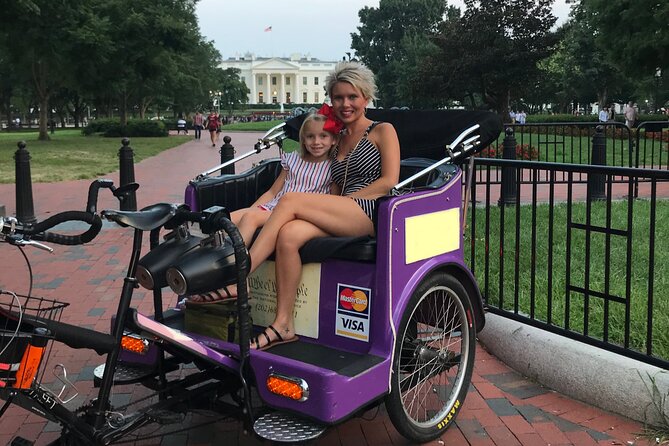
You can arrange for a complimentary folding wheelchair. The tour also welcomes folding rollators and walkers, and it mentions oxygen tanks are welcome. There are steps and a handrail for easier boarding, which is the kind of detail that prevents stressful surprises.
You can also travel with companion dogs and service animals. That matters because many “outdoor experience” plans forget animal access.
One more smart detail: it’s offered near public transportation, which gives you flexibility if you don’t want to rely on rideshare alone.
And yes, you should still expect to be outdoors for the full circuit. The pedicab helps a lot, but you’re still in a walking-and-viewing environment.
Weather, Timing, and the Smart Way to Book

This experience requires good weather. If weather cancels it, you’ll be offered a different date or a full refund. That’s worth treating as a planning cue: pick a day when DC isn’t mid-storm and not right at the peak of heavy precipitation.
Booking-wise, it’s often reserved about 5 days in advance, so I wouldn’t wait until the last minute if your dates are fixed. If you do book, you’ll receive confirmation within 48 hours subject to availability.
The tour runs in English and uses a mobile ticket, so you’ll want to keep your phone charged and your ticket handy.
Who This Tour Fits Best
This is a strong match if:
- You want a private guided experience on the National Mall
- Your group includes someone who can’t handle long walks but still wants meaningful monument time
- You’d rather spend money on a guide and an efficient route than on managing transit and crowds
- You’re short on time and want to cover the major memorials in about an hour
It might be less ideal if:
- Your group wants long, independent exploration at one site (like staying an hour at the MLK memorial on your own)
- You’re hoping for deep museum-style interpretation at every stop (this route is designed for quick, guided orientation)
Should You Book This Pedicab Tour of the National Mall?
If you want the National Mall without the grind, I’d book it. The pricing makes sense when you factor in a licensed guide, a private group-only setup, admission-free stops, and real accessibility support.
My decision rule: if you care about seeing several monuments quickly, asking questions, and getting design context instead of just snapshots, this is a very good way to spend your time in DC.
If you’re the type who needs hours of quiet at one memorial, or you’re traveling on a day with unstable weather, you might look at a different format. But on a good day, a pedicab tour like this is one of the simplest ways to enjoy the Mall’s best hits without draining your energy.
FAQ
How long is the pedicab sightseeing tour on the National Mall?
It runs about 1 hour to 1 hour 5 minutes.
Is this tour private?
Yes. It’s private, and only your group participates.
What is included in the price?
Your booking includes one pedicab conveyance, a Washington, DC-licensed official tour guide, and complimentary no charge use of a folding wheelchair with advance arrangement.
Are admission tickets required for the stops?
No admission tickets are required for the listed stops, as each stop notes admission ticket free.
What language is the tour offered in?
The tour is offered in English.
Do they allow service animals?
Yes. Companion dogs and service animals are welcome.
Is wheelchair or walker access supported?
Yes. A folding wheelchair is available with advance arrangement, and folding rollators and walkers are welcome.
Is oxygen equipment allowed?
Yes. Oxygen tanks are welcome.
What happens if the weather is poor?
This experience requires good weather. If it’s canceled due to poor weather, you’ll be offered a different date or a full refund.
Is gratuity included?
Gratuities are not included. An optional gratuity tip for your guide is never expected, but it is always accepted.