
REVIEW · WASHINGTON DC
Washington, D.C. Private 4-Hour Day Tour
Book on Viator →Operated by RSN Tours · Bookable on Viator
Washington DC can feel like a history scavenger hunt. This private, four-hour van tour is built to help you see major landmarks fast without turning the day into a marathon. You’ll ride up close to iconic sights, then get plain-English stories that connect the dots between speeches, buildings, and big moments in U.S. history.
I especially like two things: the comfortable van setup (big plus when walking gets tough) and the way the guide ties each stop to a clear takeaway. You’re not just taking photos—you’re getting the who/what/why, timed to keep the energy up.
One drawback to consider: like any DC outing, the route can be affected by road closures on busy days, and the operator has canceled a tour when minimum numbers were not met. If you’re visiting around a major event day, I’d plan with a little flexibility.
In This Review
- Key Highlights You’ll Feel on the Day
- How This Private Van Tour Makes DC Feel Manageable
- The Four-Hour Flow: What the Day Feels Like From Seat to Seat
- U.S. Capitol and Washington Monument: Big Beginnings, Not Small Talk
- Eisenhower, Jefferson, and Lincoln: Memorials as Lesson Plans
- Dwight D. Eisenhower Memorial
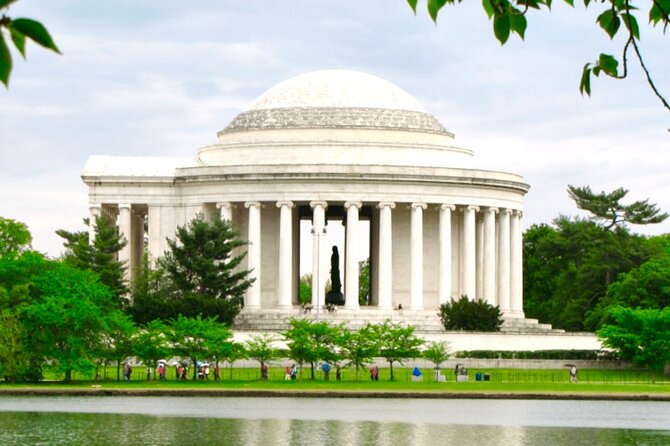
- Jefferson Memorial
- Lincoln Memorial (plus a second Lincoln stop)
- The George Mason Story Stop
- 9/11 Through the War Memorial Chain: A Route That Builds Emotion
- Franklin Delano Roosevelt Memorial
- U.S. Marine Corps War Memorial (Iwo Jima)
- Martin Luther King, Jr. Memorial
- Air Force Memorial and Vietnam Veterans Memorial
- Albert Einstein Memorial
- WWII, Korean War Veterans, and the World War I Memorial
- White House and Ford’s Theatre: Government Plus Real-World Tension
- The Extra Stops: Navy, FBI Headquarters, and Two Quick Presidential Lectures
- Régis as the Guide Style You’ll Hope For
- Price and Value: Why $74.99 Can Make Sense for a Four-Hour Intro
- Practical Tips to Make the Day Smooth (and Photo-Friendly)
- Should You Book This Private 4-Hour DC Day Tour?
- FAQ
- How long is the Washington, D.C. private tour?
- Is this tour private?
- What language is the tour offered in?
- Where is the meeting point?
- Is a mobile ticket provided?
- Are admission tickets included for every stop?
- Are service animals allowed?
- Is the tour designed for people who walk less easily?
- What happens if weather is bad?
- Is there free cancellation?
Key Highlights You’ll Feel on the Day
- Private van comfort for a 4-hour circuit through DC’s most famous landmarks
- Short, well-timed stops so you can absorb stories without losing the whole day
- Major memorial lineup packed into one run, including MLK, WWII, Vietnam, and more
- Photo-friendly stopping points with less walking than doing it solo
- Practical extras on warm days, like water and snacks, plus restroom break options
- A consistent guide presence named Régis, with lots of facts and a friendly tone
How This Private Van Tour Makes DC Feel Manageable
Washington, D.C. has two speeds: easy and exhausting. This tour aims for easy. In four hours, you’re not trying to “cover everything on foot.” Instead, you’re in a van that brings you near the action, then lets you step out for a focused stop.
The real value here is pacing. Many visitors arrive with good intentions and end up with sore feet and fuzzy facts. This format helps you get your bearings fast: quick orientation at the start, then memorials that build on each other. Even if you only know a few names, the guide’s commentary gives you a storyline you can remember.
Because it’s private, the day feels less like a production line. Your group stays together, you can ask questions, and the driver can work around real-world slowdowns. On one trip, a marathon made navigation tricky, but the day still ran well, which tells me the operator plans for DC’s curveballs.
You can also read our reviews of more private tours in Washington DC



The Four-Hour Flow: What the Day Feels Like From Seat to Seat
Think in blocks, not in ticket lines. The tour is designed around short sightseeing windows—often around 5 to 20 minutes—so you don’t spend your day waiting in the wrong place.
A typical rhythm looks like this: you park near a landmark, the guide gives the story behind it, you get time to look and take photos, then you roll to the next point. There are also more than 22 stops on the route, which is why the time windows stay tight. For many people, that’s exactly the sweet spot.
Also, since admission isn’t included at every stop, you’ll want to be ready for quick views at certain major sites where tickets are required. The tour still covers the key landmarks, but it’s not a “skip-the-ticket-line everywhere” promise.
U.S. Capitol and Washington Monument: Big Beginnings, Not Small Talk

The morning starts with the U.S. Capitol, and you’ll get the chance to experience both sides of the building. The Capitol isn’t just a pretty facade; it’s where the idea of democracy becomes architecture. You’ll hear context that makes it easier to understand what you’re looking at rather than just where you’re standing.
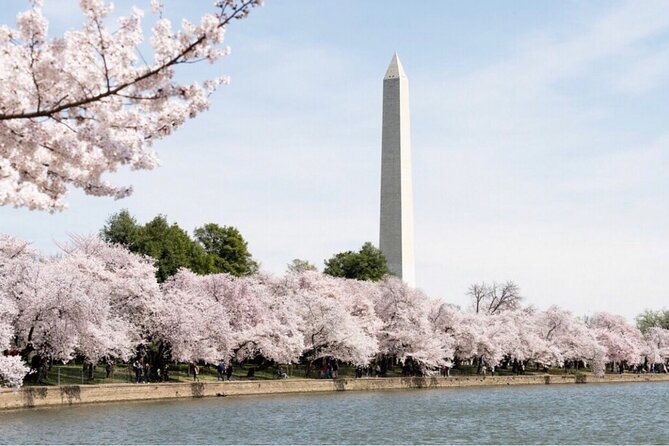
From there, the Washington Monument is next. It’s only a short stop, but the aim is storytelling. The monument works as a “turning point” landmark—after the Capitol, you start seeing how U.S. identity gets built into monuments, not just laws and speeches.
If you like history that connects building to meaning, these early stops do a lot of lifting for the rest of the day. If you prefer deep museum time, you might wish you had longer here—but for a four-hour overview, the sequence makes sense.
Eisenhower, Jefferson, and Lincoln: Memorials as Lesson Plans

After the Capitol and the monument, the route leans into memorials where the details are the whole point. You’ll stop at major sites tied to different eras, then learn how each president is remembered in stone and symbolism.
Dwight D. Eisenhower Memorial
This stop is brief, but it’s guided with the story behind Eisenhower. That matters because these memorials often feel abstract unless you know what era and themes they’re referencing. You’re not left staring at names—you get the context.






Jefferson Memorial
The Jefferson Memorial stop gives you a little more time, plus enough minutes to take a few solid photos. Again, the value is the explanation that helps you see Jefferson as more than a face on currency.
Lincoln Memorial (plus a second Lincoln stop)
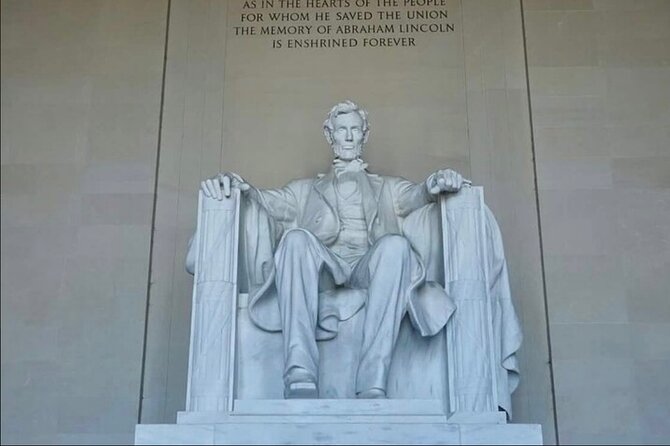
You’ll spend around 15 to 20 minutes at Lincoln Memorial, which is longer than most stops. That window is useful because the Lincoln Memorial is a “linger spot.” You can step back, read what you can, and frame photos without rushing.
Then Lincoln Memorial appears again later in the day, so the tour gives you another chance to take in the site from a slightly different perspective and keep the story fresh. For visitors who love landmarks but hate feeling rushed, that extra time is a good sign.
The George Mason Story Stop
You’ll also hear the story of George Mason during the tour. Even if you’re not deeply familiar with him, this kind of stop is how you leave DC with more than the usual top-three names. It broadens the canvas beyond the headline figures.
9/11 Through the War Memorial Chain: A Route That Builds Emotion
One reason people book a guided memorial loop is that memorials have emotional weight. If you see them in the right order, the stories connect. If you see them randomly, the meaning can get muddled.
The tour includes the Pentagon Memorial with a focus on 9/11. Even with a short visit, you’ll get the framework that makes the site feel intentional rather than generic. After that, the day flows through other memorials that represent different parts of 20th-century conflict and remembrance.
Franklin Delano Roosevelt Memorial
The Roosevelt stop is designed to explain why his memorial is especially large. Size can intimidate you—this kind of guided stop helps you know what to look at and what themes matter.
U.S. Marine Corps War Memorial (Iwo Jima)
This is a must-see visual in DC, and the stop is built for the story behind it. If you only catch a quick glance, it still hits—but with the explanation, it lands harder.
Martin Luther King, Jr. Memorial
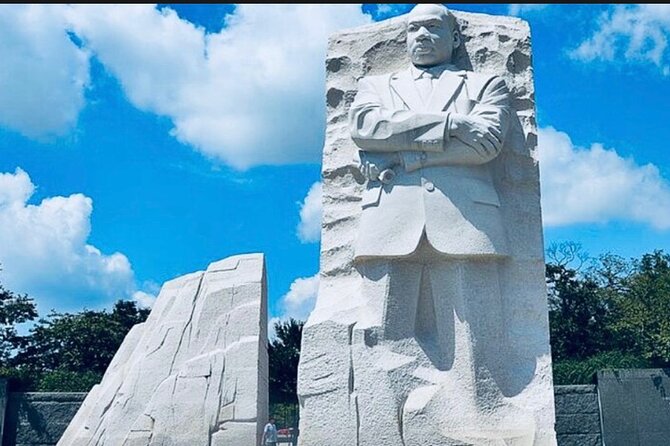
This stop is short but meaningful. The guided story helps you understand the memorial’s role in how the U.S. remembers civil rights. It also gives you enough time to step back and take photos without making it a race.
Air Force Memorial and Vietnam Veterans Memorial
You’ll hit both of these, with time windows that are brief but focused. The air-focused stop gives you a quick understanding of the memorial’s purpose, and the Vietnam stop helps you frame what you’re seeing in the larger story of remembrance.
Albert Einstein Memorial
Yes, Einstein is part of this route. That variety is smart. It prevents the day from becoming only war-and-government and adds a “science and ideas” note to balance the emotional memorial stops.
WWII, Korean War Veterans, and the World War I Memorial
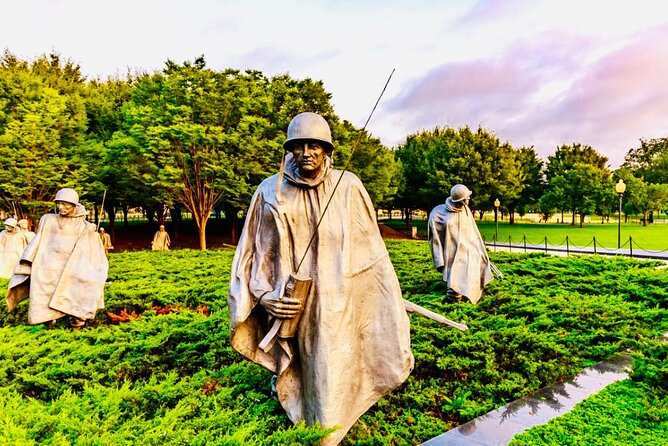
The tour continues into the big World War II memorial, then moves to the Korean War Veterans Memorial, and also includes the World War I memorial. Seeing these back-to-back helps you understand how the U.S. chooses to remember different wars—each with its own message and design language.
If you like memorials that teach you something new each time, this section is where you’ll feel the guide’s work most clearly. The stops are short, but the narrative ties them together.
White House and Ford’s Theatre: Government Plus Real-World Tension
The tour includes stops at both the White House and Ford’s Theatre. These are two of the most recognizable U.S. landmarks, but they carry different kinds of energy.
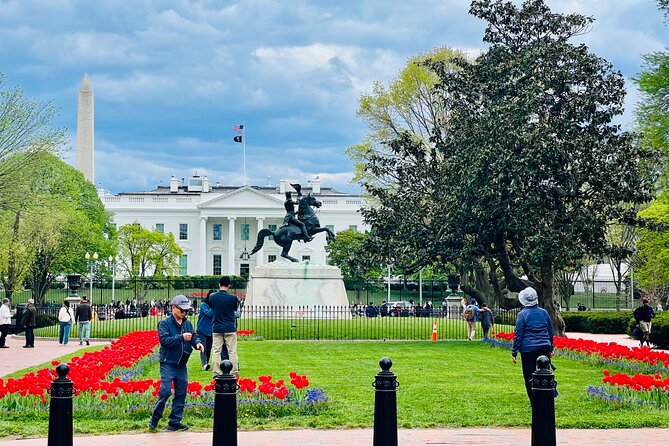
At the White House, the tour gives you a short story-focused look. Admission is not included here, so you’re not planning for a deep internal visit—your value is seeing the exterior area and understanding the landmark’s symbolism and how it fits into U.S. political life.
Ford’s Theatre brings a different kind of attention. It’s known for political drama, and the guided explanation helps you connect the site to the larger national story, not just the headline event. You also get enough time for photos without turning it into a long stop.
The Extra Stops: Navy, FBI Headquarters, and Two Quick Presidential Lectures
Beyond the headline memorials, the route adds stops tied to the Navy and the FBI Headquarters. These points are useful because they remind you DC isn’t just presidents and statues—it’s also institutions and systems.
You’ll also get two brief lectures: one about the 18th U.S. president, and one about the second U.S. president to be assassinated. Even if you only catch the key themes, these mini-lectures help you connect memorials and stories to actual timeline context.
This is one of the biggest reasons the tour works as an overview. Instead of only seeing places, you start placing them on a mental timeline.
Régis as the Guide Style You’ll Hope For

A repeated standout in guest experiences is the guide’s personality and approach. The name Régis shows up frequently, and the pattern is consistent: friendly, respectful, and able to answer questions without making anyone feel rushed.
Guests also highlight that he handles families well, encourages kids’ curiosity, and keeps the tone upbeat even when the topics get heavy. For adults, he’s described as sharing lots of details and facts, including dates and specific points you can hold onto later.
There’s also a practical angle that I think you’ll appreciate: on warm days, water and snacks were mentioned, and the van is described as clean and cool with air conditioning. That sounds like “small stuff,” but it matters in DC. It keeps the stops from turning into a sweat marathon.
One more practical note from past experiences: people with walking issues said they were helped by getting as close to venues as possible to reduce extra walking. If that’s you, this van format is one of the reasons to choose a guided route in the first place.
The one thing to watch for is communication. One guest noted that the guide’s accent could be a bit hard to follow. If you’re sensitive to accents, do what you can to sit where you can hear clearly, and don’t be afraid to ask for repeats.
Price and Value: Why $74.99 Can Make Sense for a Four-Hour Intro
At $74.99 per person for about four hours, this isn’t a budget bargain. But it can be good value when you compare it to the alternative: trying to line up a similar DC circuit on your own while also paying for parking stress, walking fatigue, and time lost to wrong turns.
You’re paying for three things you’d otherwise have to figure out yourself:
- Transport near the stops, which cuts walking and time waste
- Guided commentary, which turns landmarks into understanding
- A timed route, which is the real shortcut in a city where locations are spread out
Most memorial stops are free to view, so you’ll spend money mostly on the guide experience rather than entry fees at every stop. Still, a few major landmarks do require admission tickets if you want more than the exterior. In other words, this tour is best for people who are happy with a strong guided overview, not people expecting to go inside everything.
If your goal is to learn the story behind the famous sites and still have energy for dinner plans afterward, the price starts to look fair.
Practical Tips to Make the Day Smooth (and Photo-Friendly)
DC can surprise you with closures, especially around large events. Plan for the reality that the driver may need to work around closed streets, and keep your expectations flexible. The upside is that a good operator plans for the chaos so your day still moves.
Also, double-check the meeting point: the tour starts at 1200 Independence Ave SW, Washington, DC 20004, and ends back there. Arrive a little early. One experience included confusion about where the guide was, and that’s exactly the kind of problem you can prevent by timing your arrival.
Pack for short outdoor moments. Even with a van, you’ll step out repeatedly. Bring water if you’re prone to thirst, and wear shoes you can walk in for the quick stops. If you’re visiting in heat, the tour experience has included water and snacks before, but it’s smart not to rely on that alone.
Finally, keep in mind that some iconic stops list admission ticket requirements as not included. You’ll still see the sites, but if you’re aiming for an inside visit, do your homework ahead of time.
Should You Book This Private 4-Hour DC Day Tour?
Book it if you want the fastest way to get your DC overview with less walking, less stress, and a guide who explains what you’re seeing. It’s especially a smart pick for families, first-timers, and anyone who wants the biggest memorials and government landmarks in one go.
Skip it or at least plan carefully if you need a long, inside-focused itinerary at specific attractions. The stops are short by design, and a few key landmarks may involve separate admission if you want more than the exterior.
One last thought: if your travel window is tight and you’re booking for a specific day, it’s worth booking with a backup plan in case DC road conditions or minimum group requirements affect the schedule. When it runs, the combination of van comfort, a friendly guide named Régis, and a tight memorial-to-government route is exactly what makes DC feel doable.
FAQ
How long is the Washington, D.C. private tour?
It runs for about 4 hours.
Is this tour private?
Yes. It’s a private tour/activity, with only your group participating.
What language is the tour offered in?
The tour is offered in English.
Where is the meeting point?
The tour starts at 1200 Independence Ave SW, Washington, DC 20004, USA, and it ends back at the meeting point.
Is a mobile ticket provided?
Yes, the tour includes a mobile ticket.
Are admission tickets included for every stop?
Admission tickets are not included for some stops, including the U.S. Capitol, the White House, and Ford’s Theatre. Other stops are listed as free.
Are service animals allowed?
Yes, service animals are allowed.
Is the tour designed for people who walk less easily?
Most travelers can participate, and the tour is done by van with multiple stops close to the sights.
What happens if weather is bad?
The experience requires good weather. If it’s canceled due to poor weather, you’ll be offered a different date or a full refund.
Is there free cancellation?
Yes. You can cancel up to 24 hours in advance for a full refund.