REVIEW · WASHINGTON DC
Classic Monuments & Memorials Tour
Book on Viator →Operated by Nonpartisan Pedicab · Bookable on Viator
DC monuments move fast. This tour makes it easier.
If you want to see the big names in Washington, DC without turning your day into a marathon, this private pedicab tour is a smart fit. You’ll glide past major landmarks and get clear, on-the-spot narration while you’re doing it, so the names on the map turn into stories you can actually use.
What I like most is the way the route compresses the classics into about three hours, plus the stop-by-stop context your guide provides. One more thing I really value: the format is built to be easier for people with limited mobility than lots of walking tours. The one potential drawback is simple: timing is tight at each photo stop, and the tour runs best in good weather.
If you’re the kind of traveler who wants a quick orientation to the city’s most important memorials, this is a great way to get your bearings fast—without needing to plan every turn on your own.
In This Review
- Key points to know before you go
- Why a pedicab works so well for DC classics
- Price and what you’re really paying for
- Meeting downtown, picking a departure time, and staying flexible
- Stop-by-stop: what you’ll see and what to do at each monument
- White House (about 10 minutes)
- Washington Monument (about 7 minutes)
- Lincoln Memorial (about 15 minutes)
- Jefferson Memorial (about 15 minutes)
- Martin Luther King, Jr. Memorial (about 8 minutes)
- Franklin Delano Roosevelt Memorial (about 15 minutes)
- Korean War Veterans Memorial (about 7 minutes)
- Vietnam Veterans Memorial (about 10 minutes)
- The guide factor: why commentary changes the whole day
- Accessibility and comfort: a practical way to see DC without punishment
- Weather, timing, and why the tour is best on a good day
- Who this tour is perfect for (and who should consider another plan)
- Should you book the Classic Monuments & Memorials Tour?
- FAQ
- How long is the Classic Monuments & Memorials Tour?
- Is pickup available for this pedicab tour?
- Is admission included for the monuments?
- Is this tour private or shared?
- What landmarks are included on the route?
- Are service animals allowed?
- What happens if the weather is poor?
Key points to know before you go
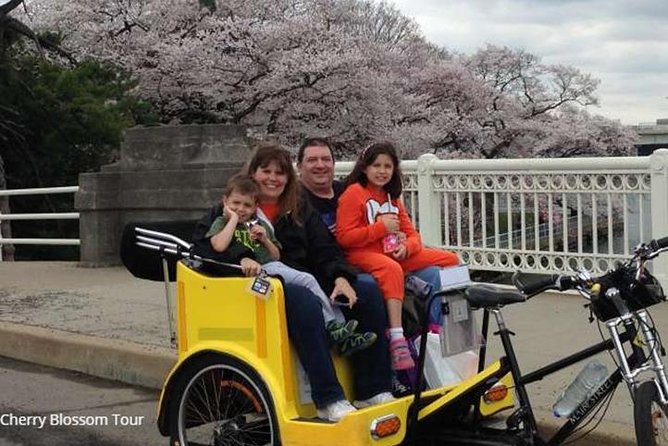
- Pedicab touring helps you see more with less strain, especially if walking is hard.
- Private group format means your guide can adapt to your pace and preferences.
- A full lineup of national icons in one outing, from the White House to the Vietnam Veterans Memorial.
- Short, guided stops keep you moving while still giving you photo time and narrative.
- Most admissions are free, so you’re spending money on the tour, not tickets.
Why a pedicab works so well for DC classics
Washington, DC’s monuments are close on a map and far in real life. Even when distances don’t look huge, the sidewalks, crosswalks, and traffic flow can turn your “quick look” into a long trek. That’s where a pedicab-style tour shines.
You’re still outside, still seeing the city up close, and still soaking in those iconic views. But you’re not fighting distance and walking fatigue. For anyone who’s using a mobility aid, traveling with someone who is, or just doesn’t want to spend the day pacing the National Mall, this approach can be a lifesaver.
The private setup also matters. A lot of group tours feel like you’re being dragged from stop to stop. Here, you’re meeting your guide downtown, hopping aboard, and then following a route designed to cover major sites in a single loop. Your guide’s commentary is part of the value, not an add-on.
You can also read our reviews of more tours and experiences in Washington DC.



Price and what you’re really paying for
It costs $554.00 per group (up to 2) for about three hours. That’s not a budget price if you’re comparing only “price per person,” because it’s really priced for a small private group experience.
Here’s how I think about the value:
- You’re paying for guided time plus a more comfortable way to cover multiple monuments.
- Many of the sites you’ll stop at involve free admission, so you’re not stacking extra entrance fees onto the day.
- If you’re traveling with limited mobility, the pedicab format can replace multiple strategies (taxis, long walks, complex routing), which often costs time and energy.
If you can split the cost with a partner or small group, it becomes much easier to justify. For solo travelers, it’s still an option, but you’ll want to be honest about whether you’d rather spend on convenience or on entry tickets and self-guided time.
Meeting downtown, picking a departure time, and staying flexible

The tour runs from 9:00 AM to 9:00 PM, so you can choose a departure time that matches your energy level and your day. That flexibility helps in DC, where plans often shift due to crowds, weather, or your next reservation.
You can also get pickup offered, and the tour uses a mobile ticket. Add to that the fact it’s a private activity—only your group participates—and you get a “show up and go” feel rather than a chaotic meet-and-join setup.
One more practical note: confirmation happens within 48 hours of booking, based on availability. So if you’re traveling close to your dates, don’t wait until the last moment.
Stop-by-stop: what you’ll see and what to do at each monument
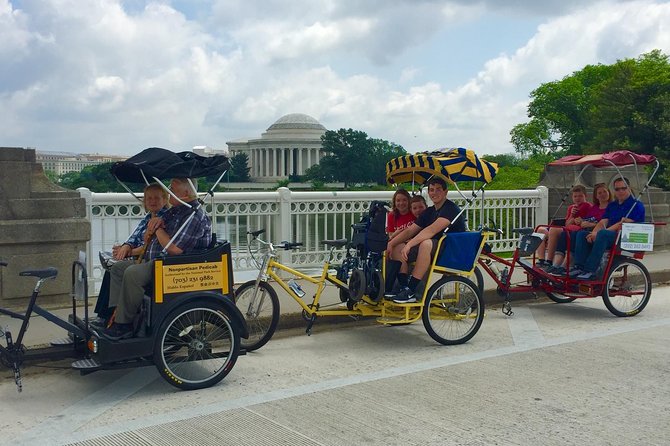
The tour is designed as a sequence of quick “see it, learn it, photo it” moments. Each stop has a set time, and the best strategy is to treat it like a guided highlights reel, then plan follow-up on your favorite sites afterward.
White House (about 10 minutes)
You’ll get a chance to see the White House either from afar, up close, or both, depending on what’s possible from your route that day. Your guide also gives narration about the White House’s history and some of the major men who lived there.
What to do in your time here:
- Take a couple of photos, then listen for the background. The story helps you notice details you’d normally skip.
- If you’re hoping for a specific shot, ask your guide where the best angle tends to be for your group.
Potential catch: with only about 10 minutes, this is not the moment for a long, slow sightseeing session. Think of it as orientation.



Washington Monument (about 7 minutes)
Next up is the Washington Monument, with narration about its building and history. Even with a short stop, it’s a useful checkpoint because it sets context for the rest of the National Mall story.
What helps you enjoy this stop:
- Listen for the “how it was built” details. You’ll look at the monument differently after you know what went into it.
- Use the minute or two to position yourself for photos before the pedicab moves on.
Potential catch: the time is brief, so don’t plan on lingering.
Lincoln Memorial (about 15 minutes)
This stop tends to be a favorite for a reason. You’ll get a narrative focused on Lincoln Memorial and then time for photos and views. After that, you have the opportunity to go inside to explore.
If you go inside, you’ll get a different kind of experience than just looking from outside. This is where you can slow down a touch, read what you can, and take in the space without feeling rushed the entire time.
Practical tip: take a quick photo outside first, then decide how much time you want for indoor viewing. With 15 minutes total, you’ll do best if you’re efficient.
Jefferson Memorial (about 15 minutes)
You’ll stop outside to hear about Jefferson and the symbolic construction of the memorial. After the narration, you can go inside on foot to admire the views and take photos.
Why this stop works well on a tour:
- The guide’s explanation about symbolism helps you see beyond the postcard view.
- The “inside and views” time gives you a change of scenery, not just another roadside pull-over.
Potential catch: it’s still timed, so treat the indoor portion as a chance to pick out key sights rather than try to read everything slowly.
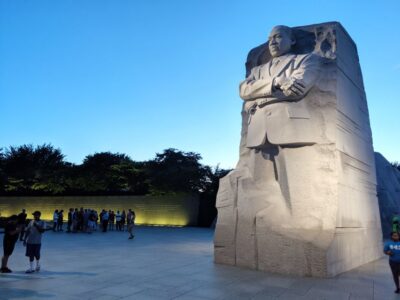
Martin Luther King, Jr. Memorial (about 8 minutes)
This is another quick narration stop just outside the memorial, followed by a chance to go inside and see the MLK statue and views around the Tidal Basin.
Eight minutes is short. The way to make it count is to focus on one thing at a time:
- Look at the statue once from your first good angle.
- Then, if you have time, shift to a second viewpoint to enjoy the surroundings.
It’s a powerful place, and a short stop can still work well if you don’t try to do everything at once.
Franklin Delano Roosevelt Memorial (about 15 minutes)
You’ll stop right near the entrance for narration about Roosevelt and why the memorial matters symbolically. Then you can enter on foot to explore.
This is one of those memorials where walking a bit makes sense. If you’re interested in the storytelling of how each memorial element fits together, this stop gives you enough time to do that.
Practical tip: decide early whether you want photos at the start or viewing and reading first. With 15 minutes, your choice affects how satisfying the stop feels.
Korean War Veterans Memorial (about 7 minutes)
You’ll view it from afar first, then you’re invited to see it up close.
Even on a short stop, it’s meaningful. Here’s the simple way to enjoy it:
- Take one photo from a wider angle to understand the layout.
- Then step in for the closer look your guide is suggesting.
Potential catch: with only about 7 minutes, you’ll want to be ready when the pedicab stops.
Vietnam Veterans Memorial (about 10 minutes)
This is a guided narration stop about the Vietnam War and the subsequent construction of the Vietnam Memorial. Then you can walk through the memorial to appreciate it fully.
If you’re going to take the experience seriously (and you should), use the walk-through time to slow down just a bit. You may not have time to do long readings, but even a brief walk can feel moving when paired with the guide’s framing.
Practical tip: if you want a particular kind of photo (wide view vs. a closer shot), be decisive because the time is fixed.
The guide factor: why commentary changes the whole day
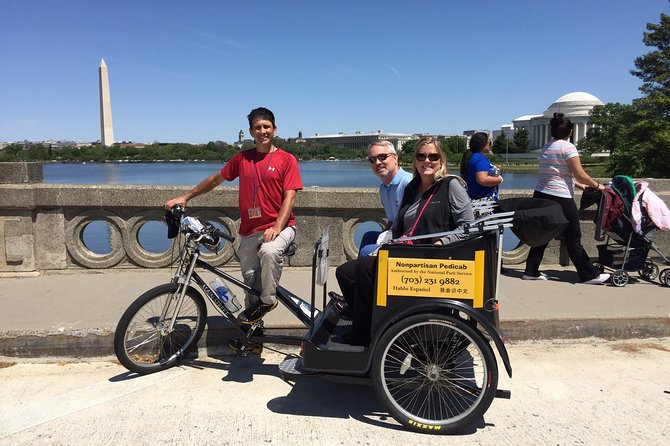
The route does the heavy lifting—covering major DC icons in a short window. But the narration is what turns a sequence of monuments into a coherent story.
People consistently praise guides who go the extra mile, with examples including Robert and Richard. The common thread in that kind of feedback is not just facts—it’s delivery. You get enough context to understand what you’re seeing, and you’re guided to places where your photo angles and viewpoints actually make sense.
That matters in DC. Without a guide, it’s easy to miss why something is positioned where it is, or what symbolic elements were trying to communicate.
If you like listening while you look, you’ll get a lot out of this tour.
Accessibility and comfort: a practical way to see DC without punishment
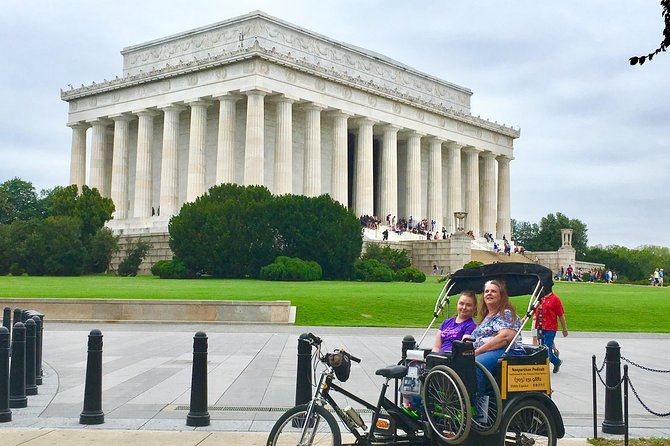
One of the strongest reasons to choose this tour is comfort. The experience is designed as an accessible way to see DC via pedicab, which can reduce walking distance and keep you from spending your vacation energy on logistics.
It’s also a private tour/activity, so you’re not negotiating space with strangers in tight moments. And service animals are allowed, which is a big deal for travelers who need that certainty.
Also helpful: the tour is near public transportation, which can simplify your planning if you’re not staying right downtown.
The main “consideration” isn’t about accessibility itself—it’s the schedule. Short stops mean you’ll want to communicate your preferences right away (how fast you can move, which stops you care about most).
Weather, timing, and why the tour is best on a good day

This experience requires good weather. That’s not just a legal note—it’s because you’re outside and moving between landmarks. If conditions are poor, the tour may be canceled and you’ll be offered a different date or a full refund.
Timing-wise, you’ll want to treat the whole morning or afternoon as a unit. Don’t schedule this and then immediately stack a hard-to-rebook plan like a timed entry somewhere far away. Give yourself breathing room.
With set stop durations, you don’t need to rush—but you also shouldn’t plan to linger too long. The tour is designed to keep you moving.
Who this tour is perfect for (and who should consider another plan)
This is a strong match if:
- You want a fast orientation to DC monuments and memorials.
- You prefer a private guide and a simple route rather than self-planning.
- Walking is difficult, limited, or just not your idea of fun.
- You’d like a guide to provide context while you see the big icons.
It might feel less ideal if:
- You want long, slow, museum-style time at each site.
- You’d rather read and explore without any guided narrative at all.
- You’re the type who needs deep research time at one memorial before moving on.
If you’re trying to cover a lot in a day, this works. If you want one or two places only, you might get more satisfaction from a different style of outing.
Should you book the Classic Monuments & Memorials Tour?
If you want DC’s headline monuments in one tidy, accessible experience, I think this is a smart booking. The price makes sense when you think of it as private guiding plus a comfortable way to cover multiple stops without draining your body.
Book it if you value efficient sightseeing, good narration, and a route that’s designed for real-world comfort. Skip it if you’re looking for lots of free time at each stop or you’re planning for weather that’s unpredictable.
If you do book, pick the departure time when you’re most comfortable outside, and tell your guide right away what matters most to you—because with short stop durations, your priorities shape the experience.
FAQ
How long is the Classic Monuments & Memorials Tour?
The tour lasts about 3 hours.
Is pickup available for this pedicab tour?
Pickup is offered.
Is admission included for the monuments?
The stops listed are free to enter, with times noted and admission tickets listed as free.
Is this tour private or shared?
This is a private tour/activity, and only your group participates.
What landmarks are included on the route?
You’ll stop at major sites including the White House, Washington Monument, Lincoln Memorial, Jefferson Memorial, Martin Luther King, Jr. Memorial, Franklin Delano Roosevelt Memorial, Korean War Veterans Memorial, and Vietnam Veterans Memorial.
Are service animals allowed?
Yes, service animals are allowed.
What happens if the weather is poor?
The experience requires good weather. If it’s canceled due to poor weather, you’ll be offered a different date or a full refund.