REVIEW · WASHINGTON DC
DC Monuments and Memorials Tour Day Tour
Book on Viator →Operated by Heart of DC Tours · Bookable on Viator
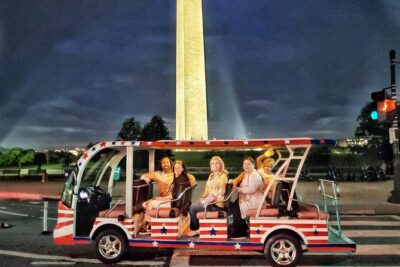
You can see a lot of DC without rushing. This 4-hour monuments-and-memorials tour strings together the biggest names—Jefferson, WWII, MLK, Vietnam, Lincoln, the Capitol—with short time windows and an audio guide for each site. I especially like the small group size (max 12) and the way the guide helps you move efficiently, so you get photos plus reflection. The one thing to consider: you’ll be on foot for short bursts at each stop, so comfortable shoes matter.
The price—$89—feels fair for a day when DC can eat your time. You get an air-conditioned vehicle, bottled water, and site-by-site audio links, plus admission tickets at the stops where they’re listed. If you hate walking at all, you may wish you had a more “stay in the car” plan, but for most people it’s a great way to build a DC day quickly.
In This Review
- Key Highlights Worth Planning Around
- Why This DC Monuments Tour Works in Only 4 Hours
- Logistics That Make or Break a DC Day (AC, Water, and Audio)
- Stop by Stop: What You Get at Each Major Monument
- Thomas Jefferson Memorial: Neoclassical Calm by the Tidal Basin
- The White House: Short Window, Best Angles, Zero Tickets Stress
- World War II Memorial: Pillars, Water, and a Serious Reset
- Ford’s Theatre Photo Stop: Red Brick Grandeur on a Busy Street
- Franklin Delano Roosevelt Memorial: Four Sections, Waterfall Reflection
- Martin Luther King, Jr. Memorial: Granite, Quotes, and Ongoing Work
- Vietnam Veterans Memorial: The Wall That Makes Everyone Quiet
- Lincoln Memorial: Columns, the Steps, and a DC Anchor
- Korean War Veterans Memorial: Stainless Statues and a Mirrored Wall
- U.S. Capitol Exterior: The West Side Dome Moment
- What Else You’ll See Along the Way (and Why It Matters)
- Price and Value: What $89 Buys You Here
- Who This Tour Fits Best (and Who Might Prefer a DIY Plan)
- Should You Book It?
- FAQ
- How long is the DC Monuments and Memorials tour?
- Where does the tour start, and where does it end?
- How much does the tour cost?
- What’s included in the tour, and do I need headphones?
- Are admission tickets included for the stops?
- How many people are on the tour?
- Is it free to cancel, and what happens with bad weather?
Key Highlights Worth Planning Around
- Max 12 people keeps waiting time low and photo stops more relaxed
- Audio link for each site helps you understand what you’re seeing while you walk
- Tidal Basin circuit hits Jefferson, Roosevelt, MLK, and the emotional core of DC memorials
- Big-photo moments get real time at the White House, Lincoln Memorial, and the U.S. Capitol
- Built-in restroom pause keeps the pacing sane for a 4-hour schedule
- Admission tickets included at the scheduled memorials and major stops listed on the route
Why This DC Monuments Tour Works in Only 4 Hours
DC looks like a postcard city, but planning it can be a time trap. Distances add up, entrances take time, and it’s easy to miss the “why” behind a memorial when you’re moving fast. This tour solves that by using a tight sequence and short stop times—enough to look closely, take photos, and still get to the next place.
I like that the schedule respects attention span. You get focused blocks—often around 10 to 20 minutes—so you don’t end up standing around wondering what to do next. And because the group is capped at 12, you’re not stuck in long lines or waiting for everyone to catch up.
You can also read our reviews of more tours and experiences in Washington DC.


Logistics That Make or Break a DC Day (AC, Water, and Audio)

You meet at One CityCenter, 850 10th St NW, and the tour starts at 9:00 am. You end back at the meeting point, so you’re not spending your day thinking about transit or where to regroup.
Inside the vehicle, you’ll have air conditioning (a real quality-of-life upgrade in summer or humid weather) and bottled water. There’s also an audio link for each site, so you can listen while walking and not just during the drive.
One practical note: WiFi isn’t included and earbuds/headphones aren’t included. Bring a small pair of wired or Bluetooth headphones so the audio actually works when you reach each stop.
Stop by Stop: What You Get at Each Major Monument

Thomas Jefferson Memorial: Neoclassical Calm by the Tidal Basin
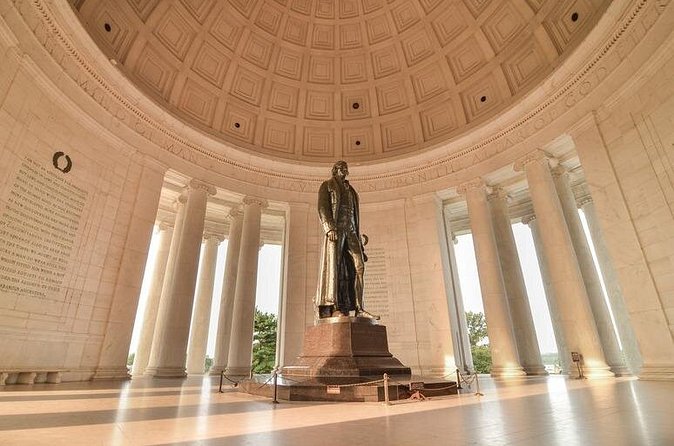
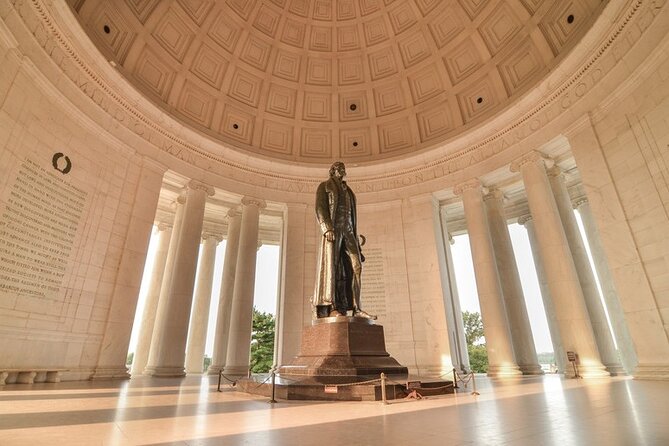
Your first major stop is the Thomas Jefferson Memorial near the Tidal Basin. The building’s neoclassical look—drawn from Roman inspiration—sets a steady, formal mood right away. Inside, you’ll find a towering Jefferson statue surrounded by excerpts from his writing, which helps you connect the physical space to the ideas it represents.
This is a smart early stop because it’s quiet and spacious enough to slow your brain down. If you’re visiting during cherry blossom season, the Tidal Basin area can feel extra picture-perfect, but even outside peak bloom, the setting stays serene and reflective.
The only catch is timing: you’ll have about 15 minutes, so you’ll want to decide quickly whether you’re going for inside time, photos, or both.
The White House: Short Window, Best Angles, Zero Tickets Stress
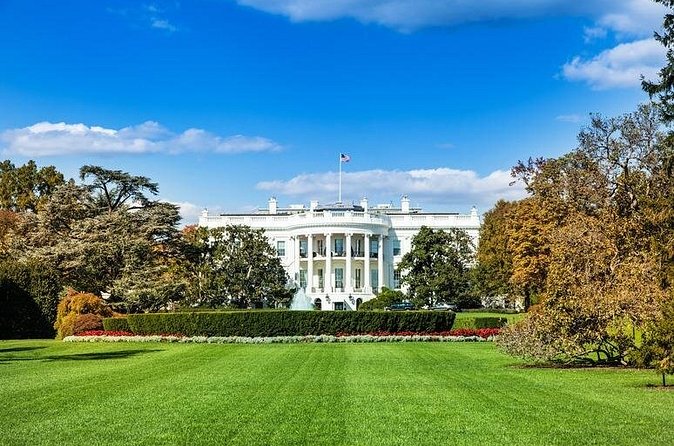
Next comes the White House, where you’ll mainly enjoy it from outside. Your time here is about 10 minutes, which is enough for a few strong exterior shots—especially from vantage points around the Ellipse.
This stop is valuable because it’s iconic, but also because it’s practical. You won’t waste your day hunting for the perfect spot or getting stuck in a longer queue elsewhere. With a guided pickup and a planned timing slot, you can focus on composition: wide shots that show the building, and closer angles that isolate the architecture against the landscaping.
It’s not a “walk inside and roam” moment. It’s a “see it like a photographer” moment, and the time window matches that goal.



World War II Memorial: Pillars, Water, and a Serious Reset
The World War II Memorial shifts the mood immediately. You’ll spend about 15 minutes here, and the design does the emotional work for you: 56 pillars represent U.S. states and territories involved in the war, set in the grand space around the reflecting pool and the nearby Lincoln Memorial.
You’ll notice the visual layering right away—pillars, names and symbolism, water features, and mosaic details. It’s the kind of stop where even a quick visit feels weighty, because it’s built to slow you down without forcing you to stand still.
Plan to give yourself a few moments just to look. In a packed day, it’s easy to treat memorials as photo ops. This one deserves a little “read the space” time.
Ford’s Theatre Photo Stop: Red Brick Grandeur on a Busy Street
Then you’ll hit Ford’s Theatre for photos. The exterior is a classic 19th-century look—red brick façade and ornate columns—and the street around it can feel lively for pictures.
This is one of those stops that’s short but useful: you’re catching another piece of DC’s story without losing time. If you like street-level architecture shots, this is a good moment to grab them while you still have energy.
Because it’s primarily a photo stop, the main “value” is variety—your day goes from solemn memorials to a historic theater frontage with motion and context around it.
Franklin Delano Roosevelt Memorial: Four Sections, Waterfall Reflection
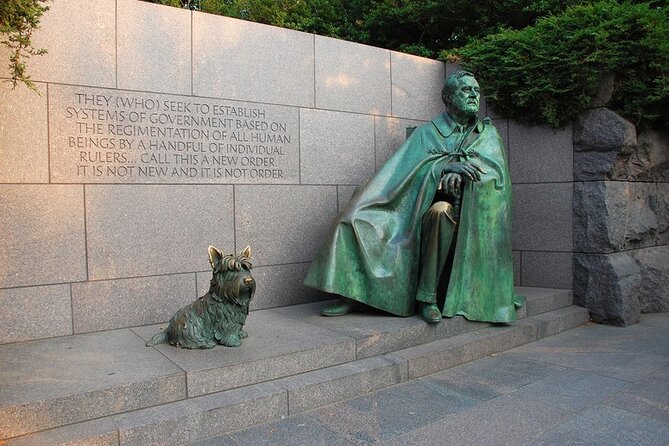
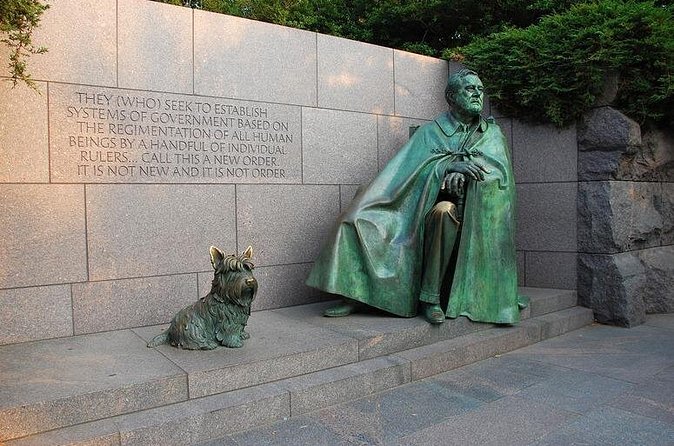
The Franklin Delano Roosevelt Memorial runs along the Tidal Basin and is about 20 minutes. It’s organized into four sections, representing Roosevelt’s four terms, with sculptures and inscriptions that focus on his persistence through difficult times.
I love how this memorial balances scale with storytelling. You’re not just looking at names or dates; you’re moving through designed areas that translate leadership into a physical walk.
Water features—waterfalls—add a steady sound layer that makes it easier to think. If you’re the kind of traveler who wants “meaning” with your photos, this is one of the best stops on the route.
Martin Luther King, Jr. Memorial: Granite, Quotes, and Ongoing Work
The Martin Luther King Jr. Memorial is built around a striking 30-foot statue rising from granite. You also get surrounding gardens and quotes that reinforce his messages of love and equality.
This stop is about 15 minutes, which is enough time to read a few key inscriptions and then step back to take in the full composition. The gardens help too—they give you space to breathe in the middle of a fast tour day.
What makes this stop feel worth it is the contrast between how famous the name is and how grounded the memorial is in daily-life ideals. Even if you’ve seen photos before, being there in person changes the scale of what you’re absorbing.
Vietnam Veterans Memorial: The Wall That Makes Everyone Quiet
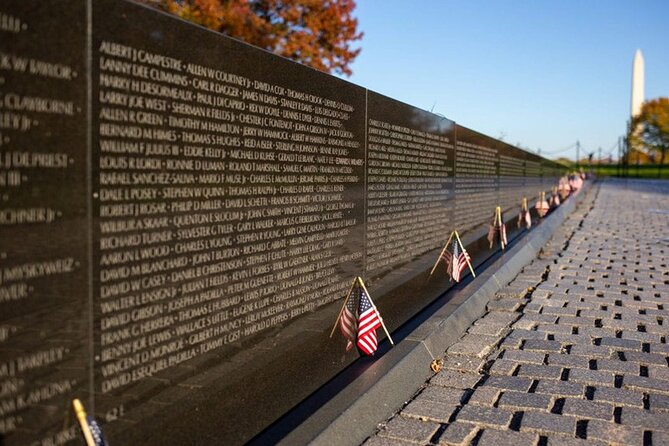
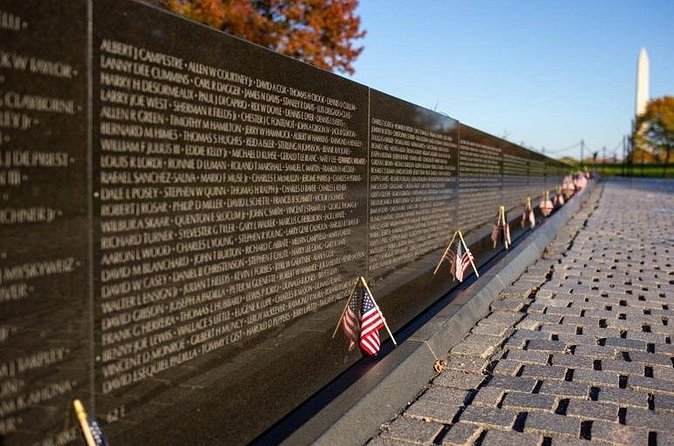
The Vietnam Veterans Memorial is one of the most powerful stops on the route. You’ll spend about 20 minutes at the black granite wall with over 58,000 names engraved into it.
This is where many people stop trying to “complete the list” and just start looking. If you’re with family, it can become personal fast because the names invite a kind of searching—finding what you’re drawn to, even in a limited time window.
Also nearby are the Three Servicemen Statue and the Vietnam Women’s Memorial, which adds context and complexity beyond the wall itself. The tour gives you just enough time to see the different elements without turning it into a rushed checklist.
Lincoln Memorial: Columns, the Steps, and a DC Anchor
Next is the Lincoln Memorial, with about 20 minutes allotted. The towering Lincoln statue and classical structure give you instant scale and clarity, and the details matter: 36 columns represent the states at the time of his death.
You’ll also see the steps where Dr. King delivered his iconic speech. That detail connects DC memorials into a shared thread—ideas about unity, freedom, and the push for civil rights.
For photos, this is a top priority stop. The structure frames well, and the open space helps you find angles without stress. For reflection, it works too, because the architecture itself keeps you focused on Lincoln without distractions.
Korean War Veterans Memorial: Stainless Statues and a Mirrored Wall
The Korean War Veterans Memorial takes about 15 minutes. You’ll find 19 stainless steel statues of soldiers positioned against a black granite wall that mirrors your presence.
It’s quieter than you might expect from a military memorial, partly because the design feels deliberate and partly because the surrounding area encourages stillness. You may also notice juniper bushes around the memorial grounds, which helps soften the hard geometry.
This stop is a good pace reset after Vietnam. It keeps the emotional tone but adds a different visual approach—more human forms and less text-forward impact.
U.S. Capitol Exterior: The West Side Dome Moment
Finally, you’ll reach the U.S. Capitol exterior, around 10 minutes. This portion focuses on the west side and the grand dome—the symbol you’ve seen in countless photos, now in real scale.
The value here is timing and positioning. The route includes gardens and the reflecting pool area, which are useful for pictures and for getting the building fully into your frame. If your schedule lets you catch better light later in the day, the exterior can look especially warm.
This is a fast closer, but it lands the day with a “DC conclusion” feeling—like the city’s purpose wraps into one view.
What Else You’ll See Along the Way (and Why It Matters)
During the ride, you’ll pass by several historic landmarks, including the Justice Department, the Willard Hotel, National Archives, and the WWI Memorial. You may also see Waldorf Historia along the route.
These “pass-by” moments sound small, but they help you connect the dots. When you later walk around DC on your own, you’ll recognize more landmarks because this tour gives you a mental map of where everything sits.
You’ll also have a chance to stop for a public restroom, which is a big deal on a day built around tight stop times. It keeps you from rushing your own schedule and it helps kids (and adults) stay comfortable.
Price and Value: What $89 Buys You Here
At $89 per person for about 4 hours, the value comes from three places:
First, you get transport plus planning. DC monuments are spread out, and doing it alone can turn into wasted time. Here, the route is timed so you hit major stops without reinventing the day.
Second, you get admission tickets included for the scheduled sites listed with admission. Even if some landmarks are free on their own, it still reduces decision-making and speeds things along.
Third, the audio support makes every stop more usable. When you’re listening to site-specific context while you walk, the tour becomes more than a photo pass.
Add in air conditioning, bottled water, and a small group—and the $89 starts to feel like buying time and mental clarity, not just a vehicle ride.
Who This Tour Fits Best (and Who Might Prefer a DIY Plan)
This works especially well if you have limited time in DC, like one day to “see the classics” and understand what you’re looking at. It’s also a good match for families, since the stop structure makes it easier to keep kids moving and engaged.
You’ll also like it if you want a mix of emotion and logistics: memorials with real meaning (Jefferson, MLK, Vietnam, Lincoln) plus major photo anchors (White House, Capitol).
If you’re the type who wants hours at just one site—like you want to read every name at Vietnam or you want long museum time—then you might find the schedule a bit tight. In that case, pair this with a slower, self-guided day later.
Should You Book It?
I think you should book this tour if you want a smart, efficient DC day that hits the biggest monuments with enough context to make them more than “I was there” photos. The small group limit, the AC + water comfort, and the audio links are strong reasons to choose it over piecing together a DIY route.
You might skip it if you’re trying to avoid walking entirely or if your ideal DC day is long, slow wandering with no timed stops. But if you want the classics covered in one morning-to-early-afternoon chunk, this is a solid buy.
FAQ
How long is the DC Monuments and Memorials tour?
It’s about 4 hours long, and the start time is 9:00 am.
Where does the tour start, and where does it end?
You start at One CityCenter, 850 10th St NW, Washington, DC 20001. The tour ends back at the meeting point.
How much does the tour cost?
The tour costs $89.00 per person.
What’s included in the tour, and do I need headphones?
The tour includes an air-conditioned vehicle, bottled water, and an audio link for each site. WiFi on board and earbuds/headphones are not included, so you’ll want to bring your own headphones.
Are admission tickets included for the stops?
Admission tickets are included for the scheduled sites where admission ticket access is listed (including stops such as the Jefferson Memorial, the White House, the World War II Memorial, the Roosevelt Memorial, the MLK Memorial, the Vietnam Veterans Memorial, the Lincoln Memorial, the Korean War Veterans Memorial, and the U.S. Capitol).
How many people are on the tour?
The tour has a maximum of 12 travelers.
Is it free to cancel, and what happens with bad weather?
Cancellation is free. You can cancel up to 24 hours in advance for a full refund, and the tour requires good weather. If it’s canceled due to poor weather, you’ll be offered a different date or a full refund.