
REVIEW · WASHINGTON DC
Two Smithsonian Museums Private Tour: American & Natural History
Book on Viator →Operated by Travel Curious · Bookable on Viator
Two museums in three hours is a tight squeeze. This private Smithsonian pairing helps you get the big ideas of American life and the wonders of the natural world, without spending your day wandering in circles. I especially like spotting Lincoln’s top hat and Dorothy’s ruby slippers, and I like having a private guide who can steer the visit toward what you care about.
One consideration: Smithsonian entry is free, so this tour is really paying for guidance and pacing—not guaranteed line-jumping. In some crowd-heavy rooms, you may find it hard to hear, so having a plan for noise matters.
In This Review
- Key takeaways before you book
- Two museums in one outing: why this combo works
- The American History Museum: Lincoln, Dorothy, and the stories behind them
- Natural History Museum: Hope Diamond, T-Rex, and the ocean scale-jolt
- Private guide value: what you’re really paying for
- Timing and pace: how to avoid feeling rushed
- Crowds and hearing: small fixes that pay off
- American and Natural History in one day: what you’ll come away with
- Price check: $185 is high until you understand what’s included
- Who this tour suits best (and who should skip it)
- Should you book this Smithsonian private tour?
- FAQ
- How long is the tour?
- Where does the tour start and end?
- Which museums are included?
- Is admission included?
- Is this tour private?
- What is included in the price?
- What is not included?
- What is the cancellation policy, and what about weather?
Key takeaways before you book
- You get two Smithsonian anchors in one outing: American History Museum plus Natural History Museum
- Famous artifacts and fossils are built into the route, including Lincoln’s top hat and the Hope Diamond
- Your interests can shape the stops, since the guide checks what you want to see early on
- The time split is real: about 1 hour at American History and about 2 at Natural History
- You’re not buying admission (it’s free), so the value is the guide and focus
Two museums in one outing: why this combo works
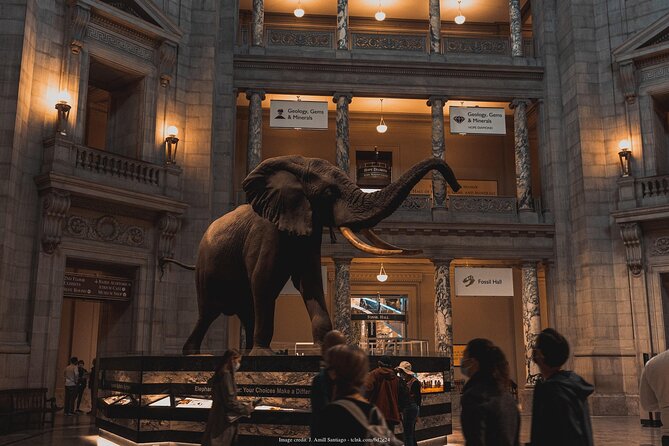
If you’re short on time in Washington DC, these two museums are the smartest pairing you can make. The Smithsonian American History Museum gives you the “people and power” story of the U.S.—how culture, politics, wars, and protest shaped daily life. The Natural History Museum flips that lens to the rest of the planet, from big-ticket icons like a T-Rex fossil to the systems that run through oceans.
What makes this private tour feel practical is that it treats the day like a sprint with purpose. You don’t just get a random walk through the galleries. You get a guided route that helps you hit the best-known highlights while still leaving room for your questions and your interests.
The length also matters. Three hours sounds long until you’re inside Smithsonian buildings. The good part of this plan is the built-in pacing: you start with American History to establish context, then you move to Natural History for the longer visit where you can linger on the wow moments.
You can also read our reviews of more private tours in Washington DC



The American History Museum: Lincoln, Dorothy, and the stories behind them
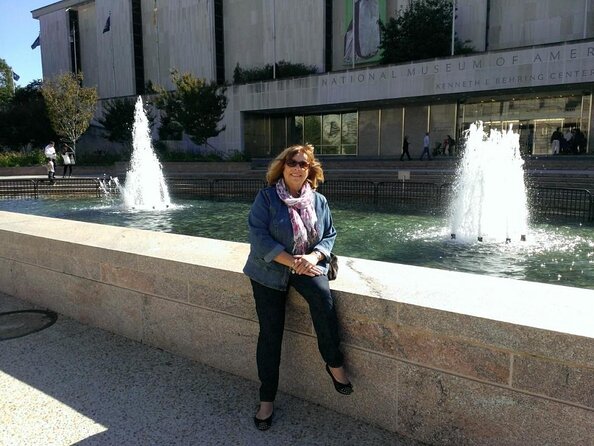
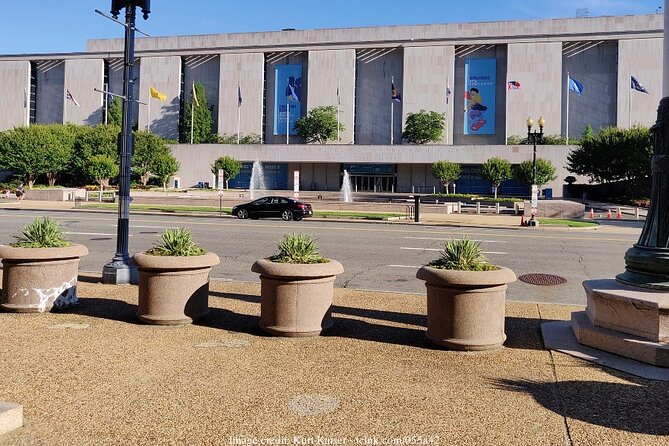
This stop starts at the Smithsonian National Museum of American History on Constitution Avenue. Your guide begins with a high-level overview of American history, then helps you move through exhibits with more depth.
Even with only about an hour here, the route is designed to do three useful things:
1) Connect objects to ideas
Instead of treating artifacts like static displays, you’re guided to see how certain items tie into political and cultural life. That shift—from item to meaning—is what makes the visit click, especially if it’s your first trip to DC.
2) Cover the full range of U.S. experience
You’re set up to see themes that include triumphs, tragedies, wars, and protests, not just a single “greatest hits” version of America. You also have a chance to focus on areas like women’s history, African American history, and Latin American history, based on what you want.
3) Use 1 hour well
One hour at a museum this size can feel like opening a book and reading only the first page. The advantage of a guide is deciding what page to read and why. You’re more likely to leave with a mental map of what you saw than if you wandered alone.
Two highlights you’ll want to look for are Lincoln’s top hat and Dorothy’s ruby slippers. They’re fun in the obvious way (they’re iconic), but the stronger value is what your guide can wrap around them—how objects become symbols and how pop culture and national identity intersect.
Possible drawback: if you go into this stop with a long list of must-sees, you might feel rushed. The route is built for highlights and understanding, not for deep, slow reading. If you’re the type who likes to read every plaque, you may want to plan extra time for this museum on your own.
Natural History Museum: Hope Diamond, T-Rex, and the ocean scale-jolt
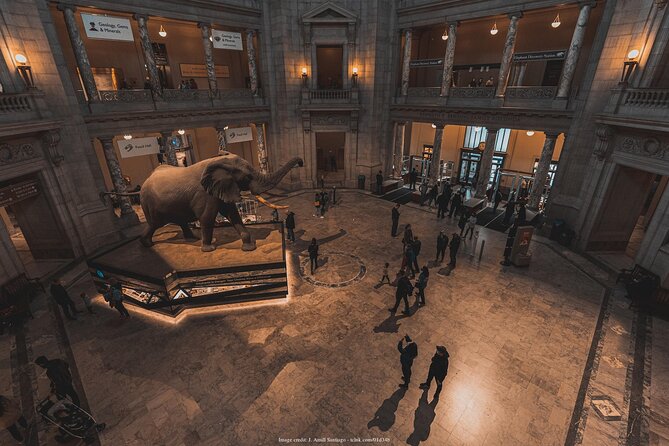
After a short break, you head to the Smithsonian National Museum of Natural History. This is where you get more time—about 2 hours—so the guide can cover more ground and you can slow down a bit.
Expect the stop to focus on headline moments and strong visual storytelling:
- The Hope Diamond (donated by Harry Winston)
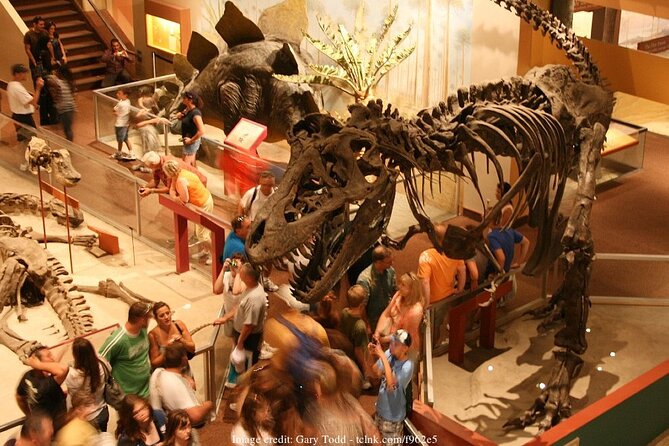
- A T-Rex fossil that instantly gives you that I can’t believe this is real feeling
- A short film on the history of mammals over 200 million years
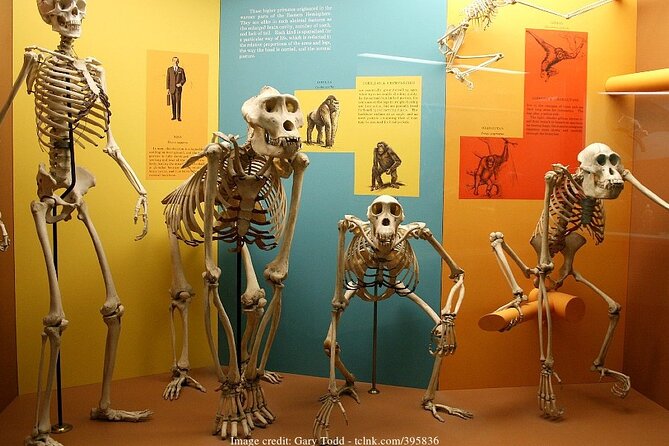
- Earth-and-ocean ecosystems, including the Sant Ocean Hall, where you can compare some of the smallest and largest animals in the oceans
The Sant Ocean Hall part is especially useful because it gives you a sense of scale. Museums can make animals feel “separate.” This section tends to show how oceans work as systems, not just as scenery.
One smart aspect of the Natural History Museum plan is that it includes both science icons (diamonds, fossils) and science understanding (ecosystems, long time scales through film). If you’re traveling with kids, this blend usually keeps attention from flagging. If you’re an adult, it helps you avoid the feeling that you only saw objects and not ideas.
Possible drawback: Natural History can be sensory overload. It’s full of impressive displays and busy traffic patterns. If you’re worried about hearing your guide in packed halls, plan to manage that (more on that below).
Private guide value: what you’re really paying for
At $185 per person for about 3 hours, you’re not paying for museum admission (entry is free). You’re paying for:
- a guide who helps you choose what to prioritize in a crowded place
- pacing that keeps the day from slipping
- context so highlights feel connected, not random
This is a good value if you’re trying to squeeze DC into a limited schedule. It’s also a good fit if you don’t want to do the homework of figuring out what to see first and how long everything takes.
Another real-world benefit: the tour is private, meaning it’s only your group. That changes the energy. A group tour can force a one-size-fits-all flow. A private guide can adjust stops based on what you care about, like focusing more on a particular history thread or spending more time at specific Natural History displays.
In the feedback, guide names like John Grant and Jalesa come up for being flexible with interests and staying attentive to what the group wants. People also credit guides such as Stephen, Jude, Jonah, Kate, Amritha, and John for directing attention to strong exhibits and keeping the mood engaging. Of course, guide quality can vary, but the structure here is designed to give you a guided “best-of” experience rather than a free-for-all.
Timing and pace: how to avoid feeling rushed
The schedule is built around the museum realities: American History gets about 1 hour, Natural History about 2. That split is helpful, because Natural History usually needs more time for you to feel like you saw more than a highlight poster.
To make this plan work for you, do two things before you arrive:
- Pick 3–5 priorities per museum
For American History, think about your top theme (for example, women’s history, African American history, protests, or wars). For Natural History, think about whether you want the diamond-and-fossil icons, the ecosystem sections, or the film experience.
- Decide your pace style
If you like reading and slowing down, you’ll want to accept that this tour is a fast route. If you’re okay with quick context and then moving on, you’ll get more out of the highlights.
One caution from the overall pattern of feedback: a few people felt the day ran short or felt rushed. That doesn’t mean you should expect a poor experience, just that you should go in with realistic expectations. If time is truly tight—like you have a specific dinner plan—plan buffer.
You can also read our reviews of more historical tours in Washington DC





Crowds and hearing: small fixes that pay off
Smithsonian museums are popular. That’s the nicest way to say it gets loud.
One concern that shows up in the experience reports is difficulty hearing in busy spaces. Since this tour doesn’t promise any special sound system, a practical move is to bring your own solution. Consider simple ear protection for the noise, or listen-in options on your phone if your guide is okay with it. The key is to be able to focus without straining.
Footwear matters too. You’ll do a decent amount of walking inside the museums. The tour notes a moderate physical fitness level, so comfortable shoes aren’t optional.
American and Natural History in one day: what you’ll come away with
A guided pairing like this does more than show objects. It helps you build a mental connection between two big ways of understanding the world.
- American History gives you the human scale: how choices, movements, and conflicts shape laws and culture.
- Natural History gives you the planet scale: ecosystems, evolution-time, and how living systems work.
This combo is great for first-timers because it gives you both lenses early in your trip. It’s also helpful if you’re traveling with a mix of ages or interests. A teen might latch onto the T-Rex fossil and Hope Diamond. An adult might care more about protests, women’s history, and African American history. A flexible guide helps bridge that gap.
Price check: $185 is high until you understand what’s included
Let’s be honest. When you see $185 per person, your first reaction is usually: Smithsonian is free. You’re right—museum admission tickets are free.
So the question is: are you getting enough value from a private guide to justify the cost?
Here’s the practical way to think about it:
- If you’d spend hours figuring out what’s worth your time, this tour can pay for itself in saved effort.
- If you want a focused “highlights plus meaning” visit, the guide is the product.
- If you plan to wander slowly and read every exhibit, you might not need to pay for someone to pick your stops.
The best buyers are people who have limited time, arrive without a clear game plan, or want a DC introduction that doesn’t feel like a scavenger hunt.
Who this tour suits best (and who should skip it)
This tour is a strong fit if you:
- want a first-timer-friendly introduction to two of the most famous Smithsonian museums
- have limited time in DC and want efficient pacing
- prefer a guide who can tailor stops based on what your group cares about
- like hearing short, connected explanations tied to major highlights like Lincoln’s top hat and the Hope Diamond
It might not be the best fit if you:
- want skip-the-line style access (this doesn’t advertise that kind of deal)
- plan to spend most of your time reading quietly at your own speed
- are sensitive to crowds and don’t want to deal with busy halls
Should you book this Smithsonian private tour?
I’d book this if your goal is a high-impact DC day with a guide who helps you see the best of both museums in a structured way. The biggest win is the pairing: you cover the human story and the natural world story without splitting your trip into two separate museum days.
I’d skip or adjust expectations if you’re hoping admission equals zero effort. You’ll still deal with the real museum crowds, and the experience depends on the guide’s ability to keep the day organized at a good pace.
If you do book, come in with a short priority list for each museum and an idea of how fast you want to move. That’s how you turn a guided highlight tour into a day you remember.
FAQ
How long is the tour?
It runs for about 3 hours (approx.), with roughly 1 hour at the American History Museum and about 2 hours at the Natural History Museum.
Where does the tour start and end?
It starts at Smithsonian National Museum of American History, 1300 Constitution Ave. NW, Washington, DC 20560. It ends inside the Natural History Museum at 10th St. & Constitution Ave. NW, Washington, DC 20560.
Which museums are included?
You visit two Smithsonian locations: the National Museum of American History and the Smithsonian National Museum of Natural History.
Is admission included?
Yes. Entrance to the Smithsonian museums of American History and Natural History is included.
Is this tour private?
Yes. It’s a private tour/activity, and only your group participates.
What is included in the price?
A professional English-speaking tour guide and entrance to both Smithsonian museums are included.
What is not included?
Gratuities (optional), food and drink, transportation on the day (if required), and hotel pickup/drop-off are not included.
What is the cancellation policy, and what about weather?
You can cancel for a full refund up to 24 hours in advance. If it’s canceled due to poor weather, you’ll be offered a different date or a full refund.