REVIEW · WASHINGTON DC
Private & Custom Guided City Tour of Washington DC
Book on Viator →Operated by Concierge Tours · Bookable on Viator
Big DC days need a plan. This private Washington, DC city tour is built to show you the big icons—Arlington, the National Mall, Ford’s Theatre, and the National Archives—without wasting hours guessing where to go next. You also get to pick how much you want to do, from a lighter half-day flow to a full-on day of monuments and museums.
What I like most is the way the day feels tailored to you. Guides on this tour (often Alan Feldman) handle the logistics early, then build the route around what you care about—whether that’s ceremonies at Arlington or “wait, what’s hidden here?” moments on the Mall. I also love that you don’t just get facts; you get stories that connect the places, so the walking starts to feel purposeful.
One consideration: this is a walking-heavy day with a mix of free and paid-entry stops. You’ll have free access at Arlington, the Capitol, parts of the Mall, and the National Archives, but admission is not included for the National Cathedral and Mount Vernon, and you’ll want comfortable shoes and a realistic pace.
In This Review
- What makes this DC tour worth your time
- Picking your day length: half-day rhythm or full-day power
- The custom part: how your route actually gets shaped
- Getting picked up in DC (and where pickup doesn’t happen)
- Arlington National Cemetery: ceremony moments and the human stories
- The U.S. Capitol interior: what you’ll actually see
- National Cathedral: stained glass, Moon rock, and quiet resting places
- George Washington’s Mount Vernon: mansion, burial vaults, and the Slave Memorial
- The National Mall route: White House grounds to Vietnam Wall symbolism
- Ford’s Theatre and the Peterson Boarding House: 1865, in order
- National Archives Museum: the Charters of Freedom
- Price and value: $550 per group can make sense
- Before you go: what to plan, pack, and decide
- Should you book this private DC tour?
- FAQ
- How many people is the tour for?
- How long does the tour take?
- Is pickup included?
- Where is pickup not available?
- What language is the tour offered in?
- What are the main stops during the experience?
- Is the U.S. Capitol open every day?
- Is admission included for all stops?
- Are service animals allowed?
- What kind of fitness level is recommended?
- What’s the cancellation policy?
What makes this DC tour worth your time
- Arlington National Cemetery with ceremony highlights, including the Kennedy Family Gravesite, Changing of the Guard, and the Tomb of the Unknown Soldier
- The U.S. Capitol interior circuit (movie, Crypt, Great Rotunda, Statuary Hall), plus optional galleries when available
- National Cathedral stained glass, including the Space Window with a piece of Moon rock tied to Apollo 11
- National Mall storytelling route from the White House South Lawn all the way to Lincoln and the Vietnam Memorial’s design details
- Ford’s Theatre and the Peterson Boarding House, with period artifacts and the Lincoln assassination timeline
- National Archives Charters of Freedom viewing the Declaration, Constitution, and Bill of Rights
Picking your day length: half-day rhythm or full-day power
This tour is designed with flexibility. You can go shorter or stretch it out, depending on your energy and how packed your DC schedule already is. The long version works best when you want a first-time DC overview plus a few deeper museum stops.
If you’re only in town for a day or two, I’d lean full-day. You’ll cover far more than you could manage with buses, parking headaches, and surprise lineups. If you’re traveling with kids, or you’re coming from a late arrival, a shorter route helps you keep the day fun instead of frantic.
A big perk for busy sightseeing is that it stays private. You can set the pace, ask questions in real time, and shift the order if something is closed or the timing doesn’t work for your group.
You can also read our reviews of more guided tours in Washington DC



The custom part: how your route actually gets shaped
This is not the standard “stand here, read that” style of tour. After booking, you should expect quick communication from your guide so you can talk through what matters most. In real-world use, guides have even checked in by phone or FaceTime and used your preferences to shape what you’d prioritize.
Here’s the practical upside: you can choose between iconic photo stops and more explanation-heavy moments. Want more on the assassination story? You’ll get a guided, chronological walkthrough at Ford’s. Want the “why is this designed this way?” angle? You’ll get that on the Vietnam Wall and Memorial layouts too.
You’ll also get help with the realities of DC logistics. This is city driving and city walking, not a countryside stroll. A private guide can route you around bottlenecks so you spend more time at sites and less time stuck in transit.
Getting picked up in DC (and where pickup doesn’t happen)
Pickup is offered at your Air B&B in Washington, D.C., or at hotels in the Crystal City, Arlington, and Pentagon City area. That’s a very useful cluster if you’re staying across the river in Virginia or near Reagan National.
Just know the tour does not include pickup from BWI Airport or from National Harbor, Maryland. If you’re staying near those areas, you’ll need to plan to get to the meeting point on your own.
At the end of the experience, the tour returns you back to the meeting point. So you don’t have to worry about figuring out a second ride after a long day.
Arlington National Cemetery: ceremony moments and the human stories
Arlington is the kind of place that can’t be rushed. Even if you’ve seen photos, you’ll feel the scale once you’re there. This stop is built around the cemetery’s signature moments and the names that made it world-famous.
You’ll visit the Kennedy Family Gravesite, watch the Changing of the Guard, and see the Tomb of the Unknown Soldier. That combination matters. The Kennedy graves bring a U.S. political legacy into view. The Changing of the Guard is precise and unforgettable. The Tomb is quiet in a way that sticks with you.
This is also where your guide’s storytelling style matters most. You want context, because Arlington is more than monuments. It’s the way the U.S. remembers sacrifice, and the symbolism is layered.
Practical tip: plan for real walking and stairs around the grounds. Even with a guide, Arlington is not a “minimal steps” stop.
The U.S. Capitol interior: what you’ll actually see
The Capitol is one of those places where the outside looks familiar, but the inside is where your understanding clicks. Here, you get an organized path through major interior areas.
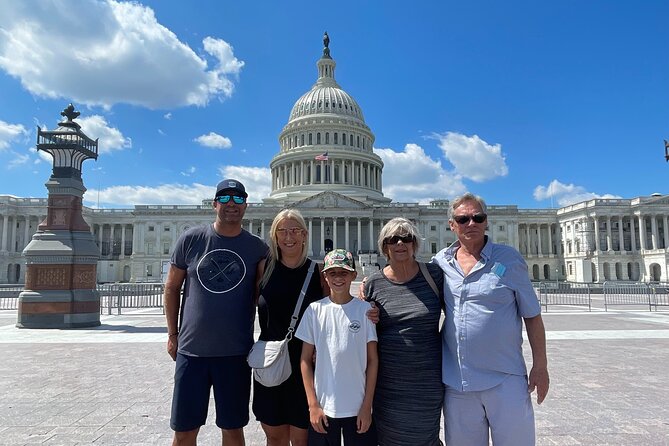
You’ll see a short movie about the country (E Pluribus Unum). Then it’s on to the Crypt, the Great Rotunda under the Capitol Dome, and Statuary Hall. There’s time for the big visual moments, plus the explanation that makes the art and symbolism make sense.
A key timing note: the U.S. Capitol is closed on Sunday. If your trip falls on a Sunday, your itinerary will need to adapt.
If galleries of the House of Representatives and the Senate are available, you can visit them. One limitation: they are not available on Saturday.
Practical tip: the Capitol is security-heavy. A private guide helps you keep your schedule tight and avoid wasted waiting, but you should still expect that the day moves at the tempo of official procedures.
You can also read our reviews of more city tours in Washington DC






National Cathedral: stained glass, Moon rock, and quiet resting places
Washington’s National Cathedral is one of the most surprising stops on this route. The building is massive, but what you notice first is the light—and then the detail.
You’ll spend about 1.5 hours inside, focusing on the cathedral’s stained glass. There are over 250 stained glass windows, and one of them—the Space Window—includes a piece of Moon rock donated by the crew of Apollo 11. That’s the kind of fact that sounds like a trivia question until you see it in person.
You’ll also visit the resting place of President Woodrow Wilson and Helen Keller. It’s a striking pairing: a leader and an advocate, both memorialized in the same sacred space.
Don’t miss the Lincoln and Washington alcoves. Those areas tie national identity to the people who shaped it.
Admission for this stop is not included, so budget separately. Still, if you care about more than stone-and-columns sightseeing, this is often the standout for first-time DC visitors.
George Washington’s Mount Vernon: mansion, burial vaults, and the Slave Memorial
Mount Vernon is where DC history becomes lived history. You’ll see the iconic Mount Vernon Mansion and the burial vaults. This stop also includes the Slave Memorial, which is important context that helps you understand the full picture of Washington’s era.
You’ll also visit the final resting places of President Washington and Martha Washington. The visitor experience here is designed to be reflective, not just scenic.
Admission is not included, so plan for that cost. Still, it’s one of the few places where the story of the early republic feels tangible. A good guide helps you connect what you’re seeing to the bigger U.S. narrative, especially if you’ve already been learning about monuments on the National Mall.
Practical tip: like Arlington, this is not a “sit the whole time” stop. Wear shoes that can handle a lot of ground.
The National Mall route: White House grounds to Vietnam Wall symbolism

The National Mall portion is where your guide’s pacing and storytelling really earn their fee. You’ll move through history in a logical sequence that also makes photos easier.
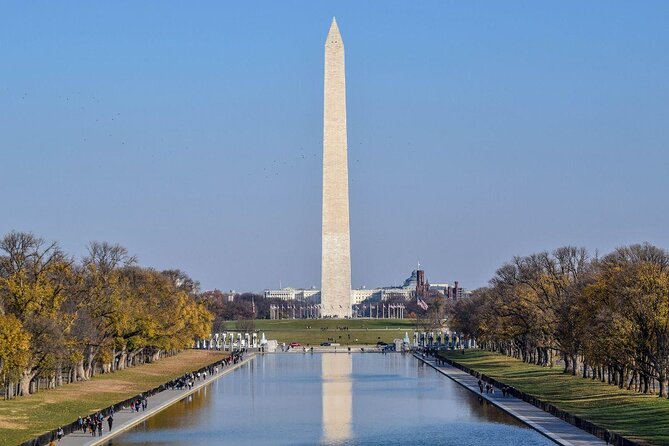
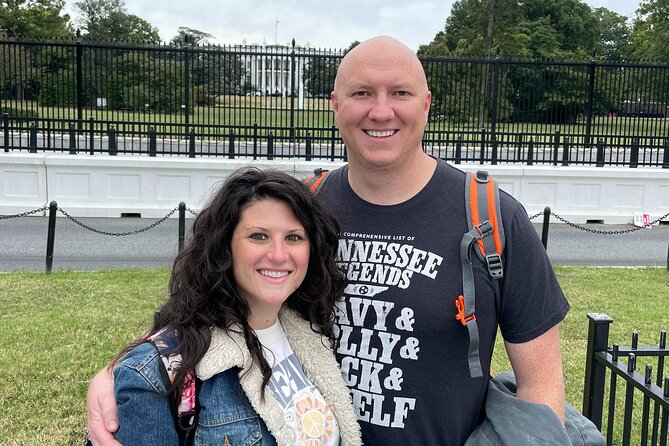
The tour walks onto the South Lawn of the White House grounds. You’ll hear about the history of Presidents who lived there and the surrounding buildings. Next comes the Washington Monument, where you’ll learn about construction and also the building-height rules compared to the monument.
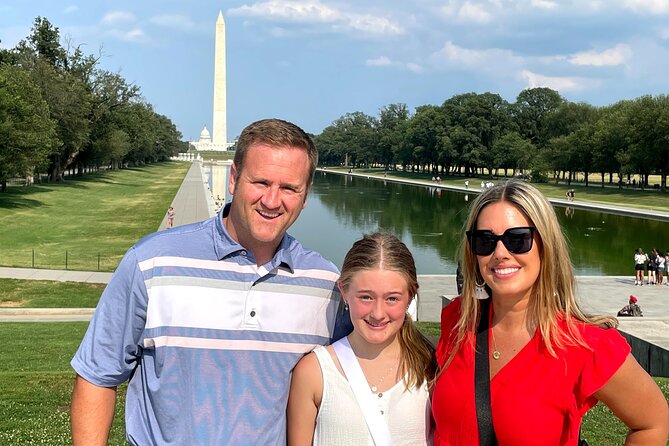
After that, you’ll visit the WWII Memorial, then walk down the Reflecting Pool toward the Lincoln Memorial. I love this stretch because it feels like the city slows down for a moment. It’s also where the scale hits you: huge memorials, open space, and lots of sky.
You’ll also hear about mistakes made in the memorial and hidden details that many people miss. Then the walk continues to the Vietnam Memorial. The guidance focuses on how the wall is organized and how it’s meant to be viewed, including symbolism in the design.
Most of this stop is free. The value here is the “why it’s arranged like this” explanation. If you just follow a map, you’ll see a lot. With a guide, you’ll understand more than you expected.
Ford’s Theatre and the Peterson Boarding House: 1865, in order
Ford’s Theatre makes U.S. history feel urgent. This is the place where President Lincoln was shot in April 1865, and the tour is built around the timeline of the attack and aftermath.
You’ll see artifacts from the time period in the basement, including the .44 caliber single shot Derringer used by John Wilkes Booth to shoot Lincoln. You’ll also look up at the box where Lincoln sat.
This tour doesn’t stop at the moment of violence. You’ll hear the story of the plot and the conspirators involved, then you’ll cross the street to the Peterson Boarding House. There, you can see the room and bed where Lincoln passed away.
Here’s a key practical point: admission for Ford’s Theatre is included. So this stop is easier to plan financially than some other major DC attractions.
One more reason this stop lands well: guides have sometimes arranged extra access with theatre staff for closer looks at viewpoints that aren’t normally available. Don’t count on that for every visit, but it’s the kind of detail that can make your photos and memories feel special.
National Archives Museum: the Charters of Freedom
The National Archives Museum is where the story of the U.S. becomes paper you can actually stand in front of. Admission is free for the time you’ll spend here.
You’ll head to the Charters of Freedom rotunda to see the Declaration of Independence, the Constitution, and the Bill of Rights. Seeing those documents in person beats reading about them, because you notice the human work behind the history.
This stop pairs well after Ford’s Theatre and the Mall. You’ve moved from national identity and conflict to the documents that created the legal and moral language of the country.
Price and value: $550 per group can make sense
The price is $550 per group, up to 4 people. That means the per-person cost depends on your group size.
If you have 2 people, it can be pricey compared with splitting a group tour ticket. If you have 4 people, it becomes far more reasonable because you’re paying for a private car-and-guide experience rather than multiple separate tickets plus transit time.
Also, you’re buying time and attention. In DC, that’s the real currency. This tour tries to compress a lot of major sights into one organized day, while still leaving room for questions and custom priorities.
One reason this tour has strong demand is that people return to DC and still feel they missed things the first time. A private guide helps you avoid the common problem: seeing the big names but not understanding what you’re looking at.
This tour also scores very high in satisfaction, with a 5-star rating and a strong recommendation rate across past bookings. It’s not just the sites; it’s how the guide connects them into one story.
Before you go: what to plan, pack, and decide
This tour works best for travelers who like structure but still want flexibility. It’s also a good match for families, couples, and multigenerational groups—especially when you want one guide to keep the whole day moving.
The itinerary includes several high-footfall areas. You should have a moderate physical fitness level and plan for lots of walking. Bring comfortable shoes, water, and something for sun or rain.
If your trip includes Sunday, remember the U.S. Capitol is closed. Your guide will likely shift priorities so the day still makes sense, but you should plan your expectations around that reality.
Lastly, you’re paying for a private experience, and the booking is non-refundable and can’t be changed for any reason. So make sure your dates are solid before you commit.
Should you book this private DC tour?
If you want the best-of-DC route without the stress of coordinating stops, I think you’ll be happy booking this. It’s especially worth it when you care about explanations, ceremonies, and the “what most people skip” details.
I’d also book it if you’re traveling with teens or mixed ages and you want someone who can keep everyone engaged. The format works when you want history to feel like a story instead of a lecture.
Skip (or shorten) it if you prefer a slow, independent trip with lots of free time to wander. This tour is structured. That’s the point. If you want spontaneity over direction, you’ll feel boxed in.
FAQ
How many people is the tour for?
It’s a private tour for up to 4 people per group.
How long does the tour take?
The duration ranges from about 4 to 15 hours, depending on the option you choose.
Is pickup included?
Pickup is offered. The tour can pick up guests at their Air B&B in Washington, D.C., or at hotels in the Crystal City, Arlington, and Pentagon City area.
Where is pickup not available?
Pickup is not offered from BWI Airport or from National Harbor, Maryland.
What language is the tour offered in?
The tour is offered in English.
What are the main stops during the experience?
The route includes Arlington National Cemetery, the U.S. Capitol, the National Cathedral, George Washington’s Mount Vernon, the National Mall monuments route, Ford’s Theatre, and the National Archives Museum.
Is the U.S. Capitol open every day?
No. The U.S. Capitol is closed on Sunday.
Is admission included for all stops?
Ford’s Theatre includes admission. National Archives admission is free. Admission is free for Arlington and the Capitol. Admission is not included for the National Cathedral and Mount Vernon.
Are service animals allowed?
Yes, service animals are allowed.
What kind of fitness level is recommended?
Travelers should have a moderate physical fitness level, since the day involves walking.
What’s the cancellation policy?
The experience is non-refundable and cannot be changed for any reason.