REVIEW · WASHINGTON DC
Washington DC Sites at Night Guided Bicycle Tour
Book on Viator →Operated by Unlimited Biking formerly Bike and Roll DC · Bookable on Viator
Monuments look different after dark. This night bike tour strings together the National Mall and Tidal Basin with a smooth, guided pace, so you see more without feeling rushed. Guides like Joe and Matt often bring the stories to life right at the curb, with monuments turning into photo backdrops as the lights kick on.
I especially like two things: the safety setup (helmets mandatory, reflective vests, and lights) makes it feel calm even when you’re riding after sunset. I also love the stop details that give context fast, from the two-tone stone story at the Washington Monument to the FDR moment where you can rub Fala’s ears for luck.
One thing to consider: no interior access. You’ll admire icons up close and often step out briefly, but you do not go inside the Washington Monument or the White House.
In This Review
- Key highlights worth your attention
- Why DC Monuments Hit Harder at Night
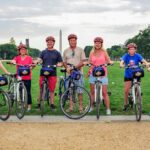
- The Bike Plan: Easy Mileage, Real Safety, and Small Groups
- Starting Point and How You Set Yourself Up to Enjoy the Ride
- Stop-by-Stop: Washington Monument, White House Ride-By, and WWII Details
- Vietnam to Lincoln: Vietnam Memorials, the Korean War, and MLK’s Stone of Hope
- Tidal Basin, FDR, and Jefferson: Fala’s Ears and the Trees That Matter
- Guides Make the Difference: Why the Stories Land
- Price and Value: What You Get for $65
- Who Should Book This Night Monuments Tour
- Book It or Pass? My Practical Call
- FAQ
- Is the tour distance really short?
- How long is the guided tour?
- What safety gear is included?
- Do we go inside the Washington Monument or the White House?
- Where do we meet, and how early should we arrive?
- Is bottled water and snacks included?
- Is this tour suitable for families and kids?
- What happens if weather is bad?
Key highlights worth your attention
- A short, easy ride: about 4–5 miles over roughly 3 hours, graded easy and flat enough for casual riders
- Night lighting with fewer headaches: monuments look incredible after dark and the route avoids the worst daytime crowds
- Safety isn’t an afterthought: helmets, reflective vests, and provided lights keep the ride structured and visible
- Super-usable guide commentary: you get practical design stories and trivia at nearly every stop
- Family options built in: child bikes and kid-sized gear, plus trailer carriages/tandems for younger kids who can wear a helmet and hold up their head
- You cover real DC hitters: Washington Monument, WWII, Vietnam sites, Lincoln, MLK, FDR, and Jefferson, plus more along the way
Why DC Monuments Hit Harder at Night
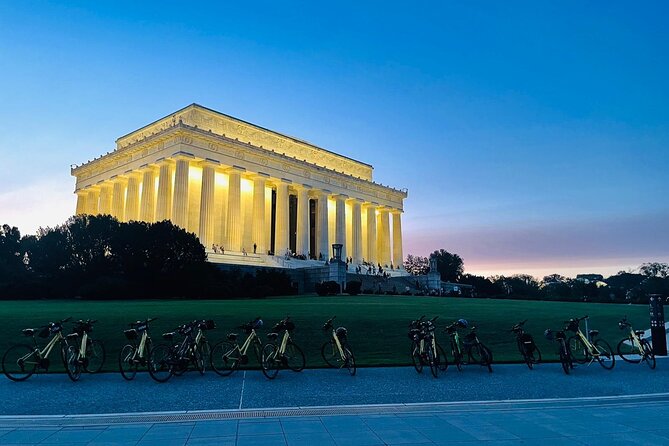
Washington DC at night feels like a different city. The monuments go from impressive to cinematic once they’re lit up, and you don’t have to fight the same daytime crush to get clean sightlines. The air can also feel more forgiving for riding, which matters when you’re covering multiple stops in one evening.
This tour also helps you see in order. Instead of trying to stitch together a walking route across the National Mall (and losing time to detours and crossings), you stay on a bike path rhythm. You’re still moving like a traveler, but with the heavy lifting done for you.
You can also read our reviews of more guided tours in Washington DC


The Bike Plan: Easy Mileage, Real Safety, and Small Groups
The ride is designed to be beginner-friendly. You’re looking at about 4 miles as the tour distance, and around 5 miles over the full 3 hours, which is a big reason this works for families and first-timers. You’ll get quick stops for looking around, plus short segments where you just roll and take in the skyline.
Safety is handled in a way that feels practical, not performative:
- Helmet is mandatory.
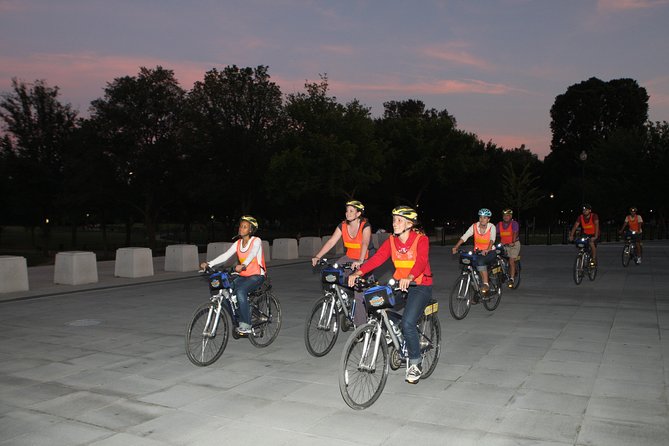
- Bike headlights and reflective vests are provided.
- You ride with a guide who keeps the group together.
The group stays small (maximum 15 travelers), so you’re not packed in like a herd. That small size also helps the guide manage pacing at each photo stop.
For kids, the tour can get even easier. There are equipment options for children of all sizes and ages, and trailer carriages/tandems are available for children who aren’t ready to ride solo. The requirement is straightforward: if a child will ride in a trailer carriage, they need to be able to hold up their head and wear a helmet.
Starting Point and How You Set Yourself Up to Enjoy the Ride
Plan to arrive about 15 minutes early so you can check in and get fitted on your bike. The tour emphasizes on-time departures, and they can’t guarantee accommodation for late arrivals. This is worth treating as part of your trip plan, not a minor detail.
Your meeting point is at 801 D St NW, and check-in runs at Unlimited Biking at 701 D Street NW. They’re close enough that you’re not scrambling across town, but I’d still treat it like a real check-in with a few minutes buffer.
Once you’re geared up, you’ll start the loop with a simple goal: cover the key memorials efficiently, then slow down just enough at each stop to take photos and absorb the stories. Bottled water and snacks help keep energy steady, which is handy because you’re doing short walks and climbing steps at a few memorials.
Weather matters here. If riding conditions are unsafe, the tour may be canceled and you’ll be offered a different date or a full refund. For an evening bike tour, that’s the right call.
Stop-by-Stop: Washington Monument, White House Ride-By, and WWII Details
The early part of the tour is all about getting your bearings—literally and emotionally—before you hit the National Mall core.
Stop 1: Washington DC (check-in and bike fitting)
You’ll check in first, get on the bike, and get ready for a smooth ride. The “get set before you roll” approach pays off later because you’re not spending time struggling with your bike while you’re trying to enjoy the views.
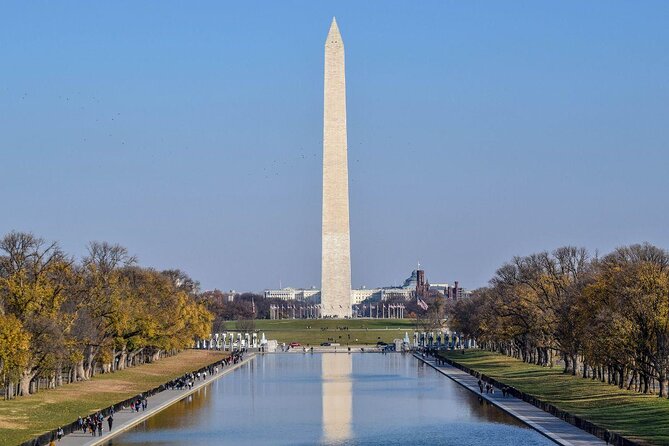
Stop 2: Washington Monument (two-tone stone story)
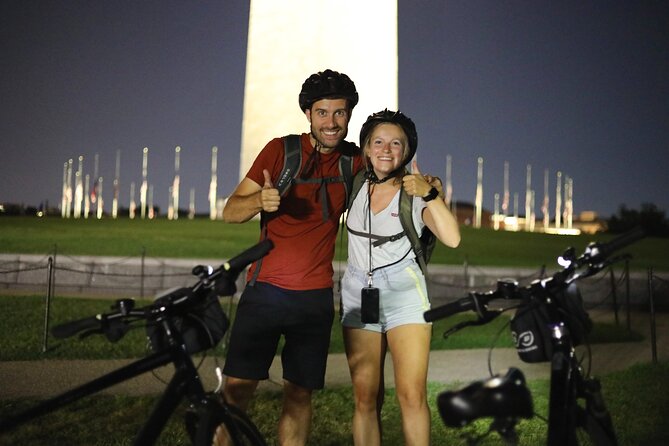
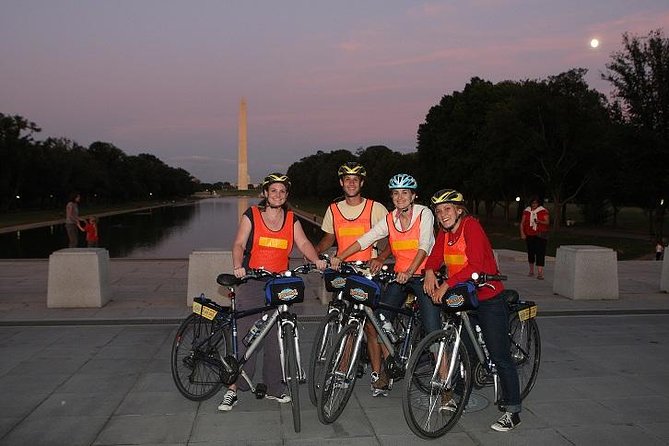
You’ll stop where you can see the monument clearly, and your guide will explain why it has two colors of stone. This is also a good reality check: you do not go inside the monument. Still, the stop works because you get the story plus the right exterior viewpoints without burning time.
Stop 3: White House (ride by the south side)
You’ll ride past the White House from the south side. If time permits, you may get a brief moment to stop, but you won’t enter the White House. I like this approach for night tours—it keeps the day’s constraints from turning into red-tape drama.
Stop 4: National WWII Memorial (design meaning and timing trivia)
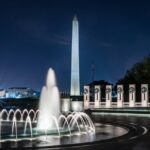
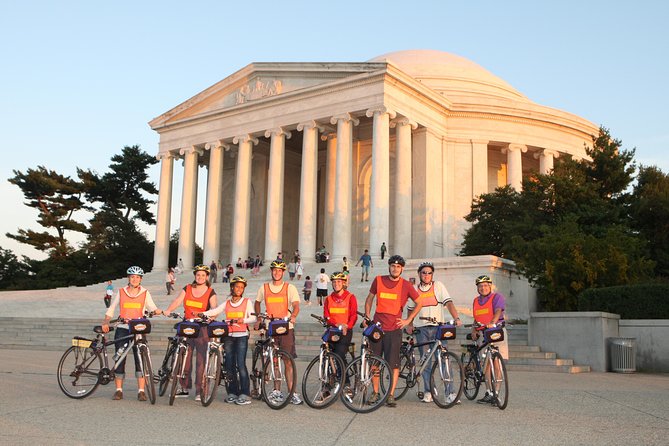
At the WWII memorial, you’ll get the significance behind the design and a fun fact: it was dedicated ahead of schedule. Then you can walk in and explore details for a few minutes. This stop is a good example of the tour’s value: you don’t just look; you understand what you’re looking at.
Vietnam to Lincoln: Vietnam Memorials, the Korean War, and MLK’s Stone of Hope
After WWII, the route shifts into the emotional and reflective part of the tour. It’s still easy riding, but the stops ask you to pay attention.
Stop 5: Constitution Gardens (ride through)
This is a “keep rolling” section. You’re not stopping long, but it helps connect the route visually so the evening doesn’t feel like a string of separate parking-lot moments.
Stop 6: Vietnam Women’s Memorial
You’ll make a stop outside the Vietnam Wall area for the Vietnam Women’s Memorial. Your guide will set context about the women who served in Vietnam, and this works well at night because the lighting makes the forms feel sharper and easier to read from a distance.
Stop 7: Vietnam Veterans Memorial (walk through the wall)
Next is the Vietnam Veterans Memorial. You’ll hear background about the design, then take a few minutes to walk through the memorial. The quick walk is one of the best compromises on this kind of tour: you get enough time to feel present without turning the evening into a long standalone visit.
Stop 8: Lincoln Memorial (steps + views)
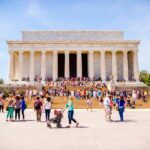
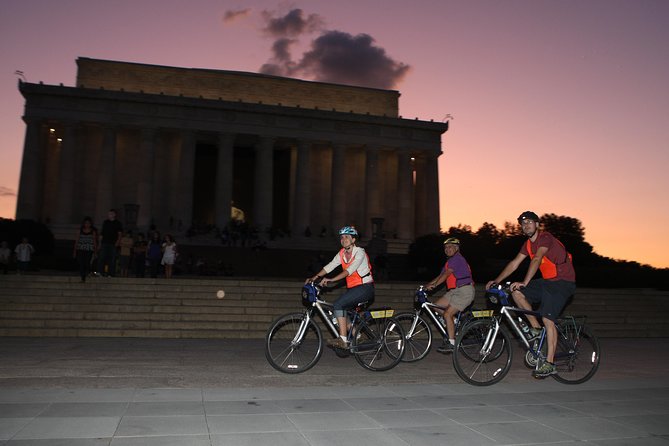
You’ll hear background about the Lincoln Memorial’s design and also a few myths. Then you climb the steps for sweeping views from the top. This is one of those stops where night lighting makes everything feel more dramatic, because the sightlines tend to open up.
Stop 9: Korean War Veterans Memorial (the Forgotten War angle)
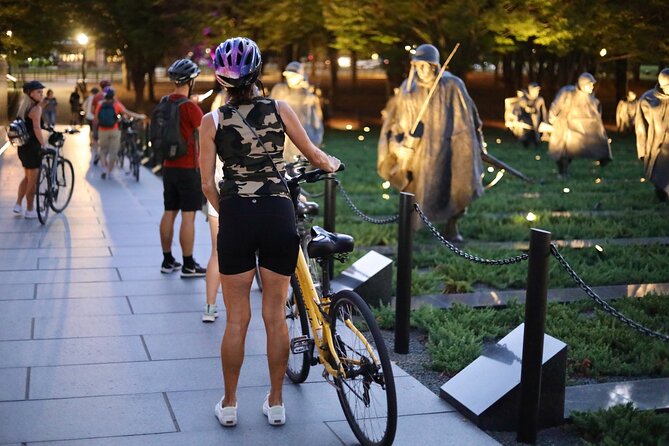
If you’ve visited on your own, you might miss what makes this memorial special. Here, the guide points out the hidden significance tied to the phrase the Forgotten War. That kind of explanation is exactly why this tour works better than a casual hop-on sightseeing run.
Stop 10: Martin Luther King, Jr. Memorial (outside stop + inside walk path)
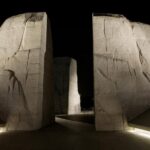
You’ll stop outside first to learn about the newest memorial in DC. Then you walk through the Mountain of Despair to view the Stone of Hope. That walk segment is short, but it’s meaningful—and it helps you experience the memorial as more than a photo backdrop.
You can also read our reviews of more evening experiences in Washington DC


Tidal Basin, FDR, and Jefferson: Fala’s Ears and the Trees That Matter
This is where the tour turns scenic again. You get the water and the classic monument alignments, plus two stops packed with symbol and detail.
Stop 11: Tidal Basin (ride around, view connections)
You’ll ride around the Tidal Basin from the MLK memorial area toward the FDR memorial. The ride time matters because it gives you perspective across the basin, so the monuments don’t feel isolated.
Stop 12: Franklin Delano Roosevelt Memorial (walk through the four terms)
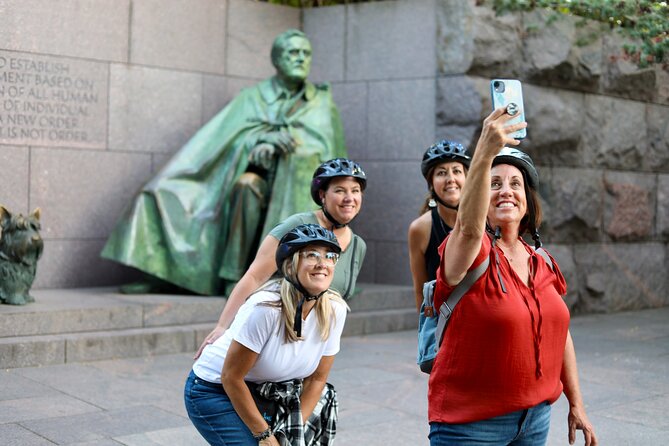
You’ll walk your bike through the memorial’s four rooms representing each of FDR’s terms. The guide will explain the symbolism behind the design, and yes, you’ll get the familiar moment: rub Fala’s ears for luck. It’s quick, but it’s also one of those small traditions that makes a visit feel participatory.
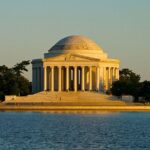
Stop 13: Jefferson Memorial (trees, views, and the climb)
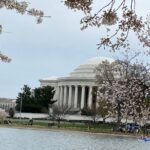
At the Jefferson Memorial stop, you’ll enjoy views over the Tidal Basin looking back toward MLK. Then your guide will tell you why the trees are cleared so that Jefferson can keep a constant eye on the White House. After that, you climb the steps and see it for yourself.
Stop 14: Return to Washington DC (final stretch)
You’ll head back for a final explore moment. The idea is to finish where you started, so you aren’t ending the night stranded.
Guides Make the Difference: Why the Stories Land
The biggest “premium” part of this tour is the human factor. The guides tend to be engaging and keep the group moving while still giving you real time at each stop. Names that come up often include Joe, Matt, Albert, Abby, Jose, Mary, Shir, Mark, and Sri—each bringing a different tone, but the same core approach: safety first, then story.
A few practical notes that help you get more out of the ride:
- Listen at the first briefing. That’s when you’ll learn how stops and photo timing work.
- At each major monument, the guide usually has a specific design detail to watch for. If you catch that cue, your photos improve.
- If you upgrade to an e-bike, ask staff to make sure you understand the controls before you roll. One rider noted that setup instruction took extra time, which is easy to fix with a quick check right at the start.
Price and Value: What You Get for $65
At $65 per person for about 3 hours, this is priced like an experience tour, not a cheap add-on. The value comes from what’s included:
- A fully guided ride for the entire loop
- Bike use
- Helmet (mandatory)
- Safety lights and reflective vest
- Equipment for kids of different sizes
- Bottled water and snacks
You’re also saving a lot of mental energy. Trying to see Jefferson, Lincoln, multiple Vietnam memorials, MLK, and FDR in one evening would be tough on foot and slow by car because of congestion and the need to park, cross streets, and backtrack. This tour turns that into an efficient circuit with the hard parts handled for you.
If you’re comparing alternatives, I’d think about it like this: you’re paying for route planning, guided interpretation, and safe night cycling—so you can spend your energy on seeing the monuments, not figuring out how to connect them.
Who Should Book This Night Monuments Tour
This tour fits best if you want:
- A structured way to see the DC core without doing a full-day walking marathon
- Night views and fewer crowds
- A family-friendly route with an easy pace
- A guide who helps you notice design details (not just “stand here, take photo”)
It may not be ideal if you:
- Don’t feel comfortable riding a bike in low light, even with lights provided
- Expect to go inside the major icons (you won’t)
- Want long, unhurried time at each site. The stops are well-timed, and the evening runs on a schedule.
Book It or Pass? My Practical Call
If you want to see a lot of Washington DC’s most famous monuments in one evening, this tour is a strong choice. It’s short enough to feel manageable, safe enough to feel supported, and guided enough that the sights feel earned instead of random.
I’d book it early in your trip if possible. Getting the layout down fast helps your remaining time in DC because you understand where everything sits relative to the Mall and Tidal Basin. And if you’re going with kids, the trailer options and kid-sized gear reduce the usual headaches that come with family sightseeing.
FAQ
Is the tour distance really short?
You’ll ride about 4 miles on an easy route, and the total riding time works out to roughly 5 miles over the full 3 hours.
How long is the guided tour?
The tour runs about 3 hours.
What safety gear is included?
Helmets are provided and are mandatory. You also get safety lights and a reflective vest.
Do we go inside the Washington Monument or the White House?
No. You will not go inside the Washington Monument, and you will not go into the White House. You ride by and view them from outside.
Where do we meet, and how early should we arrive?
The tour starts at 801 D St NW, Washington, DC. You should check in 15 minutes prior to your departure time so you can be fitted on your bike.
Is bottled water and snacks included?
Yes. Bottled water and snacks are included.
Is this tour suitable for families and kids?
It’s graded easy and designed to be a whole-family activity. Equipment for kids of all sizes and ages is available, and trailer carriages/tandems are offered for children who aren’t comfortable riding on their own bike.
What happens if weather is bad?
The tour requires good weather. If it’s canceled due to dangerous riding conditions, you’ll be offered a different date or a full refund.