REVIEW · WASHINGTON DC
Residences of the Presidents Walking Tour: Dupont and Kalorama
Book on Viator →Operated by Walking Backward Tours · Bookable on Viator
Presidential power is hiding behind ordinary doors. This walking tour strings together the homes and close-calls of US leaders across Dupont Circle and Kalorama, with a local guide who makes the politics feel human. You’ll hear the stories behind major names like Theodore Roosevelt, FDR, Hoover, Wilson, and Reagan as you move through quiet residential streets.
I love the small group format (max 8). It keeps the pace chatty, not herded, and you get time for questions instead of rushing past every stop. I also like that the tour leans into the human side of leadership—romance, parties, power struggles—without turning it into pure trivia.
The main thing to plan for is walking. You’ll be outside for about 2.5 hours, and the tour requires good weather, so come with shoes ready for sidewalks and bring water.
In This Review
- Key things you’ll notice on this Presidents Residences walk
- Why Dupont Circle and Kalorama work so well for presidential stories
- Meet at Krispy Kreme: timing, group size, and what to expect right away
- Stop 1: Dupont Circle and the Roosevelt-to-FDR chain of intrigue
- Theodore Roosevelt’s DC presence
- Calvin Coolidge’s crash pad
- FDR’s near-disaster moment
- How this stop feels under your feet
- Stop 2: Kalorama homes of Hoover, Wilson, Harding, Taft, Eisenhower—and a Reagan close call
- Hoover through Eisenhower: the “same neighborhood, different eras” effect
- The Reagan near-miss
- Chris’s style: funny, responsive, and built for questions
- Price and value: why $27.50 can feel like a bargain in DC
- What to bring for a comfy 2.5-hour walk
- Who should book this Presidents Walking Tour (and who might not love it)
- Should you book this Presidents Residences walking tour?
- FAQ
- How long is the Residences of the Presidents Walking Tour: Dupont and Kalorama?
- What time does the tour start?
- Where do I meet for the tour?
- How many people are in the group?
- Is the tour in English, and will I get a mobile ticket?
- Is there admission to pay for the stops?
- Is the tour near public transportation?
- Are service animals allowed?
- What happens if weather is bad?
- What is the cancellation policy?
Key things you’ll notice on this Presidents Residences walk
- Max 8 people keeps the guide’s attention on you, not on a crowd
- A mobile ticket makes it easy to show up and start fast
- Two focused neighborhoods: Dupont Circle and Kalorama
- Stops are tied to recognizable presidential moments and close calls, not just general plaques
- No admission fees at the stops, so your $27.50 goes to the guide and the storytelling
- The guide, Chris, is known for being funny, interactive, and quick to answer questions
Why Dupont Circle and Kalorama work so well for presidential stories
Washington DC can feel like a choose-your-own-adventure of monuments, museums, and government buildings. This tour takes a different angle: it shows you how power players lived, socialized, and jockeyed for influence in the neighborhoods where their everyday lives happened.
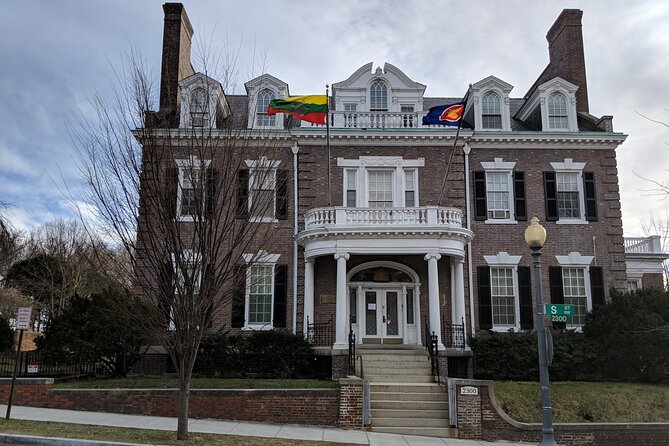
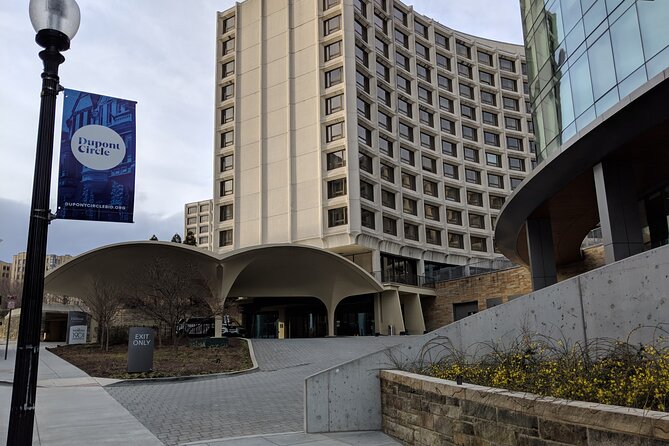
Dupont Circle and Kalorama are especially good for this kind of storytelling. They’re upscale residential areas where you can look at the streets and think: someone famous had a front door right here. The setting matters, because the guide’s best points land when you’re standing where the moments unfolded.
And while the presidents on this walk are the headliners, the magic is how the tour connects them to DC’s social and political rhythm. You don’t just learn dates—you get a sense of how “real life” and Washington politics kept crossing paths.
You can also read our reviews of more walking tours in Washington DC



Meet at Krispy Kreme: timing, group size, and what to expect right away
You’ll meet at Krispy Kreme at 1350 Connecticut Ave NW. The tour starts at 2:00 pm, and it ends back at the meeting point, so you’re not hunting down a second location later.
This is a 2 hours 30 minutes (approx.) walking tour. That duration is long enough for a proper story arc, but short enough that you won’t feel stuck on the same subject for ages. Also, the group max is 8 travelers, which changes the whole feel. Instead of one-way lecturing, the guide can react to what your group cares about—politics, scandals, or the personal side.
If you’re planning your trip, note that this tour is often booked about 27 days in advance on average. In practice, that means you’ll want to lock in your date sooner rather than later, especially if you’re visiting during peak season or a busy conference week.
Stop 1: Dupont Circle and the Roosevelt-to-FDR chain of intrigue
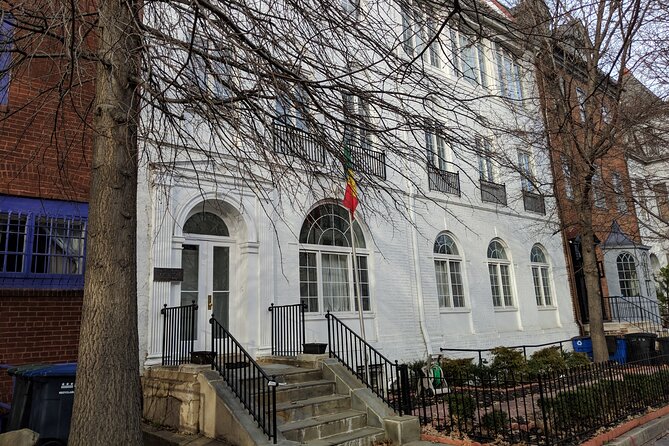
The first stretch centers on Dupont Circle, and it’s where the tour starts with a punchy mix: big personalities, high stakes, and Washington’s social scene. You’ll walk to locations tied to Theodore Roosevelt, Calvin Coolidge, and the spot where FDR almost lost it all.
What makes this stop work is how the guide frames each home base as more than a postcard location. These leaders weren’t just visiting DC—they were part of the city’s power network. Even if you know the headlines, you’ll likely pick up a different angle: how rivalries played out day-to-day, how relationships and public image affected decisions, and why the timing of events mattered.
Theodore Roosevelt’s DC presence
Roosevelt’s connection here is treated like a launch point. You get a sense of how his time in DC fit into the broader culture of the era—politics as performance, with constant pressure to stay ahead.
Calvin Coolidge’s crash pad
Coolidge is part of the fun because the tour doesn’t describe him as a distant statue. The “crash pad” detail gives you a more grounded view of how presidential work and retreat could mix. It’s the kind of story that makes you picture the person, not just the office.






FDR’s near-disaster moment
Then you get to the dramatic beat: the spot where FDR nearly lost it all. That’s a great anchor story because it turns a neighborhood stop into a real tension-filled episode. It also sets up the later stops by showing that Washington life had constant risk—political and personal.
How this stop feels under your feet
This isn’t an inside-museum stop. You’re learning while walking through a beautiful area of DC, and that’s a big plus if you want history without sitting still. The pace gives you breaks to absorb what you hear while you look around at the homes and gardens.
Potential tradeoff: since this is residential, you’ll want to keep an eye on where you’re stepping and be ready for a bit of sidewalk time before the next story beat.
Stop 2: Kalorama homes of Hoover, Wilson, Harding, Taft, Eisenhower—and a Reagan close call
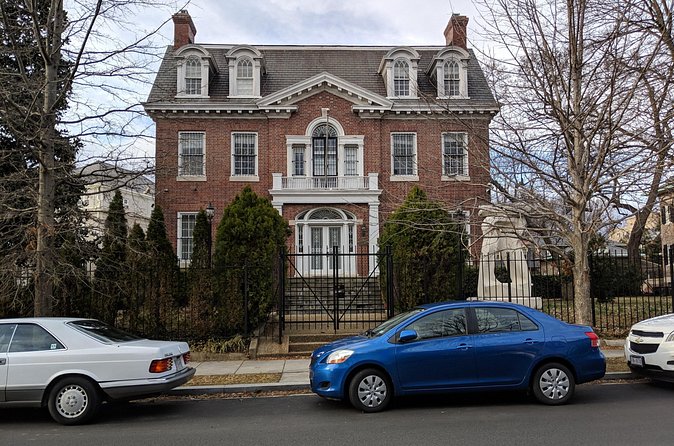
After Dupont Circle, the tour shifts into Kalorama for a second, longer segment. Here you’ll see homes tied to Herbert Hoover, Woodrow Wilson, Warren Harding, William Howard Taft, and Dwight Eisenhower. And you’ll also swing by the location where Ronald Reagan very nearly lost it all.
Kalorama is a different vibe than the first neighborhood, and that helps the tour feel like two chapters instead of one long circuit. The guide uses the change of area to build a bigger picture: lots of major power figures clustered in a small space, shaping America from close by.
Hoover through Eisenhower: the “same neighborhood, different eras” effect
Seeing multiple presidents in one continuous walk gives you a neat time-compression effect. You can connect themes across decades—leadership styles, political priorities, and the way DC social circles overlapped over time.
Hoover, Wilson, Harding, Taft, Eisenhower: each gets a place in the story, but the big payoff is how they collectively show the neighborhood as a kind of stage. You’re not just learning about five individuals; you’re seeing how the location served as a meeting point for influence.
The Reagan near-miss
The Reagan stop adds a sharper edge because it’s framed as a near-disaster. That kind of story lands well on a walk because it turns a calm street into a moment of urgency—suddenly you’re thinking about what could have changed, and how close the nation can come to dramatic turns.
If you’re an American history buff, this is one reason the tour earns strong ratings: it doesn’t treat the presidents as separate chapters. It connects them through place, and it keeps the energy moving.
Chris’s style: funny, responsive, and built for questions
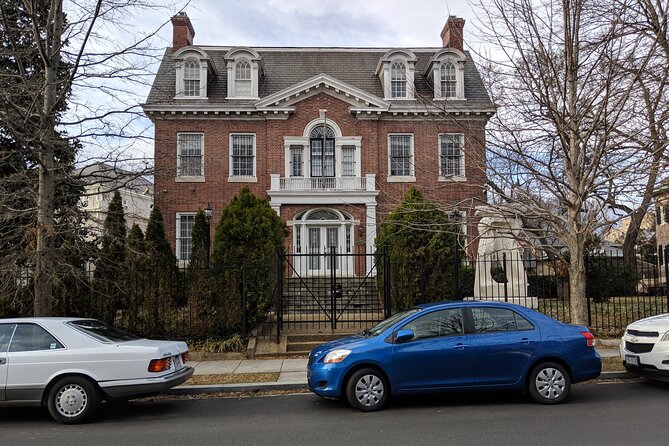
The biggest recurring theme about this tour is the guide, Chris. You’ll get the sense that he’s not just reciting facts—he’s using stories to explain how presidents lived inside the politics of their day.
People also highlight that he stays interactive and adjusts to the group’s interests. That matters because presidential history can go two ways: either it becomes dates and speeches, or it becomes human drama. Chris seems to aim for the human drama, with humor that keeps the information from feeling heavy.
You’ll also get practical touches that make the tour feel cared for. For example, one detail that stands out is that he carries bug spray, which is the kind of real-world preparedness that helps on a DC afternoon. And if you’re bringing kids, the tour is described as sensor-friendly—meaning the guide pays attention to keeping the experience engaging for a younger crowd.
Bottom line: with a small group, a responsive guide, and a mix of politics and personal stories, you’ll likely leave feeling like you finally connected the presidents to the geography of the city instead of treating DC like a museum map.
Price and value: why $27.50 can feel like a bargain in DC
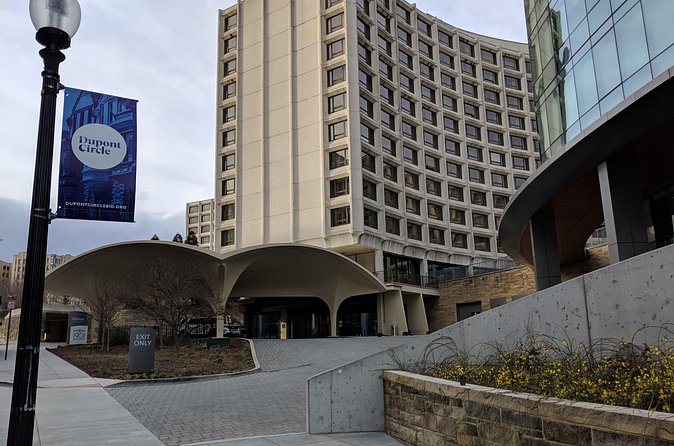
At $27.50 per person, this tour is priced like a budget-friendly add-on, but it’s not a “quick overview” tour. The duration is about 2.5 hours, the group is capped at 8, and the tour is led in English by a local guide with a lot to say.
The value gets even better because the stops list admission ticket free. In other words, you’re not paying extra entry fees just to see the areas that anchor the stories. You’re paying for time with the guide and for the walking route that ties it all together.
Also, the format is easy: mobile ticket, start and end at the same place, and confirmation received at booking. That’s not glamorous, but in DC it matters. Fewer moving parts means more time for the actual experience.
If you’re doing a first DC trip, this is one of those purchases that can help you “get bearings fast.” It gives you a way to understand why the neighborhoods you see on other days mattered to the men who ran the country.
What to bring for a comfy 2.5-hour walk
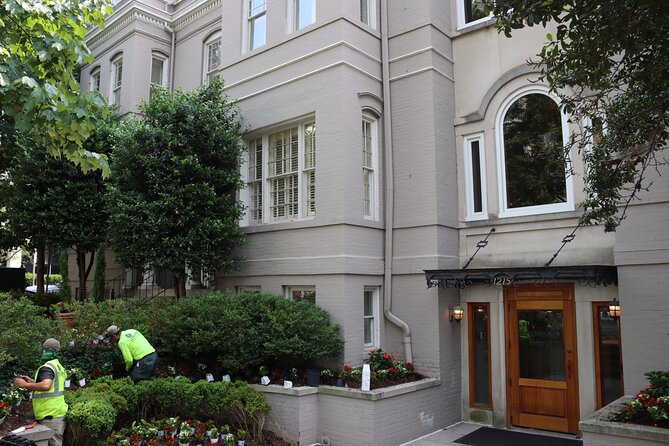
This is an afternoon walking tour, so plan like it’s outdoors for most of the time.
- Wear comfortable shoes with good grip. Residential DC sidewalks can be uneven, and you’ll be moving continuously.
- Bring water, especially if the day is warm. Even with a short break rhythm, you’ll feel the walk.
- Use bug spray if conditions are even mildly buggy. Chris reportedly comes prepared, but you’ll still want your own.
- Come with curiosity. You’ll get more from the tour if you like asking what motivated a decision or what life looked like behind the title.
Weather matters. The experience requires good weather, and if it’s canceled for poor conditions, you’ll be offered a different date or a full refund. That’s a simple rule, but it affects when you should schedule it—pick a day with some slack.
Who should book this Presidents Walking Tour (and who might not love it)
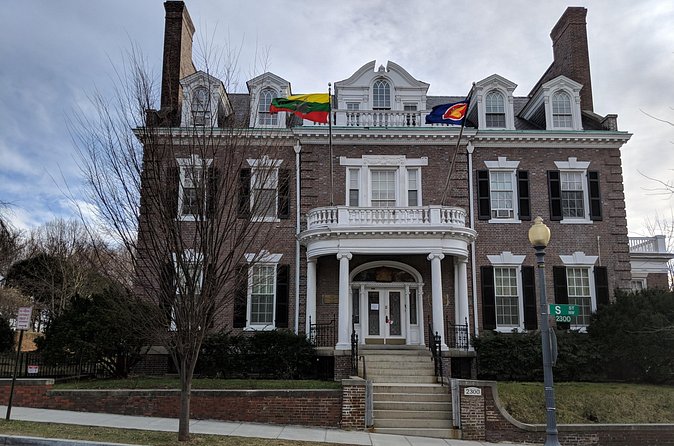
This tour is a great fit if you:
- Love US presidential history but want it connected to real places
- Like stories that mix politics with personal drama—romance, parties, power struggles
- Enjoy smaller group settings where you can ask questions
- Want a DC neighborhood experience that feels quieter and more local than the big monument areas
You might think twice if you:
- Want mostly indoor museum-style stops (this is street-and-building views)
- Have very limited tolerance for walking time
- Are visiting on a weather-fragile day with no flexibility
The upside is that the tour is described as suitable for most travelers and is set up with service animals allowed and near public transportation. So it’s generally easy to plan around, especially compared with tours that start in remote areas.
Should you book this Presidents Residences walking tour?
Yes, if you want presidential history that feels like you’re following the secret map of DC. For $27.50, you get a structured route across two key neighborhoods, no extra admissions, and a guide—Chris—who brings humor and stays engaged with the group.
I’d book it if you’re:
- On a tight schedule and want high story density
- Trying to connect major presidents to real geography
- Bringing friends or family who know some presidents, but want the “how and why” behind the headlines
If weather is unpredictable, choose your date carefully. Otherwise, this is one of the best ways to make Washington feel personal—because you’re not just seeing DC. You’re seeing where the power players lived and how close the drama sometimes was.
FAQ
How long is the Residences of the Presidents Walking Tour: Dupont and Kalorama?
It runs for about 2 hours 30 minutes.
What time does the tour start?
The tour starts at 2:00 pm.
Where do I meet for the tour?
You’ll meet at Krispy Kreme, 1350 Connecticut Ave NW, Washington, DC 20036.
How many people are in the group?
The tour has a maximum of 8 travelers.
Is the tour in English, and will I get a mobile ticket?
Yes, it’s offered in English, and you’ll use a mobile ticket.
Is there admission to pay for the stops?
Admission tickets are listed as free.
Is the tour near public transportation?
Yes, it’s near public transportation.
Are service animals allowed?
Yes, service animals are allowed.
What happens if weather is bad?
The tour requires good weather. If it’s canceled due to poor weather, you’ll be offered a different date or a full refund.
What is the cancellation policy?
Free cancellation is available. You can cancel up to 24 hours in advance for a full refund. If you cancel less than 24 hours before the start time, the amount paid won’t be refunded.