REVIEW · WASHINGTON DC
Historic Georgetown: History, Gossip, & Architecture Walking Tour
Book on Viator →Operated by DC by Foot · Bookable on Viator
Georgetown has secrets on every corner. I like the small-group size because you actually hear the stories, from old port life to the gossip that shaped the neighborhood, plus the tour stops at Old Stone House and the working canal area instead of just passing by big sights. I also like how the guide ties architecture to real people, not just dates. One heads-up: you’re on hills and rough surfaces like brick sidewalks and cobblestones, so good walking shoes matter.
This is a 2-hour, English-language walk that starts at C&O Canal Lock 3 and ends near Georgetown University at the intersection of 37th and O St NW. You get a mobile ticket, and the group cap of 15 keeps the pace humane and questions welcome.
The $49 price feels fair for what you get: a licensed guide, in-depth commentary, and stops that are free to enter. Do note the tour runs in good weather, so plan for an alternate date or a refund if conditions aren’t right.
In This Review
- Key highlights to look for
- Getting Oriented: Meet at C&O Canal Lock 3
- Georgetown’s port streets: cobblestones, homes, and the gossip angle
- The C&O Canal: the lock you can actually picture
- Old Stone House (built 1766): from tobacco tales to preservation
- Hedin House Apartments and the Kennedy thread
- Georgetown University spires: Patrick Healy and John Carroll
- Exorcist Steps: the stairway with pop-culture pull
- Martin’s Tavern: classic Georgetown comfort food stop
- Price and guide quality: why $49 works here
- Terrain and pacing: the main thing to plan for
- Who should book this Georgetown walk
- Should you book Historic Georgetown: History, Gossip, & Architecture?
- FAQ
- Where does the tour start and end?
- How long is the Historic Georgetown walking tour?
- How much does the tour cost?
- What group size should I expect?
- What language is the tour offered in?
- Do I need to print anything?
- Is it mainly indoors or outdoors?
- Are service animals allowed?
- Is it okay for most people to participate?
Key highlights to look for
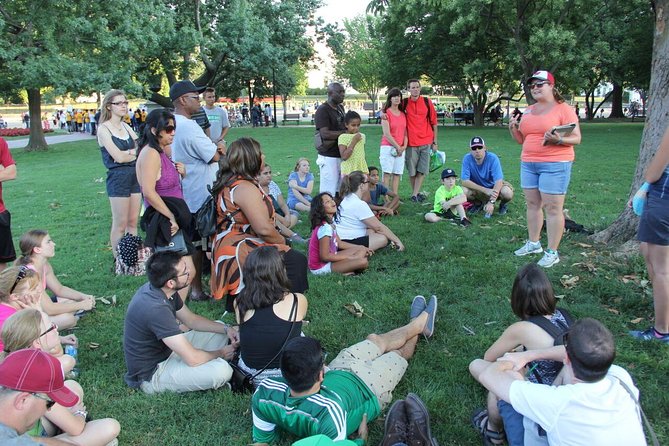
- 15-person cap: easy pace and lots of guide interaction
- C&O Canal Lock 3: see a working lock gate and hear how boats moved through town
- Old Stone House (built 1766): a preserved NPS site with a surprising later life
- Georgetown University focus: spires of Patrick Healy and John Carroll’s statue
- Exorcist Steps photo moment: the famous stairway tied to the 1970s film
- Martin’s Tavern: a long-running Georgetown institution with classic food and atmosphere
Getting Oriented: Meet at C&O Canal Lock 3
Your tour begins at C&O Canal Lock 3 in Georgetown. Starting here is smart, because it sets the theme fast: Georgetown wasn’t just a pretty neighborhood, it was a working port area with real transportation and real commerce.
You’ll get a feel for how the canal worked in the industrial stretch of Georgetown, including what a working lock looks like in practice. Even if you’ve seen canal maps before, standing there makes the history click in a more physical way.
This is also a good “warm-up” moment before the hills and cobblestones. You’re not jumping straight into the hardest-looking streets.
You can also read our reviews of more walking tours in Washington DC



Georgetown’s port streets: cobblestones, homes, and the gossip angle
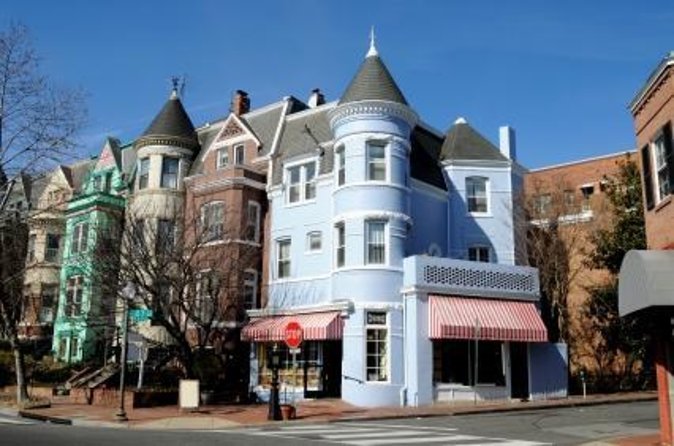
From the canal area, the walk shifts into Georgetown’s historic core—cobblestone streets, older homes, and gardens that look like they’ve been holding their breath for centuries. You’ll see how the neighborhood has evolved into a place people shop and dine, but the scale, brickwork, and street feel still give you that time-travel sense.
The tour’s real secret sauce is how your guide connects places to people and rumors. You’ll hear the kind of stories that don’t fit neatly into museum placards: family connections, small decisions, and the everyday character of the neighborhood.
If you care about architecture, you’ll also notice how the guide uses visual cues to explain what you’re looking at—materials, forms, and why certain buildings were built the way they were. The result is faster understanding than a walk where you only rely on your own guesswork.
The C&O Canal: the lock you can actually picture
One of the stops is the canal itself through Georgetown’s industrial section. You’ll learn about the canal boats and the practical mechanics of how they moved along the waterway.
The highlight here is seeing a working lock gate. It turns what can feel like abstract history into something concrete you can point at while the guide explains the system.
It’s also a nice pacing break. Canal time tends to slow your steps for a minute, which helps when you later hit brick sidewalks and older streets.
Old Stone House (built 1766): from tobacco tales to preservation
Then you’ll reach the Old Stone House area, one of the oldest buildings in Washington DC. Built in 1766, it’s run by the National Park Service, and it has a garden where you can sit for a breather.
What makes this stop memorable is the twist in the building’s story. It later served as a car dealership up until 1953, and then it was taken over for historic preservation—so the building didn’t just “stay frozen in time.” It adapted, and it survived.
This is the kind of stop where the architecture matters, but the human story matters more. The guide connects the building to the nearby port world, where tobacco trade and tall tales were part of the neighborhood’s everyday energy.
Hedin House Apartments and the Kennedy thread
As you keep walking, you’ll spot homes tied to prominent Georgetown families. One key moment is seeing the Hedin House Apartments, which connects you to the Kennedy family footprint in the neighborhood.
The idea isn’t that you’re collecting famous names like souvenirs. It’s that those names explain why certain homes and neighborhoods gained attention and how long-term residents shaped the area’s identity.
You’ll also hear that the Kennedys lived in nearly a dozen different homes in Georgetown. That kind of detail changes your mental map: Georgetown becomes less like a single landmark and more like a lived-in network of addresses.
You can also read our reviews of more historical tours in Washington DC






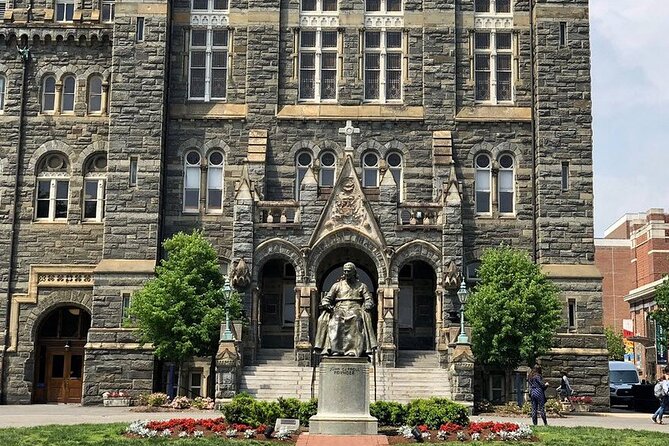
Georgetown University spires: Patrick Healy and John Carroll
Georgetown University is part of the route, and the tour uses it to show you how the neighborhood balances old port history with a major academic presence.
You’ll learn the school was founded in 1789. Then you’ll look toward the Patrick Healy building, known for its spires, and you’ll also see the statue of founder John Carroll.
On a warm day, the university front area is the kind of place where students lounge on the grass, read, or toss a frisbee. Even if your day is cooler, you’ll still feel why this spot works as a “pause” during a walking tour: it’s open, it’s social, and it gives your legs a moment of calm.
Exorcist Steps: the stairway with pop-culture pull
Near the end, you’ll come by the Exorcist Steps. The stairway became famous through the 1970s film with the same name.
This stop is quick but fun, especially if you enjoy the way pop culture rides on real geography. The guide typically frames it so you can connect the stairs to the neighborhood’s older layout, not just the movie moment.
And because the tour wraps up near Georgetown University, you’re in a natural position to keep exploring on your own right after.
Martin’s Tavern: classic Georgetown comfort food stop
One of the later stops is Martin’s Tavern, a Georgetown institution that’s been locally owned since 1933. The place has dark wood paneling, black-and-white photos on the walls, and that “regulars at the bar” kind of mood.
This is the sort of stop that works even if you’re not ordering food. You get atmosphere, plus a sense of what the neighborhood feels like when you’re not just looking at buildings.
If you do want to eat, Martin’s Tavern offers classic American fare and has both indoor and outdoor seating. It’s a good place to grab a late snack after the walk, when your feet want something warm and solid.
Price and guide quality: why $49 works here
At $49 for about 2 hours, this tour hits a sweet spot. It’s not a long, pricey day of transit-heavy sightseeing. Instead, you pay for time with a professional, licensed guide and focused storytelling in a tight area where details matter.
Also, many of the stops don’t add extra admission costs. Your time isn’t eaten up by ticket lines at museums, and you still get architecture, institutions, and neighborhood history threaded together.
What really justifies the price is the guide style. In feedback, guides such as Vicky, Becca, Ingeborg, Eli, Georgia, and Wayne are repeatedly praised for staying engaging and for sharing more than just facts.
A few examples of what gets mentioned:
- Vicky gets called out for being exceptionally engaging, and for following up after the tour with a text that includes places she likes for coffee and food.
- Becca is praised for keeping people interested even on cold, damp mornings, with a strong match between historic homes and the architecture details you came for.
- Ingeborg is remembered for bringing a good dollop of gossip along with the history and for keeping the tour entertaining.
- Eli is noted for humor and for answering detailed questions, even from tougher crowds.
- Wayne is singled out for facts plus anecdotes, and for using visuals on an iPad to make the story easier to follow.
That mix matters because Georgetown can look pretty straightforward at first glance. A guide turns it into a story you can actually track while you walk.
Terrain and pacing: the main thing to plan for
This is a walking tour, and Georgetown’s streets can be demanding. If you’re sensitive to hills, or if cobblestones and brick sidewalks aren’t your favorite, wear supportive shoes and plan on taking it slow.
The good news is that the group size stays capped at 15, and the tour is built around a manageable, about-2-hour window. Most people can participate, but it’s still smart to treat this as a real walking route, not an easy stroll on flat pavement.
A light layer helps too. This tour needs good weather, and you’ll spend enough time outside that comfort becomes part of the experience.
Who should book this Georgetown walk
I’d point you toward this tour if you’re:
- visiting Georgetown for the first time and want context fast
- interested in architecture plus small human stories, not only major monuments
- the type who likes a bit of gossip mixed into history
- someone who wants to finish near Georgetown University so you can keep exploring
This is less ideal if you want a ride-based tour, step-free access everywhere, or a long day with lots of extra stops far outside Georgetown.
If you’re debating between this and more typical sightseeing routes, this one is built for people who want to understand the neighborhood, not just tick off landmarks.
Should you book Historic Georgetown: History, Gossip, & Architecture?
Yes, if your goal is to understand Georgetown as a place with layers—port life, famous residents, university influence, and the kind of real-world details that make neighborhoods feel lived in.
Book it now if you like small groups, guided storytelling, and the idea of finishing with a strong starting point for more independent exploring near Georgetown University.
Skip it only if your walking limits don’t match hills and cobblestones, or if you’re traveling during a season where weather reliability is hard. When conditions are good, this is the kind of tour that makes Georgetown feel legible fast—and a lot more fun than it looks on a map.
FAQ
Where does the tour start and end?
The tour starts at C&O Canal Lock 3 (Lock 3, Washington, DC 20007). It ends near Georgetown University at the intersection of 37th and O St NW (3625 O St NW, Washington, DC 20007).
How long is the Historic Georgetown walking tour?
It’s listed as about 2 hours.
How much does the tour cost?
The price is $49.00 per person.
What group size should I expect?
This tour is capped at a maximum of 15 travelers.
What language is the tour offered in?
The tour is offered in English.
Do I need to print anything?
You’ll have a mobile ticket.
Is it mainly indoors or outdoors?
It’s a walking tour, and it requires good weather.
Are service animals allowed?
Yes, service animals are allowed.
Is it okay for most people to participate?
Most travelers can participate. The walk does include terrain like hills and older street surfaces, so wearing good walking shoes helps.