REVIEW · WASHINGTON DC
Small Group Monuments Tour with Changing of the Guard
Book on Viator →Operated by Continental City Tours · Bookable on Viator
DC’s monuments are best when you don’t rush.
This small-group monuments tour strings together the big-ticket sights in Washington, DC, with air-conditioned driving, quick photo time, and smart explanations so you can see a lot in one half-day. I like that the plan is built for first-timers: you hit the National Mall icons plus the solemn memorials around Arlington, including a chance to line up for the Changing of the Guard.
The best part is the value of time: with a tight 4-hour window, it’s easier to get bearings and take good pictures without parking hassles. One drawback to plan around is that timing is everything—if you start late, your day can feel squeezed fast.
In This Review
- Key things you’ll care about on this tour
- A Half-Day DC Monuments Loop That Actually Works
- Getting Picked Up and Staying Comfortable in the Van
- White House, FBI Building, and the Smithsonian Area in Short, Useful Stops
- National Gallery of Art and the National Archives: Where You Learn Why It Matters
- Capitol Hill Photos Without the Headache
- World War II Memorial to Washington Monument: Outdoors That Hit Hard
- Lincoln Memorial Time: Give Yourself Space to Pause
- Arlington National Cemetery: The Changing of the Guard Decision
- The Kennedy Grave Stop and the ID Check
- Memorials That Add Meaning (and How to Handle Walking Pace)
- Price and Value: Is $85 a Smart Deal?
- Guides You Might Meet: Victor, Helga, Sebastian, Luis, Michelle
- Who This Tour Fits Best
- Should You Book It? My Decision Checklist
- FAQ
- How long is the tour?
- What does the tour cost?
- Is the tour offered in languages other than English?
- Are there admission fees for the stops?
- Where do I meet, and where does the tour end?
- Do I need ID for any part of the tour?
Key things you’ll care about on this tour
- Small group size (max 14 people) keeps the van from feeling like a moving conference room.
- Air-conditioned vehicle + bottled water helps when DC weather turns or you’re doing lots of walking nearby.
- Arlington Changing of the Guard changes the pace: plan about an extra hour if you want the ceremony.
- Not a long walking tour: you step out, see, photograph, and move on, so comfort shoes still matter.
- White House is exterior viewing (internal access has been restricted at times), but you do get the important ground-level photos.
- ID matters for the Kennedy grave stop because you’ll go through security.
A Half-Day DC Monuments Loop That Actually Works

DC can feel like two cities: a postcard-friendly core and the rest. This tour focuses on the core. In about 4 hours, you glide through the main corridors of power and remembrance, then slow down where the sights deserve it—especially around Arlington.
What makes it practical is the rhythm. You’re not stuck doing one museum queue after another. Instead, you get short stops at the big monuments, a guide who helps you understand what you’re looking at, and just enough time to enjoy each place without losing the whole afternoon to logistics.
The tour is also built for smaller groups (up to 14). That difference matters in Washington, DC. In a big bus, you spend half your time watching other people and trying to hear over engines. Here, you tend to stay more in sync with the guide’s pacing.
You can also read our reviews of more tours and experiences in Washington DC.

Getting Picked Up and Staying Comfortable in the Van
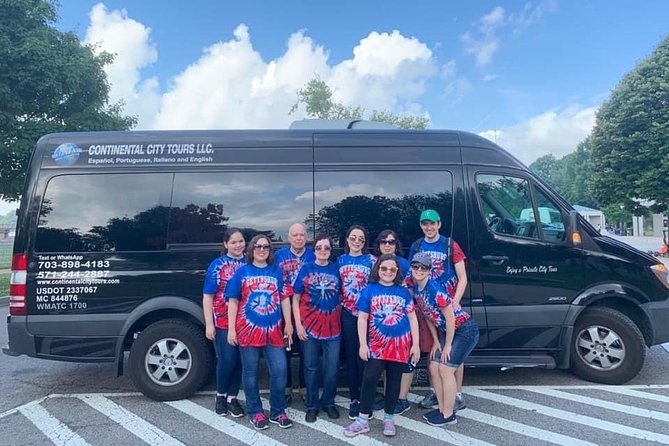
You’ll typically meet at the Smithsonian National Air and Space Museum area (650 Jefferson Dr SW) and the tour is structured to return you back there. At the same time, the experience is described as including hotel pickup, so depending on how your booking is arranged, you might be picked up rather than walking out to the meeting point.
Either way, the vehicle is air-conditioned, and bottled water is included. That sounds minor until you’re standing in sun or humidity near the Tidal Basin. The tour also runs in English and is offered in Spanish, Italian, and Portuguese, so you can match the language to your comfort level and still keep your momentum.
A quick planning note: the tour is called a monuments tour, but it’s not an all-day shuffle. You’ll be moving through a lot of ground, and the schedule is tight enough that late starts can ripple across the rest of your day—especially if you planned dinner or another timed activity after.
White House, FBI Building, and the Smithsonian Area in Short, Useful Stops
The tour starts with a classic DC moment: time near the White House. You don’t need special tickets to be there; the stop is described with free admission. You’ll get a chance for photos outside and to understand the setting—its role as the official residence and the political center of the city.
From there, you move into the National Mall orbit with the Smithsonian area. You’ll pass and look toward landmark buildings around Pennsylvania Avenue and the Mall, including the FBI Building (officially named in the early 1970s, dedicated in 1975). You also get a look toward the District of Columbia Mayor’s building area, the National Archives Building, and nearby federal structures.
One thing I really like about this early cluster is how it layers context. The White House is the headline. Then the Smithsonian and National Archives zone helps you connect it to the broader story: government, records, culture, and national identity all in the same few miles.
Possible drawback: because the stops are short, this is not the right tour if you want deep time inside every institution. Plan for photos, quick orientation, and clear talking points—not slow museum wandering.
National Gallery of Art and the National Archives: Where You Learn Why It Matters
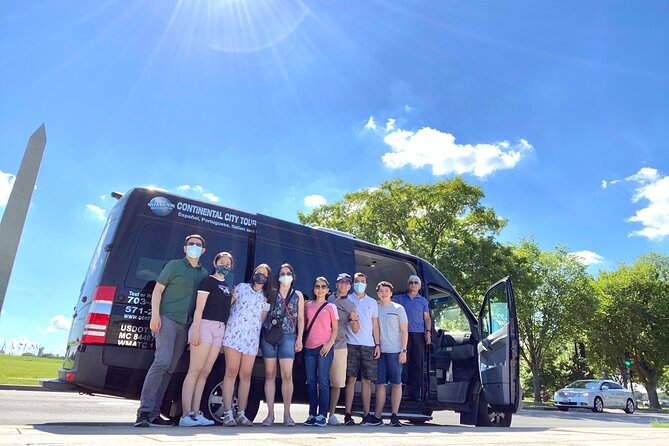
You get a stop that’s a little different from the “look-but-don’t-touch” pace. The National Archives Building is included in the sights you’ll view, and it’s home to the Declaration of Independence, the U.S. Constitution, and the Bill of Rights. Even if you do only a brief look, knowing what lives in that building changes how you see it.
The National Gallery of Art and the attached Sculpture Garden are also on the route near the Mall. This is one of those stops that makes DC feel less like a government theme park and more like a lived-in capital where art and public space matter.
If you’re the type who always wonders what a building actually contains, this portion is a good warm-up. It helps you understand why the Mall is more than a lineup of photos.
Capitol Hill Photos Without the Headache
Next up is the U.S. Capitol area. You’ll have a dedicated photo stop with free admission, and you’ll also take pictures at nearby statuary and memorials tied to major figures. The idea here isn’t to overstuff your day with Capitol-side tours. It’s to get the big images you came for, plus a quick sense of the power and symbolism concentrated in this one spot.
This is one of those practical wins of a guided loop. If you try to self-drive your way to each monument in peak traffic and parking chaos, you’ll spend energy on friction. Here, your job is just to show up at the stops and use the time well.



World War II Memorial to Washington Monument: Outdoors That Hit Hard
The tour hits the National World War II Memorial next. Admission is included, and the scale of the place is the message. You’re remembering 16 million Americans who served in World War II, and that context matters when you stand at the memorial’s outdoor spaces and read the names and symbols.
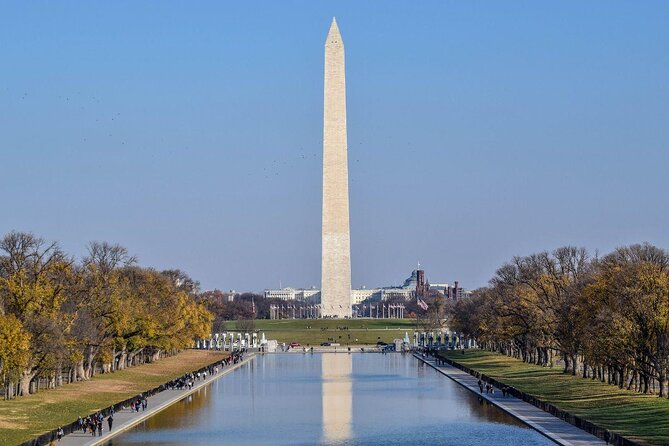
From there you shift toward the Washington Monument and other Mall landmarks. The tour makes use of quick viewing time so you can step into the “main postcard view” moment without losing the rest of the itinerary.
Then, the route layers in the Tidal Basin zone, with the MLK Memorial on the way and the Washington Monument area nearby. This stretch is especially good at sunrise or late afternoon, when the light is friendly and you can get photos without squinting.
Lincoln Memorial Time: Give Yourself Space to Pause
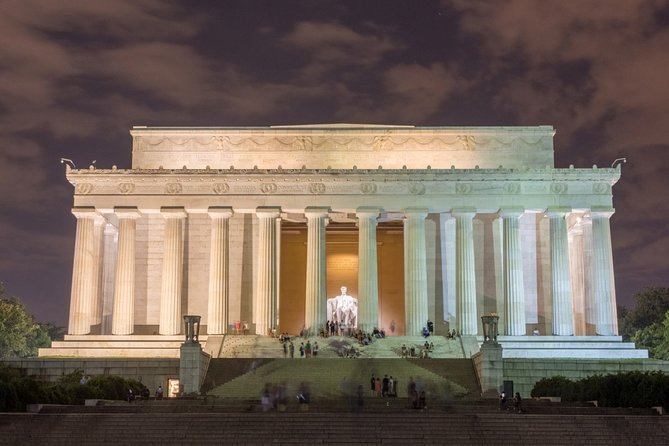
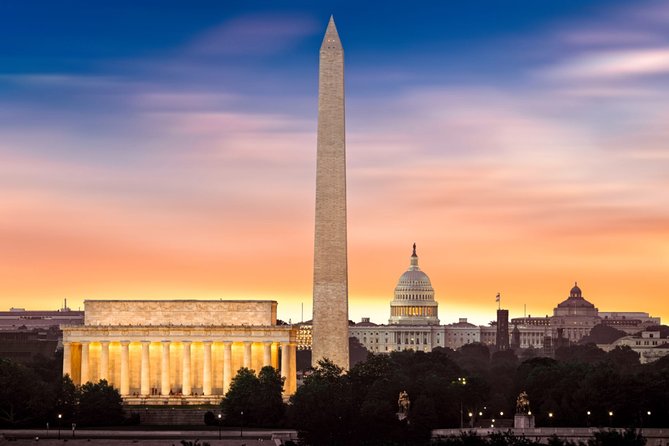
The Lincoln Memorial is a signature stop with admission included. It’s parthenon-inspired, and it sits across from the reflecting pool, with murals and a large marble figure that anchors the experience.
The Lincoln Memorial is where I’d encourage you to slow down for ten seconds longer than you think you need. Even on a short stop, take a moment to look across the pool and at the geometry. This is where DC’s memorial design language becomes obvious: sightlines, symmetry, and the way crowds gather around a central figure.
This stop is also timed well in the flow of the day. You’re not rushing from one overwhelmed museum into another. You’re moving through outdoor spaces where your eyes can reset.
Arlington National Cemetery: The Changing of the Guard Decision
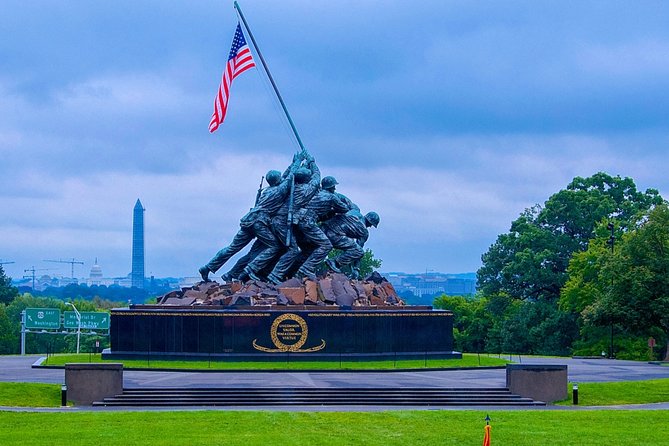
Arlington is the heart of the itinerary, and it’s also where you should make a clear choice. If you want the Changing of the Guard, you typically spend about an extra hour at the cemetery. Without the ceremony, you can often manage around 30 minutes.
Here’s the reality: ceremony time can be worth it, but it’s also the one part that can stretch your schedule. If you’re the kind of person who hates waiting, consider whether you want the ceremony or just want strong cemetery photos and quick landmark coverage.
Also: Arlington is not just a flat photo set. Even when the time is controlled, you’ll deal with paths, memorial spacing, and the way crowds form around the most photographed areas.
What I recommend: if you’re deciding between more stops or the ceremony, pick the one that matches why you came. If you came for DC’s icon lineup, do the ceremony. If you came mainly for the history lessons, focus on the big cemetery sights and don’t force extra waiting.
The Kennedy Grave Stop and the ID Check
The tour includes the John F. Kennedy grave site. One important detail: you need to bring your ID or passport to pass through security to enter the area for the grave site.
Plan for a bit of walking here too. The route includes a walk up hill to the graves of the Kennedy family members. That’s not a dealbreaker, but it’s the kind of detail that matters if you’re carrying a bag, traveling with kids, or trying to keep your shoes comfortable.
This is also a stop where security time can affect your pace. The hill walk plus the check means you should arrive ready—water bottle managed, ID at the top of your day bag, and no last-second fumbling.
Memorials That Add Meaning (and How to Handle Walking Pace)
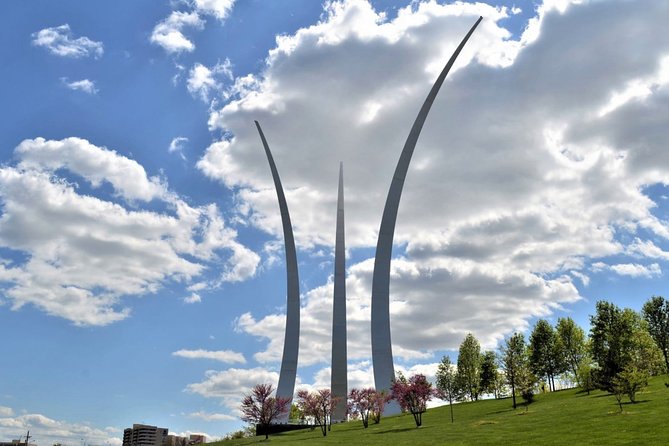
You’ll also see several major memorials beyond the headline WWII and Lincoln moments. The route includes the Korean War Veterans Memorial, the Vietnam Veterans Memorial, and additional nearby monuments that fit into the Arlington area and the broader DC remembrance corridor.
Two practical things to keep in mind:
- The tour is not a long guided walking trek. You’ll likely step out for your allotted time, then regroup to move on.
- If you’re hoping for maximum guided time inside every memorial space, adjust expectations. The format is built to cover many locations in one half-day.
If you want the most from each stop, come with one or two questions. For example: Which aspect do you want to understand, the design language or the names and stories? When you focus, even a short time feels richer.
Price and Value: Is $85 a Smart Deal?
At $85 per person for roughly 4 hours, the value depends on your travel style. If you’re trying to see a lot without wrestling with DC traffic, parking, and navigation, the price starts looking fair fast. You’re paying for a guide, coordinated timing, and transport between widely spaced stops.
This price also makes sense because many of the stops are free or have admission included. You’re not paying repeatedly for separate tickets for each major sight. Instead, your payment goes toward bundling the experience.
Where the price may feel less worth it is if you personally want deep time—like long museum visits or extended guided wandering. This is best for people who want orientation, photos, and high-impact remembrance stops.
I’d also pay attention to timing reliability. When a tour runs late, it doesn’t just shift the schedule; it can affect the rest of your day. If you have tight plans after the tour, plan a cushion.
Guides You Might Meet: Victor, Helga, Sebastian, Luis, Michelle
The experience is run by professional guides, and the names that stand out from past days include Victor, Helga, Sebastian, Luis, and Michelle. These guides have been praised for keeping things lively and for sharing lots of details you can use right away at the monuments.
In at least one case, narration has been done in more than one language during the same experience. That’s useful if your group isn’t fully aligned on one language choice, or if you want extra clarity when the guide explains symbolism.
No matter who you get, here’s the smart move: ask one targeted question when you arrive somewhere major. It helps you connect the design to the meaning, and it also makes the short stop feel less rushed.
Who This Tour Fits Best
This is a strong match if:
- you’re short on time and want the major DC monuments in one half-day
- you prefer a small group and smooth transportation over self-driving
- you want outdoor memorial time, not just museum tick-boxes
- you like structure but still want flexibility on how long you spend at stops
It might be less ideal if you need a fully narrated, step-by-step guide accompanying you inside every memorial space, for every minute. The format is built for coverage and regrouping, not one-on-one walking time at each site.
Should You Book It? My Decision Checklist
I’d book this tour if you want a guided way to see the National Mall icons plus the Arlington memorial circuit, and you like the idea of a compact day that keeps you moving.
Before you book, check your priorities:
- If the Changing of the Guard is a top reason for your trip, make room for extra time at Arlington.
- If you plan to go from the tour to another night activity, build in a buffer in case the start runs late.
- If you’re doing the JFK grave stop, keep your ID or passport ready so you’re not stressed by security.
If you want DC in one efficient pass, with air-conditioned comfort, helpful explanations, and a route that hits the places most people come to see, this is a solid way to spend your hours.
FAQ
How long is the tour?
The tour runs for about 4 hours.
What does the tour cost?
The price is $85.00 per person.
Is the tour offered in languages other than English?
Yes. It is offered in English and also available in Spanish, Italian, and Portuguese.
Are there admission fees for the stops?
Many stops are listed with free admission. Some key sites show admission as included, including the National World War II Memorial, the Lincoln Memorial, and the John F. Kennedy grave site.
Where do I meet, and where does the tour end?
The tour starts at Smithsonian’s National Air and Space Museum (650 Jefferson Dr SW, Washington, DC 20004). It ends back at the meeting point.
Do I need ID for any part of the tour?
Yes. You need to bring your ID or passport to pass through security for the John F. Kennedy grave site.