
REVIEW · WASHINGTON DC
VIP Private Tour of Washington DC
Book on Viator →Operated by RSN Tours · Bookable on Viator
Washington can feel like a lot at once. This VIP private DC tour turns it into a tight, story-driven route that hits the big sights without the stress. You’ll roll between landmarks with your own guide, stop for photo time, and learn what each place actually meant at the moment it was built.
Two things I really like: you get snacks and bottled water included, and you don’t waste your day figuring out where to go next. The private setup also means you can ask questions and linger when something sparks curiosity—like a specific battle, a Supreme Court case idea, or why a memorial is shaped the way it is.
One watch-out: White House access is outside-only on this tour. Even when you’ll be able to see the building area, fences and event closures can change how close you get, so plan for an exterior viewpoint and bring your own White House reservation if you want to go inside.
In This Review
- Key Highlights at a Glance
- A Private DC Loop That Saves Your Legs (and Your Patience)
- Price and Value: What $703 Gets for Up to 6 People
- Meet the Team: Guides and Drivers That Actually Matter
- The Flow of the Day: From Garfield to the Cathedral
- Stop-by-Stop: What Each Place Adds to the DC Story
- James A. Garfield Sculpture and the Idea of Civic Leadership
- U.S. Capitol: The Work of Democracy, Not Just a Pretty Building
- Supreme Court: Power, Law, and Why It Looks the Way It Does
- Ulysses S. Grant Memorial and the Civil War Thread
- Lincoln Memorial: The Big Icon, Explained
- Library of Congress at the National Book Festival Area
- Jefferson Memorial and the Roots of Political Thought
- Dwight D. Eisenhower Memorial: WWII, Cold War, and Moving Parts
- Franklin Delano Roosevelt Memorial: The Era That Still Echoes
- George Mason Memorial: A Lesser-Known Name With Real Importance
- Air Force Memorial: Service, Sacrifice, and Modern Warfare
- Vietnam Veterans Memorial: Names, Grief, and National Memory
- Martin Luther King, Jr. Memorial: A Message With Structure
- Pentagon Memorial: From 9/11 to Ongoing Impact
- U.S. Marine Corps War Memorial (Iwo Jima): Iconic and Heavy
- Korean War Veterans Memorial: A War Many People Know Less About
- Albert Einstein Memorial: A Scientist Stop That Feels Like DC
- National World War II Memorial: The Big One in the Right Spot
- The White House: Outside Viewing Only, Inside Requires Your Plans
- National Japanese American Memorial: A Short Stop With a Clear Meaning
- National World War I Memorial: The First Modern-Scale War Thread
- Washington National Cathedral: A Break for Thought and Architecture
- Potomac River Views: The Quick Reset Photo Stop
- Ford’s Theatre: April 14, 1865 and the Aftershock
- Tidal Basin: A Final Look That Often Feels Seasonal
- What’s Included (and What You Should Bring Anyway)
- Timing, Group Size, and Accessibility Notes That Affect the Day
- Who Should Book This Tour (and Who Might Skip It)
- Should You Book the VIP Private Tour of Washington DC?
- FAQ
- How long is the VIP Private Tour of Washington DC?
- What’s the group size limit?
- Are snacks and drinks included?
- Does the tour include tickets or admission to the White House?
- Are the other stops admission-free?
- Is pickup available?
- What is the cancellation policy?
Key Highlights at a Glance
- Private group of up to 6 with a guide who can pace the stops for your crew
- Snacks and bottled water included, so you don’t hunt for food mid-route
- Major DC anchors in one loop: Capitol, Supreme Court, Lincoln, MLK, and more
- Plenty of stop time built into the schedule for photos and walking around the grounds
- Outside views focused on the White House (inside visits require your own plans)
A Private DC Loop That Saves Your Legs (and Your Patience)

DC has a way of making first-timers feel like they need a spreadsheet. This tour does the opposite. You get picked up near Independence Avenue, then you’re guided around the monuments and federal buildings that define the city’s story.
The best part is the pacing. Stops are short when they should be short, then longer when the place really deserves it. You’ll also get a real sense of the layout—where the civic core sits, how the memorials line up, and how the war tributes are clustered so the day makes sense as one theme instead of random photo stops.
I also appreciate the “real-world” feel. This isn’t just a slideshow drive. The guide builds quick context at each stop, so when you look at the statues and names, they connect to something beyond just dates.
You can also read our reviews of more private tours in Washington DC



Price and Value: What $703 Gets for Up to 6 People

At $703 per group (up to 6), the math works best when you’re traveling with at least a couple people. If you’re solo, it can feel steep compared with a standard group bus tour. If you’re a family, a small friend crew, or anyone who hates crowds, it starts to look like a fair trade.
Here’s why the value holds up: you’re not only paying for transportation. You’re paying for (1) a guide who explains what you’re seeing, (2) direct routing through the DC highlights, and (3) a schedule that gives you time at each stop to actually enjoy the view instead of rushing through.
Add the included snacks and bottled water, and this becomes one less thing to plan during a city day where everything takes longer than you think. Also, many of the stops on the route are listed with admission free access, so your day budget stays predictable.
Meet the Team: Guides and Drivers That Actually Matter

The private format shines when the guide understands how to move a group through DC without turning it into a sprint.
In the reviews, I saw guide and driver names come up repeatedly. Regis is praised for making the history feel clear and engaging, with lots of story detail and symbolism you might otherwise miss. Kareem gets credit for getting the route working around construction and security fencing, keeping the group close to the major sites. Smokey is specifically mentioned for helpfulness and for making the tour smooth, especially when travelers had mobility needs.
Even without naming every staff member, the pattern is the same: the people running this tour seem to focus on timing, comfort, and making sure you don’t just stop at a place—you understand why you’re there.
The Flow of the Day: From Garfield to the Cathedral

Your tour is built around a logical DC route, moving from one landmark cluster to the next. You’re at each stop for a short window, usually around 5–15 minutes depending on the site, and you’re encouraged to use that time for quick reading, a couple photos, and a walk around the immediate area.
A big perk of this kind of structure: you don’t have to decide between “let’s see the Capitol” or “let’s see the memorials.” You can do both in one outing, which is huge if you only have one day in town.
One practical tip: wear shoes that handle stone and curb edges. The schedule includes multiple memorial areas and memorial wall readings where you’ll naturally slow down. Comfortable feet turn that natural slowing down into a bonus instead of a problem.
Stop-by-Stop: What Each Place Adds to the DC Story
You can also read our reviews of more tours and experiences in Washington DC






James A. Garfield Sculpture and the Idea of Civic Leadership
You start at the James Garfield sculpture, a quick stop that sets the tone. Even though it’s only about 5 minutes, the guide uses it to frame the theme of leadership in American life: who rises, how they serve, and what the era valued.
Short opening stops matter because they get you into “DC mode.” Once you’re mentally in the right gear, the later memorial explanations land much better.
U.S. Capitol: The Work of Democracy, Not Just a Pretty Building
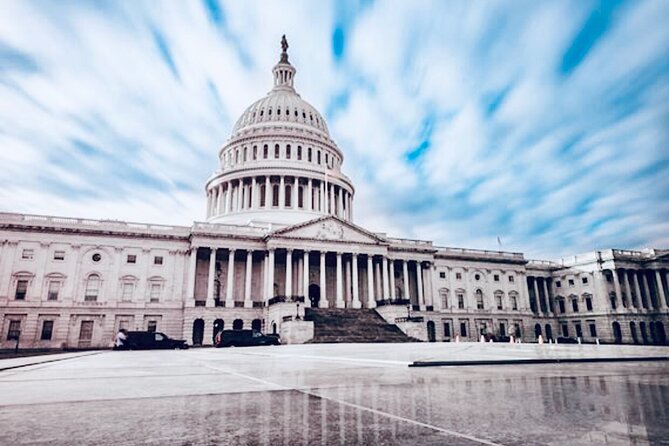
Next is the U.S. Capitol, where you’ll get a story about democracy as a process, not a slogan. You’re allotted around 10 minutes here, enough time to take in the scale and then look at the surroundings with a better lens.
If you’ve ever walked around the Capitol grounds and felt like you needed someone to translate what you’re seeing, this is where the tour earns its keep. The guide turns architecture and placement into meaning.
Supreme Court: Power, Law, and Why It Looks the Way It Does
You’ll move on to the Supreme Court for another ~10 minutes. This is one of those stops where the building itself does a lot of talking. The guide gives you the story behind the Court’s role so that the visit connects to American life beyond civics class.
Think of it as a bridge between “democracy as voting” and “democracy as law.” That context helps you understand the rest of the memorial route, which keeps circling back to rights, conflicts, and who gets remembered.
Ulysses S. Grant Memorial and the Civil War Thread
The Ulysses S. Grant Memorial stop runs about 10 minutes. It’s your early Civil War anchor, and it helps put later war memorials into a longer timeline.
A drawback with fast DC routes is that wars can blur together. The guide’s storytelling here helps you keep the eras separate, so you don’t just see names—you place them.
Lincoln Memorial: The Big Icon, Explained
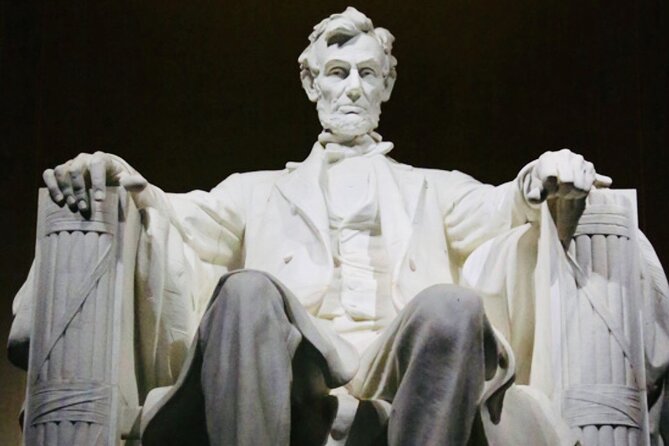
Then comes the Lincoln Memorial with about 15 minutes. This is the longer stop because Lincoln deserves attention. You’ll get the story of the 16th president and why the site became a symbol for the country later on.
What I like about giving Lincoln this extra time is that you can do more than snap photos. You can read what you missed, look for details, and soak up the meaning without feeling rushed.
Library of Congress at the National Book Festival Area
Next is a Library of Congress National Book Festival stop, around 5 minutes. It may feel like a curveball compared with the monuments, but it adds a smart dimension: DC isn’t only courts and presidents. It’s also the institutions that shape ideas.
If you like the connection between law, government, and culture, this one slot gives you a quick taste without derailing the schedule.
Jefferson Memorial and the Roots of Political Thought
You’ll stop at the Jefferson Memorial for about 15 minutes. The guide connects you to the story of the third U.S. president and why his legacy is still discussed in policy debates today.
This is one of the places where DC’s “founding principles” become real. The explanation helps you see Jefferson not as a name on a plaque, but as a person tied to how America built its political language.
Dwight D. Eisenhower Memorial: WWII, Cold War, and Moving Parts
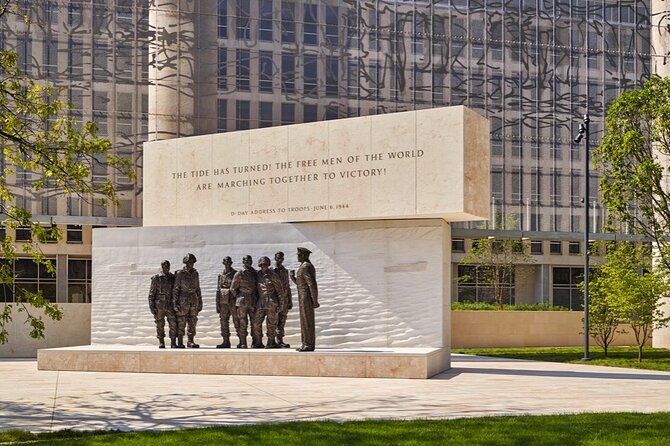
The Dwight D. Eisenhower Memorial is about 10 minutes. This stop adds a layer between the founding era memorials and the later 20th-century war tributes.
It’s a good breather, too. After several stops centered on presidents and foundational ideas, Eisenhower shifts the focus toward modern military power and the changing threats of the era.
Franklin Delano Roosevelt Memorial: The Era That Still Echoes
At the Franklin Delano Roosevelt Memorial, you’ll get roughly 10 minutes. The guide frames FDR’s story in a way that helps the larger DC memorial wall feel connected instead of scattered.
This stop is especially helpful if you know the basics but want a clearer picture of what was at stake and how the country responded.
George Mason Memorial: A Lesser-Known Name With Real Importance
Then comes a quick stop at the George Mason Memorial (~5 minutes). Mason isn’t as famous as the presidents on the list, but the tour treats him like he belongs here because he helped shape key ideas.
If you enjoy the sense of discovery that comes from seeing one name you didn’t expect, this is a nice payoff. In a long day, these shorter stops can be the ones you remember most.
Air Force Memorial: Service, Sacrifice, and Modern Warfare
The Air Force Memorial stop takes about 10 minutes. The guide gives you the story tied to the Air Force and the broader military context behind it.
This one helps you move beyond “big battles” and think about how modern wars involve technology, strategy, and long-range responsibility.
Vietnam Veterans Memorial: Names, Grief, and National Memory
Next is the Vietnam Veterans Memorial, around 10 minutes. The guide’s explanation gives context for how the site works emotionally and historically.
This is also one of the moments where you’ll likely spend extra time reading names if you’re moved by it. The schedule gives you enough room to stand, look, and understand why this memorial hits people hard.
Martin Luther King, Jr. Memorial: A Message With Structure
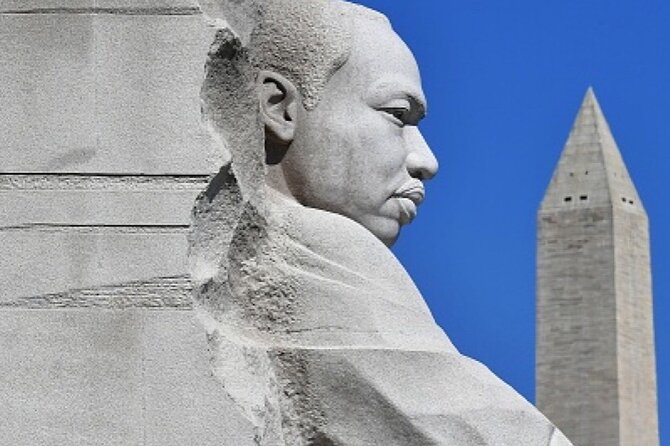
The Martin Luther King, Jr. Memorial comes with about 15 minutes. You’ll learn the story of Dr. King and why the memorial is designed to reflect the movement’s message and style.
This stop pairs especially well with the war memorials because it puts “conflict” into a wider frame: rights, civil struggle, and the fight for change.
Pentagon Memorial: From 9/11 to Ongoing Impact
Then it’s the Pentagon Memorial for around 10 minutes. The guide connects the tragedy of 9/11 to how the country’s sense of security and memory changed afterward.
Even if you already know the outline, the memorial explanation helps you see what people chose to remember and how that shapes public space.
U.S. Marine Corps War Memorial (Iwo Jima): Iconic and Heavy
The U.S. Marine Corps War Memorial is about 10 minutes. You’ll hear the story tied to the Iwo Jima memorial, which is powerful for how recognizable it is and how much it carries underneath the surface.
This is a solid “photo stop with purpose.” You’ll get shots, but you’ll also get the story that makes the image stick.
Korean War Veterans Memorial: A War Many People Know Less About
The Korean War Veterans Memorial stop is about 10 minutes, with a story that fills in what many people only vaguely remember.
For me, the value is that it prevents gaps. When your DC day includes wars from multiple decades, the tour helps you keep track of which conflict is which.
Albert Einstein Memorial: A Scientist Stop That Feels Like DC
The Albert Einstein Memorial is quick at about 5 minutes, but it’s a smart reminder that DC honors more than presidents and soldiers.
If you like the mix of government and ideas, you’ll probably enjoy the shift here. It gives your day a human, intellectual note.
National World War II Memorial: The Big One in the Right Spot
Next is the National World War II Memorial for around 10 minutes. The guide frames World War II in a way that helps you see why the site is designed the way it is and why it matters to American identity.
This is also a great moment to slow down for a second and let the day’s theme become clear: DC memorials aren’t just decoration. They’re a national memory system.
The White House: Outside Viewing Only, Inside Requires Your Plans
Then you reach the White House area for about 15 minutes. Here’s the key point: the tour does not include a tour inside the White House. You’ll learn the story of the building, but you’ll need to make your own reservation if you want to go inside.
One more reality check: security fencing and event closures can affect how close you get for exterior views. That doesn’t mean you’ll miss it, but it does mean you should expect an outside look, not a Hollywood front-door moment.
National Japanese American Memorial: A Short Stop With a Clear Meaning
You’ll pause at the National Japanese American Memorial for about 5 minutes. The guide shares the story tied to Japanese Americans, giving you a quick but meaningful context stop between larger war tributes.
National World War I Memorial: The First Modern-Scale War Thread
Then comes the National World War I Memorial, also about 5 minutes. The guide gives you the story of World War I, rounding out the “war memory” arc across the 20th century.
This matters because DC tends to split wars across different sites. A tour helps connect the dots fast.
Washington National Cathedral: A Break for Thought and Architecture
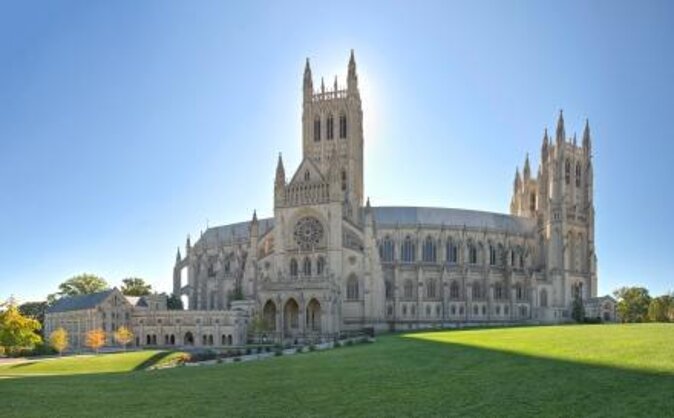
Next is Washington National Cathedral, around 10 minutes. You’ll hear the story of the Cathedral, which makes a nice change of pace from the more tightly packed memorial walls.
Even if you only see the immediate area and get a short explanation, it helps reset your brain. Cathedral architecture gives your day breathing room.
Potomac River Views: The Quick Reset Photo Stop
Then it’s the Potomac River for about 5 minutes. Expect a view break, not a long walk. This is where you can step back, frame photos, and get a clearer sense of DC’s geography.
Ford’s Theatre: April 14, 1865 and the Aftershock
At Ford’s Theatre, you’ll get about 5 minutes and hear what happened there on April 14, 1865. This stop adds a dramatic historical anchor to the Lincoln Memorial thread earlier in the day.
Short as it is, it’s the kind of stop that turns “history trivia” into something more immediate.
Tidal Basin: A Final Look That Often Feels Seasonal
Finally, the tour includes time near the Tidal Basin for about 5 minutes. You’ll get nice views there and finish the loop with a visual reset.
This is a small wrap-up that can matter a lot if you’re planning your day around photos and lighting.
What’s Included (and What You Should Bring Anyway)
Included:
- Snacks and bottled water
- Private guide and driver service as part of the tour
- Mobile ticket
Not included:
- Admission ticket for the White House (and no White House interior tour)
Because DC walking and waiting add up, I’d still bring a light layer. Weather changes quickly, and memorial mornings can turn into windy afternoons fast. The included bottled water helps, but you’ll still want to sip early and often.
Also, if you care about the White House interior, don’t assume this tour solves it. You’ll need your own reservation plan.
Timing, Group Size, and Accessibility Notes That Affect the Day
This is offered as a private tour with only your group. The limit is up to 6 people, which keeps the group manageable and makes stop time feel more personal.
The tour is listed for English, and it says most people can participate. Reviews also mention helpful support for mobility needs, including help getting in and out of the vehicle. If you or someone in your group has mobility concerns, it’s smart to contact the operator ahead of time with specifics.
Who Should Book This Tour (and Who Might Skip It)
Book it if:
- You want a one-day DC highlights route with stories at the right moments
- You’re traveling with family or a small group (up to 6) and want privacy
- You hate crowds and want time at stops instead of quick drive-bys
- You care about both the famous monuments and the “lesser-known but important” names
You might skip it if:
- You only want one or two sites and plan to explore independently
- You specifically want an included White House interior tour (this one is outside-only)
Should You Book the VIP Private Tour of Washington DC?
I’d recommend this tour when you want structure. It’s efficient without feeling like a race, and the guide-led explanations make the memorials and civic buildings easier to connect to the larger American story.
The rating is strong, with many people giving it a thumbs-up for guide quality and overall flow. Still, be realistic about the White House: you’re getting a guided stop and exterior viewpoint, not an inside tour.
If your goal is to understand DC’s major landmarks instead of just collecting photos, this is the kind of booking that pays off quickly.
FAQ
How long is the VIP Private Tour of Washington DC?
The tour is listed as about 4 to 5 hours.
What’s the group size limit?
It’s a private tour for up to 6 people per group.
Are snacks and drinks included?
Yes. Snacks and bottled water are included.
Does the tour include tickets or admission to the White House?
The tour does not include White House interior access. Admission to the White House is not included, and you’ll need your own reservation if you want to visit inside.
Are the other stops admission-free?
The listed stops show free admission tickets for each memorial or site on the route, based on the information provided, except the White House.
Is pickup available?
Pickup is offered, with the provided pickup location near 1200 Independence Ave SW.
What is the cancellation policy?
You can cancel for a full refund if you cancel at least 24 hours in advance. If you cancel within 24 hours, the amount paid is not refunded.