REVIEW · WASHINGTON DC
Washington DC: National Archives and US Capitol Guided Tour
Book on GetYourGuide →Operated by Walks - US · Bookable on GetYourGuide
In Washington, paper feels alive. This guided tour earns early entry and takes you straight to the heart of the National Archives, where the Declaration of Independence is on display. I also love that the guide doesn’t rush; you get context for what you’re seeing, not just a checklist.
Next, the standout is the original Magna Carta stop in the archives’ vault area. You’ll also get a smart walking route through the National Mall area and a real Capitol tour, including the House side and crypt.
One thing to plan around: this is a walking tour with large hills, and it isn’t suitable for strollers or some mobility needs. On rare occasions, the Capitol part may shift if Capitol Visitor Center tickets aren’t available, with a fallback to the Library of Congress or the Supreme Court.
In This Review
- Key things that make this tour work
- Entering The National Archives: Meeting Point and First-Thing Strategy
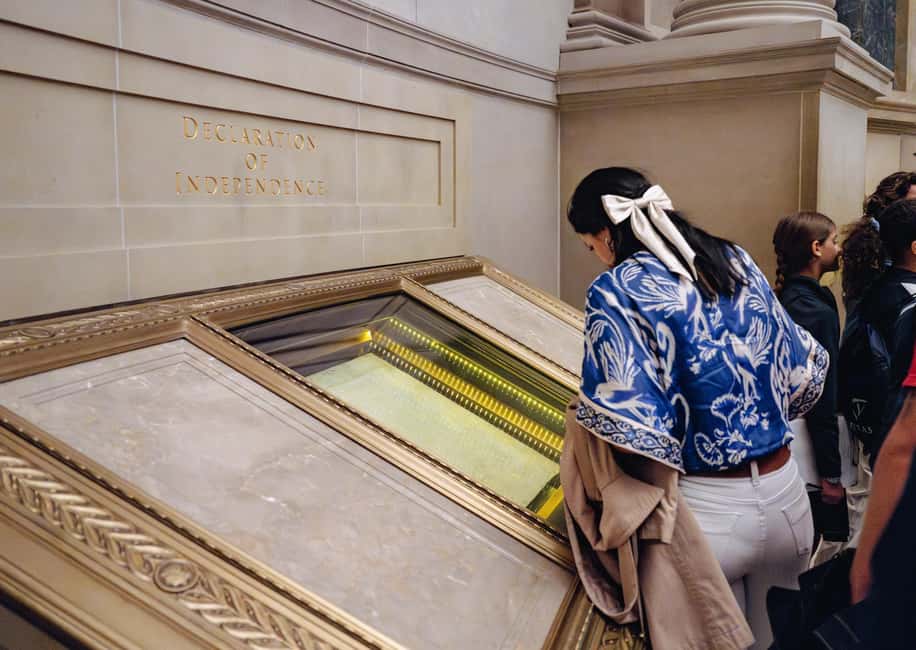
- The Rotunda and the Charters of Freedom: What You’ll Actually Look At
- Magna Carta in the Vaults: Why 1297 Belongs in Today’s Story
- National Gallery of Art Sculpture Garden: A Breather That Still Teaches
- The National Mall Walk-Through: Orienting Yourself in DC Fast
- US Capitol Arrival: Reflecting Pool Photos and Reserved Entry
- Inside the Capitol: House Area, Crypt, and the “Why It Matters” Layer
- When the Capitol Ticket Plan Changes: What to Expect
- Price and Value: What $53 Really Buys You in DC
- Getting the Most Out of the Day: Your Prep List
- Who This Tour Suits Best (and Who Might Want a Plan B)
- Should You Book This National Archives and US Capitol Tour?
- FAQ
- Where does the tour meet and end?
- How long is the tour?
- What are the main places included during the tour?
- Are tickets included for the National Archives and the US Capitol?
- What should I bring?
- Is the tour wheelchair accessible?
- What happens if Capitol Visitor Center tickets are not available?
Key things that make this tour work

- VIP-style early access to the National Archives, meeting at the front steps and entering as first visitors
- A direct route to the Charters of Freedom (Declaration, Constitution, and Bill of Rights) in the Rotunda
- Vault time for an original 1297 Magna Carta, plus the story of the late auction bid that secured it
- A guided walk through the National Gallery of Art Sculpture Garden, with quick, useful art picks
- Pre-reserved US Capitol entry with time inside the House area and the crypt
- Small groups (10 max), so questions and pacing stay human (and not cattle-herd fast)
Entering The National Archives: Meeting Point and First-Thing Strategy

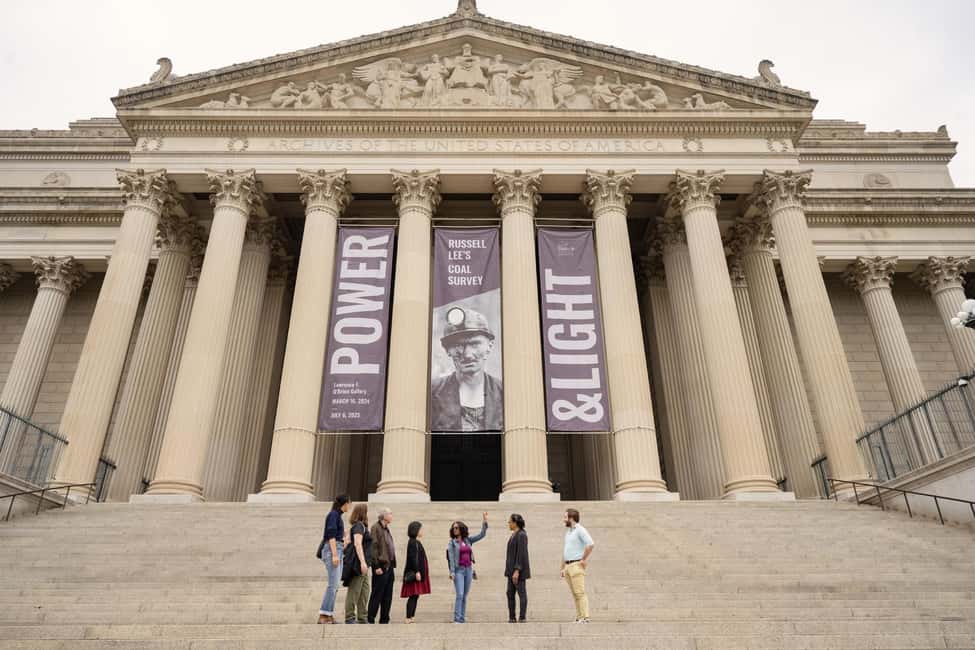
This starts in the most logical spot imaginable: the outside front steps at 701 Constitution Ave. NW. Arrive about 15 minutes early, and you’ll find your guide holding a green Walks sign. That small detail matters because this tour is built around timing—getting you in fast and moving you to the objects most people came for.
The big advantage here is that you’re not wandering the building in confusion. The plan is to go directly to the Rotunda, where the Charters of Freedom live. If you’ve ever shown up at a museum and spent half your visit searching for the main room, you’ll appreciate how this tour avoids that trap.
And yes, you’ll walk. It’s not a sit-and-read experience. You’ll want comfortable shoes, because you’re going to cover a lot of ground across multiple sites.
You can also read our reviews of more guided tours in Washington Dc



The Rotunda and the Charters of Freedom: What You’ll Actually Look At
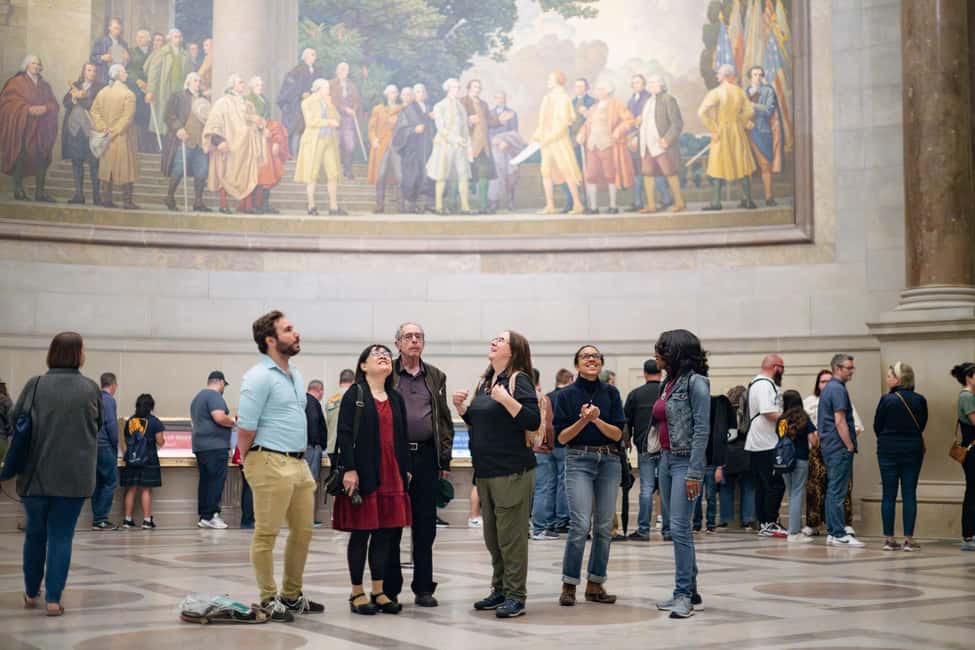
When you reach the Rotunda, the goal is simple: see the documents that shaped the early United States. The tour focuses on the Declaration of Independence, the Constitution, and the Bill of Rights—not as trivia, but as the spine of the story. That matters, because it changes how you read what you’re looking at. You’re not just staring at old ink; you’re seeing how ideas became rules.
One practical trick you’ll benefit from is the way your guide teaches you where to look. Lots of people look forward, then stop paying attention once they’ve found the main display. This tour pushes you to notice the murals above too, including why they matter to the overall message of the space. You’ll leave with a clearer sense of how the building itself helps frame the national narrative.
This is also where the guide makes the difference. In the guide lineup, names like Jim, Joe, Mike, and Ryan come up often in the best way—easygoing, friendly, and effective at keeping the group moving without feeling rushed. If you’re the type who likes to ask questions, you’re usually in good shape with a group capped at 10.
Magna Carta in the Vaults: Why 1297 Belongs in Today’s Story
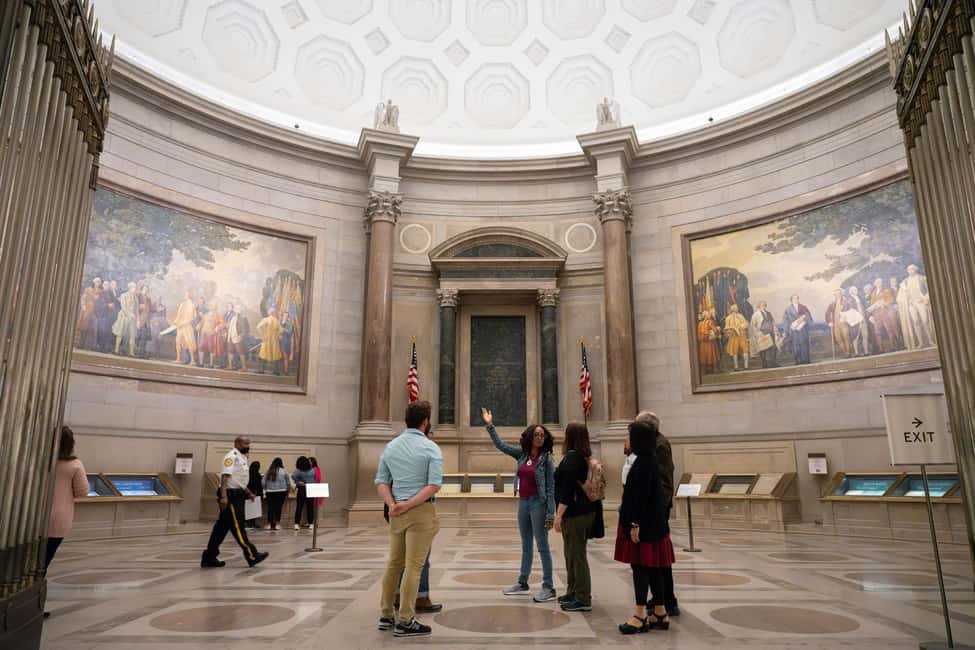
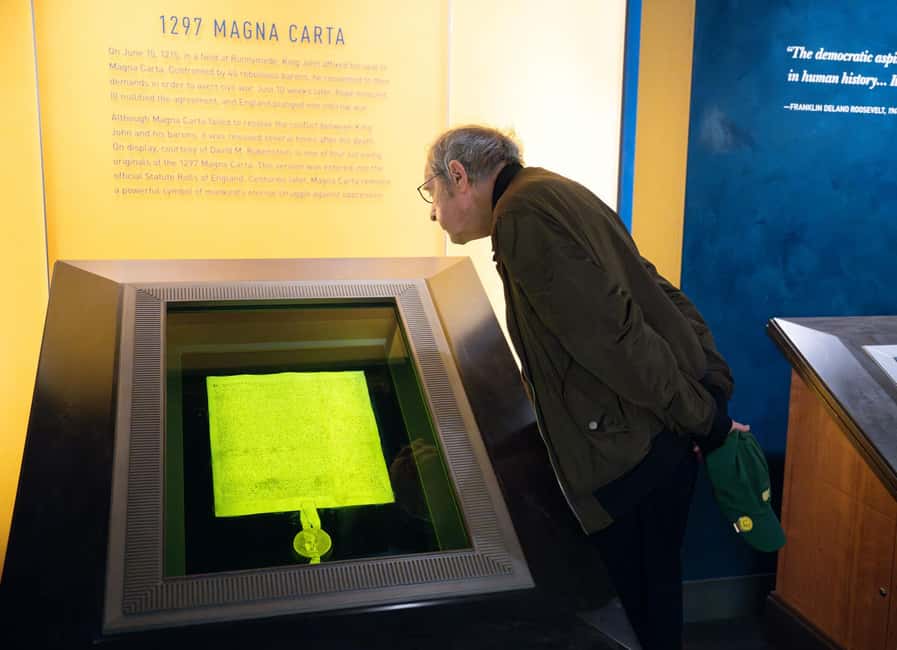
The final stop inside the National Archives takes you into the vaults for an original copy of the 1297 Magna Carta. Even if you know the basic idea—limits on power, rights, law—seeing the document in person can shift your brain from date memorization to real-world meaning. It’s one of those objects that turns a history lesson into something tangible.
What makes this stop special on this tour is the emphasis on the document’s path to America. You’ll hear the story about a last-minute auction bid that helped secure its place here. That detail is more than trivia. It gives you a sense of how fragile these artifacts can be, and how much effort it takes to preserve the links between past and present.
If the Charters of Freedom are about founding documents, Magna Carta becomes the earlier “why.” The tour ties them together so you understand that ideas didn’t appear from nowhere; they evolved through legal thinking long before the American Revolution.
National Gallery of Art Sculpture Garden: A Breather That Still Teaches

After the archives, you step outside and head through the Sculpture Garden at the National Gallery of Art. This isn’t just a scenic pause. Your guide points out interesting pieces as you walk, so the time feels useful instead of wasted between two major indoor sites.
This is the kind of stop I recommend when you’re visiting DC’s heavy hitters back-to-back. The National Archives and the Capitol can feel intense. The Sculpture Garden gives your feet a chance to reset while keeping your mind engaged with something visual and thoughtful.
It also sets you up for the next phase: the National Mall approach, where the scale of DC starts to hit you. You’ll pass major landmarks along the way, and your guide uses those moments to orient you to what you’re seeing.
The National Mall Walk-Through: Orienting Yourself in DC Fast
As you move along the National Mall, you get guided orientation instead of aimless wandering. You’ll pass notable sites including the Smithsonian Castle, Hirshhorn Museum, and the National Air and Space Museum. Even if you don’t go inside those museums today, understanding where they sit helps you plan the rest of your trip.
This also helps with photos. The Mall is full of viewpoints, but it’s easy to stand in one spot and feel like you missed the geometry. Having a guide point out what to notice lets you take better pictures with less time spent guessing.
The walking pace here stays manageable, but it’s still movement. If you want to enjoy the experience without feeling smoked, I’d treat water and shoe comfort as part of the plan.





US Capitol Arrival: Reflecting Pool Photos and Reserved Entry
Once you arrive at the Capitol area, you’ll get time to admire the reflecting pool and grab the classic photo view. This is the moment where the tour shifts from documentary rooms to a living symbol. The US Capitol isn’t just a monument; it’s also a working office building, and your guide frames that in a way that makes the place feel active rather than frozen.
Entry is pre-reserved, which is a major value point. DC can be slow when you hit lines at major sites. Reserved access means you spend more time inside the areas the tour is designed to show you, and less time waiting.
You’ll then get a guided visit that includes time in the Capitol areas tied to the House of Representatives, plus the crypt. That inside access is the reason this tour is better than trying to wing it on your own with a quick self-guided plan.
Inside the Capitol: House Area, Crypt, and the “Why It Matters” Layer
The Capitol tour part is about more than architecture. You’re there to understand how the building represents democracy, then how it continues to function as a center of governance. The guide helps connect the physical space to the political story, so the visit doesn’t stay stuck in aesthetics.
You’ll see the original House of Representatives and tour the crypt. Those two areas do different jobs. The House area brings you close to the idea of lawmaking and debate, while the crypt helps you understand the deeper layer of symbolism and legacy that surrounds the institution.
On top of that, the guide’s teaching style matters. Names like Amanda, Jjana, and Alex come up in the same positive pattern—friendly, informed, and good at answering questions while keeping the group on track. That “on track” piece is key because the Capitol has a lot of potential distractions. The best guides guide your attention without making you feel herded.
When the Capitol Ticket Plan Changes: What to Expect

DC plans sometimes get disrupted by access rules. The tour info you have is clear that on rare occasions it may not be possible to get Capitol Visitor Center tickets. When that happens, the itinerary may be modified, time permitting, with a substitution to the Library of Congress or the Supreme Court.
This is worth noting because it’s the one part of the day that feels least predictable. Still, the tour isn’t likely to leave you with nothing to do—it’s set up with alternatives that keep you in the orbit of US governance and founding-era institutions.
Price and Value: What $53 Really Buys You in DC

At $53 per person, this is not a budget bargain, but it also isn’t priced like a luxury experience. The value comes from three things working together:
First, you’re paying for skip-the-line / pre-reserved entry at two major sites. If you’ve tried to schedule visits to the National Archives and the Capitol on your own, you know how quickly time turns into hassle.
Second, you get a live guide for the key rooms, not just a generic audio route. The explanation of what you’re looking at—like why you should look up at the murals in the Rotunda, or the story of Magna Carta’s auction bid—adds real meaning.
Third, the group is small (10 participants max). That’s a practical quality-of-life upgrade. You’re more likely to ask a question and hear the answer, and the guide can adjust pace without the visit collapsing into crowd management.
If you’re visiting DC for a first time or you only have a half-day to cover founding-and-governance sites, this price tends to feel fair because you’re buying focus.
Getting the Most Out of the Day: Your Prep List
You don’t need special gear, but you do need the right mindset. This tour is designed for walking between major landmarks and spending meaningful time indoors.
Bring:
- Comfortable shoes (non-negotiable)
Plan for:
- A steady walking day with large hills
- Time spent looking closely at documents and interiors, not just snapping quick pics
- Being ready to move when the guide tells you to move
If you’re traveling with kids, grandparents, or mixed ages, the small group size helps. Even better, guides like Mike and Ryan are noted for being relaxed and personable while still keeping things efficient—so people who want to learn and people who just want to see it all have a better chance of enjoying the same day.
Who This Tour Suits Best (and Who Might Want a Plan B)
This is a strong match if you want a clear, guided story of US democracy from the founding through today, and you care about seeing the specific objects—Declaration, Constitution, Bill of Rights, and Magna Carta. It’s also ideal if you don’t want to spend your limited time in DC wrestling with navigation or lines.
It’s less ideal if you need a stroller-friendly route or mobility support. The tour information is explicit that it’s not suitable for wheelchairs and not suitable for guests with mobility impairments or strollers, even though it’s described as wheelchair accessible in one part of the listing. If accessibility is a concern, I’d treat that as a reason to confirm details with the operator before you commit.
If you’re the kind of visitor who likes to wander and linger without a schedule, you might find the pacing brisk. But if you want a structured experience with the main highlights accounted for, you’ll likely appreciate the efficiency.
Should You Book This National Archives and US Capitol Tour?
Book it if you want a guided, high-impact route through two of DC’s most meaningful institutions, with reserved entry and a plan that focuses on the documents and spaces that explain how democracy formed and works. The combination of original documents plus a real guided Capitol visit is the whole point, and it’s why the experience tends to satisfy people who want both learning and logistics handled.
Skip it or rethink it if your day requires lots of mobility breaks, stroller access, or step-free options you can’t compromise on. And if the Capitol plan is a must-have for you, remember the tour can substitute the Library of Congress or Supreme Court when Capitol access isn’t possible.
If your goal is understanding, not just sightseeing, this is a solid bet.
FAQ
Where does the tour meet and end?
It starts outside the front steps of the National Archives at 701 Constitution Ave. NW, Washington, DC 20408. It ends back at the meeting point.
How long is the tour?
The duration is listed as 225 minutes, so plan for a little over three and a half hours.
What are the main places included during the tour?
The tour includes the National Archives, the National Gallery of Art Sculpture Garden, the National Mall area walk-by points, and the US Capitol.
Are tickets included for the National Archives and the US Capitol?
Yes. You get pre-reserved entry tickets for the National Archives and pre-reserved US Capitol entry as part of the experience.
What should I bring?
Wear comfortable shoes. This is a walking tour with large hills, so comfort helps a lot.
Is the tour wheelchair accessible?
The information provided includes mixed guidance: it’s labeled wheelchair accessible in one area, but it also states it is unfortunately not suitable for guests with mobility impairments, wheelchairs, or strollers. If accessibility applies to you, check with the operator directly.
What happens if Capitol Visitor Center tickets are not available?
In rare cases, if Capitol Visitor Center tickets can’t be obtained, the tour may visit the Library of Congress or the Supreme Court instead, depending on time and modifications communicated at tour start time.