REVIEW · WASHINGTON DC
Smithsonian Air & Space Museum Guided Tour 8ppl Max
Book on GetYourGuide →Operated by Babylon Tours DC · Bookable on GetYourGuide
Smithsonian Air & Space can feel like a whole universe to sort out. That’s why a guided walk is such a smart move: you get a clear path through aviation’s early breakthroughs and the Space Race, with stories that connect the objects you see. I like that the tour is built around “greatest hits” moments like the Apollo 11 Command Module and the chance to touch actual moon rock. I also like the human side of the experience, where guides such as Rebecca, Paul, and Leigh are described as bringing the technology and the personalities behind it to life.
One thing to keep in mind: the museum is in major construction, and some exhibits mentioned may not be on display every day. The tour adjusts with the renovation, so you should expect a best-available version of the highlights rather than a guaranteed checklist.
In This Review
- Key things you’ll notice on this guided Air & Space tour
- Why a guided Air & Space sprint beats wandering on your own
- Pricing and value for a 150-minute expert-led museum focus
- Getting there and meeting your guide at the right entrance
- The route’s core storyline: from first powered flight to the Moon
- Wright Brothers Flyer: why 1903 still matters
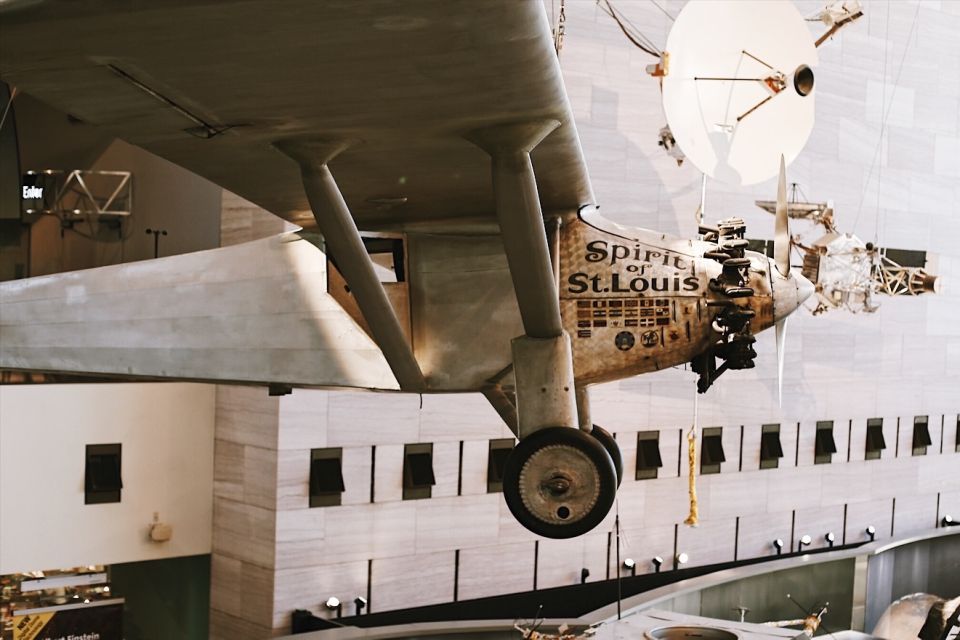
- Spirit of St. Louis: the human side of breaking records
- Buzz Aldrin’s suit and moon boots: the details that make the mission real
- Apollo 11 Command Module and touching moon rock
- International Space Station model: what modern astronauts actually deal with
- The freeze-dried ice cream and the astronaut-life touch
- Construction reality check: what to do if exhibits are offline
- Practical tips that make the tour smoother
- Group size, private options, and how pacing feels
- Who should book this Smithsonian Air & Space guided tour
- Should you book it: my straight answer
- FAQ
- How long is the Smithsonian Air & Space Museum guided tour?
- What’s the meeting point for the tour?
- How many people are on each tour?
- Is the tour offered in private or small-group formats?
- What language is the guide?
- What are the main highlights included?
- Do I need to bring anything with me?
- Are large bags allowed?
- Does the tour help with ticketing?
- Is the museum always open on schedule?
Key things you’ll notice on this guided Air & Space tour
- Max 8 people keeps the pace conversational, so you can ask questions instead of yelling over a crowd.
- The big-ticket stop list includes the Wright Brothers Flyer, Spirit of St. Louis, and Apollo 11 Command Module.
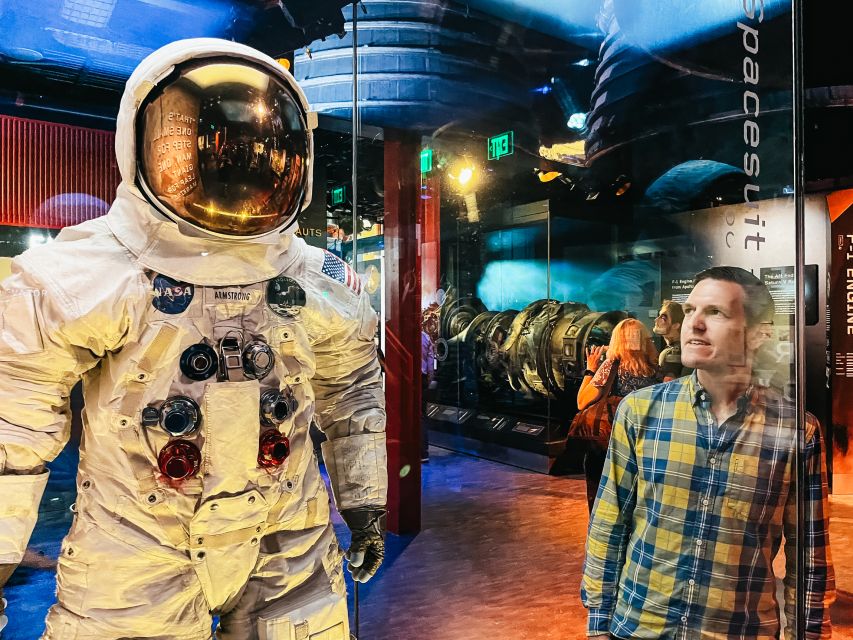
- You get hands-on, story-focused moments like learning about Buzz Aldrin’s spacesuit and moon boots.
- The tour includes an International Space Station model, helping you understand modern space life beyond the moon landings.
- You may have time for fun extras like freeze-dried ice cream (and yes, it’s included as an opportunity to purchase).
- Your guide works around changing exhibits due to ongoing renovation.
Why a guided Air & Space sprint beats wandering on your own
The Smithsonian National Air and Space Museum is big enough that “just walk through” can turn into “just walk around.” Even if you love aircraft and spacecraft, you can end up stuck reading plaques while the best stuff sits right there, in your peripheral vision, without the context that makes it click.
A guided format changes the whole experience. Instead of treating the museum like a storage room of impressive items, you’re guided through the why—how early flight changed what engineers thought was possible, and how moon landing technology grew out of decades of trial, failure, and refinement. You also save time on decision-making. In a place this vast, the biggest value is often having someone point you toward the moments that match your limited hours.
At 150 minutes, this is also a very realistic length if you’re on a tight DC schedule. You won’t leave feeling like you tried to conquer 10 pounds of museum in one hour. You’ll leave with a narrative arc: early flight → Space Race → moon landings → what astronauts and space stations deal with today.
You can also read our reviews of more guided tours in Washington Dc



Pricing and value for a 150-minute expert-led museum focus
The price is $95 per person for a tour that lasts about 2.5 hours. That sounds steep until you factor in what you’re actually paying for: guided interpretation, a structured route, and a smoother arrival experience thanks to skipping the ticket line.
If you only have one trip to the museum, paying for a guide often beats spending that time guessing what matters most. You’re also not paying for transportation or a fancy vehicle here—you’re paying for time used well inside a museum that’s easy to wander aimlessly through.
Is it “worth it” for every traveler? If you’re the type who enjoys quiet museum hours and likes to read everything slowly, you might prefer self-guided time. But if you want your visit to feel connected and satisfying without spending most of the day planning, this guided tour is a strong use of your museum budget.
Getting there and meeting your guide at the right entrance
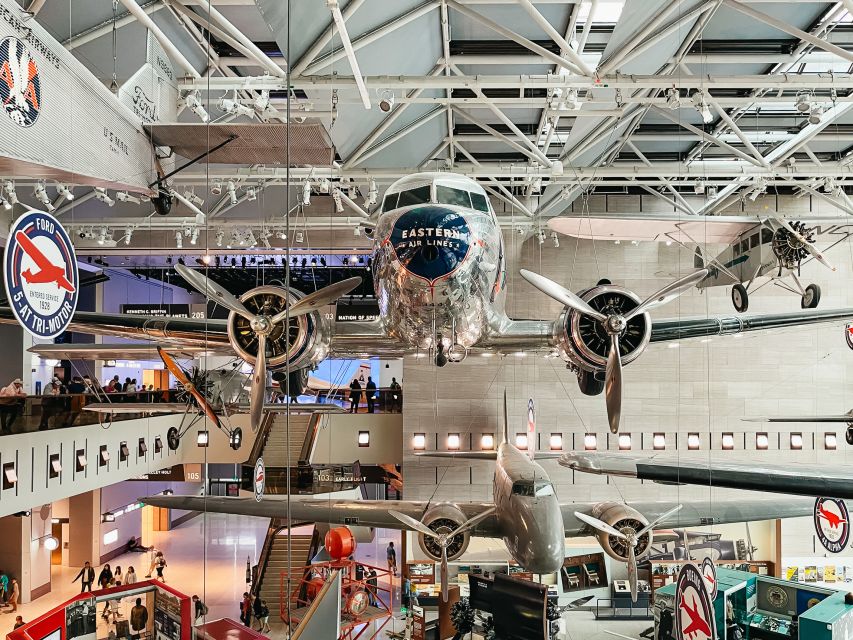
You meet your guide 10 minutes before the start time at the base of the sculpture in front of the Air & Space building entrance. This is the entrance facing the lawn of the DC Mall.
That detail matters more than it sounds. If you show up late or at the wrong side of the building, you can lose the momentum that makes the 150-minute format work. I’d treat the meeting like a train departure: arrive, find the guide, then settle in.
Also note the “just in case” advice: the guide’s contact details are sent by email (and you should check spam folders). That’s useful if security lines or timing get weird.
The route’s core storyline: from first powered flight to the Moon
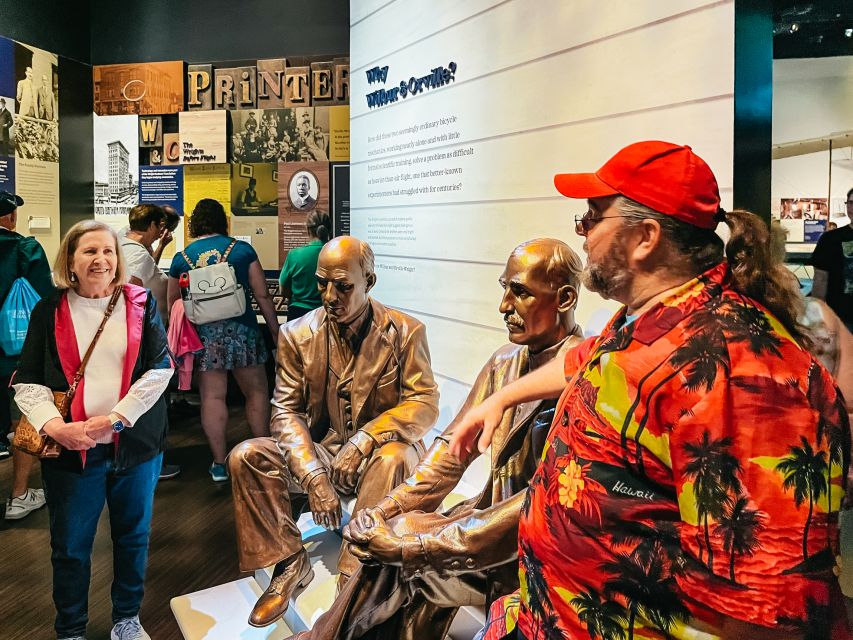
This tour’s whole pitch is that the museum isn’t just about moon landings. It connects the early history of flight with the Space Race, showing the through-line of technology and human ambition.
What makes that approach practical is that you don’t just see artifacts—you learn what problem each one solved. The early airplanes aren’t treated as old curiosities; they’re presented as proof-of-concept. The space hardware isn’t treated as distant sci-fi; it’s presented as engineering choices made under real constraints.
And because the tour is small—up to 8 people—you get a smoother flow between stops. It’s easier for the guide to adjust on the fly if someone has an interest (aviation history vs. lunar missions vs. modern space operations).
Wright Brothers Flyer: why 1903 still matters
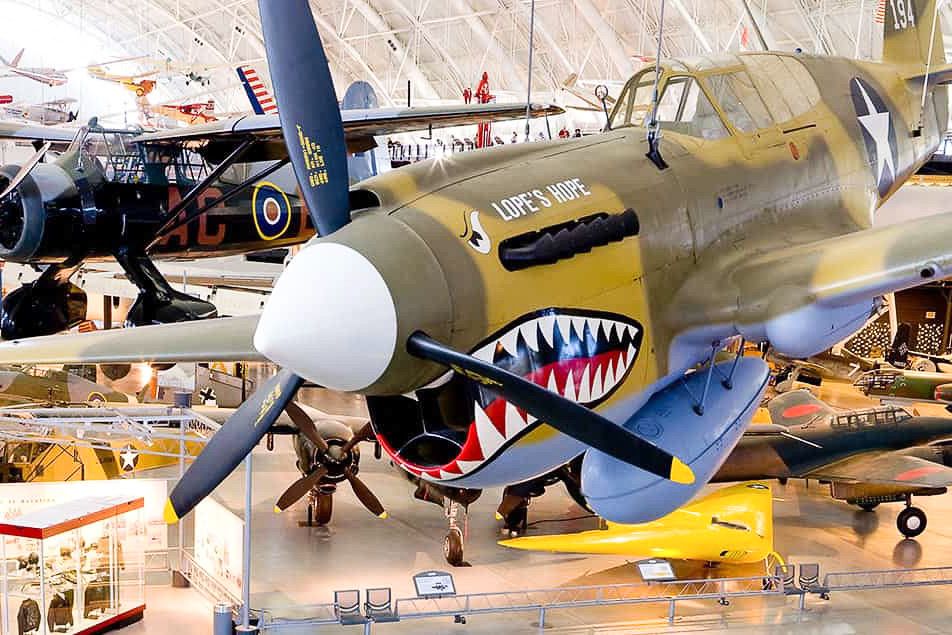
One of the early highlights is the 1903 Wright Brothers aircraft. Seeing it within a guided story is the difference between “cool plane” and “turning point.”
The Wright era represents more than a single flight date. It’s the moment when controlled, powered flight became real, repeatable, and teachable. In a guided walk, you’re more likely to hear how early aviation concepts connected to later design thinking—so when you see other aircraft in the museum, they start to make sense as steps in an evolving engineering chain.
This is also a good stop if you’re bringing kids or teens. Early flight creates a natural entry point: it’s about control, wind, lift, and trial-and-error. Even if you’re not a technical person, you’ll get the “why it was hard” part.
You can also read our reviews of more museum experiences in Washington Dc






Spirit of St. Louis: the human side of breaking records
Next up is the Spirit of St. Louis, one of those objects that feels famous even before you know the details. On your own, you might notice the plane and move on. On a guided tour, you’ll likely get the story dimension: how people pursued long-distance flight and what that effort revealed about reliability, risk, and bravery.
I like this stop because it turns the museum from “technology museum” into “adventure history museum.” The stories also help you see why later space missions were never just about machines; they were also about people making decisions with incomplete information.
If you’re into aviation, this section usually hits the sweet spot: enough context to appreciate the significance, without turning into a textbook.
Buzz Aldrin’s suit and moon boots: the details that make the mission real
The tour doesn’t just orbit the big artifacts. It also points you toward the smaller, high-impact details—like learning about Buzz Aldrin’s spacesuit and moon boots.
This is where your visit becomes tactile in a mental sense. Suits and boots are tools designed for life-and-limb safety in a harsh environment. When a guide explains what those pieces had to do, you stop thinking of moon landings as a single dramatic event and start thinking of them as a checklist of survival and work tasks.
For many people, this is also one of the most memorable parts because it bridges eras. It’s not just “moon stuff happened.” It’s “this is what someone physically wore to do the job.”
Apollo 11 Command Module and touching moon rock

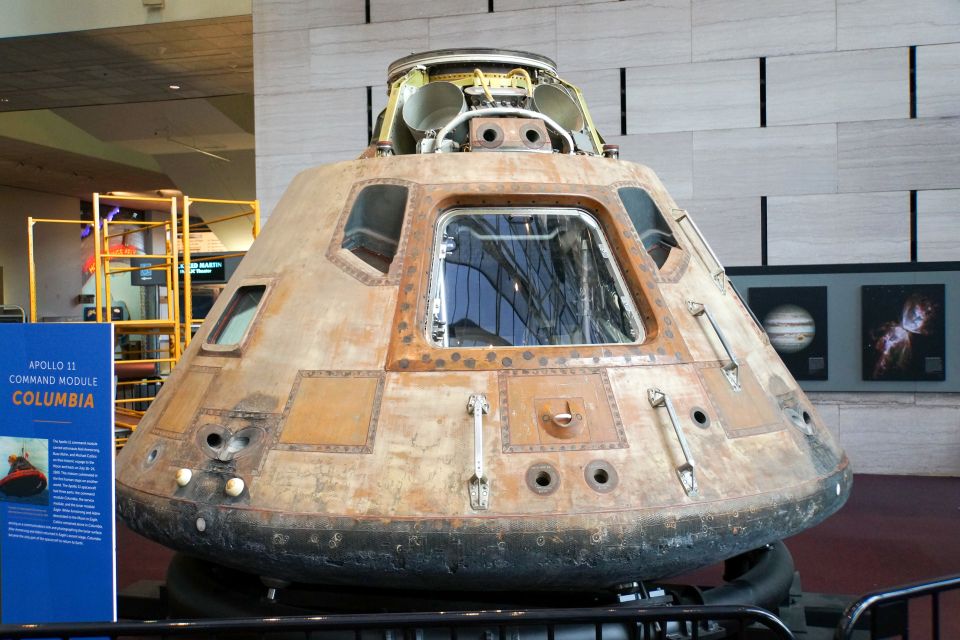
Now for the moment most people remember: the Apollo 11 Command Module and the chance to touch some moon rock.
Even if you’ve seen photos before, the Command Module feels different in person because it’s the environment people actually lived in—tight, built for function, and designed under extreme constraints. A good guide helps you understand what you’re looking at: the purpose of the space, what it meant to operate in it, and why the design choices mattered.
Then there’s the moon rock contact. That’s the closest thing you’ll get to the mission in your hands. It’s also a reality check: it makes the Moon feel less like a distant image and more like a physical place you can reference when you talk about the mission.
Do note the museum construction warning: the tour adjusts based on what’s available. If a specific exhibit is unavailable on a given day, your guide should steer you to the best substitute route while keeping the story intact.
International Space Station model: what modern astronauts actually deal with
After moon landings, the tour shifts gears into the present via a model of the International Space Station (ISS). This part is valuable because it changes the emotional framing from “historic moment” to “ongoing operations.”
A guided look at the ISS model helps you connect the dots: how work in orbit differs from work on the Moon, what kinds of systems matter daily, and why life in space is about routine just as much as it is about danger.
This stop is also a great match if you’re curious about today’s space program. The tour includes discussion about what it’s like to be an astronaut today, so you’ll leave with a more current view than a museum visit focused only on vintage highlights.
The freeze-dried ice cream and the astronaut-life touch
There’s time for a playful extra too: the opportunity to purchase freeze-dried ice cream. It’s not essential to understanding space history, but it’s a fun way to make the experience stick.
Small non-essential moments like this can turn a “two-hour tour” into something you’ll remember on the walk back to your hotel. If you’ve got a sweet tooth, it’s an easy add-on. If you don’t, it’s still a useful cultural detail: it reflects the reality that space food is designed around shelf life, weight, and practicality.
Construction reality check: what to do if exhibits are offline
Because the museum is under massive renovation, you may not see every exhibit described. The tour is adjusted based on changing stages of the renovation and what’s available.
Here’s the practical way to handle this: treat the tour as a guided interpretation of air and space history rather than a guaranteed set of photo stops. You’re still getting the story spine—early flight, space race milestones, Apollo context, and modern space—just with potential substitutions depending on what rooms and displays are currently accessible.
If one specific exhibit is your top priority (like the Apollo hardware), it’s still worth booking, but go in with flexibility. That attitude usually leads to a better experience than trying to force your day into a fixed checklist.
Practical tips that make the tour smoother
A few details matter if you want the tour to feel effortless:
- Bring passport or ID (it’s required).
- Don’t plan to bring luggage or large bags. Only handbags or small thin bag packs are allowed through security.
- Wear appropriate dress for entry into some sites on the tour.
- Some rooms require quiet or restrict speaking. Your guide will explain rules before entering those areas.
- Temporary exhibits aren’t included, and some collections can vary.
These are the kinds of constraints that often trip people up with museum tours. If you plan ahead, you’ll spend your energy on the actual highlights.
Group size, private options, and how pacing feels
The tour runs as private or small groups, with a maximum of 8 people. You’ll also see a minimum rule for small-group tours—if there aren’t at least two participants, you may get a refund or an alternative date.
What you should expect from that structure is a pace that stays human. In a museum full of distractions, a guide can only do so much if the group is too large. Here, the small size helps keep the experience interactive. You can ask questions. You can linger when something clicks. And you’re less likely to feel like you’re sprinting between rooms.
If you prefer maximum control, the private tour option usually fits best. If you want to meet other people but still keep it intimate, the small group format is a nice middle ground.
Who should book this Smithsonian Air & Space guided tour
Book it if:
- You have limited time and want an intentional route.
- You want context for major objects like Wright Brothers aircraft, Spirit of St. Louis, and Apollo 11 artifacts.
- You enjoy stories that connect science and history, not just labels on glass.
- You like small-group pacing and Q&A moments.
Consider skipping or pairing with self-guided time if:
- You want to spend most of your day reading at your own speed.
- You’re hoping for a guaranteed “every single highlight” checklist during ongoing construction.
- You have accessibility needs that you’re not sure the tour can accommodate. The info here includes wheelchair tours by request, but it also notes the tour as not suitable for wheelchair users. If that applies to you, confirm directly before booking.
Should you book it: my straight answer
If your goal is to leave the Smithsonian Air & Space Museum feeling like you understood the big ideas—not just seeing impressive stuff—then I’d book this tour. The combination of small group size, major highlights like the Apollo 11 Command Module and moon rock contact, and the way the guide ties early flight to the Moon is exactly what makes this experience worth paying for.
Just go in with realistic expectations because of ongoing construction. If you’re flexible about which rooms you’ll see that day, you’ll likely get the best version of what this tour is designed to do: make the museum feel like one connected story.
FAQ
How long is the Smithsonian Air & Space Museum guided tour?
The tour runs for about 150 minutes.
What’s the meeting point for the tour?
Your guide meets you 10 minutes before the tour starts at the base of the sculpture in front of the Air & Space building entrance, facing the lawn of the DC Mall.
How many people are on each tour?
A maximum of 8 people are permitted on each tour.
Is the tour offered in private or small-group formats?
Yes. Private or small-group options are available.
What language is the guide?
The tour is led by a live English-speaking guide.
What are the main highlights included?
The tour includes seeing the Wright Brothers Flyer and Spirit of St. Louis, a model of the International Space Station, and the Apollo 11 Command Module. You’ll also have the chance to touch some moon rock and learn about Buzz Aldrin’s spacesuit and moon boots. There may also be an opportunity to purchase freeze-dried ice cream.
Do I need to bring anything with me?
You should bring a passport or ID card.
Are large bags allowed?
No. Only handbags or small thin bag packs are allowed through security. Luggage or large bags are not allowed.
Does the tour help with ticketing?
Yes, it includes skipping the ticket line.
Is the museum always open on schedule?
National Air and Space Museum may have occasional closures without prior warning. If the museum opening is delayed more than 1 hour from the tour start time, guests will be provided an appropriate alternative, and refunds or discounts are not provided in these cases.