REVIEW · WASHINGTON DC
African-American Heritage Walking Tour of U Street in DC
Book on Viator →Operated by UTG Experience · Bookable on Viator
U Street sounds like music at dusk. This African-American heritage walking tour strings together U Street’s Black Broadway vibe with some genuinely moving stops, especially the African American Civil War Memorial & Museum, while your guide fills in the people and stories behind what you’re seeing. I also love how the pace is built for foot travel—no rushing, just time to take in storefronts, sidewalks, and the neighborhood mood as the evening unfolds.
One heads-up: it runs on an evening schedule and requires good weather, so if conditions are bad the tour may shift or get canceled. I’d plan for that chance, and I’d wear comfy shoes because you’ll be on your feet for about 2 hours.
In This Review
- Key takeaways before you go
- U Street at 5pm: Black Broadway on foot
- The Ben’s Chili Bowl mural: art, controversy, and local memory
- African American Civil War Memorial & Museum: troops, policy shifts, and names
- Howard Theatre in the Shaw area: where Black music found stages
- Price and logistics: is $90 worth it?
- What to expect from your guide (and how to get the most)
- Who this tour suits best
- Should you book this African-American Heritage Walk?
- FAQ
- How long is the African-American Heritage Walking Tour of U Street?
- How much does the tour cost?
- What time does the tour start, and where do I meet?
- Is transportation included?
- Are any tickets or admissions required?
- Is food or drink included?
- What language is the tour offered in?
- How big is the group?
- What happens if the weather is bad?
Key takeaways before you go
- 5:00 pm start, two hours, and a small group (max 20) keeps the experience personal
- U Street’s jazz legends get connected to real streets, not just names on a screen
- Ben’s Chili Bowl mural is a living timeline of who’s honored and why that changes
- The Civil War memorial focuses on Black troops with units and names that matter
- Howard Theatre brings the music-and-stage story full circle to the Shaw area
U Street at 5pm: Black Broadway on foot
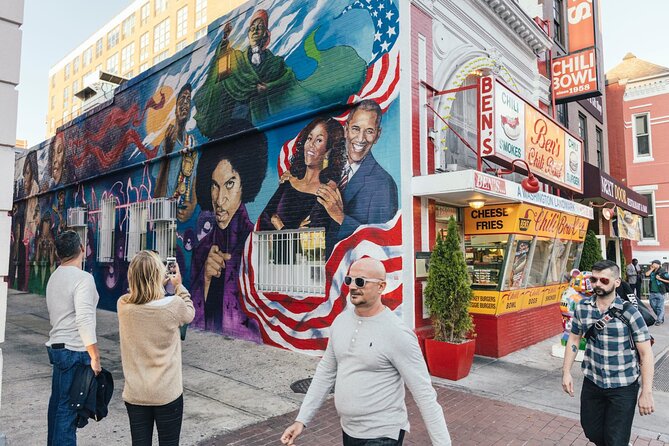
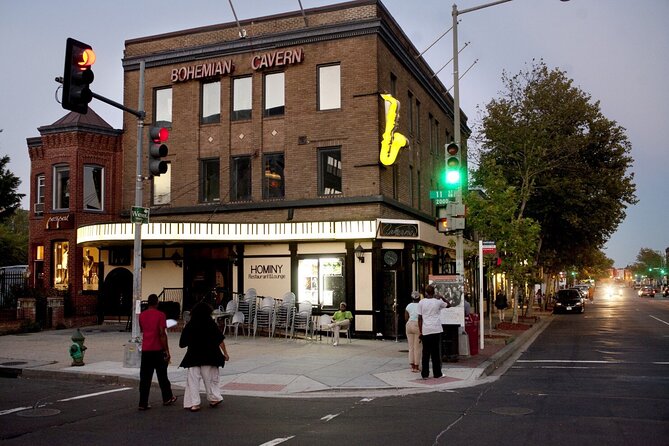
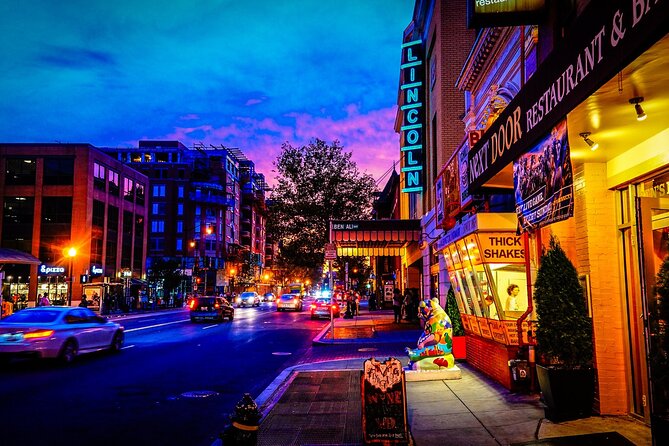
Your tour starts at 1250 U St NW at 5:00 pm, and that timing is a big deal. U Street has a way of feeling different after sunset—less like a museum street and more like a real neighborhood where history still shows up in music, murals, and signage.
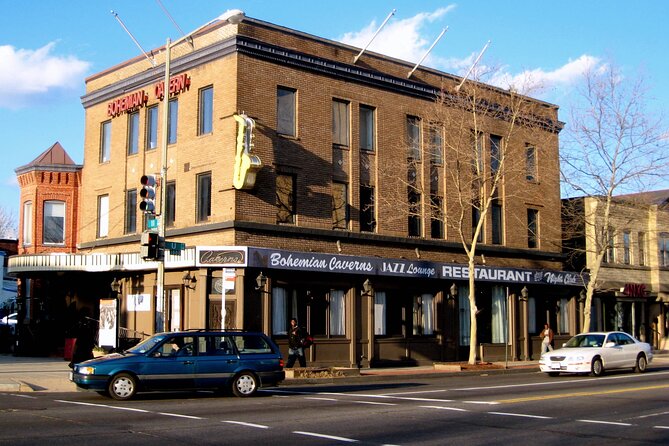
You’ll spend time on U Street learning why it earned the nickname Black Broadway. The area is tightly linked to the African-American jazz scene, where theaters and clubs hosted major artists such as Duke Ellington, Cab Calloway, Pearl Bailey, Sarah Vaughn, and Jelly Roll Morton. The point here isn’t to memorize a list; it’s to understand how a street can become a stage when a community builds spaces for its own voices.
This is also where your guide can really make the streets click. In past tours, guides like Amanda and Nur Ali have been praised for connecting the past to what you can still sense today—street layout, the rhythm of the neighborhood, and why the stories belong to this specific block. If you’re the kind of person who likes learning while walking (instead of sitting still), you’ll probably enjoy this format.
Practical tip: go in ready to look up. Street corners and building fronts matter on this route. Plan on short stops for photos, but keep your eyes on the “why,” not just the “what.”
You can also read our reviews of more walking tours in Washington DC



The Ben’s Chili Bowl mural: art, controversy, and local memory
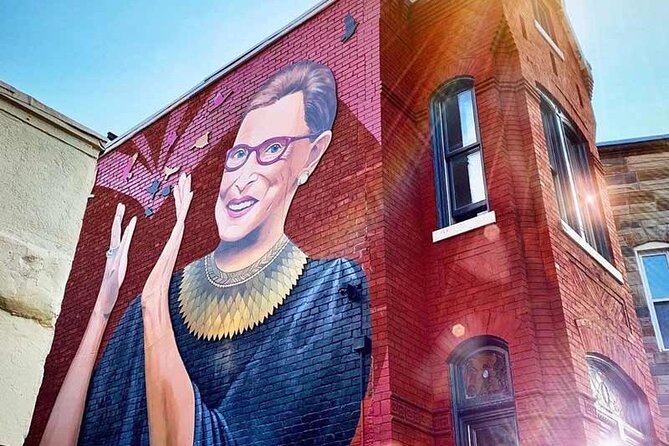
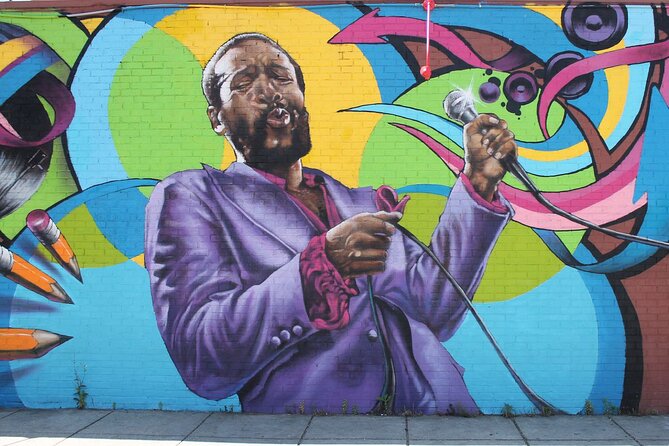
At the Ben’s Chili Bowl mural stop, you’re getting something more interesting than a quick photo. The mural has changed multiple times since it appeared in 2012, and each version reflects what’s happening in public life—what gets celebrated, what gets removed, and what gets repainted.
Here’s the key sequence that makes the mural a conversation piece:
- The artwork previously included a smiling Bill Cosby along with other recognizable Black figures.
- That portion was removed after allegations against Cosby came to light.
- In 2017, the mural was temporarily changed to honor the Washington Wizards during NBA playoffs.
- Later in 2017, local artist Aniekan Udofia painted the mural you can see today.
This matters because it shows how local landmarks don’t stay frozen in time. A mural like this becomes a public document—written in paint—and it changes as the community reevaluates stories and reputations.
Also, the irony you’ll feel (in a good way) is that Ben’s Chili Bowl is already famous for the half-smoke tradition, but the mural adds a second layer: DC identity isn’t just about what people eat. It’s about who people choose to remember.
One more practical note: this is a short stop (about 30 minutes total at the broader stop window listed for the mural). If murals are your thing, bring your phone battery and be ready to frame shots quickly.
African American Civil War Memorial & Museum: troops, policy shifts, and names
This is the stop that tends to land hardest. The African American Civil War Memorial & Museum is described as the first memorial dedicated solely to Black troops who fought for the Union—and the tour explains why that focus is so important.
You’ll learn the basic turning points that led to Black regiments serving the Union:
- Early in the Civil War, the rebel states refused to rejoin the Union.
- Abraham Lincoln issued the Emancipation Proclamation and helped create regiments filled with Black soldiers.
- These troops faced harsh treatment from the opposing army and discrimination from within their own side.
The statistics are sobering, but they’re also useful because they show scale rather than vague “many people” storytelling. More than 200,000 Black Americans served in 175 regiments known as the United States Colored Troops (USCT)—about one-tenth of Union forces. It also notes that Union policy on Black military service changed largely through the persistence of the Black American community.
You’ll also hear about how many served, including 98,500 formerly enslaved men, and how their service helped the Union Army. The museum’s emphasis on commemoration shows up in the Wall of Honor, where names are inscribed—along with those of white service members associated with the record.
For me, the value here is that the stop is both educational and human. It’s not just battles; it’s recognition. If you’ve ever felt like standard Civil War storytelling sidelines Black participation, this memorial corrects that immediately.
Practical tip: give yourself mental space for this part. Even though the stop is listed as about 30 minutes, it can take longer to read or absorb the names. If you’re the type who moves fast, you may want to slow down here.
Howard Theatre in the Shaw area: where Black music found stages
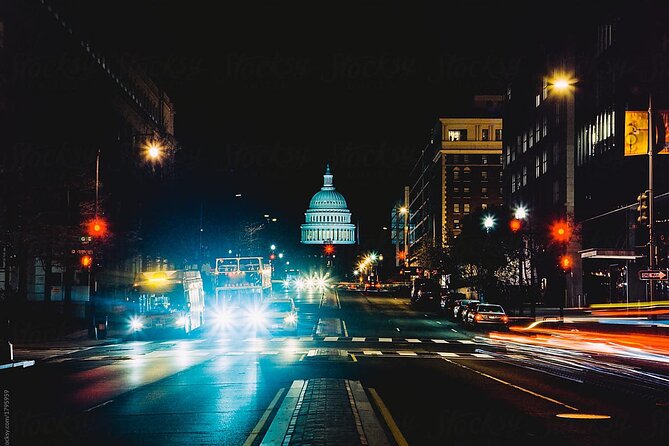
The final major stop is the Howard Theatre, a landmark tied directly to African-American performance culture. The story starts with its founding: the Howard Theatre was established in 1910 in the Shaw neighborhood, around Howard University, and it was called the first Black theater in America.
The why matters. Back then, Black men and women weren’t allowed into many other venues in the city. So this theater wasn’t just entertainment—it was access. It created a public space for Black audiences and performers at a time when that was restricted.
The tour connects the theater to big names in music history, noting performers ranging from Louis Armstrong to Kendrick Lamar. That span helps you see continuity: the stage changed over generations, but the need for Black-owned and Black-run performance spaces stayed constant.
You’ll also hear how the theater operated before it became widely known nationwide. Locally, it was associated with amateur open-mic-style events and battle-of-the-band contests. That detail is more than trivia. It explains the theater’s role as a testing ground—places where artists sharpened skills, built reputations, and found community.
If you’ve ever wondered why some neighborhoods feel like creative engines, this stop gives you one answer: built stages and built audiences.
Practical tip: the Howard area tends to include busy streets and side streets. Wear shoes with good grip so you feel steady as you move at evening pace.
Price and logistics: is $90 worth it?
At $90 per person for about 2 hours, you’re paying for more than entry to a site. You’re paying for a licensed tour guide, a route designed to connect multiple stops, and the ability to ask questions while walking.
Here’s what helps the value:
- Multiple major stops are part of the experience, and the listed admissions for each stop are free.
- The group size is capped at 20, which usually keeps the conversation from feeling like a lecture.
- You start in one place and end back at the same meeting point, which is handy for planning the rest of your evening.
The tradeoff is that transportation and food/drink aren’t included. So you’ll want to plan how you’ll get to 1250 U St NW before 5:00 pm. Also, don’t count on this tour to feed you—bring a snack plan from nearby or eat before you go.
The other “value” point is timing. Tours like this are often booked ahead (it’s noted that it averages about 22 days in advance). If you care about a specific date, book early rather than waiting for the last-minute “maybe” feeling.
Finally: good weather matters. Since it’s a walking tour, you’ll be happier if you dress for DC evenings—light layers, breathable comfort, and something for sudden changes.
You can also read our reviews of more historical tours in Washington DC




What to expect from your guide (and how to get the most)
Most of what makes this tour special is the way your guide turns landmarks into stories. In the guide feedback included with this experience, names like Nur Ali, Darren, Nor, and Nore appear with consistent praise for passion and connecting details.
What that means for you: don’t treat this like a checklist. When your guide points out a building, a corner, or a reference in the mural, pause for a second and ask yourself what the story is doing. Is it explaining how a community created space? Is it showing how public art responds to controversy? Is it grounding a historical event in a specific place?
If you do that, the tour becomes more than facts. You start noticing patterns—how neighborhoods build culture, how institutions open or close doors, and how public memory works in real time.
Also, because the tour is about 2 hours, pacing is part of the design. You’ll likely have just enough time at each stop to learn, look around, and move on without feeling trapped in one location.
Who this tour suits best
This walk works especially well if you want:
- A guided way to see DC’s African-American landmarks without jumping between multiple ticketed attractions
- Evening atmosphere on U Street with a focus on people, not just buildings
- A Civil War stop that highlights Black troops and the Wall of Honor rather than general overview history
It may be less ideal if you:
- Hate walking for extended periods (the tour says you should have moderate physical fitness)
- Need a fully seated or low-movement format
- Don’t like the idea of outdoor timing, since the experience requires good weather
If you’re traveling solo, it’s a strong pick because the small group size helps you actually engage. If you’re with a partner, it’s also easy to talk through what you learned while the guide is explaining details.
Should you book this African-American Heritage Walk?
If your goal is a meaningful, place-based introduction to African-American history in DC—and you want it on foot—you should seriously consider booking.
I’d book it if:
- You want multiple key landmarks in a short, organized evening
- You like learning through context and story, especially with a licensed guide
- You’d appreciate a Civil War memorial experience that focuses on Black troops and names
I’d think twice if:
- You’re not comfortable with evening walking or weather-dependent plans
- You’re hoping for food included (plan that separately)
- You’re very strict about timing and hate any chance of schedule disruptions
Bottom line: for $90, you get a tight route, free-entry stops, and a guide-led connection between U Street culture, public art, and memorial storytelling. It’s the kind of tour that makes DC feel personal fast.
FAQ
How long is the African-American Heritage Walking Tour of U Street?
It runs for about 2 hours.
How much does the tour cost?
The price is $90.00 per person.
What time does the tour start, and where do I meet?
The start time is 5:00 pm, and the meeting point is 1250 U St NW, Washington, DC 20009.
Is transportation included?
No. Transportation is not included, and you’ll need to make your own way to the meeting point.
Are any tickets or admissions required?
The included stops list admission tickets as free, and the tour is described as having a mobile ticket.
Is food or drink included?
No. Food and drink aren’t included.
What language is the tour offered in?
The tour is offered in English.
How big is the group?
The tour/activity has a maximum of 20 travelers.
What happens if the weather is bad?
The experience requires good weather. If it’s canceled due to poor weather, you’ll be offered a different date or a full refund.