REVIEW · WASHINGTON DC
Smithsonian Museum of Natural History – Exclusive Guided Tour
Book on Viator →Operated by Babylon Tours DC · Bookable on Viator
A museum this big can overwhelm fast. This exclusive guided tour helps you hit the Smithsonian Natural History Museum’s top moments in 2 hours, with a real story behind each one. I especially liked the way your guide turns major exhibits into a fast-paced path you can follow, and how it’s built for your group only.
The best part for me was the focus: you don’t just see the headlines like the Hope Diamond or the Ocean Hall whale replica Phoenix. You also get the small “wait, how do they know that?” facts that make the museum feel alive. One thing to consider: it’s a tight time box, and you’ll still have to move through crowd lines and security rules without much flexibility.
In This Review
- Quick Hit Points
- Why This Private Natural History Tour Works in 2 Hours
- Getting Oriented at 1010 Madison Dr NW (and Staying Oriented)
- Stop 1: Smithsonian Natural History Museum Highlights You’ll Remember
- The Hope Diamond and the World of Gem Mysteries
- Real Mummies and Death Rituals (Ancient Egypt With Context)
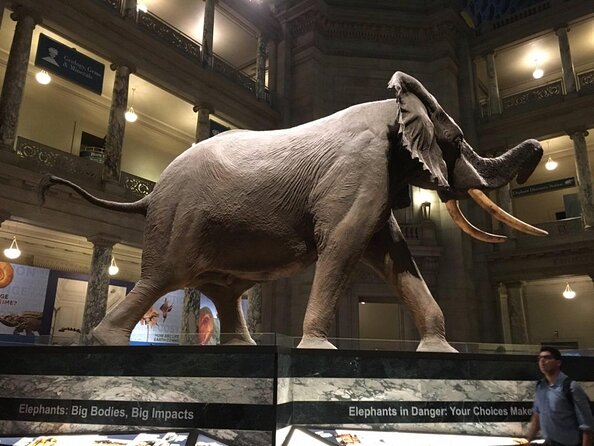
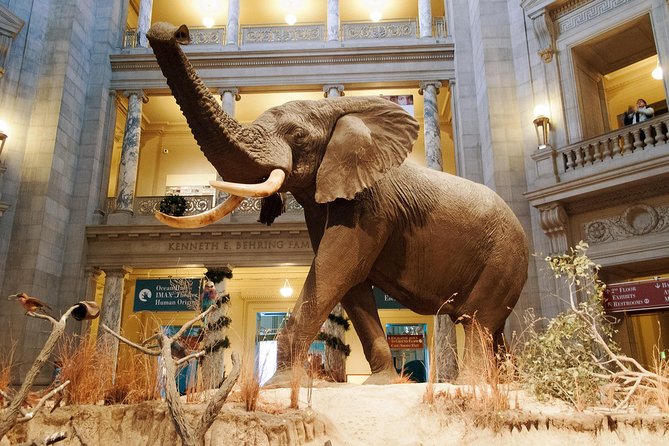
- Mammals on Land: Polar Bears, Elephants, and Giraffes
- Ocean Hall: Live Coral Reef Exhibit and the Whale Phoenix
- One timing reality: you won’t linger like you want to
- Who This Tour Fits Best (and Who Might Want a Different Option)
- Price and Value: Is $89.67 Worth It?
- What Makes the Guides a Big Deal Here
- Practical Tips That Will Save You Stress
- Should You Book This Smithsonian Natural History Tour?
- FAQ
- What does the tour price include?
- How long is the Smithsonian Natural History Museum exclusive guided tour?
- Where do I meet for the tour?
- Is the tour wheelchair friendly?
- Do I need to bring food or drinks?
- Does this tour require a mobile phone number?
- Can I pick a morning or afternoon time?
Quick Hit Points
- A guide-led route through the Smithsonian highlights so you don’t waste your best time wandering
- Iconic must-sees, explained from the Hope Diamond to Ocean Hall’s live coral reef area
- Private group experience where the guide can tailor pacing and questions to you
- A “how this museum works” payoff including the museum’s staggering 126.5 million artifacts
- Smart crowd management (especially on busy days) and guidance for quieter, restricted rooms
Why This Private Natural History Tour Works in 2 Hours
The Smithsonian National Museum of Natural History is one of those places where “take your time” becomes “you’ll never see it all.” This tour fixes that problem with a guide-led route and a clear highlight set that covers the museum’s big themes without turning your day into a marathon. You get a plan you can actually finish, plus time to keep interest from fading when your feet start asking questions.
I love that it’s built around stories you wouldn’t naturally connect. Your guide points you toward the right exhibits, but the real value is in the interpretation: how objects, animals, and cultures fit into a bigger picture of Earth and life. In several guide-led experiences I’ve done, I’ve found that the museum’s “wow” factor is real, but the order matters. Here, the order helps.
Also, because it’s private (your group only), you’re not stuck matching your pace to a bigger group shuffle. If you’re the type who likes asking one more question, this format makes it easier. Just know that you’re still doing a highlights tour, so you’ll see a lot without stopping long enough to fully “master” every section.
A small drawback to keep in mind: museum security and occasional crowd build-ups can affect timing. The tour includes a guide path, but you’ll still deal with the museum’s real-world flow, plus the rule that no large bags or suitcases are allowed inside—only handbags or small, thin packs. Plan to travel light.
You can also read our reviews of more guided tours in Washington DC



Getting Oriented at 1010 Madison Dr NW (and Staying Oriented)
You meet at 1010 Madison Dr NW, Washington, DC 20004. The tour ends back at the same spot. That round-trip setup sounds basic, but it matters in DC: you can plan the rest of your day without worrying about where you’ll end up or how to backtrack.
The meeting point being near public transportation is a practical plus. DC days often run on trains, buses, and walking. If your timing is tight, it’s reassuring that you’re not locked into a car-and-parking plan.
Before you go, make sure you follow the tour’s practical requirement: you’ll need to provide a mobile phone number (with country code). That’s about letting your local team coordinate quickly. Also expect a standard museum-style security setup. If you’re wearing a big coat or carrying a bulky day bag, simplify your carry so you don’t get stuck at the wrong point in the screening line.
For pacing, you’ll want a moderate level of physical comfort. This is mostly walking and standing inside a large museum, plus some movement between themed halls.
Stop 1: Smithsonian Natural History Museum Highlights You’ll Remember
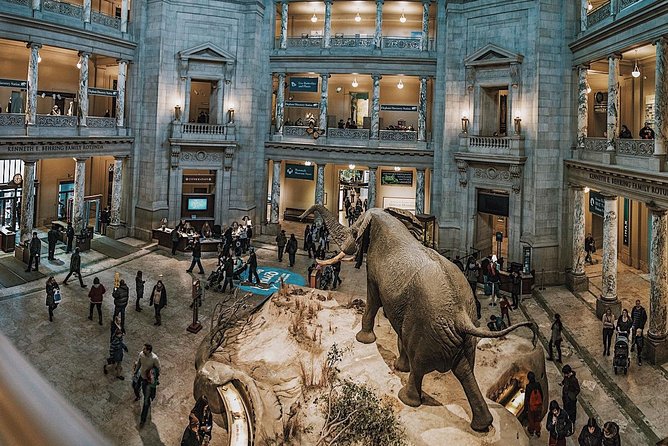
This is the heart of the experience. Your guide leads you through the museum’s most famous stops inside a massive building described as covering an area of 18 football fields. Even if you love museums, that scale can turn into a blur if you’re on your own. With a guide, you get a route and a reason for each stop.
The Hope Diamond and the World of Gem Mysteries
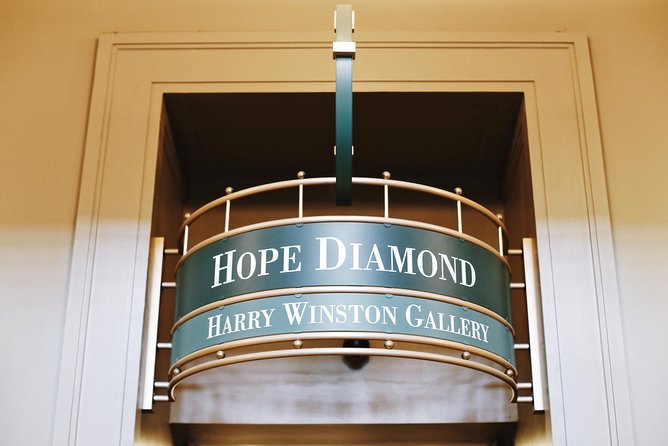
The tour kicks off with the museum’s high-impact gem and mineral section. One standout is the Hope Diamond at 46 karats—famous for its brilliant blue sparkle and the dramatic history connected to former owner Marie Antoinette. Even if you’ve seen photos, seeing it in person is different. A guide helps you understand why this diamond has that kind of long cultural pull, not just why it’s pretty.
You’ll also spend time with gems and minerals like the Dom Pedro Aquamarine, described as the world’s largest gem of its type. This kind of exhibit can be tricky solo because you end up staring at labels without context. A good guide gives you the “why it matters” angle—where these stones come from, what makes them scientifically interesting, and how people have used them for centuries.
Real Mummies and Death Rituals (Ancient Egypt With Context)
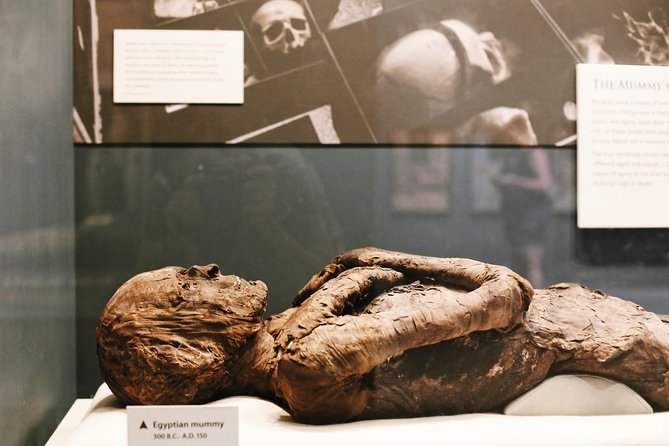
Next comes ancient history through the lens of real objects—specifically, real mummies from Ancient Egypt. The museum does a lot of work explaining death rituals, and your guide helps connect the artifacts to the beliefs behind them. That matters, because it’s easy to reduce ancient cultures to a single spooky image. Here, you get a clearer view of how their practices reflected their ideas about the afterlife and the soul’s journey.
If you’re traveling with kids, this is often where you hear the most “wait, that’s real?” moments. If you’re an adult, it’s where the museum can feel less like a collection and more like a study of people.
You can also read our reviews of more historical tours in Washington DC






Mammals on Land: Polar Bears, Elephants, and Giraffes
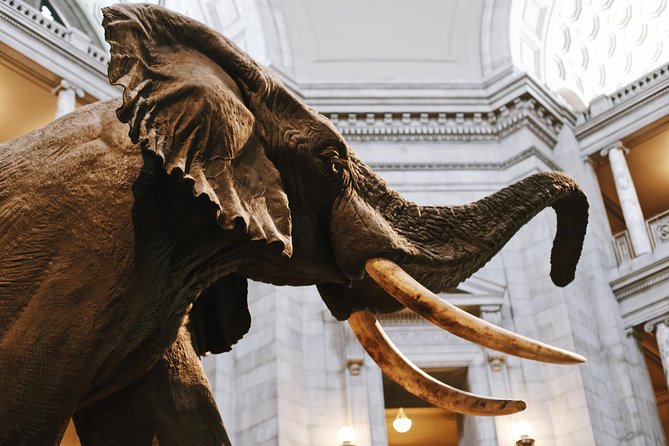
From ancient Egypt, the tour moves from past lives to present animals—stepping into the wildlife side with exhibits featuring polar bears, elephants, and giraffes. This section helps reset your brain after the intensity of mummies and death rituals.
The value of having a guide here is simple: you get help noticing. On your own, you might walk past and think it’s just “another animal display.” With a guide, you’re pointed toward what makes each animal exhibit educational—behavior, adaptation, and how the museum frames Earth’s ecosystems.
Ocean Hall: Live Coral Reef Exhibit and the Whale Phoenix
The finale is where the tour really earns its name. You head into Ocean Hall, where you can see a live coral reef exhibit. Then you get a chance to stand in front of Phoenix, a 45-ton whale replica described as a model based on a living whale that the museum tracks.
This combination is smart. Coral reef exhibits teach you how life forms depend on systems, not just individuals. Then Phoenix brings the scale up with a dramatic, unforgettable presence. If you’ve ever left a museum feeling like you saw animals but didn’t really learn anything, this is one of the places that fixes that.
By the end, you’ll also understand why the Smithsonian attracts repeat visitors. The museum houses 126.5 million artifacts, which is basically a reminder that there’s always another story you haven’t reached yet. A highlights tour won’t show everything—but it gives you a mental map for what to chase next time.
One timing reality: you won’t linger like you want to
The tour is about 2 hours total. That’s long enough to see major sections and absorb explanations, but short enough that you’ll feel that urge to go back and spend more time on your favorite items. I think that’s normal. The best way to use this tour is to treat it like a tour guide-powered “front page,” then plan a self-guided revisit for your top priority areas afterward.
Who This Tour Fits Best (and Who Might Want a Different Option)

This experience suits you if you:
- Want a smart overview without having to plan a museum route yourself
- Like asking questions and getting answers in plain language
- Prefer your time to be structured when you’re dealing with DC crowds
It’s also family-friendly in spirit, especially because the guide’s storytelling approach tends to keep kids engaged. One parent note I took to heart: the tour gave their child enough detail to write about it later—so the experience clearly lands when you’re trying to turn sightseeing into real learning.
This tour may feel less ideal if you:
- Want deep, room-by-room reading time
- Plan to carry large bags or bulky gear (because security rules limit what you can bring in)
- Have extremely limited mobility and would need lots of sit-down breaks (the tour is wheelchair friendly, but the format still involves movement)
Price and Value: Is $89.67 Worth It?
At $89.67 per person for about 2 hours, this is not a bargain. But it’s also not priced like a luxury shopping spree. The value comes from what you’re buying: time, direction, and interpretation.
Here’s how I think about it:
- If you go solo, you’ll still have to cover security, crowds, and the sheer size of the building.
- If you go guided, you get help deciding what to prioritize and how to connect exhibits with human stories and scientific meaning.
Multiple guides described in the feedback set a pattern: people felt they saw more in a short window than they would on their own, and the guides made the museum feel organized. That’s the big value piece. When the museum is sprawling, a guide is less about convenience and more about steering.
Also, booking demand is real—this is typically booked around 36 days in advance on average. That’s usually a sign you should lock in your time slot if you care about morning vs afternoon.
What Makes the Guides a Big Deal Here
One theme shows up again and again: the guides don’t just recite facts. They tell stories. That’s why names like Meghan, Leigh, Lynn, Rebecca, Christopher, Ryan, Brenda, Tim, Donna, and Amanda keep popping up in standout experiences. You’ll notice a consistent payoff: visitors felt like they saw the museum’s big parts and understood the “why.”
I like that this tour also handles etiquette and rules inside the museum. Some rooms can be quiet or have restricted speaking, and your guide will explain what’s expected before you enter. That reduces awkward pauses and lets you focus on the objects instead of museum manners.
And since the tour is offered in English and you can choose morning or afternoon start times, you can fit it into a day when you’re also lining up other DC stops.
Practical Tips That Will Save You Stress
Here are the money-saving, time-saving realities you should plan for:
- Bring a small bag. Large bags or suitcases aren’t allowed inside—only handbags or small thin pack types go through security.
- Dress in appropriate attire for museum entry, since some sites can require it.
- Expect lines. Even with any faster-access claims you might see elsewhere, security and crowd control can still create waits.
- Plan for a fast day. Two hours is great for highlights, but it’s not built for a full museum read.
- Have your phone ready. The tour stresses providing a mobile number so coordination is smooth.
One more note: the museum can have occasional closures. If opening is delayed by more than 1 hour from the tour start time, the operator says they’ll provide an appropriate alternative. Still, that’s a reminder to keep your day flexible.
Should You Book This Smithsonian Natural History Tour?
Book it if your goal is a high-quality “best of” experience with someone guiding your eyes, your feet, and your questions. At $89.67, you’re paying for direction and storytelling in a museum that would otherwise swallow your time.
Skip it—or choose a different plan—if you want to slow down and study one section for hours, or if you don’t like structured tours. Also think twice if you’re bringing lots of gear. The bag rules are real, and you’ll feel it.
My practical advice: treat this as your orientation visit. Do this first (or early in your trip), then plan a self-guided return to the one or two areas you loved most—like gems, mummies, or Ocean Hall—so you can linger where you actually want to.
If you’re on a first trip to the Smithsonian Natural History Museum, this is one of the easiest ways to turn a huge building into a day you’ll remember, not just a checklist you survived.
FAQ
What does the tour price include?
The tour includes a guided museum tour with a tour guide. Admission is listed as a free admission ticket, and the experience runs for about 2 hours.
How long is the Smithsonian Natural History Museum exclusive guided tour?
It lasts about 2 hours.
Where do I meet for the tour?
You meet at 1010 Madison Dr NW, Washington, DC 20004, USA and the tour ends back at the same meeting point.
Is the tour wheelchair friendly?
Wheelchair friendly is listed as included, but it does not apply if you choose the SAVE! BOOK SEMI-PRIVATE option.
Do I need to bring food or drinks?
No. Food and drinks are not included, so you’ll want to plan those separately.
Does this tour require a mobile phone number?
Yes. It states it is imperative that you provide a guest mobile phone number (including country code).
Can I pick a morning or afternoon time?
Yes, the tour offers both morning and afternoon start times to fit your schedule.