REVIEW · WASHINGTON DC
America’s 250th VIP Tour: Archives, Portraits & History 6 ppl Max
Book on Viator →Operated by Unscripted Tours · Bookable on Viator
Three stops, one afternoon of America.
I love how this tour keeps you moving with small-group attention (max 6 people) and still gives you reserved entry to the National Archives. You also get a focused, guide-led way to see portraits and founding documents without feeling lost in the sheer size of the museums.
One possible drawback: the final stop is short, so you’ll likely want to plan extra time at the Smithsonian American History exhibits on your own after the tour ends.
In This Review
- Key highlights to know before you go
- VIP, but practical: what $200 buys you
- Meeting point at 7th St NW and an easy end at the Smithsonian
- Stop 1: National Portrait Gallery in the old Patent Office
- Stop 2: National Archives Museum with reserved entry
- Stop 3: National Museum of American History as a guided on-ramp
- Why the guide matters more than you think
- Group size and pacing: small, focused, and doable
- Cost vs value: the real math of three major museums
- Who should book this tour
- Should you book America’s 250th VIP Tour?
- FAQ
- What is the duration of the tour?
- When does the tour start?
- How many people are in the group?
- Is the tour offered in English?
- Is entry to the National Archives included?
- Are admission tickets free for the museums on the itinerary?
- Where do I meet, and where does the tour end?
- What is the cancellation window?
Key highlights to know before you go
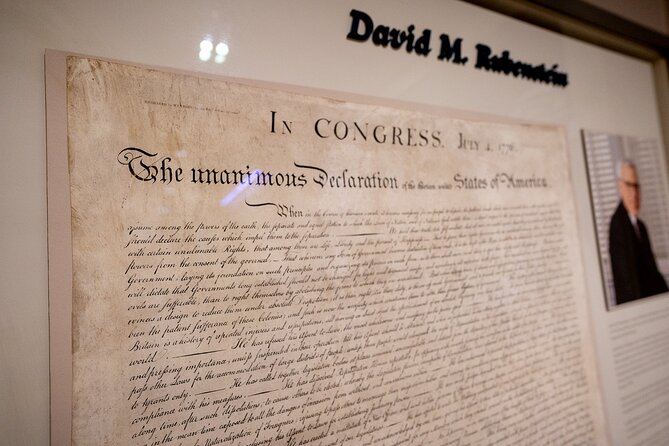
- Reserved National Archives entry that includes interpretation of major founding documents
- National Portrait Gallery inside a former Patent Office space with a great path through presidential portraits
- A guide-led hit list of key details (written documents, murals, and the “why” behind what you’re seeing)
- Max 6 travelers so questions are actually possible
- A fast wrap-up at the American History Museum with time to keep exploring right after
VIP, but practical: what $200 buys you
At $200 per person for about 3 hours, you’re paying for the guided experience and the time-saving advantage of reserved entry to the National Archives. The good news is that the museum stops themselves are listed as free-entry on the tour schedule, so your money doesn’t disappear into attraction tickets.
Think of this as a smart “curated highlights” format, built for people who don’t want to spend a half day figuring out what matters most in DC’s museum galaxy. With a group size capped at 6, the guide can pace the information and answer questions without herding everyone like a school group.
If you’re the kind of traveler who likes to go in with a plan—then adjust it on the spot—this setup fits nicely.
You can also read our reviews of more tours and experiences in Washington DC

Meeting point at 7th St NW and an easy end at the Smithsonian
You start at Unscripted by Guided Tours DC, at 400 7th St NW #102 (near public transportation) with a 2:00 pm start time. You’ll finish at the Smithsonian National Museum of American History on Constitution Ave NW, where you can continue exploring after your guided time ends.
This “start one place, finish at another” format is useful. Instead of backtracking across the National Mall area, you walk yourself straight into more exhibits at your own pace. Bring your patience for DC crowds around the major Smithsonian sites, but the tight schedule helps you avoid wasting time.
Also note: bottled water isn’t included, so plan to grab a bottle before you meet or once you arrive.
Stop 1: National Portrait Gallery in the old Patent Office
Your first stop is the National Portrait Gallery, where you’ll learn the building’s backstory as the former home of the U.S. Patent Office. The tour connects that past to how the space has been used over time, including the fact that the Declaration of Independence was once on display here.
After that context, the main payoff is the portrait focus: you’ll see famous faces from American leadership. This is where a good guide makes a real difference. Without help, portrait galleries can feel like a long hallway of frames. With guidance, you get a clearer sense of who you’re looking at and why their image still matters.
A practical way to use your hour: decide ahead of time which presidents you care about most, and let the guide lead you to the strongest examples first. Then, if something grabs your attention, you can slow down for it instead of trying to do everything.
Stop 2: National Archives Museum with reserved entry
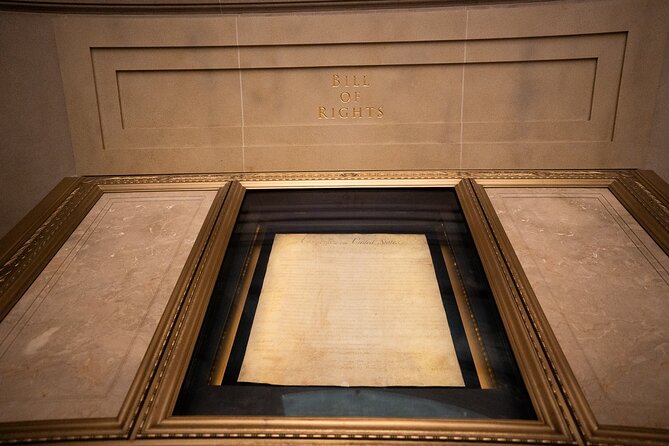
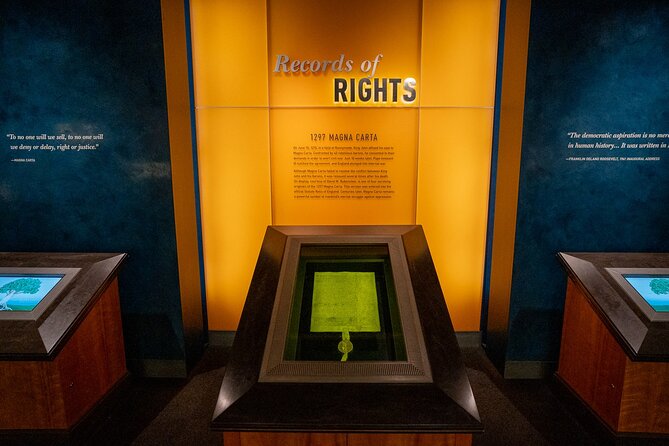
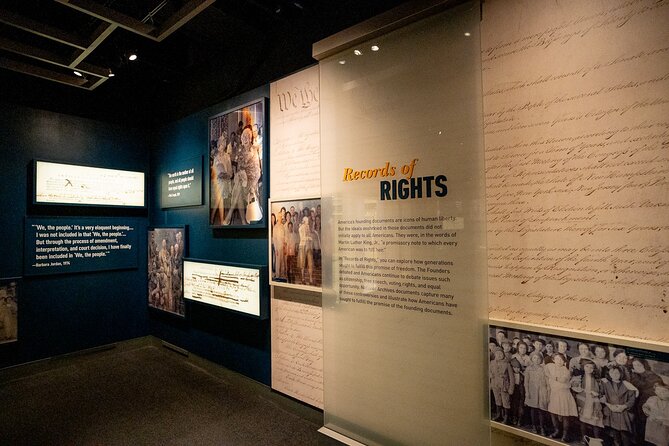
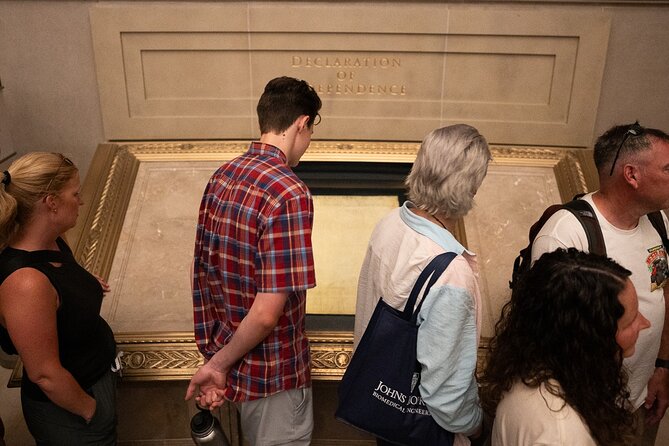
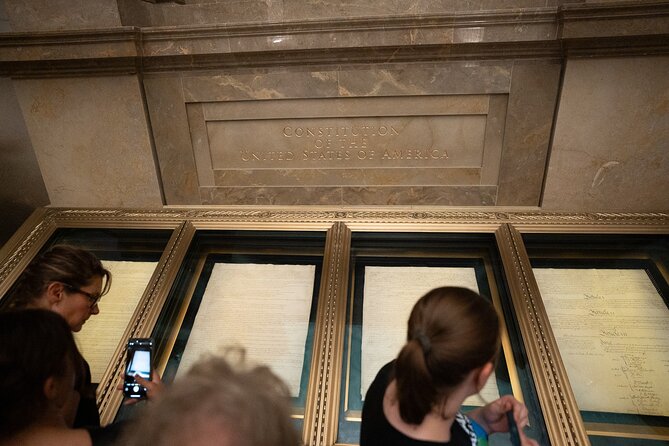
Next up is the National Archives Museum with guaranteed entry. This is the stop built around interpretation—specifically around the documents that shaped the country: the Declaration of Independence and the Constitution.
In about 45 minutes, you’re not trying to read every panel word-for-word. You’re getting the guided context that makes the documents feel less like glass cases and more like turning points. The tour also notes that you’ll see artifacts tied to major events, which helps connect the written documents to the wider story.
A very important real-world note: one participant mentioned that when the National Archives was closed due to a government shutdown, the experience was substituted with another option. That’s a reminder to stay flexible. If things are disrupted, the best mindset is: expect a pivot, and go with what you can still see.
If you want the maximum value from this 45-minute slot, come with two questions:
1) What moment or argument in each founding document matters most to you?
2) What did these documents make possible right after they were adopted?
Your guide’s explanations will help you spot the answer faster.
Stop 3: National Museum of American History as a guided on-ramp
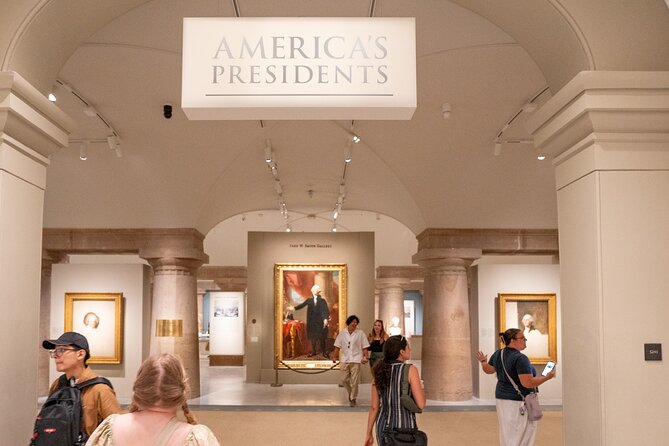
The final stop is the National Museum of American History, and the time on site is listed as a quick 1-minute highlight. Don’t let that sound discouraging. What it usually means in practice is that you’ll get a fast orientation and key pointers, not a full museum tour.
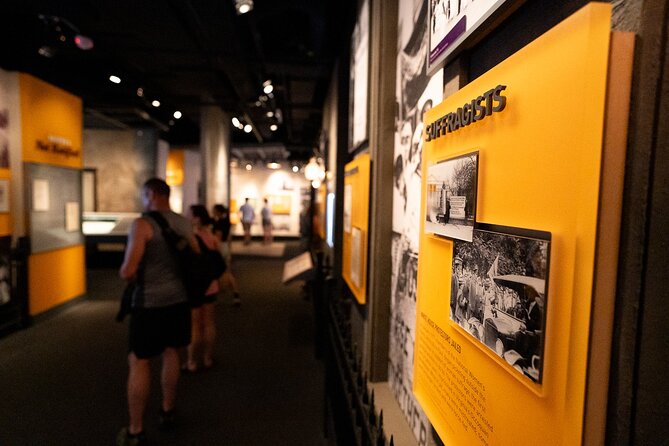
The topics you’ll touch through these highlights include presidents, inventors, civil rights, and democracy—so you get a broad sweep of themes that connect back to what you just saw in the Portrait Gallery and the Archives.
Then you’re free to keep going because the tour ends at this museum. This is exactly how you should use the last stop: treat the guided part as your map, then spend real time on the exhibits that match your interests. If you’re a first-timer at the Smithsonian American History building, this kind of entry plan can save you hours of wandering.
You can also read our reviews of more historical tours in Washington DC





Why the guide matters more than you think
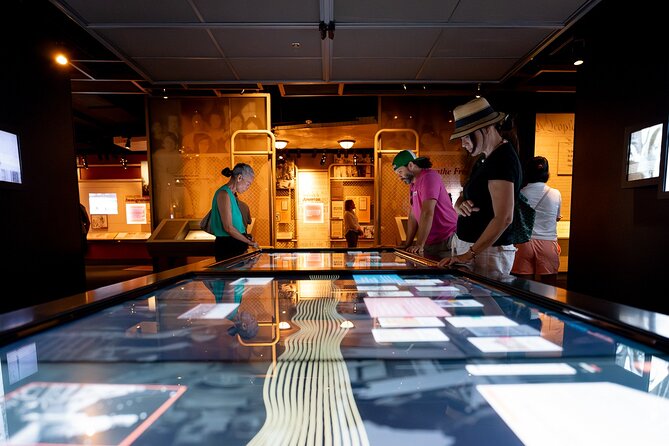
This tour’s biggest strength is not just what you see—it’s how you’re guided through it. Several people praised the guides for pointing out the key things you might otherwise miss: details in written documents, and even the meaning behind murals and visual storytelling.
In particular, two guide names came through in the feedback: Dash and Meg. The common thread is their practical approach—friendly, informative, and tuned to the right amount of content so the experience doesn’t overwhelm you.
Here’s why that matters for you: DC museums are incredible, but they can also be mentally noisy. A guide helps you filter the noise and focus on what connects across stops. When the portrait gallery sets the stage and the Archives sharpens the story, your final stop at American History feels less like three unrelated visits and more like one connected lesson.
If you like asking questions, this small group format makes it easier to do. And if you don’t, you still get the benefit of someone else choosing the most important moments for your limited time.
Group size and pacing: small, focused, and doable
With a maximum of 6 travelers, the pacing stays human. You’re not stuck waiting for slow-moving people every five minutes, and you’re also less likely to feel like you’re racing the group to keep up.
The tour is also designed for moderate physical fitness, which is a polite way of saying you should be comfortable with museum walking and standing for interpretive moments. If you’re someone who needs long seating breaks, you might find three hours a bit tight—but there aren’t red flags in the provided details that suggest heavy trekking.
The overall duration is about 3 hours, so this is a strong afternoon option for people who are doing other DC sights in the morning or evening. It’s also a good way to get a lot of perspective without sacrificing your whole day.
Cost vs value: the real math of three major museums
Let’s talk value the way you actually experience it.
You pay $200 per person for:
- guided interpretation across three major Smithsonian-area experiences
- reserved entry to the National Archives
Meanwhile, the tour schedule lists free admission for the museum stops. That means your money is less about entry fees and more about the guide service and the guaranteed access to one of the most important document destinations.
Is it “cheap”? No. But for DC, it can be a solid deal if you value guided context and you want to avoid spending your precious sightseeing hours on logistics. And the small group cap helps justify the cost. When you have six people (not thirty), the guide can react to what you’re curious about.
One more value angle: getting a structured sequence across portraits, founding documents, and American history themes is a fast way to build a mental framework. Later, when you walk through exhibits on your own, you’ll recognize connections faster.
Who should book this tour
This is a great fit if:
- you want a short, guided history experience in DC
- you’re interested in presidents, founding documents, and democracy themes
- you like museums but hate the overwhelm of trying to plan everything alone
- you want access support for the National Archives via reserved entry
You might want to plan differently if:
- you prefer long, self-directed time in one museum instead of highlights across three
- you’re hoping for a deep, all-day dive into every exhibit (this is a focused schedule, not an all-day marathon)
Should you book America’s 250th VIP Tour?
I’d book it if you want a smart afternoon that connects the story—portraits to documents to American history themes—without wasting time. The small group size and reserved National Archives entry are the two pieces that most affect your day-to-day experience. And if you like the idea of a guide who knows how to point out what matters in written documents and murals, this tour is built for you.
Two quick tips before you decide:
- If the National Archives is a must for you, prioritize this tour for the reserved entry advantage—but stay flexible if the site is disrupted.
- Plan to continue at the National Museum of American History after the tour. The guided portion is brief by design, and your best payoff may come from what you explore next on your own.
FAQ
What is the duration of the tour?
It lasts approximately 3 hours.
When does the tour start?
The start time is 2:00 pm.
How many people are in the group?
The group is capped at a maximum of 6 travelers.
Is the tour offered in English?
Yes, it is offered in English.
Is entry to the National Archives included?
Yes. Reserved entry to the National Archives is included.
Are admission tickets free for the museums on the itinerary?
The tour schedule lists free admission tickets for the National Portrait Gallery, the National Archives Museum, and the National Museum of American History.
Where do I meet, and where does the tour end?
You meet at Unscripted by Guided Tours DC, 400 7th St NW #102, Washington, DC 20004. The tour ends at the Smithsonian National Museum of American History, 1300 Constitution Ave NW, Washington, DC 20560.
What is the cancellation window?
You can cancel for a full refund up to 24 hours before the experience’s start time.