REVIEW · WASHINGTON DC
DC Monuments & Memorials Guided Minibus City Tour
Book on Viator →Operated by Astra tours and transportation llc · Bookable on Viator
Four DC icons in three hours. This guided minibus loop is a fast, comfortable way to orient yourself, with a guide who talks through what you’re seeing as you move. I especially liked the air-conditioned ride and the way the commentary turns famous facades into places with real context. The trade-off: each stop is short (about 15 minutes) and there are no admission tickets included, so you’re viewing from the outside and keeping an eye on timing.
You meet at 400 New Jersey Ave NW at 10:30am and return to the same spot after about three hours. It runs in English with a mobile ticket, and the group size is capped at 60, which helps keep things moving without feeling like a school bus stampede.
In This Review
- Key highlights to watch for
- The real value: a 3-hour orientation you can build on
- Where you’ll start: 400 New Jersey Ave NW and a smooth reset
- Stop 1: U.S. Capitol Campus and the Statue of Freedom view
- Stop 2: The White House from the right angle
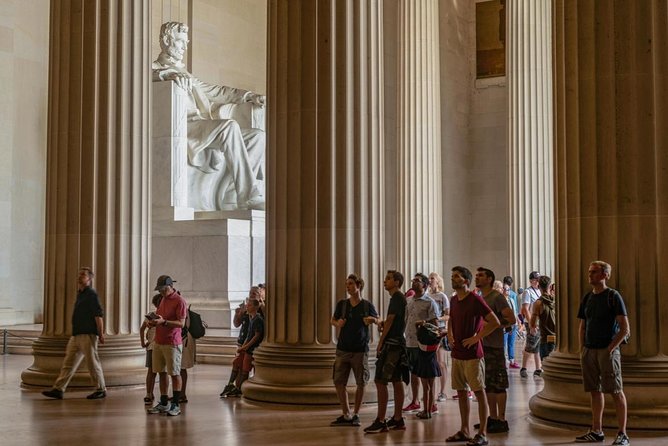
- Stop 3: Lincoln Memorial and the timeline behind the symbolism
- Stop 4: National World War II Memorial and the building blocks of meaning
- What you’ll notice about the schedule: 15 minutes means smart priorities
- The guide experience: what makes it feel fun instead of robotic
- Comfort and transport: why shared vehicles can be the smart move in DC
- Photo and timing strategy for each monument stop
- Who this tour fits best (and who should skip it)
- Should you book this DC Monuments & Memorials guided minibus tour?
- FAQ
- How long is the DC Monuments & Memorials guided minibus city tour?
- Where does the tour start and end?
- What time does the tour begin?
- Is the tour in English?
- Are admission tickets included for the stops?
- How big is the group?
- Are children allowed on the tour?
- Are service animals allowed?
- Can I get a full refund if I cancel?
Key highlights to watch for
- A tight route for getting your bearings: Capitol area to the National Mall in one smooth run
- Guides who do more than recite facts: some guides use humor, stories, and even bus quizzes
- Big photo moments with built-in stops: set photo time at the main icons, not just pass-by driving
- Outdoor viewing (admission not included): you’ll spend time seeing sights nearby, not entering them
- Comfort matters in DC: the shared ride is commonly noted as a lifesaver in hot weather
- Short visits that reward good planning: quick stops mean you’ll want to decide your photo angle early
The real value: a 3-hour orientation you can build on
Washington, DC is spectacular. It’s also spread out, and the traffic can test your patience. This tour is built for people who want the headline monuments without losing half a day to driving, parking, and second-guessing where to start.
For $49, you’re paying for two things that are hard to DIY at the same quality level: transportation plus interpretation. The driver/guide doesn’t just point. They explain what you’re seeing as you go, including details you’d likely miss if you arrived on your own and just snapped photos.
Just know what the format is. It’s a guided circuit with quick stop windows, not a deep museum-style experience. If you want to linger for an hour at one monument, you’ll probably feel rushed. If you want a smart first pass that helps you plan your next day, it’s a great deal.
You can also read our reviews of more guided tours in Washington DC



Where you’ll start: 400 New Jersey Ave NW and a smooth reset

Your day begins at 400 New Jersey Ave NW in central DC, and you’re back there at the end. That matters more than people think. When a tour returns you to the same meeting point, you’re not stuck reverse-navigating in the last hour while your energy drops.
This one also uses a mobile ticket, which is convenient if your phone battery is behaving. Confirmation comes at booking, and the tour is offered in English. The group limit of up to 60 keeps it from becoming totally unwieldy, especially given that you’re making multiple short photo stops.
Stop 1: U.S. Capitol Campus and the Statue of Freedom view

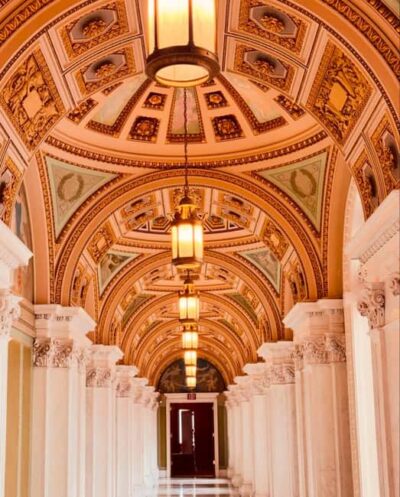
The Capitol is the anchor point of the whole area. You’ll start on the Capitol Campus, a roughly 450-acre set of grounds that includes the House and Senate office buildings, the U.S. Botanic Garden, the Library of Congress, and the Supreme Court.
Even in a short visit, there’s a lot you can clock:
- The landscaping is part of the story. The grounds were originally planned in 1892 by Frederick Law Olmsted, the same landscape architect behind New York City’s Central Park.
- Before you get too close, you’ll stand back for a look at the Statue of Freedom, a 19-foot-tall bronze female figure crowning the dome.
That “stand back” detail is practical. It keeps you from arriving too near and losing the best sightline. You’ll get the dome in context, not just a close-up scramble that’s hard to photograph.
Timing note: 15 minutes is enough for orientation and a solid few photos, but not enough to do the kind of close-up, slow walking you’d want if you were touring the Capitol buildings themselves. And admission tickets aren’t included.
Stop 2: The White House from the right angle
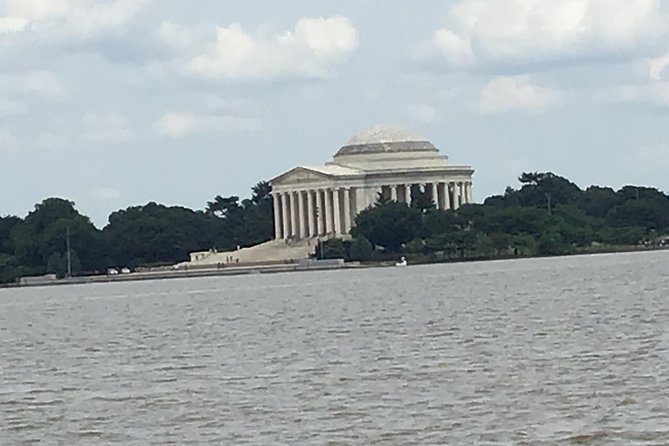
Next is the White House, the official residence and main workplace of the President. It sits at 1600 Pennsylvania Avenue NW, designed by Irish-born James Hoban and built between 1792 and 1800 of white-painted Aquia sandstone in the Neoclassical style.
Here’s what makes the short stop feel richer than you’d expect: the design and the timeline are built into the story.
- It has housed every U.S. president since John Adams.
- When Thomas Jefferson moved in around 1801, the building was expanded outward.
- Jefferson worked with architect Benjamin Henry Latrobe on changes that created two colonnades, meant to conceal storage and stables.
You don’t need a long stop to catch the basics. You just need one good exterior viewpoint and a guide explaining why the building looks the way it does.
As with the Capitol, admission isn’t included. So your focus should be exterior viewing, photos, and soaking up context while you have the chance.
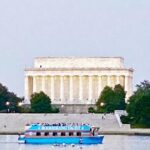
Stop 3: Lincoln Memorial and the timeline behind the symbolism
The Lincoln Memorial is one of those places where you feel something immediately, even if you’re not a Lincoln superfan. It’s a major draw, and there’s a reason it took so long to become what it is today.
This stop brings in the long arc:
- The memorial was planned as early as 1867, just two years after Lincoln’s death.
- Henry Bacon’s design wasn’t completed until 1912.
- It was dedicated in 1922.
In a quick 15-minute block, I find this kind of timeline explanation does a lot of work. It turns the structure from a photo spot into a monument with a clear backstory: the country shaping a space over decades, not weeks.
You’ll also want to use the time efficiently for photos. The memorial is photogenic from several nearby angles, but you’ll be competing with other camera-ready moments unless you’re decisive the second you arrive.
You can also read our reviews of more city tours in Washington DC






Stop 4: National World War II Memorial and the building blocks of meaning
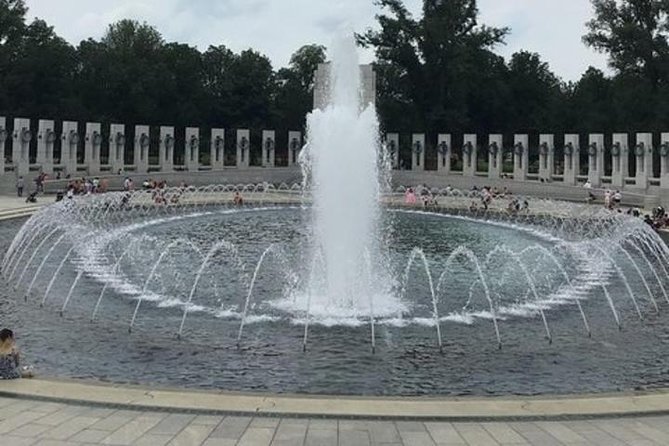
Then you hit the National World War II Memorial, located on the National Mall between the Lincoln Memorial and the Washington Monument. The location itself matters because it places you in that famous stretch of monuments where the city feels designed for remembrance.
The memorial’s structure is specific:
- It has 56 pillars.
- There are two arches that frame a plaza and fountain.
- It sits on the former site of the Rainbow Pool at the eastern end of the Reflecting Pool.
That combination of numbers, arches, and plaza isn’t just decorative. It’s the kind of design that makes the memorial feel organized and intentional, even when you’re seeing it briefly.
If you like memorials you can understand quickly, this stop is a winner. You can read the design in a few minutes—especially with the guide’s explanation—and then take your photos.
What you’ll notice about the schedule: 15 minutes means smart priorities
Across the big stops, the pattern is 15 minutes each. That’s short, but it also keeps the tour from turning into a slow slog. In three hours, it’s designed to let you see the most iconic DC shapes, then get back to real sightseeing with a better mental map.
Here’s how to make the most of it:
- Pick your photo angle before you disembark. Don’t spend five minutes deciding while the best light and best positioning move on.
- If you care about details (statues, inscriptions, architectural lines), listen closely during the guide’s talk—you’ll get more out of it than trying to read everything after.
- Keep an eye on return timing. When you’re on a shared vehicle, the group has to move as one.
One downside shows up in feedback from some people: if a guide talks at a fast pace or keeps the delivery very fact-heavy, it can feel less fun. The upside is that many guides are praised for being animated and interactive, with a style that makes quick stops feel worth it.
The guide experience: what makes it feel fun instead of robotic

A guided tour lives or dies by delivery. In this case, the guide factor seems to be a highlight.
I’ve seen specific guide names come up in positive feedback, including Ali, Craig Bell, and Bobby. The common thread is that they don’t just rattle off dates. They add story, keep things moving, and keep the group engaged. One account even described quizzes and small prizes on the bus, which is exactly the kind of light touch that makes a short city tour feel memorable.
At the same time, one piece of feedback mentions a guide who spoke very quickly and felt dry, plus an unflattering moment with a late couple. That’s a reminder that live guiding is human. If you’re very sensitive to pace or prefer slower storytelling, you might want to mentally prepare yourself for a fast cadence on a “see a lot” tour.
Comfort and transport: why shared vehicles can be the smart move in DC
This tour is done by shared transportation, and recent experiences highlight an air-conditioned bus as a big win—especially in warm weather. That comfort matters in DC because the outside time can be deceptive. You’re standing, walking a bit, and waiting for photo windows, so cool air on the ride between stops is a practical gift.
There’s also a group-size ceiling of 60. That’s not tiny, but it’s enough people that you get energy and chatter without feeling like you’re shoulder-to-shoulder at every curb.
Also, near public transportation access can help if you want to tack on museum time before or after the tour day. You’ll be starting from a central meeting point anyway, so you’re not locked into just one bubble.
Photo and timing strategy for each monument stop
If you’re coming for photos, you’re in luck. This tour is built around seeing the icons with enough time to get pictures, not just a drive-by.
For the Capitol:
- Aim for the dome and Statue of Freedom from your assigned viewing spot.
- Don’t count on getting super close. The point is a clear exterior view with context.
For the White House:
- Plan for exterior viewing only.
- Think symmetry. The Neoclassical lines read well in photos.
For Lincoln:
- Expect a powerful backdrop. Even if you’re rushing, the form of the memorial does most of the work for you.
- Use the guide’s context while you’re there—then photograph.
For WWII:
- Watch for the pillars and arches framing the space.
- A quick primer from the guide helps you photograph with meaning, not just as a blank background.
Who this tour fits best (and who should skip it)
This works best for you if:
- You want a first-time DC orientation in a tight schedule.
- You’d rather pay $49 for guiding and transport than spend the day bouncing between stops on your own.
- You enjoy architecture and memorial symbolism, especially with an explanation while you’re looking.
You might want to skip or pair this tour with something else if:
- You want long, quiet time at one site.
- You need included admissions or ticketed entries. Admission isn’t included for these stops.
- You prefer a slow pace and deep stops. This is a highlights-and-go format.
If you’re planning a fuller DC trip, this can act like your map. Afterward, you’ll know what you loved and what you want to revisit on your own.
Should you book this DC Monuments & Memorials guided minibus tour?
If you’re trying to see the big DC hits efficiently, I’d say yes. The value is in the combination of short, well-chosen stops plus transportation, delivered with a guide who often turns the route into a story.
Book it if:
- You want a compact, high-impact overview.
- You’ll use the time well for photos and orientation.
- You’re okay with exterior viewing and not having admissions included.
Consider something else if:
- You’re expecting ticketed entry into major landmarks.
- You want more than three hours of monument time.
- You’re uncomfortable with quick stop windows and a fast guiding pace.
Bottom line: this is a practical “get your bearings and enjoy the landmarks” tour. For the price and timeframe, it’s a solid way to start your DC story.
FAQ
How long is the DC Monuments & Memorials guided minibus city tour?
It’s approximately 3 hours.
Where does the tour start and end?
The tour starts at 400 New Jersey Ave NW, Washington, DC 20001, and it ends back at the same meeting point.
What time does the tour begin?
The start time is 10:30 am.
Is the tour in English?
Yes, it’s offered in English.
Are admission tickets included for the stops?
No. Admission ticket for each listed stop is not included.
How big is the group?
The tour has a maximum of 60 people.
Are children allowed on the tour?
Yes, children are allowed, but they must be accompanied.
Are service animals allowed?
Yes, service animals are allowed.
Can I get a full refund if I cancel?
Yes. You can cancel up to 24 hours in advance for a full refund.