REVIEW · WASHINGTON DC
DC Monuments: Small Groups, Big Ideas Walking Tour
Book on GetYourGuide →Operated by Rethinking History · Bookable on GetYourGuide
One mile of walking can still feel like a deep conversation. This DC monuments tour trades the usual date parade for stories about the people honored and the people who made the memorials happen, guided by Shelley. I especially like the small group vibe (limited to 8) and the unhurried pace that lets you actually take in what you’re seeing, not just speed past it.
The main thing to consider is practical: you’ll be outside most of the time, you’ll walk about a mile, and benches aren’t guaranteed at every stop. If you have back problems or you need frequent seating, this may be tougher than you want.
In This Review
- Key points to know before you go
- Why this small-group National Mall tour feels different
- Price and value: what $85 covers (and what it doesn’t)
- Getting oriented: the exact meeting spot by the WWII Memorial
- Walking plan and comfort tips for a smooth mile
- Stop 1: Washington Monument, viewed from a distance (and why that works)
- Stop 2: World War II Memorial, where numbers meet people
- Stop 3: Vietnam Veterans Memorial, the three-part meaning machine
- Stop 4: Vietnam Women’s Memorial (a shorter stop with big impact)
- Stop 5: Three Servicemen Statue, a quick look with context
- Stop 6: Korean War Veterans Memorial, a wall and 19 service statues
- Stop 7: Lincoln Memorial finish, leadership tied to slavery’s end
- Photo time on the National Mall: how to use the camera without rushing
- Rules that keep the tour respectful (and easy to follow)
- Who should book this DC monuments walking tour
- Should you book this tour?
- FAQ
- How long is the DC Monuments walking tour?
- How much walking is involved?
- Where do I meet the guide?
- Is the tour wheelchair accessible?
- What should I bring?
- Is bottled water included?
- Are pets or drones allowed?
- What’s the cancellation and payment flexibility?
Key points to know before you go
- Small group of up to 8 keeps the talk interactive, not lecture-y
- People-first stories focus on who shaped the monuments, not just dates and numbers
- Photo-friendly stops across the Washington Monument, WWII, Vietnam, Korean War, and Lincoln
- About 1 mile (1.6 km) total walking, with breaks built into the timing
- Mostly outside with refill stations for water, so bring shoes and a reusable bottle
- Respectful rules: no drones, no alcohol/drugs, and no pets (assistance dogs allowed)
Why this small-group National Mall tour feels different
The National Mall can be a blur—big crowds, big marble, lots of people trying to beat the heat. This tour helps you slow down without making it feel sluggish. The group stays limited to 8 participants, which changes the whole feel. Instead of everyone staring at the same guide voice, you get a real back-and-forth about what the monuments mean and why they exist.
Shelley leads the experience, and that matters. She started her career with the National Park Service as a ranger, then built her background with a Master’s in museum studies and a Bachelor’s in anthropology and linguistics. Translation: you get thoughtful context on how memorials communicate—through names, symbols, and design choices—and not just a string of facts.
What I like most is that the tour keeps pulling you back to people. You’re not memorizing a long list of history dates. You’re learning how different generations wanted to be remembered, and how the country argued, built, and refined those choices over time. If you enjoy asking questions and listening for meaning, you’ll feel right at home.
You can also read our reviews of more walking tours in Washington Dc



Price and value: what $85 covers (and what it doesn’t)
At $85 per person for about 150 minutes, you’re paying for a live professional guide plus the tour’s fees and taxes. There’s no hotel pickup included, so you should plan to get to the meeting point on your own. That’s normal for a National Mall walk, and it keeps the schedule tight and simple.
Your money is also going toward a guide-led experience that’s designed around time at each monument—guided viewing, discussion as you go, and enough slack for photos. It’s not a rushed march where you’re only allowed to look for five seconds and move on. The value is strongest if you’d otherwise wander alone and end up with only the broad “this is important” version of DC.
What you’ll need to budget separately:
- Water: bring a reusable bottle (fill stations are along the way), and bottled water isn’t included
- Snacks/food: the tour is outside the whole time, so bring something small if you get hungry
- Comfortable footwear for the walking segment
If you like structured stories but hate cookie-cutter group tours, this price feels fair for what you get: guided context, respectful pacing, and a route that covers the major monuments without dragging.
Getting oriented: the exact meeting spot by the WWII Memorial
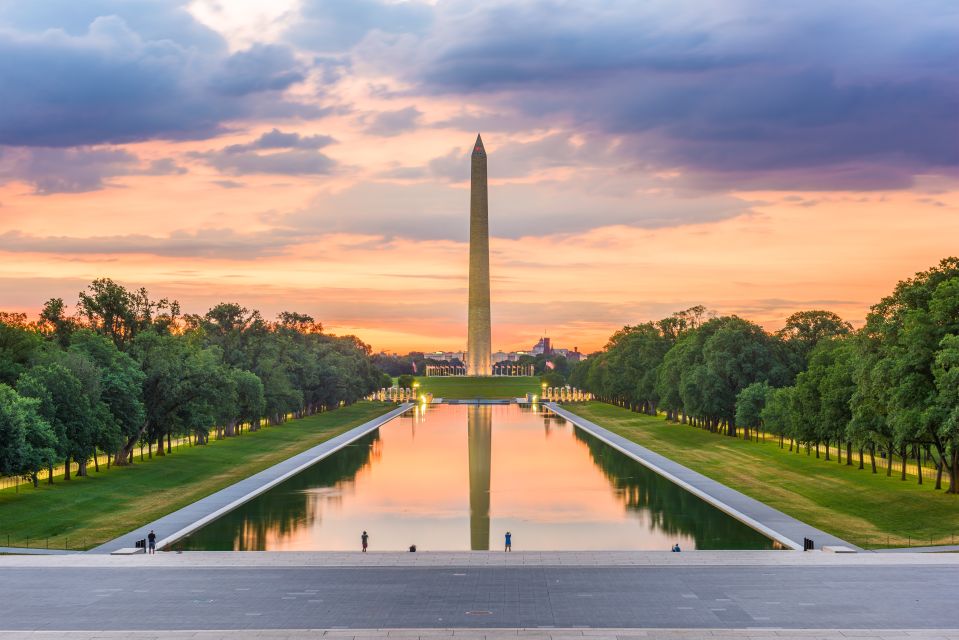
You meet near the World War II Memorial, with a clear “find me here” plan. Head to 17th St. SW, next to one of the crosswalks at the WWII Memorial. It’s about halfway between Independence Ave and Constitution Ave, on the east side of the street—the side with the Washington Monument.
If you’re walking from Constitution Ave, it should be the first crosswalk after the intersection. Look for Shelley in a green shirt.
This kind of precise meeting point matters on the National Mall. There are a lot of entrances, stairs, and lookouts. If you arrive a few minutes early, you’ll save yourself the stress of searching while everyone else lines up.
Walking plan and comfort tips for a smooth mile
The tour asks you to come prepared to walk about 1 mile (1.6 km). That distance doesn’t sound huge until you add in cobblestones, crowds, and the “stop to talk” timing at major monuments.
Benches exist, but not at every stop, so don’t assume you’ll be able to sit whenever you want. Also, since you’re outside the whole tour, you’ll want to dress for the day—comfortable shoes matter most.
Practical checklist:
- Wear comfortable shoes
- Bring a reusable water bottle (there are refill stations)
- Bring snacks if you need them, since food isn’t included
- Bring your camera—you’ll have multiple iconic photo moments
If you have back problems, this tour may not be suitable. The route is accessible in general (wheelchair accessible), but the tour’s walking nature and stop-and-go rhythm can still be hard for people with mobility or back limitations.
Stop 1: Washington Monument, viewed from a distance (and why that works)
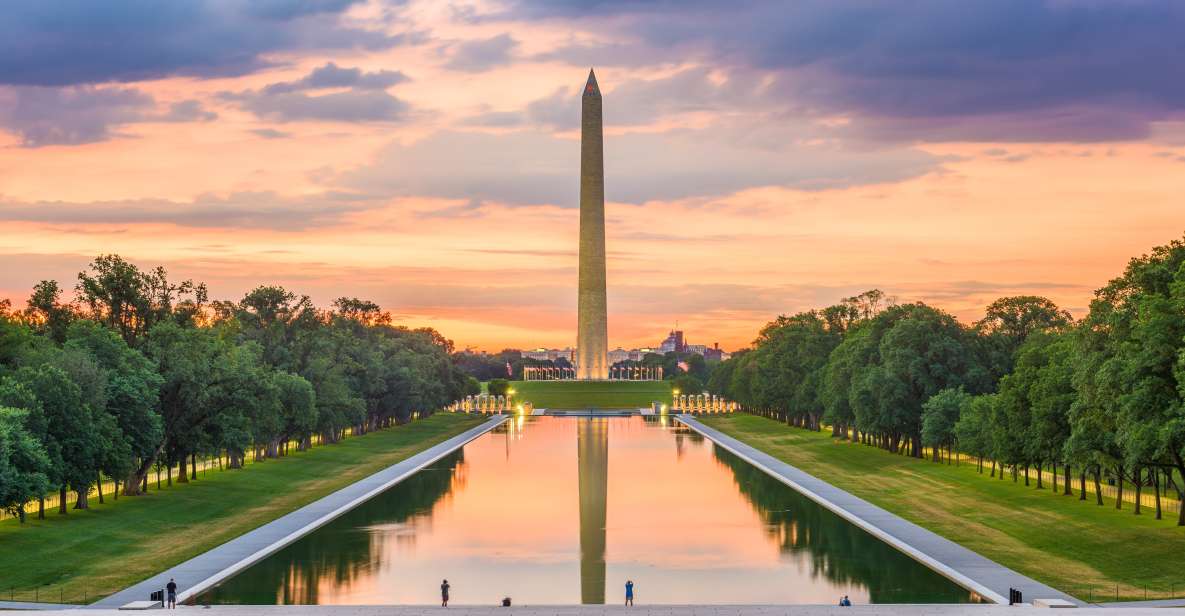
The tour begins at 1750 Independence Ave SW, then moves to the Washington Monument area. Here, you’ll view the monument from a distance and talk about what it represents: it’s dedicated to George Washington, the United States’ first president.
Starting this way is smart. Up close, the Washington Monument can be overwhelming in scale. From a distance, you can more easily take in the monument in context—how it fits the broader National Mall layout and how DC uses monuments to communicate national identity in visible, repeatable ways.
If you strongly want an up-close view of the monument itself, the tour suggests doing that before your walking time. In other words: use your independent time for the tight angles, and let the tour handle the meaning and the story.
You’ll also get scenic views as you move. Even at the beginning, this tour is teaching you how to look—not just where to look.





Stop 2: World War II Memorial, where numbers meet people
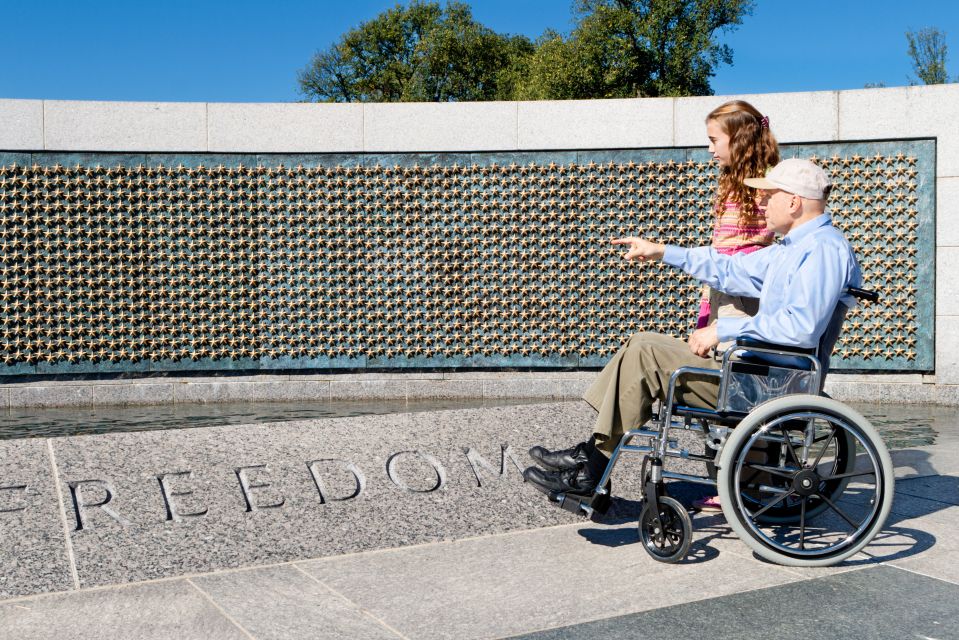
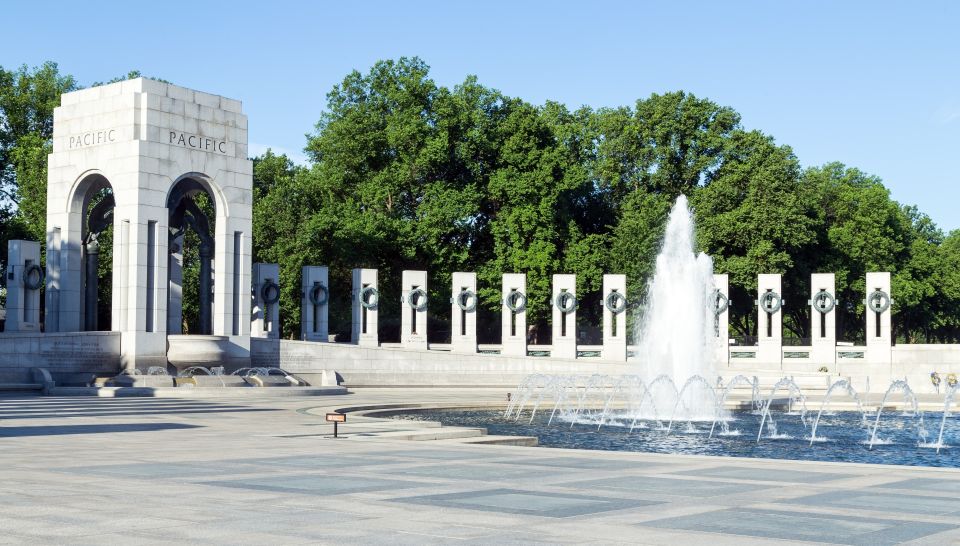
Next up is the National World War II Memorial, where the scale is part of the message. The memorial honors 16 million service members, supports from the home front, and the 405,399 Americans who made the ultimate sacrifice.
The value here isn’t just knowing the numbers. It’s hearing how memorial design helps you hold both sides at once: the military service, the effort back home, and the cost. The guide will shape the story so it doesn’t become an abstract math problem.
In practical terms, the WWII Memorial is also one of the easiest places to learn “how to read” a monument. You can look for symbolism, take in overall layout, and then zoom in on the details you’re learning about with the guide. Expect guided viewing and discussion, with enough time to stand, look, and ask questions without feeling shoved along.
Stop 3: Vietnam Veterans Memorial, the three-part meaning machine

Then you’ll move to the Vietnam Veterans Memorial, which is made up of three separate parts:
- the Three Soldiers statue
- the Vietnam Women’s Memorial
- the Vietnam Veterans War Memorial, often called the Wall
This stop is one of the most emotionally intense on the route, and that’s exactly why the tour’s “people first” approach helps. You’ll talk about how the memorial was created and how it is used today to honor those who died during the war.
What to watch for: each component speaks to a different slice of memory. The story isn’t only about battle. It’s also about presence, service, and the people who were there. The Three Soldiers statue and the Vietnam Women’s Memorial shift the focus away from a single frame and into lived experience—who showed up, who supported, and who was recognized.
The Wall portion, of course, draws attention immediately. But the guide’s emphasis on creation and present-day use is what makes it more than a quick photo stop. You’ll understand the why behind the design—and why people treat the memorial with such care.
Stop 4: Vietnam Women’s Memorial (a shorter stop with big impact)
After the broader Vietnam area, the tour includes a dedicated moment at the Vietnam Women’s Memorial. Even though this segment is shorter, it matters. It keeps the story from turning into a one-note visit where you only focus on the most famous element.
In memorial terms, this stop highlights how recognition expands. You get a clear reminder that official remembrance doesn’t happen by accident. It’s shaped by who advocates for inclusion and how the country decides what deserves space in public memory.
For anyone who’s ever walked past a monument and thought, I wish more stories showed up here, this is the answer.
Stop 5: Three Servicemen Statue, a quick look with context
You’ll also stop at the Three Servicemen Statue. This is a brief segment, but it’s designed as a bridge between larger concept points—so you can connect the Vietnam story to how memorials personify service and sacrifice.
The Three Servicemen statue offers a more direct, human face to the monument complex. It complements the more reflective elements and gives you a moment to think about how DC uses different forms—sculpture, names, and memorial walls—to create different kinds of remembrance.
If you’re the kind of person who likes to understand how design affects emotion, don’t rush this stop. Stand, look, and let the guided context do its job.
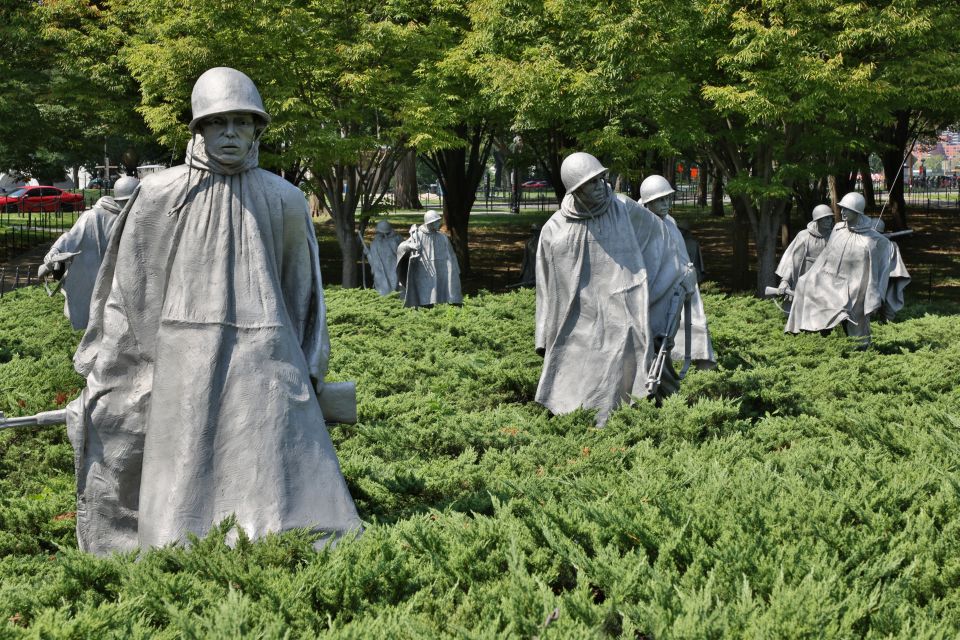
Stop 6: Korean War Veterans Memorial, a wall and 19 service statues
The Korean War Veterans Memorial offers a moving combination of structure and symbolism. You’ll see a Wall of Remembrance and 19 service men statues.
What makes this stop valuable is how the design supports a broader meaning: it honors the sacrifices of Americans and allied partners who fought during the Korean War. That “allied partners” piece keeps it from becoming purely U.S.-only storytelling.
The 19 statues are also a visual cue that invites counting and comparison—but the guide steers that impulse into understanding. You’re not just looking at figures. You’re learning how public remembrance tries to represent many lives in a space that can’t hold them all.
With guided viewing and discussion, you’ll leave with a clearer sense of what the monument is trying to do for visitors: slow you down and make reflection feel like the default.
Stop 7: Lincoln Memorial finish, leadership tied to slavery’s end
The tour ends at the Lincoln Memorial. The memorial is dedicated to Abraham Lincoln, the nation’s 16th president, and focuses on his leadership during the American Civil War and how that leadership was crucial to ending slavery.
Ending here isn’t just convenient. It ties the tour’s theme—people and meaning—back to a central DC idea: public monuments don’t only honor the past. They tell you what a nation wants future generations to remember.
By the time you reach Lincoln, you’ve already spent the afternoon thinking about how remembrance is built, who gets recognized, and how memory becomes part of public space. That’s why the finish feels complete. It’s not a random capstone; it’s a final reminder that monuments are arguments made in stone.
Expect a guided viewing and a chance to reflect before you wrap.
Photo time on the National Mall: how to use the camera without rushing
You’ll likely take a lot of photos on this route, and the tour explicitly includes that mindset. The monuments are iconic. But the real trick is timing: don’t just grab shots while you’re walking. Stop, frame, and listen while you look.
A helpful way to approach photography on this kind of tour:
- Use the guided pauses to choose your angle before you hit the crowd
- Shoot both wide and detail views (the tour topics help you know what details matter)
- Keep moving gently when people cluster, since the National Mall is heavily visited
Also, this tour runs through one of the most visited areas in DC, so you should plan for crowds. That doesn’t ruin the experience—it just means you’ll work a little for clean photos. Bring patience. The monuments are the prize.
Rules that keep the tour respectful (and easy to follow)
The experience asks you to keep things respectful and straightforward:
- No drones
- No pets (assistance dogs allowed)
- No alcohol and drugs
- Please don’t litter
Those rules are standard for major memorial spaces, but it’s good to know up front so you don’t get caught mid-visit. The tour is also guided in English, which helps if you want clear explanations without language friction.
Who should book this DC monuments walking tour
I’d book this if you:
- Want a small-group tour where questions are welcome
- Like stories about people, not just dates and dates and more dates
- Are okay walking about 1 mile and spending most of the time outdoors
- Want a route that hits the biggest National Mall memorials in one connected experience
I’d think twice if you:
- Have back problems or need frequent seating
- Want a fully car/bus-style experience with minimal walking
- Prefer only the most famous photo spots with no deeper context
Should you book this tour?
Yes, if you want a more thoughtful National Mall visit that doesn’t treat your time like a checklist. The best part is how it balances iconic sights with meaning—so you leave understanding why these monuments look the way they do and what they were built to honor. For a single afternoon, it’s good value: professional guide, small group, and a pace that doesn’t feel like you’re sprinting.
FAQ
How long is the DC Monuments walking tour?
The tour lasts about 150 minutes.
How much walking is involved?
You should come prepared to walk about a mile (1.6 km).
Where do I meet the guide?
Meet on 17th St. SW next to one of the crosswalks at the World War II Memorial, on the east side of the street. Look for the guide in a green shirt.
Is the tour wheelchair accessible?
Yes, the tour is wheelchair accessible.
What should I bring?
Bring comfortable shoes and a reusable water bottle. The tour is outside the whole time, so snacks can help too.
Is bottled water included?
No. Bottled water is not included, but there are refill stations along the route.
Are pets or drones allowed?
Pets are not allowed (assistance dogs are allowed). Drones are also not allowed.
What’s the cancellation and payment flexibility?
You can cancel up to 24 hours in advance for a full refund, and you can reserve now and pay later.