REVIEW · WASHINGTON DC
Washington DC Neighborhoods Personalized Self-Guided App Tour
Book on Viator →Operated by Pintours · Bookable on Viator
One app can stitch together DC’s biggest landmarks. This Washington DC neighborhoods self-guided route is built around an easy flow: Union Station to the courthouse blocks, then Frederick Douglass, Folger, the Florida House, suffrage sites, the Supreme Court, the Capitol, and finally Library of Congress. I like that it blends iconic stops with human stories, not just big buildings, and I also like the wallet-friendly mix of included admission plus several free sites. The main thing to think about is that this tour leans on the app working smoothly, and that can be a problem if your phone or the guide connection has issues.
You’ll spend about 2 to 4 hours on your own pace, and the route ends inside the Library of Congress, which is open from 6:00 AM to 11:00 PM daily during the listed dates. Start at Union Station (50 Massachusetts Ave NE) and finish at 101 Independence Ave SE, with lots of public-transport options along the way. If you’re the type who likes to control timing and read at your own speed, this format can feel like a smart way to get bearings fast in Capitol Hill.
In This Review
- Key highlights you shouldn’t miss
- Price and what you actually get for $5
- Starting at Union Station: more than a pretty train hall
- The federal judiciary headquarters stop and the Thurgood Marshall thread
- A quick turn into Obama’s former DC neighborhood
- Frederick Douglass National Historic Site: short and meaningful
- Folger Shakespeare Library: one stop for literature geeks
- Florida House: the only state embassy in DC
- Belmont Paul Women’s Equality Monument: suffrage in plain sight
- Supreme Court and the Capitol: architecture plus power
- Library of Congress: finishing strong inside the building
- The route reality check: pacing, phones, and audio
- What kind of traveler will love this?
- Should you book?
- FAQ
- How long is the Washington DC Neighborhoods Personalized Self-Guided App Tour?
- Where does the tour start and where does it end?
- Is the tour guided by a person or an app?
- Are any admission tickets included?
- What are the Library of Congress opening hours listed for this experience?
- What is the cancellation policy?
Key highlights you shouldn’t miss
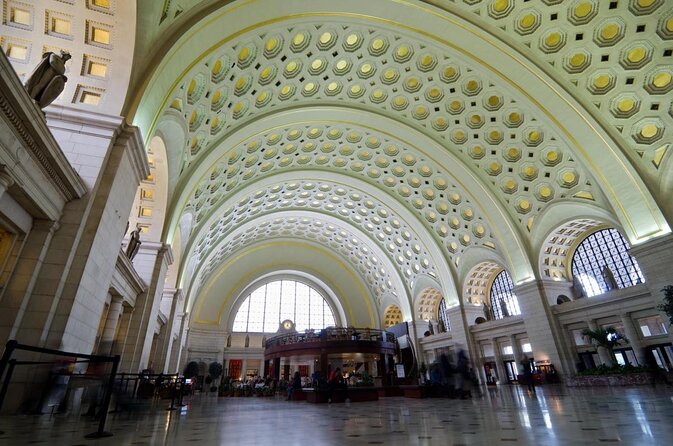
- Union Station with real context from its 1907 opening story and its role in shaping DC’s growth
- Thurgood Marshall and the federal judiciary stop, tying one person’s impact to Capitol Hill
- A planned Capitol Hill cluster: Supreme Court, then the Capitol’s architecture and famous speeches
- Frederick Douglass National Historic Site for a focused, short lesson at a meaningful place
- Folger Shakespeare Library as a quick hit of literary DC (world-famous collection energy included)
- End inside the Library of Congress so you don’t just stand outside admiring it
Price and what you actually get for $5

This tour is priced at $5 per group (up to 15 people). That’s the standout value angle: you’re paying for a guided narrative and app access, not for a private driver or a staff-led walking group. When you’re comparing it to typical “guided” experiences in DC, that group price can make sense even if you’re traveling with 2 to 5 people, because you’re essentially splitting the cost of the app tour.
The other value piece is the mix of ticketed and free stops. You’ll have admission ticket included for Union Station and for the Library of Congress, while other major sites on the route are listed as free entry (like Frederick Douglass National Historic Site, Folger Shakespeare Library, and the Florida House). In a city where “entry fees” can pile up, that combination can make this route feel efficient without rushing you through everything.
The catch is that the “experience” is only as good as the tech and scheduling. One person ran into trouble getting the virtual guide to connect and also found that getting into the Library of Congress involved timing/reservation steps. So if you’re the sort of traveler who hates last-minute schedule surprises, I’d plan to set yourself up early and double-check any required time entry for the Library of Congress before you leave.
You can also read our reviews of more guided tours in Washington DC



Starting at Union Station: more than a pretty train hall
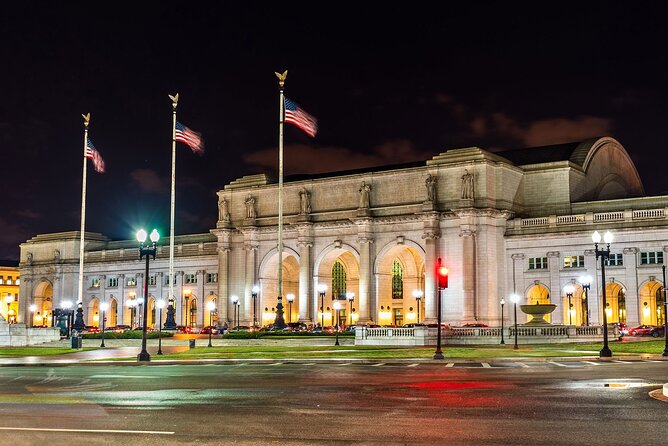
You begin at Washington Union Station at 50 Massachusetts Ave NE, and it’s an excellent starting point because the place is instantly legible. This is one of America’s early “great union terminals,” and the tour’s narrative is anchored in specifics: architect Daniel Burnham, the October 27, 1907 opening, and completion in April 1908. Those dates matter because they frame DC as a city that was growing up fast—and learning how to move people at national scale.
Expect roughly a 30-minute stop. The ticket component here matters too, because it helps you shift from looking at Union Station like a tourist to understanding it like a piece of national infrastructure. If you’re the kind of visitor who usually walks past buildings thinking, “Cool,” this stop is designed to give you a reason to slow down.
Practical tip: Union Station can be a navigation maze. Give yourself a few minutes to find the meeting point area first, then start the app when you’re ready to walk. If your phone battery is low, recharge before you commit to this opening segment, because the rest of the route depends on you staying on the audio.
The federal judiciary headquarters stop and the Thurgood Marshall thread
After Union Station, the route points you toward the administrative headquarters of the federal judiciary. This is one of the smarter choices on the itinerary because it connects DC landmarks to American legal history in a human way. The guide narrative here focuses on Thurgood Marshall, his contribution to Capitol Hill, and his broader impact on U.S. history.
This stop is shorter in the way the overall route is designed—more “get the idea” than “read every plaque.” That’s good if your goal is to build a map in your head: who shaped the country’s legal landscape, and why that story lives right here in the Capitol Hill zone.
One consideration: since this is self-guided, you’ll get the most out of it if you pay attention to the audio prompts at the right spot. If you wander a block or two off the intended position, you may lose the connection between the story and what you’re seeing in front of you.
A quick turn into Obama’s former DC neighborhood
Next, you’ll go exploring “the former President Obama’s DC neighborhood.” The guide will point out where he lived and share stories from his time there. Even if you’re not a “politics museum” person, I like this part because it changes the pace from civic institutions to lived experience.
This also helps you understand DC as a set of neighborhoods, not just a collection of monuments. You’ll be walking through the idea that power and policy aren’t far away from everyday streets.
Because the itinerary doesn’t list a named building for this stop, treat it like a “listening walk.” Keep the app active and follow the route closely so the guide’s references actually match what you see outside. It’s the kind of segment where self-guided works best when you don’t freestyle.
Frederick Douglass National Historic Site: short and meaningful

Then you hit Frederick Douglass National Historic Site, with an appointment-like feeling even though it’s self-guided: it’s scheduled for about 15 minutes and labeled as free. This is a smart size for a walking tour. You get a focused lesson on Douglass’s life and significance, his connection with President US Grant, and more points the guide will cover.
The biggest benefit here is framing. DC can sometimes become “big building tourism.” This stop pulls you back toward individual legacy and the mechanics of change, which makes the later Supreme Court and Capitol pieces land better. You’ll feel the storyline tightening: rights, law, leadership, and public life.
If you’re pressed for time, prioritize this stop for context before moving on. It’s one of the quickest ways to make the rest of the tour feel more coherent.
You can also read our reviews of more tours and experiences in Washington DC





Folger Shakespeare Library: one stop for literature geeks
Your next cultural detour is the Folger Shakespeare Library, described as the world’s largest Shakespeare library. The route gives it about 20 minutes and lists admission as free. That’s an easy win if you like stories that aren’t just political.
This isn’t just about knowing Shakespeare’s name. The guide narrative is designed to connect the library to its Capitol Hill setting, and it adds Shakespeare facts along the way. For me, a library stop is most valuable when it’s tied to why the building exists and what it protects, not when it’s treated like a photo backdrop.
One tip: go in with a question for yourself. Even a simple one like, What’s special about a library dedicated to one author? can make the audio feel sharper and more purposeful.
Florida House: the only state embassy in DC

Then you’ll stop at the Florida House, described as the only state embassy in Washington, DC. This is a fun switch from federal institutions because it gives you a state-level view of how government functions. The guide will explain why the place exists and how it operates today, with “extra benefits” if you’re coming from Florida.
Even if you’re not from Florida, I like this stop because it reminds you that Washington isn’t only federal power. States still have visible roles here, and you can feel that when you visit something designed to represent a state formally.
Since this is listed as free, it’s also a good place to stretch your legs and reset your brain. If your phone audio is lagging elsewhere, you can still enjoy the site visually while you get the main points.
Belmont Paul Women’s Equality Monument: suffrage in plain sight

The route includes the Belmont Paul Women’s Equality Monument, maintained by the National Park Service. The guide focuses on its connection to the National Women’s Party and the suffragists’ struggle for the vote. This is one of those places where short audio can do real work, because the monument is both commemorative and instructional.
I especially like how this stop bridges to the later legal and civic stops. Women’s suffrage isn’t “separate history.” It’s part of the same national story about rights and who gets to participate in democracy. That makes the Supreme Court and Capitol segments feel less random and more like a timeline you can walk through.
To make this section hit harder, slow down for a minute even if the app says your time window is short. Read the monument once, then play the audio. The order helps the information stick.
Supreme Court and the Capitol: architecture plus power
After the women’s equality stop, you’ll move to the world-famous Supreme Court. The guide explains the court’s history, how it functions today, and its role in Capitol Hill. This is the backbone stop in the entire itinerary because it ties together the legal theme you started at the federal judiciary headquarters.
From there, you’ll continue to the United States Capitol. The guide highlights the building’s architecture and also includes famous speeches held there. That pairing is practical: buildings are easier to remember when you connect them to what happened inside.
Plan to spend time looking outward as well as inward. Even without a long guided lecture, the Supreme Court and Capitol area teaches you DC’s “grammar”: stairs mean ceremony, scale means authority, and placement means hierarchy.
If you’re the type who normally rushes, try not to. This portion is where the tour is trying to turn your photos into understanding.
Library of Congress: finishing strong inside the building
Your tour ends inside the Library of Congress at 101 Independence Ave SE. This is scheduled for about 45 minutes, and admission is marked as included. The guide is set up to cover the library’s history and point out amazing treasures you can find inside.
This stop can be the best payoff of the whole route because you finish in a place that rewards curiosity. Unlike many “see it and leave it” landmarks, a library can give you that feeling of stepping into knowledge at scale. Even if you only catch part of the building, the audio should help you notice what makes it special.
One important caution: a reported issue is that timed entry/reservation requirements for the Library of Congress can be stricter than you expect, even though entry may be free in general terms. So treat this like a real appointment. Confirm your entry details ahead of time and start the app with enough battery so you’re not stuck troubleshooting at the door.
The route reality check: pacing, phones, and audio
This is a private tour in the sense that only your group participates, but it’s still self-guided via the app. That means your success comes from you, not from a staff member waiting to help. You can absolutely make this work well, but you should prepare for the tech reality.
Here’s how I’d set yourself up:
- Make sure your phone is charged before Union Station.
- Use headphones if your surroundings are noisy.
- Keep the app open and follow the prompts closely, especially where the stops don’t name a specific landmark building.
- If you need to use a music library connection for any reason, know that device permissions can sometimes become a snag.
If the app fails at the start, the whole day can feel like a scramble, especially because the itinerary ends at a building where you may need timed access. In other words: this tour isn’t just “walk around.” It’s a planned path paired with audio.
What kind of traveler will love this?
You’ll probably like this tour if you:
- Want a structured route without joining a group and listening to someone talk the whole time.
- Enjoy history tied to specific places, like Union Station’s Burnham story and the Thurgood Marshall thread.
- Like short stops where each one builds context for the next (Douglass → Supreme Court → Capitol).
You might not love it if:
- You hate depending on a phone guide to stay oriented.
- You tend to arrive with limited buffer time for timed entry spaces.
- You want someone physically present to fix problems on the spot.
It’s also a solid option for people who want an English tour and don’t mind doing the walking themselves.
Should you book?
If you’re comfortable with app-based self-guided touring and you’re willing to plan a little around Library of Congress entry, I think this is a strong value. The low group price, the mix of included admission and free sites, and the clean “Capitol Hill story arc” from law to suffrage to national governance make it feel worth your time.
My main hesitation is also the biggest risk: if the app audio or connection doesn’t cooperate, you lose the whole point of the tour. If you’re the type who has reliable tech and you can start early enough to solve problems calmly, book it. If you’re traveling on tight timing or you’re expecting a hands-on guide to rescue the day, choose a more staff-led option.
FAQ
How long is the Washington DC Neighborhoods Personalized Self-Guided App Tour?
It typically takes about 2 to 4 hours.
Where does the tour start and where does it end?
It starts at Union Station (50 Massachusetts Ave NE, Washington, DC 20002) and ends inside the Library of Congress (101 Independence Ave SE, Washington, DC 20540).
Is the tour guided by a person or an app?
This is a personalized self-guided experience that uses an app-based guide in English.
Are any admission tickets included?
Yes. Admission ticket is included for Union Station and for the Library of Congress. Other listed stops (Frederick Douglass National Historic Site, Folger Shakespeare Library, and Florida House) are listed as free.
What are the Library of Congress opening hours listed for this experience?
The listed hours are 6:00 AM to 11:00 PM, Monday through Sunday.
What is the cancellation policy?
You can cancel for free up to 24 hours in advance for a full refund. If you cancel less than 24 hours before the experience starts, there’s no refund.