REVIEW · WASHINGTON DC
Family Friendly Smithsonian Natural History Museum Private Tour
Book on Viator →Operated by Babylon Tours DC · Bookable on Viator
Diamonds, mummies, and whales—without the stress. This family-friendly private tour in Washington, DC turns the Smithsonian National Museum of Natural History into a tight, kid-manageable route with a real guide to point out what matters.
What I like most is the storytelling around the Hope Diamond, and the wow-factor of the Ocean Hall with its live coral reef and the 45-ton whale Phoenix.
One thing to plan for: the museum may close some rooms or shift timing, and if the opening is delayed by more than 1 hour from your start time, refunds or discounts aren’t offered.
In This Review
- Key Points to Know Before You Go
- Is $268.09 per Person Good Value for a 2-Hour Smithsonian Tour?
- Meeting Point and What to Know Before You Walk In
- Hope Diamond to Royal Stories: Why This Start Works for Families
- Dom Pedro Aquamarine: A Gem-Spotting Break That Feels Like a Game
- Ancient Egypt and Real Mummies: History Kids Actually Feel
- Wildlife Exhibits: Polar Bears, Elephants, and Giraffes Without the Museum Fatigue
- Ocean Hall Finale: Live Coral Reef and Whale Phoenix
- How the Guide Keeps a 2-Hour Tour Actually Feelable
- What You’ll Want to Bring (and What You Shouldn’t)
- Who This Tour Suits Best (and When It Might Not)
- Should You Book This Smithsonian Private Tour?
- FAQ
- How long is the Smithsonian Natural History Museum private tour?
- Where does the tour start and end?
- Is this tour private?
- What’s included in the tour price?
- What isn’t included?
- Do I need a mobile phone number?
- Can I cancel for free?
Key Points to Know Before You Go
- Private guide, just for your group means less waiting and more hands-on attention for kids who need a little extra focus.
- Hope Diamond highlights the 46-carat gem and its royal tie-in to Marie Antoinette.
- Ancient Egypt stop with real mummies helps kids see that history is not just pictures.
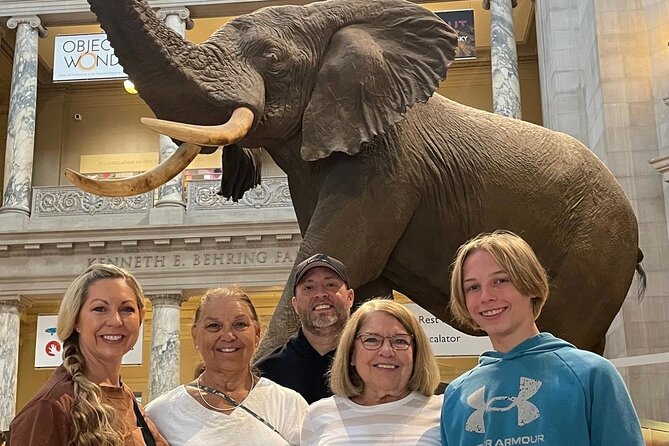
- Wildlife exhibits for polar bears, elephants, and giraffes keep the tour moving between themes (space, animals, history).
- Ocean Hall’s Phoenix and live coral reef is the big finale moment for most families.
- Museum rules matter: you’ll want to travel light because security limits bags inside.
Is $268.09 per Person Good Value for a 2-Hour Smithsonian Tour?
For Washington, DC, pricing can feel all over the map. At $268.09 per person for about 2 hours, you’re not paying for bus rides or a long itinerary. You’re paying for time and attention: a guide who knows how to get you through a huge museum without your family getting lost, bored, or separated.
Here’s the value angle I’d look at. The Smithsonian National Museum of Natural History is massive, packed with serious objects. Without a guide, families often spend more time orienting than learning. With a private tour, you get a focused route that hits high-impact areas kids remember: gems, mummies, big wildlife, and Ocean Hall. That concentration is what you’re really buying.
Also, the tour says admission is free as part of the experience. So compared with paying admission first and then adding a guide, you’re not stacking costs on top of each other. If you’re juggling a 5-year-old’s energy levels, that “less admin, more seeing” part counts for real.
You can also read our reviews of more private tours in Washington DC



Meeting Point and What to Know Before You Walk In
You meet at 1010 Madison Dr NW, Washington, DC 20004. The experience ends back at the meeting point, so there’s no awkward end-of-tour hunt for your group. The location is also described as near public transportation, which helps if you’re not renting a car.
Two practical things can make or break a museum visit with kids.
First: security bag rules. No large bags or suitcases are allowed inside. Only handbags or small thin bag packs go through security. If your family tends to bring everything (snacks, spare layers, toys), plan a slimmer pack than you’d use for a day outdoors.
Second: the tour notes mention some quiet or restricted rooms where you may not be able to speak. Your guide will tell you about those before you enter. That’s good news: it means you’re not the family accidentally talking too loud in a rules-heavy space.
Finally, the tour requires a mobile phone number (with country code). It’s one of those details you’ll want to sort early so day-of communication is painless.
Hope Diamond to Royal Stories: Why This Start Works for Families
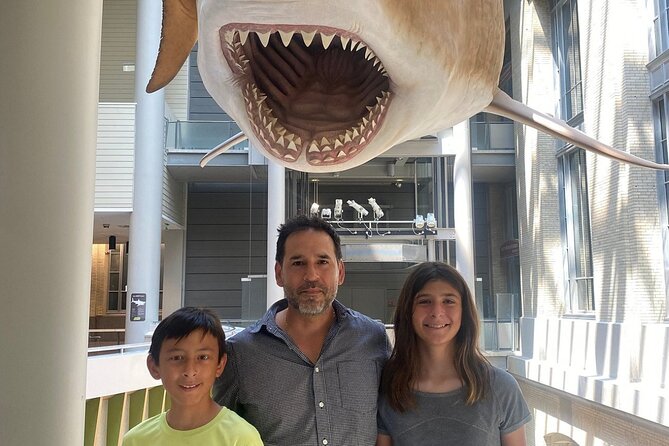
Your first stop is the Smithsonian National Museum of Natural History, and the tour kicks off with one of the museum’s best attention-getters: the Hope Diamond, a 46-carat gem with a legendary link to Marie Antoinette. Even if kids don’t care about royal history, they care about big objects that look like they belong in a movie.
What I like about starting here is the focus. The museum is huge—like, you can get lost even when you think you’re “just going to look around.” Starting with a landmark gem gives your family an anchor point, then your guide builds outward.
A good guide doesn’t just point. They turn the moment into a story you can repeat later. With a private format, the guide can slow down when a child gets distracted, or speed up when your teen is ready to sprint to the next room.
Dom Pedro Aquamarine: A Gem-Spotting Break That Feels Like a Game
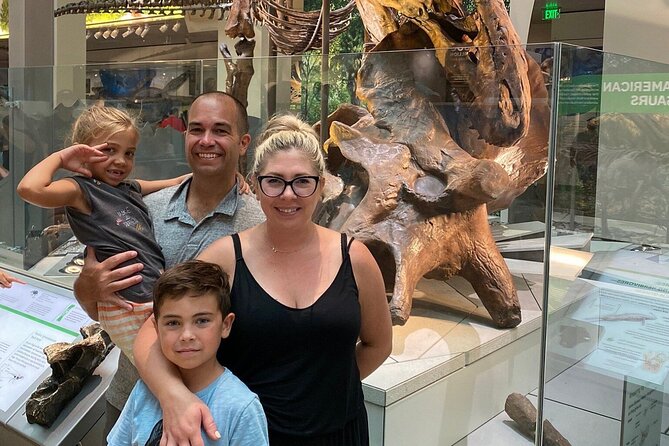
After the Hope Diamond, you’ll get to see the Dom Pedro Aquamarine. It’s the kind of object that’s easy to gloss over if you’re doing a self-guided museum day, because gems can blend into the general “pretty glass case” vibe.
A guide helps you see what’s specific. You’ll get context for why this stone is famous and how it fits into the museum’s broader mix of geology, materials, and human history. For kids, the “why is this famous” part is the hook that keeps them paying attention.
If you’ve ever tried to explain rocks to a child at a museum, you know the magic moment: when someone reframes it as a mystery, not a lecture. This stop is set up that way.
Ancient Egypt and Real Mummies: History Kids Actually Feel
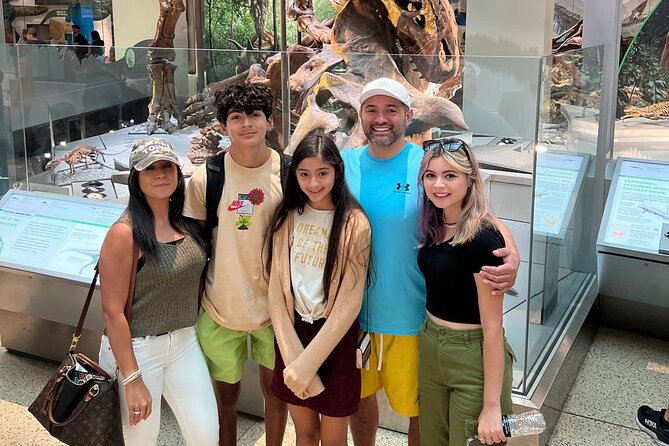
Next comes Ancient Egypt, including real mummies. This is a turning point for many families because it’s where curiosity can flip from mild interest to full-on fascination—or from fascination to “too weird.” A good private guide helps you hit the sweet spot: factual, not scary, and paced for your kids.
Even for adults, this section is valuable because it connects display objects to a real culture with real practices. For kids, the museum’s challenge is to make the story understandable without watering it down into nonsense.
The private format matters here. If your child needs extra time looking, your guide can slow down. If they’re ready to move on, you don’t have to wait for a group shuffle.
You can also read our reviews of more historical tours in Washington DC






Wildlife Exhibits: Polar Bears, Elephants, and Giraffes Without the Museum Fatigue
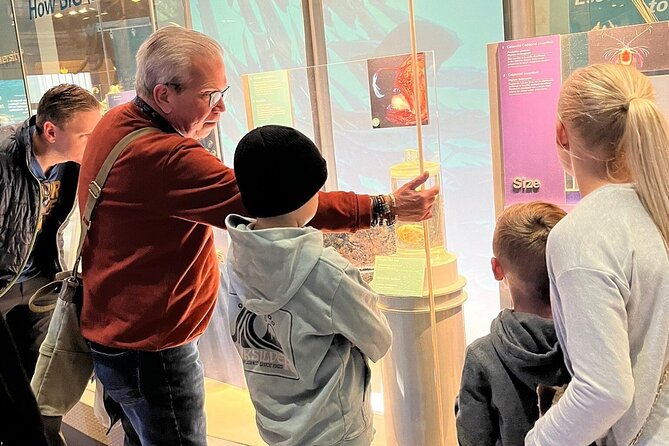
After the ancient-history shift, the tour moves into wildlife exhibits—where you’ll see polar bears, elephants, and giraffes. This is smart planning. It changes the theme again, so you’re not asking kids to live in one kind of attention the whole time.
For families, wildlife halls are often where the trip stops feeling like “walking through exhibits” and starts feeling like “experiencing animals.” Kids have an easier time engaging when they recognize what they’re seeing. Even if they’ve seen a picture before, seeing the exhibit in real space hits differently.
The drawback you can plan around: big museums can cause sensory overload. Wildlife rooms can be lively and crowded. The private tour helps because your guide can keep you oriented and moving with purpose, instead of letting you drift into the same paths as every other family.
Ocean Hall Finale: Live Coral Reef and Whale Phoenix
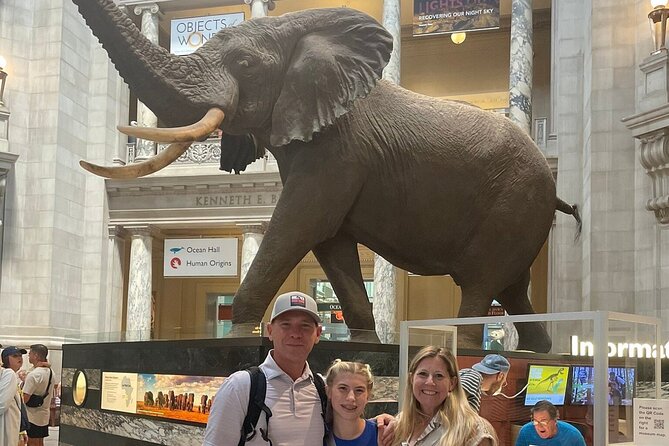
The last major highlight is the Ocean Hall, including a live coral reef and the massive whale Phoenix, listed as a 45-ton animal. This is one of those “save the best for the last” moments for many families, and for a reason. It’s visual. It’s dramatic. And it makes the ocean feel alive, not like a diagram.
For kids, the live coral reef is often the most memorable piece. You’re not just looking at something preserved—you’re seeing a living system on display. For adults, the whale Phoenix brings scale and perspective. The contrast between delicate coral and a huge whale is a natural teaching moment about ecosystems, not just animals.
Also, Ocean Hall tends to create a mental payoff: after gems, mummies, and wildlife, your brain finally gets the deep “whoa” space. Your guide’s pacing here is key, because this area can be crowded and time can slip away fast if you’re just wandering.
How the Guide Keeps a 2-Hour Tour Actually Feelable
A 2-hour museum tour sounds short, and it is. That’s a feature, not a flaw—especially with children. Your guide’s job in a private setup is to make each segment count, then move to the next without dragging.
From the best feedback, two guide names come up repeatedly for doing this well: Rebecca F and Leigh. The consistent theme in their praise is patience and keeping children engaged at their level. That matters because museums can be high-pressure when kids get restless. You want someone who can handle distraction without making it feel like your family is the problem.
You’ll also appreciate that the tour is wheelchair friendly. That doesn’t just help accessibility; it often signals smoother logistics for strollers and families who need easier routes.
What You’ll Want to Bring (and What You Shouldn’t)
The tour info is clear about museum bag limits: no large bags or suitcases. Think small, light, and easy through security. A handbag or small thin bag pack is the safe choice.
Since food and drinks aren’t included, plan to handle snacks and hydration around the tour window rather than expecting the guide to manage meals during those two hours. If you’re traveling with younger kids, bring what you need for comfort—then keep it compact so security doesn’t turn your start time into a headache.
Dress matters too. The notes say appropriate dress is required for entry into some sites. While your guide will handle the flow, you’ll still want to avoid outfits that could cause problems with entry rules.
Who This Tour Suits Best (and When It Might Not)
This private tour fits best for families who want structure. If you’re traveling with a 5-year-old (or kids up to early teens), the mix of gems, real mummies, wildlife, and Ocean Hall hits multiple interests without demanding that kids sit through long stretches.
It also works well if you want an adults-only planning win. You get a route and a guide, so you’re not spending your vacation time mapping museum strategies.
Moderate physical fitness is mentioned. That usually means expect walking and standing inside the museum. It’s not described as extreme, but it’s also not a “barely move” experience.
One more “when to skip” thought: if your family likes to wander freely with no plan at all, a private route might feel too structured for your style. In that case, you might prefer self-guided time. But if you want the museum’s biggest hits in a tight, family-paced window, this tour is built for that.
Should You Book This Smithsonian Private Tour?
I’d book it if your priority is making the National Museum of Natural History doable with kids. The combination of private attention, a tight 2-hour route, and the big-ticket stops—Hope Diamond, real mummies, wildlife, and Ocean Hall with whale Phoenix—is exactly how you get a memorable museum day without turning it into a long endurance test.
I’d think twice if your schedule is fragile. Museum closures can happen, and the notes are blunt: if the museum opening is delayed by more than 1 hour from your start time, they can provide an alternative but no refunds or discounts are guaranteed.
If you can travel light for security and you want a guide to keep your family pointed in the right direction, this is a strong value play at the Smithsonian.
FAQ
How long is the Smithsonian Natural History Museum private tour?
It’s listed as approximately 2 hours.
Where does the tour start and end?
It starts at 1010 Madison Dr NW, Washington, DC 20004 and ends back at the same meeting point.
Is this tour private?
Yes. It’s described as private, and only your group participates.
What’s included in the tour price?
Included features are a guided museum tour, wheelchair friendly access, a tour guide exclusively for you, and duration of 2 hours. The information also indicates the admission ticket is free for the experience.
What isn’t included?
Hotel pickup and drop-off and food and drinks are not included.
Do I need a mobile phone number?
Yes. You’re required to provide a mobile phone number (including country code).
Can I cancel for free?
Yes. Free cancellation is available if you cancel at least 24 hours before the experience start time.