REVIEW · WASHINGTON DC
Embassy Row: Architecture, Mansions & International Intrigue
Book on Viator →Operated by DC by Foot · Bookable on Viator
That one block can feel like another century. Embassy Row turns Washington into a real-world family saga of millionaires, presidents, and diplomats, all on foot. I like that the tour keeps moving while still giving you enough context to read the architecture, not just pass buildings. You also get an easy planning win afterward: your guide points you to good food and shopping in the Dupont Circle area.
My favorite part is the story thread: these grand houses were built by wealthy private citizens, then many became diplomatic offices. I also like the small-group feel (up to 15 people) because questions land fast, and guides such as Becca, Tyler, Mark, Eli, Dan, and John are known for fast, clear pacing. One possible drawback: because it’s a neighborhood walk, the route ends back near where you started but not by circling in a perfect loop, so bring comfy shoes and expect a steady two-hour walk.
In This Review
- Key things I’d plan for
- Embassy Row’s big appeal: architecture with real stakes
- A focused $49 walk that hits multiple highlights
- Starting at Dupont Circle: get oriented fast
- Embassy Row itself: mansion facades, diplomat realities
- Statue of Goddess Dewi Saraswati: cultural symbolism on the block
- Society of the Cincinnati: old money, organization, and legacy
- Embassy of India and the Gandhi statue nearby
- Embassy of Ireland: elegant design tied to history
- Sheridan Circle and Woodrow Wilson’s house: the presidential thread
- Spanish Steps: a quiet break from the big street
- What makes the guides matter on this walk
- Who should book this Embassy Row tour
- Should you book this one?
- FAQ
- How long is the Embassy Row tour?
- What does the tour cost?
- Where do I meet the guide?
- What time does the tour start?
- Is the tour offered in English?
- Do I need to pay admission at the stops?
- How big is the group?
- Are service animals allowed?
- Can I cancel and get a refund?
Key things I’d plan for
- Gilded Age to diplomacy: see how private mansions became embassies and mission buildings
- 2-hour small group: up to 15 people, with a guide who answers questions as you go
- Photo-friendly stops: statues, circles, and view points that don’t require tickets
- Theme-rich storytelling: billionaires, scandals, and cultural diplomacy in short segments
- Dupont Circle start: you get built-in ideas for where to eat and shop after
Embassy Row’s big appeal: architecture with real stakes
Embassy Row can sound like a generic sightseeing label, but on this walk it feels personal. You’re not just looking at doors and windows; you’re learning how a street of mansions became a map of international relationships.
The tour’s value is in the connection between eras. You get the Gilded Age flavor of old money, then the modern diplomatic purpose that replaced it. That switch explains a lot about Washington’s look and vibe: grand homes remain, but the reason they exist quietly changes.
And since it’s a guided walk with a professional licensed guide, you’re meant to pick up details you’d miss on your own. The best part is that the facts don’t drag; they’re framed as stories you can remember while you’re standing in front of the building.
You can also read our reviews of more walking tours in Washington DC



A focused $49 walk that hits multiple highlights
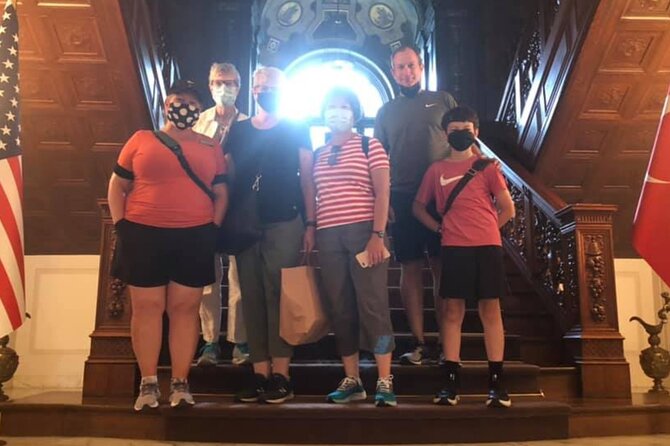
At $49 per person for about two hours, the tour works best as a high-impact starter for your trip. It’s long enough to cover several major photo stops and a stretch of Embassy Row, but short enough that you’re not giving up your whole morning or afternoon.
Also, the “free admission” stops matter. You can enjoy the views and exterior details without paying entry fees just to understand the place. That keeps the tour budget-friendly, especially if you’re pairing it with museum time later.
One more practical win: you’ll use a mobile ticket, and you start at 10:00 am at Dupont Circle. That means you can plan your day around a clear meeting point and a predictable end back in the neighborhood.
Starting at Dupont Circle: get oriented fast
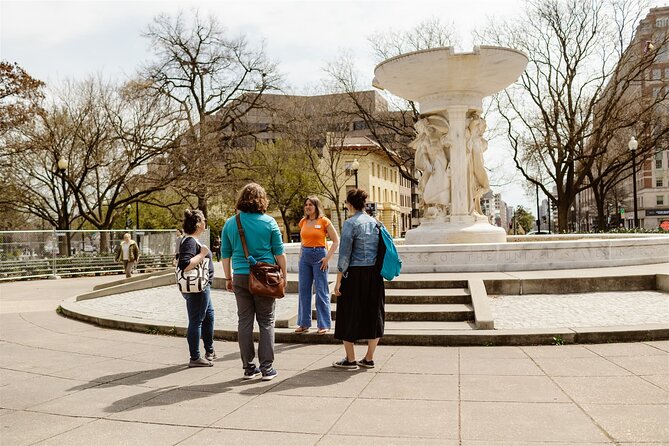
The tour begins at the fountain at Dupont Circle, and that’s smart. This neighborhood is compact, but its layers can be hard to untangle before you understand where you are.
Your guide sets the stage with history of the area, then immediately gives you local pointers for after the walk. I like this because it turns the tour from stand-alone sightseeing into a springboard for the rest of your DC day.
Expect a calm start where you can get your bearings. It also helps if you’re mixing this with other plans, since Dupont is simple to reach via public transportation and easy to build around.
Embassy Row itself: mansion facades, diplomat realities
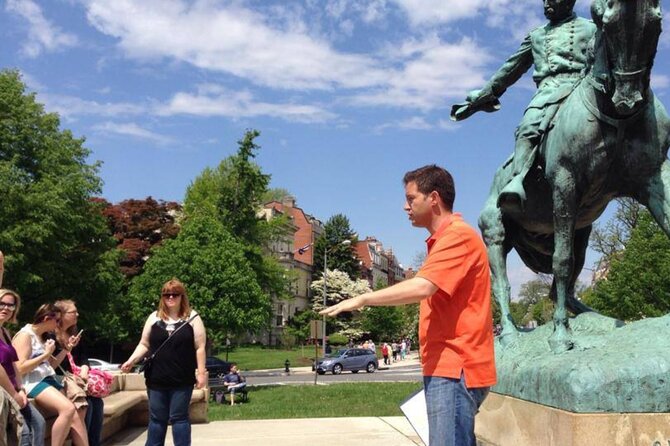
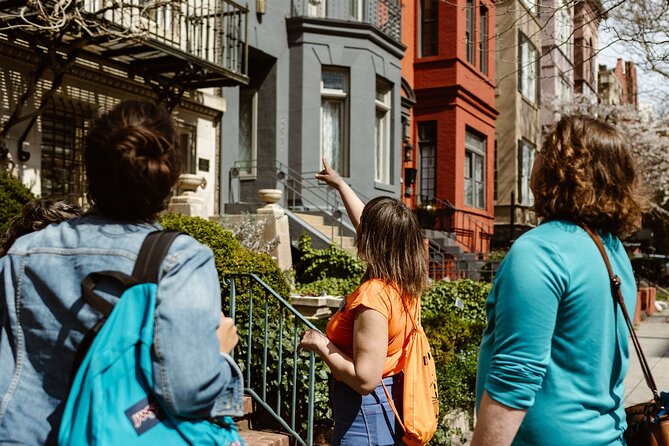
This is the heart of the experience. Along Embassy Row, you’ll explore embassies in buildings that were once private mansions for wealthy residents. The contrast is the point: the architecture carries the old glamour, while the purpose reflects modern international work.
Your guide walks you through why these buildings look the way they do and what changed over time. You’ll also hear the kind of scandal-and-society stories that make old DC feel less like a museum and more like a drama that happened in real neighborhoods.
A practical note: most of what you’ll truly “see” is exterior. That sounds limiting, but it actually forces you to pay attention to proportions, entrances, setbacks, and how formal the streetscape feels. If you enjoy noticing details, this section rewards you.
Statue of Goddess Dewi Saraswati: cultural symbolism on the block
Along Embassy Row, you’ll stop at the Statue of Goddess Dewi Saraswati. The guide connects it to the Hindu goddess of knowledge, music, and the arts, and you’ll see it surrounded by flowers near the Indian Embassy area.
This stop is short—about five minutes—but it adds texture. It reminds you that Embassy Row isn’t only about diplomacy between governments; it also signals cultural exchange in public art.
If you like photographing small landmarks, this is one of the easiest stops. Even a quick look is meaningful here because the statue’s theme ties into the later India stop without feeling repetitive.






Society of the Cincinnati: old money, organization, and legacy
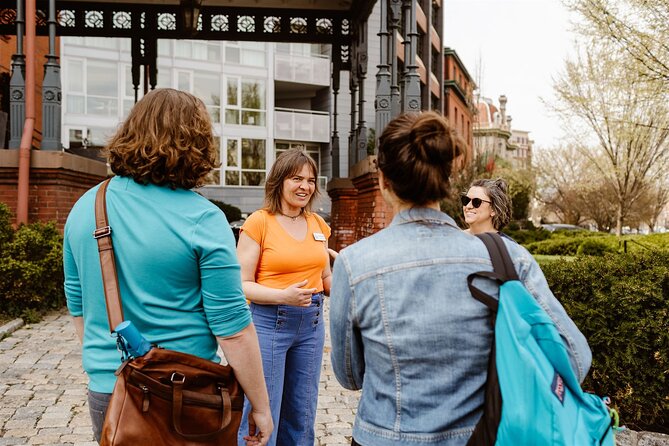
Next up is the Society of the Cincinnati. This is where the walk shifts from the visible “embassy street” story into a deeper thread about the millionaires who built the home—and the society that inherited it.
The value of this stop is perspective. Washington’s power often hides behind institutions and property transitions, not just speeches. Your guide helps you understand how private wealth and public legacy can overlap.
It’s also a useful pause in the rhythm of embassy after embassy. You get a different angle on the area’s identity: more about who held influence, and how it was passed along.
Embassy of India and the Gandhi statue nearby

The tour then heads to the Embassy of India, described as a historic structure reflecting Indian heritage and cultural diplomacy. Your guide frames it as a hub for strengthening Indo-US relations, which adds a clear modern purpose to the building’s presence.
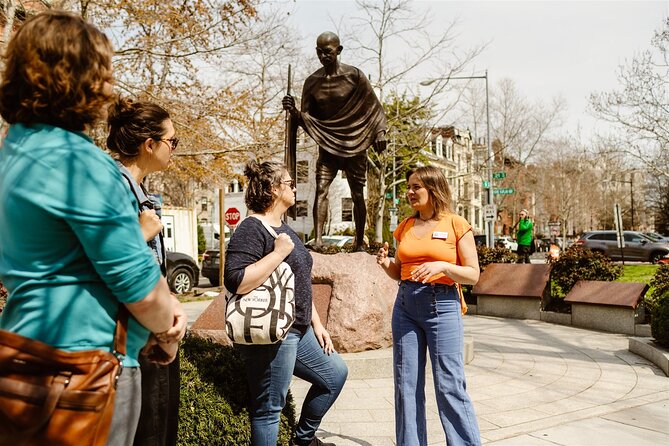
Nearby, the tour highlights the Gandhi statue on Massachusetts Avenue NW. It’s presented as a symbol of peace and nonviolence, tied to Mahatma Gandhi’s legacy and relevance to global harmony efforts.
I like pairing these two moments because they show different ways culture travels. You get architecture and institutional diplomacy on one side, then a public monument symbolizing a moral message on the other. Together, they make the street feel like an exchange, not just a setting.
Embassy of Ireland: elegant design tied to history
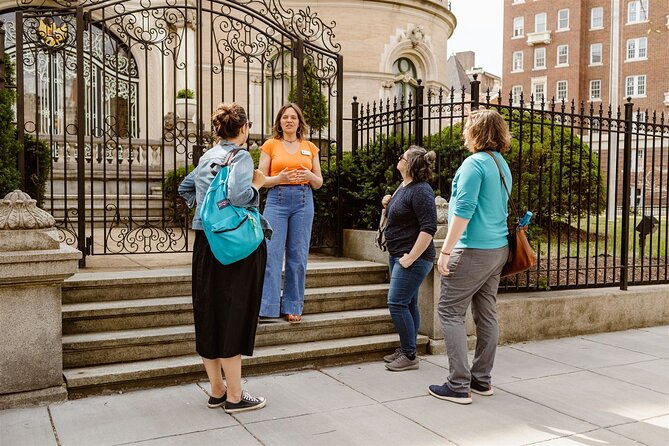
The Ireland stop is another quick hit—about five minutes—but it has a clear theme. You’ll see the Irish Embassy building on Embassy Row and learn how its design reflects Ireland’s history and culture, supporting diplomatic ties between Ireland and the United States.
This portion is useful if you’re trying to train your eye. Embassy architecture often borrows from national styles, formal building traditions, and recognizable design cues. A short explanation helps you see those cues instead of treating the buildings like anonymous offices.
Even if you’re not an architecture buff, this stop gives you enough “why” to care about what you’re looking at.
Sheridan Circle and Woodrow Wilson’s house: the presidential thread
At Sheridan Circle Northwest, the tour connects an equestrian statue of Phillip Sheridan to Mount Rushmore. That’s a clever little pivot because it turns a local statue into part of a bigger national story.
This kind of link is one reason I enjoy guided walks. It keeps the city from feeling like a bunch of unrelated landmarks. Your guide helps you see how Washington’s symbols connect to national identity.
Then you move to the President Woodrow Wilson House for an outside discussion. You’ll learn about the notable detail that Wilson is the only president who lived in DC after his term, aside from Obama in recent times. That context gives the house a sharper meaning in the DC timeline.
Even as an exterior stop, the explanation makes you look for the kind of details that signal how someone lived and why the location mattered.
Spanish Steps: a quiet break from the big street
The final style shift is the Spanish Steps near Dupont Circle. Inspired by the iconic steps in Rome, this staircase gives you a small “breather” moment in the middle of the city’s motion.
Your guide describes it as a tranquil retreat, surrounded by greenery and historic architecture. It’s short—about five minutes—but it’s a nice reset if you’ve been walking steadily through embassies and formal streets.
If you want photos without feeling rushed, plan a moment here. The steps tend to frame the neighborhood differently than the embassies do, so your images will feel varied even in a short tour.
What makes the guides matter on this walk
The tour is built for conversation. A strong guide doesn’t just recite dates; they connect details to the big picture and keep a comfortable pace.
I saw a pattern in guide praise: people mention fast answers, friendly personality, and strong storytelling. Names that came up include Becca, Tyler, Mark, Eli, Dan, and John, with emphasis on keeping the walk engaging and making sure questions feel welcome.
That also means you’re less likely to feel stuck with one long lecture. Instead, you get a series of short moments—each with an idea you can carry to the next stop.
Who should book this Embassy Row tour
This is a great fit if you want:
- A two-hour DC plan that mixes architecture with politics and culture
- A guided walk that turns exterior-only viewing into real understanding
- A small-group experience where questions are easy to ask
- An easy start point in Dupont Circle before you explore nearby neighborhoods
It may be less ideal if you’re expecting lots of interior access or long stops at each site. Based on the structure of the tour, it’s designed for exterior highlights and quick context, not museum-level time in each building.
Also consider your walking comfort. The route is an easy-to-moderate neighborhood walk and generally works for most people, but it’s still time on your feet.
Should you book this one?
I’d book this tour if you want Embassy Row to make sense quickly. For $49 and about two hours, you get a tight mix of Gilded Age-to-diplomacy storytelling, plus landmark stops like the Goddess Saraswati statue, Gandhi’s monument nearby, Sheridan Circle’s Sheridan link to Mount Rushmore, and the Woodrow Wilson House discussion from the outside.
I would skip it only if you hate guided walks or you’re looking for a deep, hours-long, every-stop-in-detail experience. In that case, you might prefer a self-guided plan with more time at fewer locations.
But if you want a smart DC morning that leaves you with both photos and context, this is a very solid pick.
FAQ
How long is the Embassy Row tour?
It runs for about 2 hours.
What does the tour cost?
The price is $49.00 per person.
Where do I meet the guide?
You meet at Dupont Circle, Washington, DC 20036, USA at the fountain.
What time does the tour start?
The start time is 10:00 am.
Is the tour offered in English?
Yes, it’s offered in English.
Do I need to pay admission at the stops?
The stops on the tour are listed as having free admission.
How big is the group?
The tour has a maximum of 15 travelers.
Are service animals allowed?
Yes, service animals are allowed.
Can I cancel and get a refund?
You can cancel up to 24 hours in advance for a full refund.