REVIEW · WASHINGTON DC
George Washington’s Mount Vernon & Old Alexandria Half-Day Guided Tour from DC
Book on Viator →Operated by Zohery Tours International, Inc · Bookable on Viator
A day like this keeps DC from feeling too boxed in. You get a coach ride out to George Washington’s world, plus Old Alexandria drive-bys, and a protected time slot at Mount Vernon.
I like the built-in flow: 2 hours at Mount Vernon with admission included, along with a self-guided audio experience so you can set your own pace.
The potential downside is simple: this trip is only as good as what’s open at the mansion that day. If the main house has limited access due to repairs, you can feel it fast.
In This Review
- Quick hits: what makes this tour worth your time
- Why this half-day DC tour works: coach, narration, and a tight plan
- Price and what you actually get for $99
- Washington Monument on the way out: the story behind the obelisk
- George Washington Memorial Parkway: the 25-mile stretch you’re meant to see
- Old Alexandria from King Street: Masonic National Memorial and Christ Church
- George Washington Masonic National Memorial
- Christ Church (Church of England heritage)
- Robert E. Lee Boyhood Home and the limits of drive-by sightseeing
- Mount Vernon: your 2-hour window and how to actually use the audio guide
- George and Martha Washington’s tomb: don’t let it become a quick stop
- The outbuildings and grounds: what you’re really paying for
- The big risk factor: mansion access during repairs
- Ride quality and time management: what to watch for on a 5-hour plan
- Best fit: who should book this, and who should DIY
- Should you book this Mount Vernon & Old Alexandria guided tour?
- FAQ
- FAQ
- How long is the George Washington’s Mount Vernon & Old Alexandria tour?
- What does the $99 price include?
- Do I get a guided tour inside Mount Vernon?
- Is there any audio guide support in other languages besides English?
- Which Alexandria landmarks are included?
- Do I need a separate ticket for Mount Vernon?
- Where is the meeting point in Washington, DC?
- What if the weather is bad?
Quick hits: what makes this tour worth your time
- Round-trip coach from DC keeps this easy if you don’t want to plan transit on your own
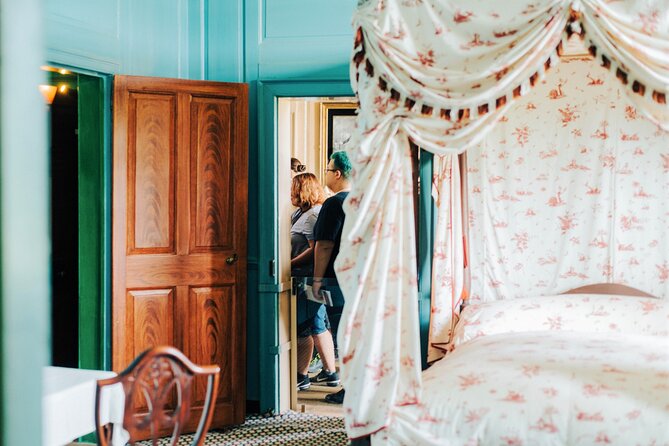
- Mount Vernon admission + reserved mansion time saves you from time-wasting line math
- Audio guide in multiple languages means you’re not locked into one narration style
- Old Alexandria stops include the Masonic National Memorial and Christ Church from the road
- The itinerary packs a lot of stops, so good timing matters
Why this half-day DC tour works: coach, narration, and a tight plan
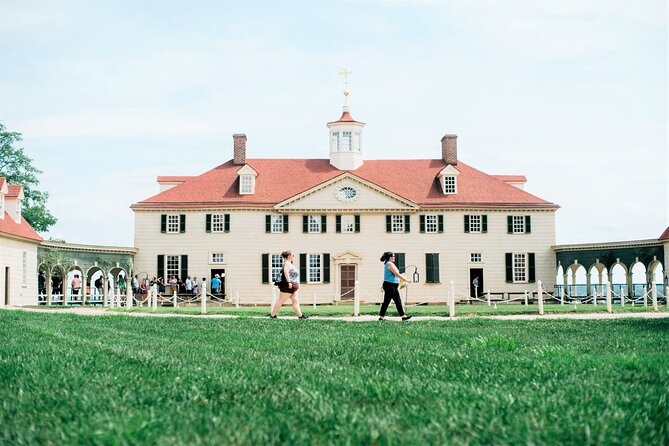
This is a classic half-day structure: transportation first, then a real window at the big target (Mount Vernon). The coach means you’re not juggling maps and buses, and you’re not stuck at the curb trying to time connections.
You also get a running talk as you move. The guide covers several Washington-related landmarks—starting with the Washington Monument story—before the trip eases into the George Washington Memorial Parkway corridor. It’s not a slow sit-down lecture. It’s more like getting your bearings while the scenery rolls by.
For many people, that’s the real value: you spend less brainpower figuring out logistics and more time learning what you’re seeing.
You can also read our reviews of more guided tours in Washington DC



Price and what you actually get for $99
At $99 per person, this can feel either fair or pricey, depending on what you compare it to.
Here’s what you’re buying for the money:
- Coach transit out of DC and back
- Mount Vernon admission included
- A self-guided audio tour of the estate and museum
- Access to George and Martha Washington’s tomb
- A reserved mansion tour time so you’re not left guessing when you’ll be admitted
That last point matters. Mount Vernon is popular. A reserved time slot is the difference between arriving ready and arriving stressed.
The caution: if the mansion has areas closed, the “reserved time” can turn into “limited rooms.” A few travelers have felt they paid full price but got only a small slice of what they expected to see.
Washington Monument on the way out: the story behind the obelisk
The guide starts with a stop focused on the Washington Monument—its designer Robert Mills, the later completion work by Thomas Casey and the U.S. Army Corps of Engineers, and the fact the build happened in phases (a private phase from 1848–1854, then a public phase from 1876–1884).
Why this works on a tour like this: once you learn the “Egyptian obelisk” idea, you start noticing how the monument is meant to signal permanence and national memory. Then, while you’re already on the road, that theme follows you out toward the river and the estate.
If you usually skip the quick monument explanations, don’t here. It sets up a satisfying through-line for the rest of the day.
George Washington Memorial Parkway: the 25-mile stretch you’re meant to see

As you head along the George Washington Memorial Parkway, the guide frames what you’re seeing: a 25-mile parkway along the south bank of the Potomac, maintained by the National Park Service.
This part isn’t about shopping. It’s about context—seeing the geography that shaped Washington’s choices. Even if you’re not a big “car-ride scenery” person, you’ll at least understand where the estate sits in the larger Washington-to-Mount-Vernon story.
The stop is timed so you keep moving. The takeaway is the views plus a clean geography lesson.
Old Alexandria from King Street: Masonic National Memorial and Christ Church
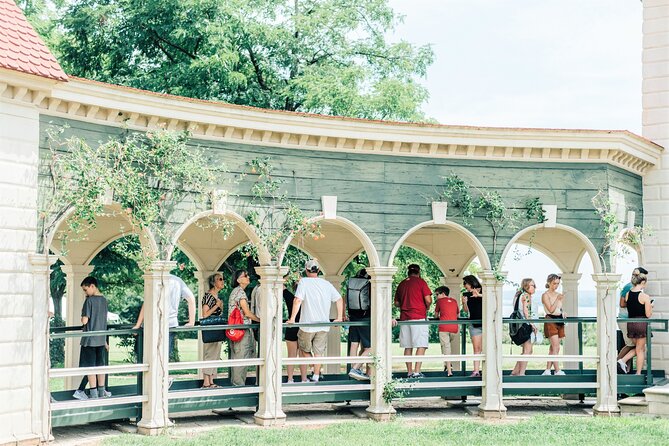
Old Alexandria is handled mostly as a drive-and-point-out experience, with a bit of narration as you cross key areas.
You can also read our reviews of more tours and experiences in Washington DC






George Washington Masonic National Memorial
You pass the George Washington Masonic National Memorial, designed as a memorial tied to Washington’s Masonic connection. The tower is shaped after the ancient Lighthouse of Alexandria in Egypt—an oddball detail that’s exactly the kind of thing that makes a drive-by interesting.
Inside the Memorial Hall, the details are the point:
- Entry through a portico echoing Greek and Roman temple entrances
- Eight green granite columns
- A marble floor
- Two murals painted by Bro. Allyn Cox
Even if you can’t linger, those specifics help you recognize what you’re looking at when the buildings flash past the window.
Christ Church (Church of England heritage)
You also pass Christ Church at 118 North Washington Street, an Episcopal church tied to the Church of England’s Fairfax Parish.
The story is unusual in the best way: funding was raised by 31,186 pounds of Oronoco tobacco, construction started in 1765, and the building went through changes in overseers before being completed with keys handed over in February 1773.
If you like architecture and the “how did they actually build this” angle, this stop gives you enough facts that you’ll later be able to picture the place, not just see it.
Robert E. Lee Boyhood Home and the limits of drive-by sightseeing
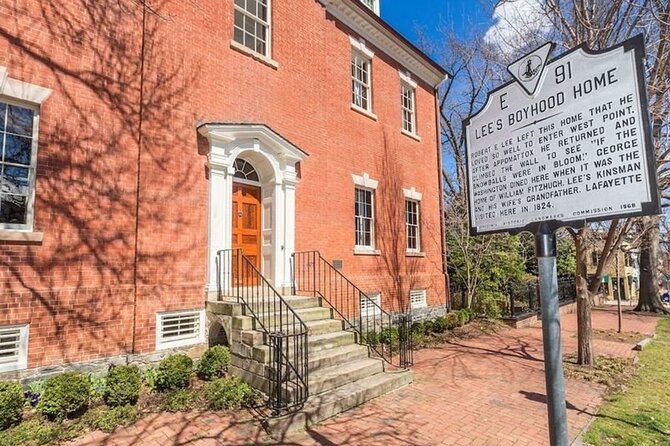
One stop covers the Robert E. Lee Boyhood Home area (607 Oronoco Street), with a reminder to avoid confusion with the Lee-Fendall House at 614 Oronoco St. The guide talks about it as you pass by.
This is where expectations need a nudge. This tour is not a long “walk the historic blocks” Alexandria experience. You’re mostly getting orientation: where sites are, what they’re called, and why they matter.
So if you want photos from a sidewalk and time to read plaques, you’ll probably feel that Alexandria gets “skimmed.” Still, the right person for this tour might be you if you want a taste of Alexandria while your main attention stays on Mount Vernon.
Mount Vernon: your 2-hour window and how to actually use the audio guide
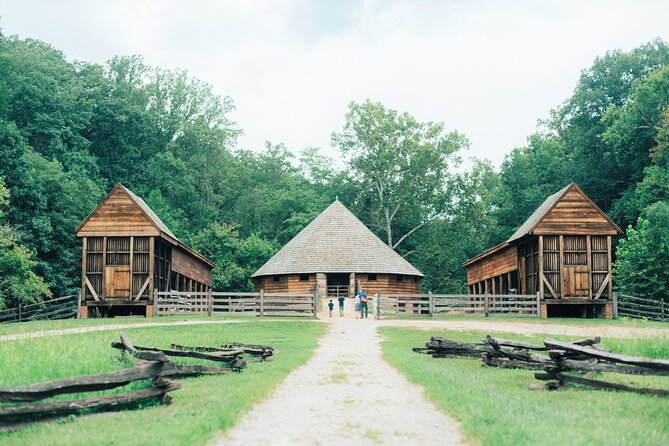
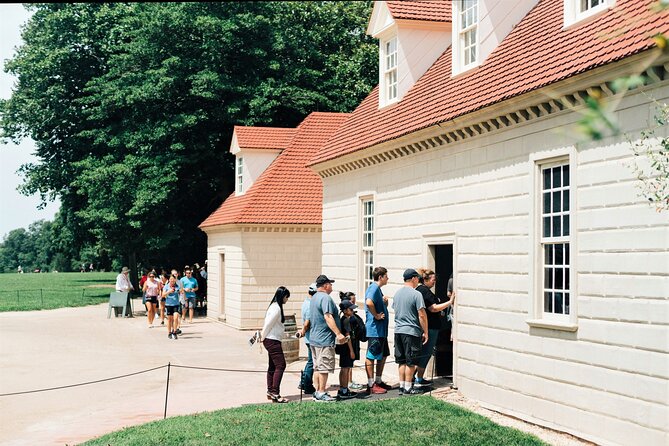
The core of the trip is George Washington’s Mount Vernon, where you get about two hours. During that time, you walk through the plantation grounds and by smaller buildings near the mansion, then move through the estate sites with a self-guided audio tour.
This setup is smart for most people because it avoids the common “rushed guided script” problem. The audio guide (available in English, Spanish, French, and Chinese) lets you pause when something catches your eye—especially around the museum pieces and interpretive stops.
But you still have only two hours. That means you should decide what matters most before you walk in. I’d pick one priority for learning, one for atmosphere, and one for photos.
A practical order that often works:
- Start with what you’d miss if time runs out (tomb access and the mansion area)
- Then use audio for the museum/grounds context
- Save extra outbuildings for last, unless you know you care about them deeply
George and Martha Washington’s tomb: don’t let it become a quick stop
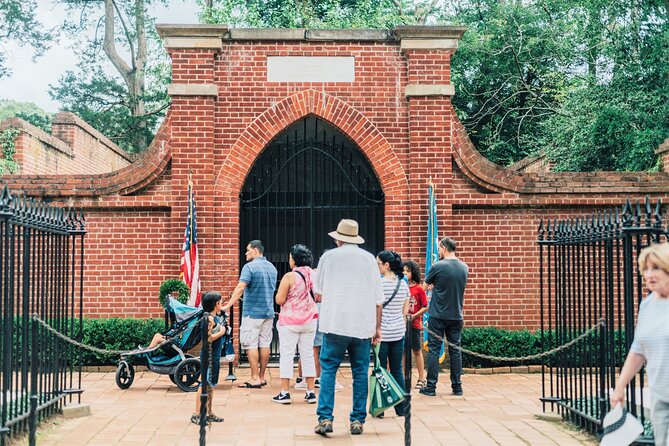
The trip includes access to the tomb of George and Martha Washington. It’s not a “see it in passing” stop by nature. People remember this part because it’s where the estate becomes personal.
Even when the rest of the day feels like moving parts—coach timing, drive-by stops, audio navigation—the tomb is the emotional anchor. It’s also the place where a rushed itinerary hurts you most, because you can’t “speed-read” meaning.
If your visit feels compressed, protect your time here.
The outbuildings and grounds: what you’re really paying for
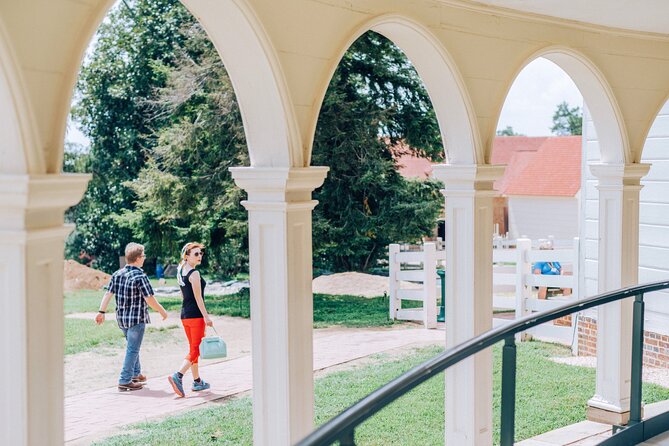
Mount Vernon isn’t just a pretty house. It’s an operational-feeling plantation landscape, and that’s why the walking route matters.
You’ll pass by smaller structures around the mansion and have time for the museum and interpretive areas through the audio guide. Reviews tied to the experience often praise how well the grounds and overall estate are preserved, and that usually comes down to the walking route doing its job.
One note: the slave quarters area can be heavy. Some people find the discomfort part of the learning. If you’re visiting with a group, it helps to know this ahead of time so you aren’t blindsided by the tone of the interpretation.
The big risk factor: mansion access during repairs
Here’s the reality check that can make or break value: the mansion has sometimes been partially closed for repairs, and when that happens, you might not see the full set of rooms you expect.
A few people reported arriving and learning only limited access was available—sometimes seeing just one room or spending more time than they thought in a shorter viewing setup. That turns the tour from a “half-day with a major attraction” into “a timed entry plus disappointment.”
So do this before you go:
- Check what the mansion tour time actually covers on your date
- Build flexibility into your day so you don’t feel trapped if access is limited
If the mansion is fully open, this tour can feel like a good deal. If not, you may wish you had planned your own schedule with more slack.
Ride quality and time management: what to watch for on a 5-hour plan
A half-day coach tour is always a timing game. If pickup runs late, the Mount Vernon window shrinks, and that hits the mansion and museum time most.
Some departures have been described as smooth and informative, with drivers like Robert standing out for being helpful. Other experiences have sounded less pleasant—rides that felt rough, driving that felt tense, or guides whose behavior felt unprofessional (including demands around tipping).
You can’t control a driver’s personality. But you can control your response:
- Dress for long sitting and bring what you need for comfort
- If you’re sensitive to motion, take that seriously with this format
- Be ready to follow the group even if you personally want more time to linger
Also, if you’re traveling with mobility needs, note that the tour includes walking through the plantation. Some people with wheelchairs have mentioned that ramps help with mansion access, but not every area can be reached as easily as others.
Best fit: who should book this, and who should DIY
This tour fits best if you want:
- An easy DC-to-Mount-Vernon trip without planning transport
- A structured visit that still gives you some independence inside the estate via audio
- A quick taste of Alexandria landmarks tied to Washington-era stories
It’s less ideal if you want:
- A deep, slow walk through Alexandria
- Full flexibility to linger at every Mount Vernon stop
- A guaranteed mansion-view experience regardless of repairs
If you’re the DIY type, you can often get the same core experience by taking public transit or a rideshare and buying tickets directly. The tour’s value is the reserved timing and the painless ride out.
Should you book this Mount Vernon & Old Alexandria guided tour?
I’d book it if Mount Vernon’s main house is fully open on your date and you like the idea of arriving already “oriented” to Washington’s story. The combo of coach convenience, admission included, and tomb access is strong for a half-day plan.
I’d pause or consider a different option if you’re the kind of person who needs the full mansion experience with no surprises. In that case, spend extra time planning your own visit—or at least verify what’s open before you commit.
FAQ
FAQ
How long is the George Washington’s Mount Vernon & Old Alexandria tour?
The duration is about 5 hours.
What does the $99 price include?
It includes round-trip coach transit from DC, Mount Vernon admission, a self-guided audio tour, tomb access, and a reserved mansion tour time, plus the fee-related items listed for the experience.
Do I get a guided tour inside Mount Vernon?
You’ll have a self-guided audio guide for the estate and museum, and you’ll have access to George and Martha Washington’s tomb. The mansion also has a reserved tour time included.
Is there any audio guide support in other languages besides English?
Yes. The Mount Vernon audio guide is available in English, Spanish, French, and Chinese.
Which Alexandria landmarks are included?
You’ll pass by sites such as the Robert E. Lee Boyhood Home, Christ Church, the George Washington Masonic National Memorial, and the Lyceum Museum & more. The tour includes narration as you cross key areas, including King Street.
Do I need a separate ticket for Mount Vernon?
No separate ticket is needed based on what’s included. Admission to Mount Vernon is included, along with the reserved mansion tour time.
Where is the meeting point in Washington, DC?
The meeting point is 400 New Jersey Ave NW, Washington, DC 20001. The tour ends back at the meeting point.
What if the weather is bad?
The experience requires good weather. If it’s canceled due to poor weather, you’ll be offered a different date or a full refund.