REVIEW · WASHINGTON DC
Hop-On Hop-Off 21 Stop Trolley Tour + Arlington Cemetery Tour
Book on Viator →Operated by Historic Tours Of America · Bookable on Viator
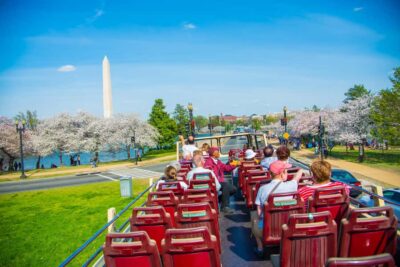
DC without a car? This trolley helps get oriented fast. You hop on at the Washington DC Welcome Center and ride past the White House, the National Mall sights, and more, with live narration that makes the passing scenery make sense. Then you branch out to Arlington National Cemetery so your sightseeing day has a clear emotional peak.
I love the freedom of hop-on hop-off stops. If a plaza, memorial, or museum draw you in, you get off and take your time, then roll back on at the next trolley that arrives about every half hour. I also really like that the Arlington part is included, which saves you from stitching together separate transportation plans.
One real drawback to plan around is timing. You can lose time if you miss a pickup point or if traffic slows the line, and Arlington is strict about IDs—so come prepared and start early if that cemetery is your priority.
In This Review
- Key things that make this tour work
- 21 Stops, One Ticket: Getting Oriented Fast in Washington
- Price and Value: Where $59.45 Really Lands
- How Pickups Work: Half-Hour Trolleys and the Real Timing Game
- Starting at the Welcome Center: Ford’s Theater and the White House Loop (Stops 1–2)
- National Archives to Union Station: Navy Memorials and a Postal Museum Stop (Stops 3–5)
- Capitol Area to the Museum Mile: Supreme Court, Air & Space, and Memorials (Stops 6–8)
- Spy Museum to Washington Monument and the Smithsonian Core (Stops 9–10)
- Jefferson to Lincoln Memorials: Memorial Row at Stops 11–13
- American History and Portrait Stops: Museums at Stops 14–15
- Arlington National Cemetery Rules, Shuttle Transfer, and Stops 16–18
- Tomb of the Unknown Soldier, Arlington House, and Iwo Jima Outside the Gate (Stops 19–21)
- Should You Book This Trolley + Arlington Cemetery Combo?
- FAQ
- Where do I start this tour in Washington DC?
- How long is the tour?
- How often do the trolleys arrive?
- Is Arlington National Cemetery included?
- What ID do I need for Arlington?
- Are tickets mobile?
- Are strollers or service animals allowed?
- What’s included in the price?
Key things that make this tour work

- Live on-board commentary that explains what you’re seeing while you’re moving
- 21 stops across DC, so you can build your own mini-itinerary
- Arlington National Cemetery included, with a structured transfer from the Lincoln Memorial area
- Frequent trolley arrivals (about every half hour), which helps you avoid feeling stuck
- No headphones setup in the narration (so hearing can depend on where you sit on the trolley)
- Strict ID rules at Arlington with no exceptions, including passport-only entry for foreign visitors
21 Stops, One Ticket: Getting Oriented Fast in Washington
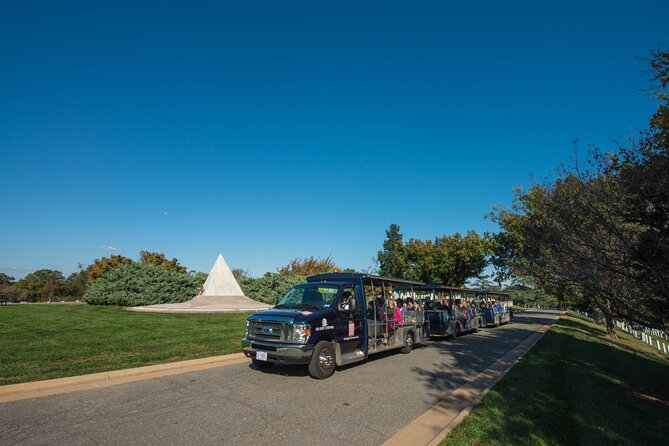
This is the kind of tour that earns its keep on a first visit to DC. The trolley route hits the major ceremonial and museum corridors—White House area, National Mall, and the memorial stretch—so you’re not piecing it together with guesswork. The best value for you is speed plus context: you see a lot, but the live guide narration also tells you what each stop means, not just what it looks like.
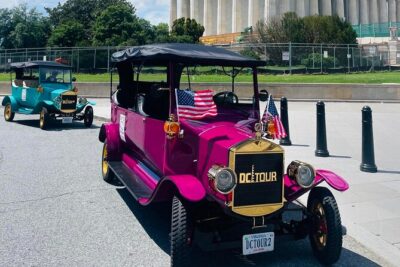
The trolley style also matters. You’re not trapped in a long bus crawl without control. Hop on, hop off. The stops are designed so you can spend 20 minutes or two hours depending on your energy level. That’s ideal if you’ve got mixed interests—someone wants a quick photo, someone else wants to read every plaque.
One practical note: the narration is one-language and comes through on-board, not through individual headphones. If you’re sensitive to audio clarity, sit where you can hear clearly and keep an eye on the stop announcements.
You can also read our reviews of more tours and experiences in Washington DC.
Price and Value: Where $59.45 Really Lands
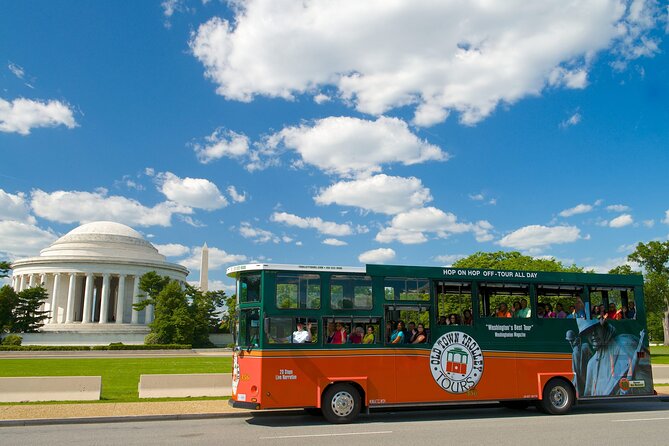
At $59.45 per person, the big value play here is that you’re paying for two things at once: a DC hop-on hop-off loop and an Arlington Cemetery transport add-on. Many DC “see the highlights” options stop short of Arlington, which means you’d either pay extra for another ticket or lose time planning.
You’re also getting live commentary included in the fare. That sounds like a small line item, but on a route this long it changes the experience. You’ll get better at recognizing what you’re seeing as you go, so even free time later feels smarter.
The other value angle is logistics stress. DC parking can be a headache, and riding around by yourself while searching for stops costs time. This tour replaces that with a structured route, a regular trolley cycle (about every half hour), and a clear Arlington transfer point.
Food and drinks aren’t included, and parking fees are not included either—so you’ll want to budget a snack break. Also, there’s no hotel pickup, so you’ll go on your own to the departure point near the action.
How Pickups Work: Half-Hour Trolleys and the Real Timing Game
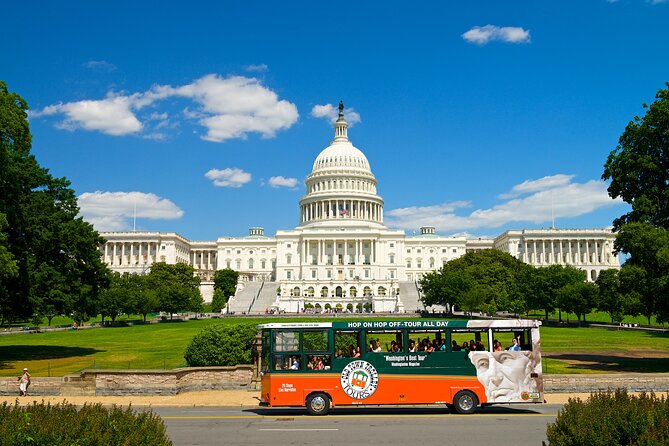
The tour’s rhythm is simple: trolleys arrive roughly every 30 minutes, and you can hop off to explore. The catch is that DC traffic and crowds are real. If you linger too long at one stop, you might miss your pickup and end up walking to the next one.
This is where I’d plan like a local: treat each stop as a small mission, not an open-ended picnic. If Arlington is your must-see, don’t assume “it’ll work out.” Build in buffer time.
Two tips that matter in practice:
- Listen for exact meeting instructions. Some stops can be confusing about where the trolley picks up.
- Use the route plan, not just your gut. One challenge that shows up often is the gap between when you arrive at a stop and when the trolley actually comes through again.
Also, you’ll do a lot of walking. Even if you hop off, you’re moving around the city’s paths, and Arlington includes stairs and uphill/downhill terrain.
Starting at the Welcome Center: Ford’s Theater and the White House Loop (Stops 1–2)
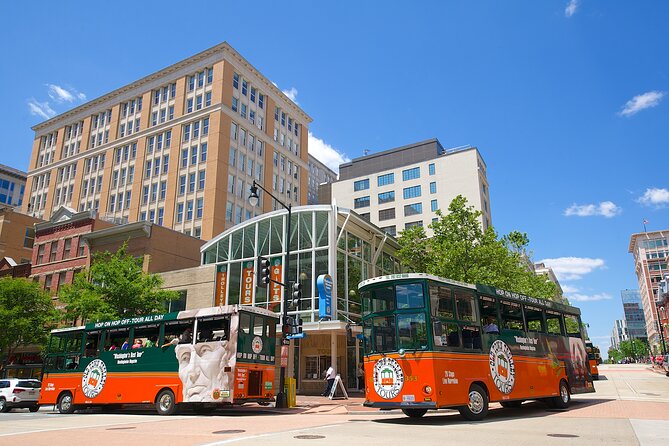
You start at the Washington DC Welcome Center, conveniently located near Ford’s Theater and the Peterson House area. This first boarding moment is useful because it gets you into DC’s geography right away. Even before you see the White House, you’re already oriented to where the historic core sits.
From there, the trolley rolls toward 1401 Pennsylvania Ave NW for the White House and the White House Visitor Center, plus the WWI Memorial in the same general orbit. This is a good early block because the National Mall area tends to feel busiest later in the day.
What you’ll likely appreciate most: the guide narration gives you a running thread. You don’t just watch buildings appear. You learn how the city’s layout supports ceremonial sightlines—why these places are where they are, and why they’re still central to modern civic life.
If you want the best photographs, earlier light often helps. And if you’d like more time at the White House Visitor Center, this is a good first chance to jump off before the day fully heats up.
National Archives to Union Station: Navy Memorials and a Postal Museum Stop (Stops 3–5)
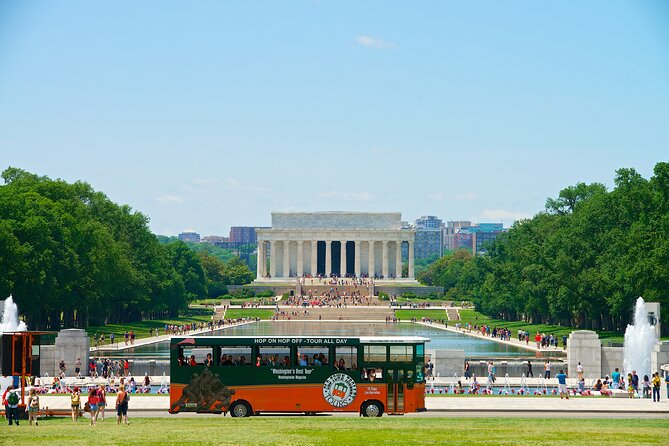
Stop 3 takes you to 701 Constitution Ave NW, for the National Archives area and surrounding sights like the Navy Memorial and nearby National Gallery of Art galleries (listed as West/East galleries). If you care about “DC moments,” this is where the city’s story becomes tangible. Even if you don’t go inside, you can time a walk to match your interests.
Then you head to Stop 4 at 400 New Jersey Ave NW, where the focus becomes the Japanese American Memorial area. This stop is one of those that can surprise people who came for monuments only. It’s reflective, and the narration helps you see why it matters in the bigger DC narrative.
Stop 5 is your Union Station break: Union Station and the Smithsonian Postal Museum are in the mix. Union Station is a great place to reset because it’s a natural pause point—often easier to re-group than a memorial plaza with no obvious “center.”
Practical move: if anyone in your group wants a calmer indoor moment, Postal Museum access at this stage can be a smart way to take a break without feeling like you’ve hijacked the plan.



Capitol Area to the Museum Mile: Supreme Court, Air & Space, and Memorials (Stops 6–8)
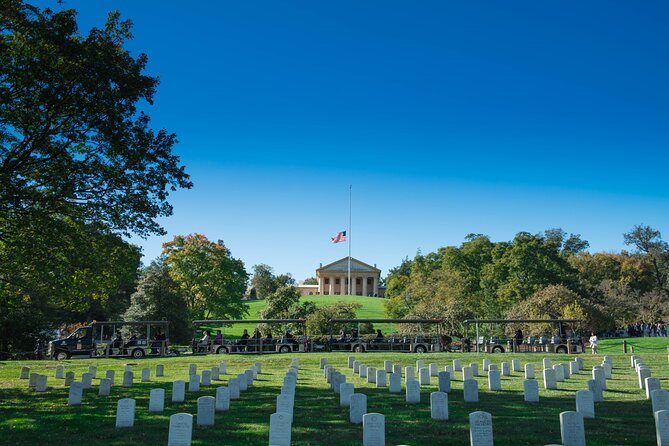
Now you hit the heart of the federal district. Stop 6 at 1st Street Southwest is the US Capitol area, with sights including the Botanic Gardens, and the Supreme Court and Library of Congress around the route.
Stop 7 at 600 Independence Ave SW is museum-heavy in the best way: Air & Space Museum, the Museum of the American Indian, and the Eisenhower Memorial are all part of this stretch. If you’re short on time, you can use the trolley here like a scout: ride past, then decide what you really want to commit to when you’re on foot.
Stop 8 is listed as 114 Maine Ave SW. The tour gives you a hop-off option here, but the exact “what to do” depends on what you’re drawn to that day. Use this kind of stop strategically: jump off only if you already know what you want nearby, because this route is built for flexibility, not for wandering without a target.
A key consideration: DC museum plans can balloon fast. If your group includes both “monument people” and “museum people,” keep one person responsible for time—otherwise you’ll end up with two half-finished plans and less of Arlington.
Spy Museum to Washington Monument and the Smithsonian Core (Stops 9–10)
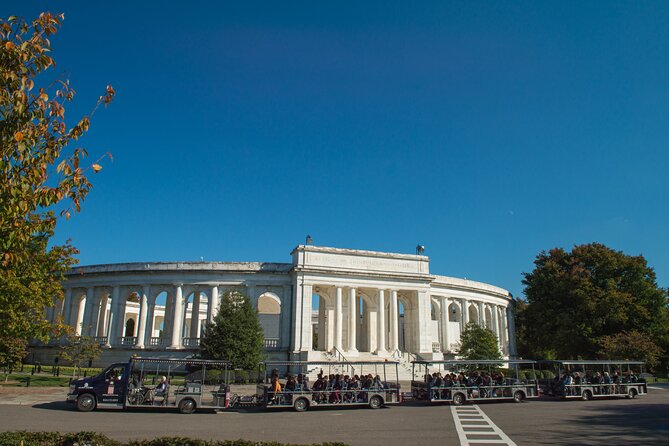
Stop 9 is a standout for fun and curiosity: the International Spy Museum. Even if you don’t buy tickets for it, it’s a perfect “pause the day and be entertained” option because the narration can give you context for the whole theme of DC as a center of power and intelligence.
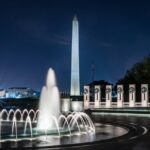
Stop 10 at 1398 Independence Ave SW brings you to the Washington Monument area and more Smithsonian museums, plus the Castle and the Holocaust memorial context listed on the route. This is one of the most powerful segments, because it combines a big icon (Washington Monument) with smaller, more reflective experiences nearby.
This block is also where you should think about pacing. If you get off for a museum, remember that the trolley is still moving and your next pickup might not line up perfectly with the exact moment you finish reading the last panel.
If you’re trying to cover a lot, hop off for 30–60 minutes, then come back on and let the guide carry you forward. It keeps your day from turning into a stress test.
Jefferson to Lincoln Memorials: Memorial Row at Stops 11–13
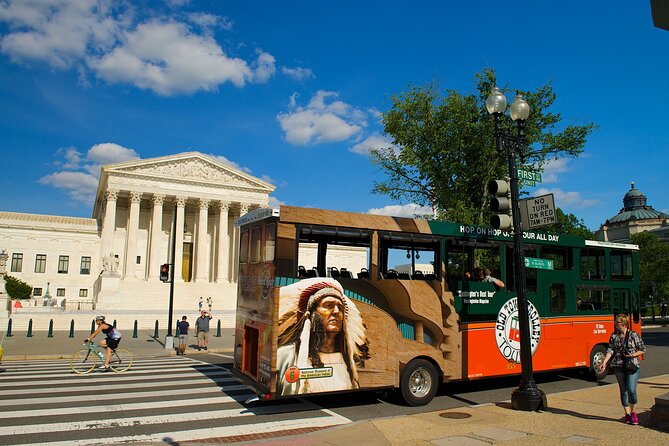
Stop 11 at 16 E Basin Dr SW is Jefferson Memorial and the George Mason Memorial. This area is all about reflection and sightlines. The narration tends to help you connect why people built these spaces the way they did—how each memorial ties back to the values DC likes to project.
Stop 12 at 1964 Independence Ave SW focuses on Franklin D. Roosevelt Memorial and the Martin Luther King Jr. Memorial. This is a strong segment emotionally. The trolley ride narration gives you a backbone for what you’re about to see, so the memorials don’t feel random.
Stop 13 at 2 Lincoln Memorial Cir NW covers the Lincoln Memorial plus the Vietnam Veterans Memorial and the Korean War Veterans Memorial. This part is often the “I didn’t expect to feel this” section for many visitors. Even if you keep it to photos and a short walk-through, the area’s design tells a story.
If you want to do well here: wear shoes with grip. DC paths can be uneven, and crowds can slow you down. And if Arlington is next, plan your time at these stops like a relay—enjoy it, but don’t let it eat your whole day.
American History and Portrait Stops: Museums at Stops 14–15
Stop 14 at 1400 Constitution Ave NW is a museum sweet spot: National Museum of American History and the National Museum of African American History are listed here. This is where the tour becomes more than sightseeing—it becomes a route that can line up with your personal interests.
Stop 15 at 800 F St NW brings you to the National Portrait Gallery and the American Art Museum area. If you’re the type who likes portraits, political figures, and how artists interpret power, this is a solid place to hop off and reset.
The main caution on museum stops: once you step inside, time disappears. For your sanity, pick one museum to go longer in, and keep the other as “quick look” unless you’re on a multi-day plan.
If you love museums, you might wish you had more time—one good strategy is to use this day to map what you’ll return for later on your own.
Arlington National Cemetery Rules, Shuttle Transfer, and Stops 16–18
The Arlington portion starts with a shuttle transfer from the Lincoln Memorial area. Stop 16 is the Arlington National Cemetery Welcome Center, and that’s where the day’s “serious business” feeling kicks in.
Here’s the non-negotiable part: Arlington requires 100% ID check with no exceptions. If you’re a US guest, bring a state or government-issued picture ID. Visitors aged 16 and 17 may present a valid school ID. If you’re a foreign guest, you must bring a passport. Foreign ID cards aren’t accepted.
This is why I tell you to plan like you mean it. Double-check your wallet before you leave DC sights. One misplaced ID can turn your Arlington time into wasted hours.
Stops 17 and 18 cover key cemetery moments: President John F. Kennedy memorial and JFK’s graveside, plus Supreme Court Justice Ruth Bader Ginsburg is listed with the stop. Stop 18 is the general John J. Pershing gravesite and the tour route includes an area described as future expansion.
Practical note: cemetery visits involve walking and some uphill/downhill terrain. If anyone in your group has limited mobility, plan to go slower and consider taking breaks rather than rushing between stops.
Tomb of the Unknown Soldier, Arlington House, and Iwo Jima Outside the Gate (Stops 19–21)
Stop 19 is the Tomb of the Unknown Soldier, a must for many people and a moment that hits differently in person. Expect to spend time on-site, and plan to build your route around when you want to see this area most.
Stop 20 is Arlington House, which adds another layer beyond the graves. It’s the kind of place where you’ll likely want a little time just to take it in and connect it to the surrounding cemetery.
Stop 21 is the Ord & Weitzel Iwo Jima Memorial listed outside the gate. This is a final “close the day” stop that gives you a broader view of Arlington’s military memorial scope.
One timing reality: a few people find it tight if they wait too long for their Arlington shuttle or if traffic delays the trolley line. If Arlington is the emotional center for you, I’d start your DC exploring earlier in the day so you have room to breathe.
Should You Book This Trolley + Arlington Cemetery Combo?
Book it if you want a first-day DC orientation plus an Arlington visit without extra planning. The combination is efficient: you get the National Mall’s big picture, you can hop off for targeted time, and you finish with Arlington’s major stops in a structured way.
I’d skip or reconsider if your main goal is a slow museum day where you’ll spend long indoor stretches. This tour is built for movement, and even with hop-on hop-off flexibility, Arlington ID rules and pickup timing make the schedule feel real.
If you do book: pack your ID early, wear real walking shoes, and treat Arlington like the main event, not the afterthought. Sit where you can hear the guide, and use the trolley freedom to follow your interests instead of forcing a rigid checklist.
FAQ
Where do I start this tour in Washington DC?
You begin at the Washington DC Welcome Center, then board the hop-on hop-off trolley from there.
How long is the tour?
The duration is listed as about 2 hours 30 minutes.
How often do the trolleys arrive?
Trolleys are described as arriving roughly every half hour.
Is Arlington National Cemetery included?
Yes. The tour includes a transfer to Arlington National Cemetery and a visit to major cemetery stops.
What ID do I need for Arlington?
Arlington requires 100% ID check with no exceptions. US guests must show a state or government-issued picture ID (or a valid school ID for ages 16 and 17). Foreign guests must show a passport.
Are tickets mobile?
Yes, you receive a mobile ticket.
Are strollers or service animals allowed?
Collapsible strollers are allowed. Service animals are allowed. Emotional support animals and pets are not allowed.
What’s included in the price?
Included are live commentary on board, the hop-on hop-off Washington DC and Arlington National Cemetery tour, and children 3 and under are free. Food and drinks are not included.