REVIEW · WASHINGTON DC
3-Hour Small Group Memorial Tour in Washington, D.C.
Book on Viator →Operated by TOUR BUY THE HOUR LLC · Bookable on Viator
One loop, eight landmarks, and a fast history hit. In just 3 hours, you’ll move through some of Washington’s most recognizable memorial spaces with a licensed guide and free admission at each stop. What makes it especially useful is the pacing: each location gets about 20 minutes, so you can actually see the details without feeling trapped in a long bus tour.
I like that the route links big themes—presidents, civil rights, and multiple wars—so the sites start to talk to each other instead of feeling random. I also like the practical add-ons: your guide accompanies you to the Capitol grounds and shares where to take photos of specific memorials and monuments. One consideration: the tour info doesn’t clearly include snacks or water, and one past guest noted that water wasn’t available as advertised and that the guide was selling items, which can be annoying on a short 3-hour outing.
In This Review
- Key highlights worth knowing
- How this 3-hour memorial tour actually feels on your day
- Where you start: Hyatt Regency on Capitol Hill (and why it’s convenient)
- The route, stop by stop: what you’ll see and what to watch for
- Jefferson Memorial (20 minutes, free)
- Martin Luther King, Jr. Memorial (20 minutes, free)
- U.S. Capitol grounds with photo focus (20 minutes, free)
- Korean War Veterans Memorial (20 minutes, free)
- Lincoln Memorial (20 minutes, free)
- White House (20 minutes, free)
- Vietnam Veterans Memorial (20 minutes, free)
- Franklin Delano Roosevelt Memorial (20 minutes, free)
- Value for your time: what you get without paying entry fees
- Who this tour fits best (and who might want a different plan)
- Practical advice: make the most of 20 minutes per stop
- Should you book this 3-hour memorial loop?
- FAQ
- How long is the 3-hour small group memorial tour?
- What is the tour language?
- Does the tour use a mobile ticket?
- Where does the tour start and end?
- Is admission included for the memorials and monuments?
- What’s included in the price?
- What’s not included?
- Is there a limit on group size?
- Are service animals allowed?
- Can I cancel if plans change?
- Is public transportation nearby?
Key highlights worth knowing
- 20-minute stops that keep the tour moving without turning it into a marathon
- Free admission at every stop, so you’re paying for guiding and logistics, not entry fees
- Capitol grounds time plus help finding good photo angles for several nearby landmarks
- Air-conditioned vehicle to handle the D.C. heat (or just the general stop-and-go chaos)
- Mobile ticket for an easier check-in day
- A compact memorial-focused route from Jefferson to FDR, plus the Lincoln and White House area
How this 3-hour memorial tour actually feels on your day
This is the kind of D.C. tour that helps you get your bearings fast. The core idea is simple: you’re not trying to cover every museum or every street corner. Instead, you’re given short, focused time blocks at major presidential and civic memorials—then moved on by bus.
Because each stop is timed (about 20 minutes), you’ll likely feel a steady rhythm: arrive, orient, take photos, read a few key plaques, and move before your legs or attention start to fade. That rhythm matters in Washington. Memorials can be visually stunning but also text-heavy; having a guide helps you decide what to look for first so you don’t spend your limited time scanning everything.
Also, the group size is described as small, with a maximum of 50 travelers. That’s still large enough that you’ll want to keep an eye on your meeting point and your exact time window, but it usually means the guide can manage the pace without getting totally lost in the crowd.
You can also read our reviews of more tours and experiences in Washington DC



Where you start: Hyatt Regency on Capitol Hill (and why it’s convenient)
The tour meets at Hyatt Regency Washington on Capitol Hill, 400 New Jersey Ave NW. That location is a practical base because it’s near major road corridors and public transportation. You can usually get yourself there without needing a complicated plan.
Then you return back to the same meeting point at the end. I like that, because D.C. days can get messy when you end far away from where you started. Here, your “after tour” options stay simple: coffee, a snack, or continuing on your own schedule with less guesswork.
The route, stop by stop: what you’ll see and what to watch for
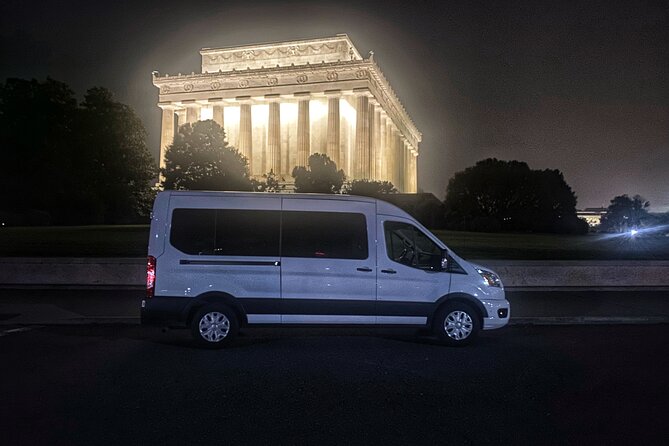
Your itinerary moves in a straight line through some of the most recognizable memorials in Washington. Even if you’ve seen photos online, the in-person layout gives you better context for scale and placement—especially around water features and big open sightlines.
Jefferson Memorial (20 minutes, free)
You start at the Jefferson Memorial. It’s open to the public since 1943, built to honor the third U.S. president. The description calls out its placement on the tidal basin, which is a useful clue for what to expect visually.
Why this stop works: Jefferson’s memorial sits in a landscape designed for big views, so even a short visit lets you notice how the architecture frames the water and the surrounding grounds. Tip: come ready to take a couple of photos quickly, because the timing is tight and it’s easy to get stuck reading everything at once.
Martin Luther King, Jr. Memorial (20 minutes, free)
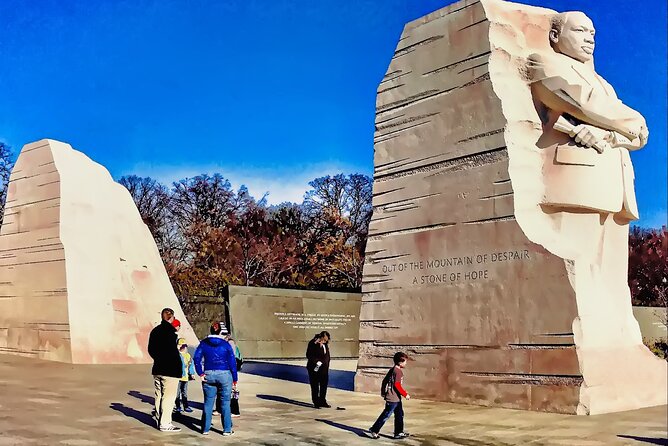
Next is the Martin Luther King, Jr. Memorial, open since August 28th, 2011, honoring the civil rights leader. This one is often more emotionally immediate than people expect. Even with limited time, you can usually find a strong vantage point for photos and a couple of key inscriptions without feeling rushed.
What I’d focus on in the short window: spend a few minutes reading what’s central to the design, then move on to how the memorial space feels as you step around it. That movement is part of why memorials land.






U.S. Capitol grounds with photo focus (20 minutes, free)
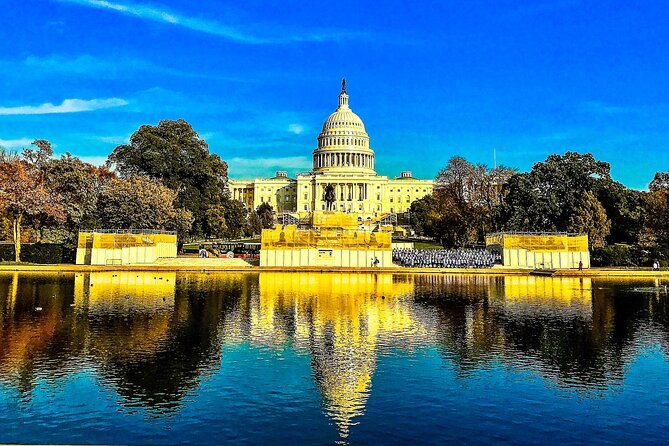
Then your guide takes the group to the grounds of the U.S. Capitol. The tour specifically notes that your guide will share history and show the best photo spot to capture nearby points of interest, including the President Garfield Mem and Gen. USS Grant, plus the Peace monument.
This is a smart use of time because the Capitol area can be confusing for first-timers. Having a guide point you toward a practical photo angle means you’ll get better results than if you wander and hope. Also, this is one of those places where you’ll quickly understand why government buildings in D.C. are set up for big ceremonial lines and views.
Small caution: the tour is short here, so choose your camera angles fast. If you’re traveling with a group member who likes to take long breaks reading every plaque, you may want to agree on a plan before you arrive.
Korean War Veterans Memorial (20 minutes, free)
Now you move to the Korean War Veterans Memorial. The description emphasizes scale: it honors over 51 thousand men and women who defended South Korea.
Why this stop matters: war memorials often feel quieter than people expect. The name alone doesn’t tell you the tone. In a short visit, your job is to focus on the core elements that represent those who served and sacrificed—then let the emotion do the rest.
Lincoln Memorial (20 minutes, free)
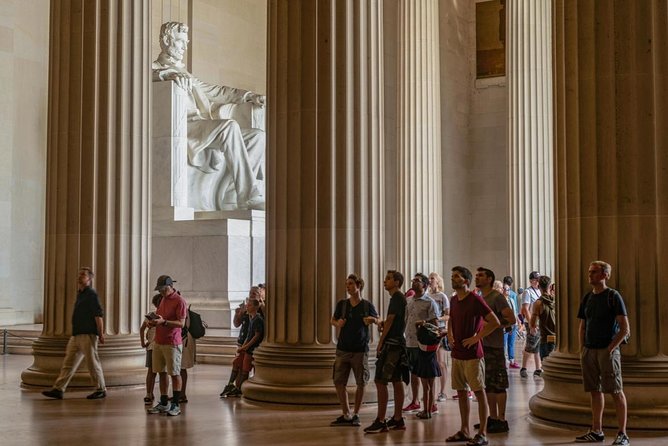
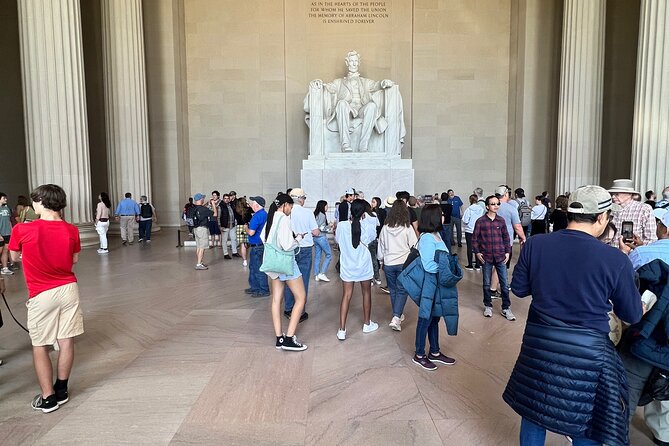
The Lincoln Memorial is next, open to the public since 1922 and overlooking the reflecting pool. The details provided are very specific: you’ll see the 19 sq.ft white marble of President Lincoln, along with the Gettysburg and second inaugural address areas referenced in the tour description.
A practical note: Lincoln’s memorial can be a photography magnet, but that doesn’t mean it has to become a crowd-control headache. Since your visit is about 20 minutes, you can still get a few meaningful photos and take in some of the inscriptions without turning it into a full-hour “I’ll read everything” project.
If you care about photos, arrive ready for a quick scan of open lines of sight—reflecting pool views look best when you pick your spot early.
White House (20 minutes, free)
Then you spend time at the White House, described as the official residence of the President of the United States.
With this stop, don’t expect it to be a lecture about politics. Expect orientation and short photo time. You’re also dealing with typical D.C. realities: security lines and crowd control can affect how smooth the moment feels. Keeping expectations realistic helps here. In a 3-hour loop, the White House is part of the story, not the whole story.
Vietnam Veterans Memorial (20 minutes, free)
Next is the Vietnam Veterans Memorial. The description highlights that it honors over 68 thousand men and women who lost their lives. It also points out that the wall includes names, and it references two additional elements: the nurses memorial and the band of brothers.
This stop tends to require time in your head even if your feet only stand for 20 minutes. If you’re someone who likes to look for specific names, pick a plan before you arrive—otherwise the short timing can feel frustrating.
Franklin Delano Roosevelt Memorial (20 minutes, free)
Finally, you reach the Franklin Delano Roosevelt Memorial. It’s described as honoring the president who led the country from 1933 to 1945, through the dust bowl, the depression, and World War II. The tour notes that it has four rooms showcasing events from that era.
This is a strong way to end because the memorial is designed for movement through themes, not just one static view. Even in a short timeframe, you can usually pick up how the design segments the period into understandable parts, instead of making you compress everything into one glance.
Value for your time: what you get without paying entry fees
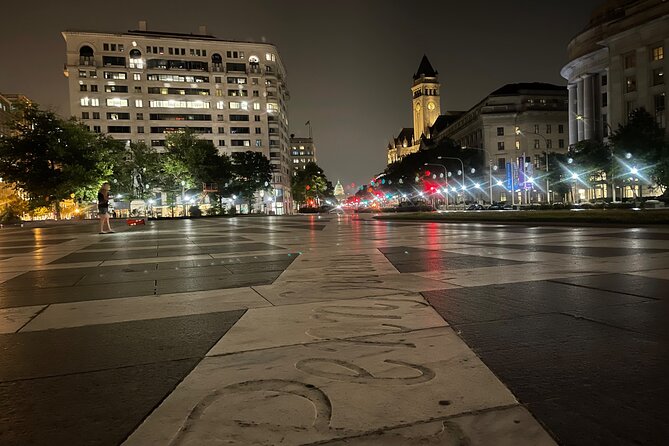
Every listed stop is admission ticket free, which is a big deal in D.C. where some monuments and attractions can quietly add up. Here, you’re mostly paying for:
- A licensed guide to manage the route and keep you from wandering
- An air-conditioned vehicle (real comfort during long hot stretches)
- Efficient routing so you hit the big memorials within a short window
The included package doesn’t list snacks or water. One review comment flags a mismatch between what was advertised and what happened on the day, saying water wasn’t free and needed to be purchased, and that the guide also sold souvenirs. I can’t confirm that this is the standard for every run, but it’s a good reason to arrive prepared.
My practical takeaway: bring a refillable bottle or plan to buy water outside the tour, and pack a small snack if you rely on one. It keeps you from getting stuck paying premium prices or waiting for a break that may not come.
Who this tour fits best (and who might want a different plan)
This experience is a good match if you want a guided “greatest hits” memorial pass with clear structure. You’ll likely enjoy it if you:
- Want major sites in about 3 hours without building your own route
- Prefer short guided orientation rather than museum-depth wandering
- Like photo opportunities but don’t want to spend your whole day figuring out angles
It may feel less satisfying if you’re the type who needs long quiet reading time at every monument. The stops are timed, so you’ll be making choices. If that’s your style, consider a flexible self-guided day or a longer guided option.
It’s also a sensible choice for many mobility needs because the time at each stop is limited and you’re transported by bus—just remember that you still have walking and standing.
Practical advice: make the most of 20 minutes per stop
D.C. memorials can tempt you into “I’ll just read this one plaque” mode. With 20 minutes each, I’d use this simple strategy:
- Do photos first, then read.
- Choose one or two details per stop and move on.
- Keep track of the exact re-group time your guide calls.
Also, because the tour uses a mobile ticket, make sure your phone battery is topped up. If you’re traveling with kids or a slower pace group member, set a clear “we meet here” plan before the first stop. This reduces stress when the group moves quickly.
Finally, if you care about comfort, dress for weather and plan for sun and wind. The vehicle helps, but your best views still require standing outdoors.
Should you book this 3-hour memorial loop?
If your goal is to cover the major memorials efficiently—starting with Jefferson, then MLK, then Capitol grounds, veterans memorials, Lincoln, the White House area, and ending with FDR—this tour makes a lot of sense. You’re getting a licensed guide, air-conditioned transport, and free entry everywhere, which is hard to beat for a short D.C. day.
I’d book it if you’re okay with short stops and you like structure. If you’re someone who absolutely needs included snacks/water, or you want a long, slow read at every monument, you may prefer a longer private tour or a self-guided route where you control pacing and refreshments.
One last decision tip: if you hate souvenir pressure, bring a neutral mindset. Based on a past comment, some guides may sell items during the ride. You don’t have to buy anything, but knowing it can happen helps your day stay pleasant.
FAQ
How long is the 3-hour small group memorial tour?
The tour is approximately 3 hours.
What is the tour language?
The tour is offered in English.
Does the tour use a mobile ticket?
Yes, it includes a mobile ticket.
Where does the tour start and end?
It starts at Hyatt Regency Washington on Capitol Hill, 400 New Jersey Ave NW, Washington, DC 20001, USA, and ends back at the same meeting point.
Is admission included for the memorials and monuments?
Yes. The tour notes free admission for each of the stops listed.
What’s included in the price?
Included features are an air-conditioned vehicle and a licensed guide.
What’s not included?
Alcoholic beverages and snacks are not included.
Is there a limit on group size?
Yes. The tour has a maximum of 50 travelers.
Are service animals allowed?
Yes, service animals are allowed.
Can I cancel if plans change?
You can cancel up to 24 hours in advance for a full refund.
Is public transportation nearby?
Yes. The meeting location is near public transportation.