
REVIEW · WASHINGTON DC
Skip the Line National Archives and US Capitol Tour
Book on Viator →Operated by Walks - USA · Bookable on Viator
Skip the line and your day speeds up. This small-group walk links the National Archives, the National Gallery of Art Sculpture Garden, and the U.S. Capitol, timed so you hit the big documents and chambers before the worst crowds. I love the pre-reserved entry that keeps your morning moving. I also love the max 10 travelers setup, which gives you time to ask questions instead of being marched along.
The trade-off: it’s a walking route with large hills and a schedule that doesn’t pause for lingering. If you’re hoping for lots of deep exhibit talk every minute, you’ll get more out of it by asking your guide to slow down at the spots that matter most to you.
In This Review
- Key points worth knowing before you go
- A 9:45 route that strings DC’s top symbols together
- Entering the National Archives rotunda: Declaration, Bill of Rights, Magna Carta
- National Gallery of Art Sculpture Garden: Orphée mosaic and the Paris Metro entrance
- The National Mall on foot: Reflecting Pool, Grant Memorial, and Smithsonian hits
- Inside the U.S. Capitol: House of Representatives and the crypt
- The guide factor: what you should ask for
- Pace and comfort: large hills call for real planning
- Price and value: $53 for two reserved entries plus a guided story
- Pair it with DC’s nearby museums (without overloading your day)
- Should you book this Skip the Line Archives and U.S. Capitol tour?
- FAQ
- What is the duration of the tour?
- How much does it cost?
- What does skip the line include?
- Where do I meet and what time does it start?
- Is this a small group tour?
- Is the tour in English, and is hotel pickup included?
- What if you can’t get Capitol Visitor Center tickets?
- Is the tour suitable for everyone in terms of walking?
Key points worth knowing before you go
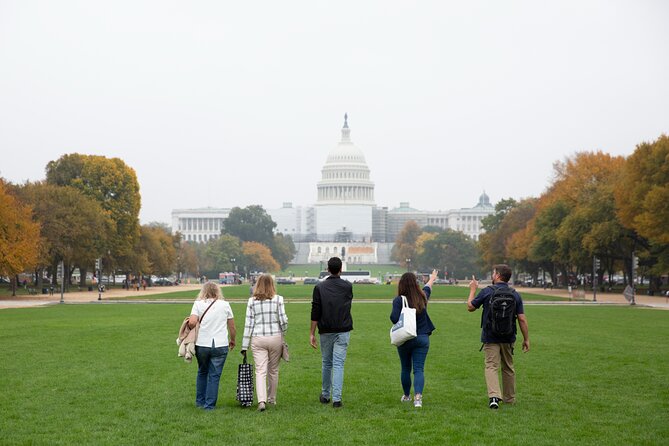
- First-entrance timing at the Archives helps you see the originals with less waiting.
- Small-group pace (up to 10) makes questions and photo stops feel possible.
- National Mall orientation walk connects the dots between major monuments and museums.
- Capitol access includes the House area and the crypt, not just a quick exterior look.
- Capitol Visitor Center ticket issues get handled with a Library of Congress or Supreme Court alternative if needed.
A 9:45 route that strings DC’s top symbols together

This tour runs about 3 hours 45 minutes, starting at 9:45 am. You meet at 701 Constitution Ave. NW and end near 2436 Rayburn House Office Building after the guided time in the Capitol.
No hotel pickup is included, so plan to arrive a bit early and buffer your walk. The flow is intentionally logical: you start at the National Archives, move through the Sculpture Garden, then stroll the National Mall on foot, and finish inside the U.S. Capitol. That ending matters. The Capitol visit is the payoff, and timing it after the early-morning document viewing keeps the story coherent.
Also note: this is a moderate physical fitness walking tour with large hills. If you’re choosing between this and a purely transit-based sightseeing plan, be honest with yourself about whether stairs and uphill stretches will be comfortable.
You can also read our reviews of more tours and experiences in Washington DC



Entering the National Archives rotunda: Declaration, Bill of Rights, Magna Carta

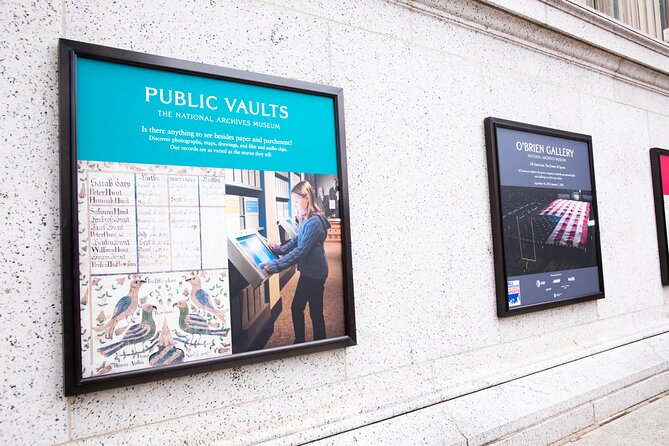
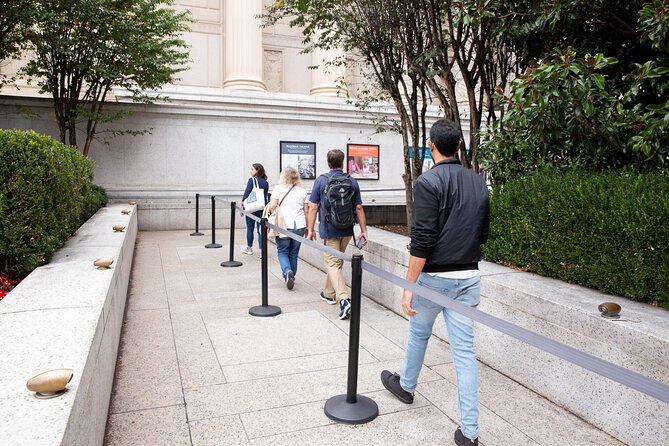
Your first stop is the National Archives Museum, where you go in with a pre-reserved ticket for the first entrance of the day. Translation: you get more time looking at what’s inside while other people are still shuffling in lines.
In the rotunda, you’ll see the Declaration of Independence and the Bill of Rights, presented in the setting they’re famous for. The emotional punch is real here—not because the guide tells you to feel anything, but because you’re looking at the actual documents you’ve seen only in books.
You’ll also see an original copy of the Magna Carta (1297). A good guide will connect that object to the bigger theme of legal tradition and how it ended up stored in Washington, D.C. That “how and why” context is often what turns the visit from sightseeing into understanding.
Practical tip: keep your phone away for the first few minutes. The Archives space rewards slow looking. After you’ve taken in the overall layout, then snap a couple photos and let the guide point out the details you might otherwise miss.
National Gallery of Art Sculpture Garden: Orphée mosaic and the Paris Metro entrance

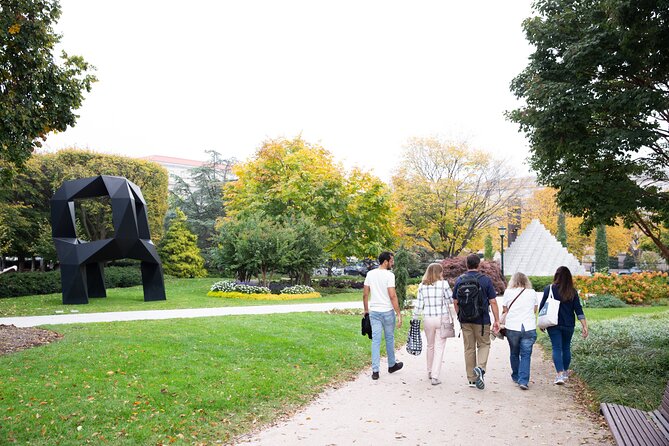
Next is a scenic break: the National Gallery of Art Sculpture Garden, including a quick stop at the highlights. Time here is short—about 20 minutes—so treat it like a moving gallery break, not a full museum session.
You’ll pass by Marc Chagall’s mosaic Orphée, which draws from Greek mythology. It’s the kind of piece that feels both playful and old-world at the same time. You’ll also see Hector Guimard’s Entrance to the Paris Métropolitain. Even if you’ve never been to Paris, the structure will look familiar once you notice its distinctive ironwork style, tied to the metro entrances that still exist around 86 stations.
Season changes the mood of the garden. The center space acts like a fountain in summer and becomes an ice-skating rink in winter. On a warm day it feels like a calm pause between big indoor institutions. On a cold day, it adds a little DC drama without needing a separate ticketed activity.
Drawback to expect: because this stop is brief, you may not get long, uninterrupted time with any single sculpture. If a specific piece really grabs you, ask your guide if you can spend an extra minute there before you move on.
The National Mall on foot: Reflecting Pool, Grant Memorial, and Smithsonian hits
After the Sculpture Garden, you head onto the National Mall, about 30 minutes of walking. This is often where you start feeling the “DC scale.” It’s not just a walkway—it’s an organized spine linking major landmarks and museums.
You’ll pass well-known anchors like the Reflecting Pool and the Grant Memorial, and your guide will help you connect the history of the founders to the geography leading toward the Capitol. Along the route, you’ll also take in sights you’ll recognize from any first-timer DC plan, including the Smithsonian Castle, the Hirshhorn Museum, and the National Air and Space Museum.
What makes this section valuable is that it’s a shortcut to orientation. You’re learning how everything lines up while you still have your full attention. Later, when you return on your own, the streets and buildings won’t feel random.
Practical tip: bring layers and water. The Mall can swing between sunny and windy fast, and you’ll be outside for this portion. Comfortable shoes matter here more than you think, because the hills are cumulative.
Inside the U.S. Capitol: House of Representatives and the crypt
The last stop is the U.S. Capitol visit, about 1 hour 15 minutes, and it’s the moment most people are saving their energy for. The Capitol is both a historic monument and a working office building, so you’ll see it as a living government site, not a frozen museum set.
You’ll tour the crypt and see the original House of Representatives area. That mix—underground history plus the chamber spaces—helps you understand why this building matters beyond architecture. It’s one thing to read about American institutions. It’s another to stand in the rooms built for the arguments, rules, and compromises.
Guides also tend to share insights you won’t easily find on a quick audio tour, especially about what the building represents and how the experience fits into the larger founding story.
Important contingency detail: on rare occasions, they may not be able to get Capitol Visitor Center tickets. If that happens, the plan may shift to the Library of Congress or the Supreme Court instead (time permitting). It’s not the exact same experience, but it keeps your final chapter connected to U.S. government and foundational documents.






The guide factor: what you should ask for
Small-group tours shine when the guide can tailor the pacing to the questions you care about. In the strong versions of this tour, guides bring personality and strong framing of the documents and Capitol spaces. You may be led by people like Ryan, Jesse, Jim, Amanda, Kyle, David, Mike, Jana, Alegra, or Faith—names that show up often in past experiences. The consistent theme in the best moments is clear explanations plus smooth handling of DC detours.
That said, one possible drawback is uneven depth from guide to guide. If your guide goes light on exhibit talk and simply moves you through, you’ll still get the big sights, but the story connection may feel thin. The fix is simple: ask direct questions early. For example, ask what detail in the rotunda setup matters most, or what the crypt visit is meant to help you notice.
Because the group is capped at 10, your questions aren’t lost in a crowd. Use that advantage.
Pace and comfort: large hills call for real planning
This tour is built as a walking tour with large hills, and it requires you to keep a moderate pace. That doesn’t mean it’s a fitness challenge, but it does mean you should prepare like it is: shoes you can walk in for hours, layers for changing weather, and a calm attitude about stopping only when the group stops.
There are no hotel logistics to manage, but you do need to show up ready to move. Service animals are allowed, and the tour is in English, which helps if you’re traveling with anyone who wants straightforward explanations.
If you’re traveling with kids or teens, this can work well because the “original documents plus dramatic rooms” combo grabs attention fast. Just keep expectations realistic: the structure moves you through three major institutions, so snacks and bathroom breaks may not line up like a theme park day. Go in with a flexible mindset.
Price and value: $53 for two reserved entries plus a guided story
At $53 per person, this is not cheap for one afternoon—but it also isn’t random sightseeing pricing. The value comes from stacking three key elements:
1) Pre-reserved entry for the National Archives
2) Pre-reserved entry for the U.S. Capitol
3) A guide who helps you connect the dots while you walk the National Mall
Skipping the lines is the big driver. Even if the Capitol day would be manageable without help, the Archives stop is the one that benefits most from arriving early. You can spend your time looking at documents instead of watching everyone else queue up.
The tour is typically booked about 19 days in advance on average, which is a clue that planning ahead matters. If you wait until the last minute, you may lose your best time slots for the early-entrance experience.
In short: this price works best when you care about timing and context. If you’re the type who’s happy wandering museums alone with no guided framing, you might feel less urgency. If you want the “big American institutions, connected into one story” experience, this is a fair deal.
Pair it with DC’s nearby museums (without overloading your day)
One smart way to use this tour is to treat it as your orientation hour set. After you finish at the Capitol area, you’ll already know where the Mall landmarks sit and how the neighborhoods and major buildings line up.
Then you can choose a museum based on mood—still close, still central, and less stressful because you’ve already gotten your bearings. The tour also points you toward major names you’ll likely want to revisit, like the National Air and Space Museum and Smithsonian sites near the Mall.
If you’re building a multi-day plan, this tour is a strong “day one” choice. It gives you a storyline that makes later independent sightseeing click faster.
Should you book this Skip the Line Archives and U.S. Capitol tour?
Book it if:
- You want to see the Declaration, Bill of Rights, and Magna Carta with first-entrance timing
- You’d rather spend your time learning what you’re looking at than waiting in lines
- You like a small group pace where questions are welcome
- You’re aiming for a first DC visit and want a guided walk connecting the Archives to the Capitol
Skip it (or plan something different) if:
- Hills and steady walking will likely be uncomfortable for you
- You’re expecting long, deep museum-style lecturing for every exhibit along the way
- You’d rather go at your own pace with no timed flow between sites
If you’re on the fence, I’d lean yes for most first-timers—because reserved entry plus smart staging is exactly what saves time and turns “must see” into a smoother, more meaningful day.
FAQ
What is the duration of the tour?
The tour lasts about 3 hours 45 minutes.
How much does it cost?
It costs $53.00 per person.
What does skip the line include?
You get pre-reserved entry tickets for the National Archives and the U.S. Capitol, plus access to the National Gallery of Art Sculpture Garden.
Where do I meet and what time does it start?
You meet at 701 Constitution Ave. NW, Washington, DC 20408 at 9:45 am. The tour ends at 2436 Rayburn House Office Bldg, Washington, DC 20004.
Is this a small group tour?
Yes. The maximum group size is 10 travelers.
Is the tour in English, and is hotel pickup included?
The tour is in English. Hotel pickup and drop-off are not included.
What if you can’t get Capitol Visitor Center tickets?
On rare occasions, if Capitol Visitor Center tickets aren’t available, the tour may visit the Library of Congress or the Supreme Court instead (if time permits).
Is the tour suitable for everyone in terms of walking?
You should have a moderate physical fitness level. It’s a walking tour with large hills, so you need to be able to walk at a moderate pace. Service animals are allowed.