REVIEW · WASHINGTON DC
Monuments and Memorials Night Walking Tour
Book on Viator →Operated by The Daily Trips · Bookable on Viator
Night in DC hits different. This 2-hour walking tour strings together the most important monuments and memorials in a clean, easy circuit, with time to look up close instead of just passing by. I like that the stops are built around free admission and a small-group size that keeps the vibe calm. A possible drawback: it is still a walking tour, so you will want decent shoes for an evening stroll and a few quick stops.
You also get the kind of guide attention that makes the stories stick. The guide named Jeff is praised for being patient, not rushing, and answering questions as you go, including detail you may not find on Wikipedia. One more consideration: with several stops packed into the night, each one is a “pay attention” moment rather than a long linger.
You’ll finish near the National Mall area, with a solid sense of how these sites connect—war, civil rights, sacrifice, and the landscape of protest and remembrance—without feeling like you crammed in everything.
In This Review
- Key things to know before you go
- Night walking value: why this circuit works after dark
- Price and what you’re really paying for at $43
- Meet-up at Henry Bacon Drive and the pacing for a 2-hour loop
- Stop 1: Lincoln Memorial at the end of a powerful civil rights story
- Stop 2: The Three Servicemen Statue and the human meaning of bronze
- Stop 3: Vietnam Veterans Memorial and the experience of reading names
- Stop 4: Korean War Veterans Memorial and the power of Freedom is Not Free
- Stop 5: World War II Memorial and the scale of 16 million
- Stop 6: Capitol Reflecting Pool and how protest becomes part of the story
- Stop 7: Washington Monument’s height and what 555 feet feels like
- The guide’s real value: calm pacing and question-friendly answers
- Who should book this memorial night walk
- Should you book the Monuments and Memorials Night Walking Tour?
- FAQ
- How long is the Monuments and Memorials Night Walking Tour?
- How much does the tour cost?
- What time does the tour start, and where does it end?
- Are admissions included for the memorials?
- Is the tour in English?
- Can I cancel for a refund?
Key things to know before you go
- Small group, max 10 guests: more back-and-forth and less crowd noise.
- Seven major stops in about two hours: a tight route that still leaves you time to look.
- All the big memorials are free to enter: your $43 goes mostly to the guide and pacing.
- Photo opportunities built into the walk: you’re not left guessing where to stand.
- Night timing helps the experience: you get different light and a calmer feel at the monuments.
- Jeff gets called out for patience: expect questions to be welcome, not brushed off.
Night walking value: why this circuit works after dark
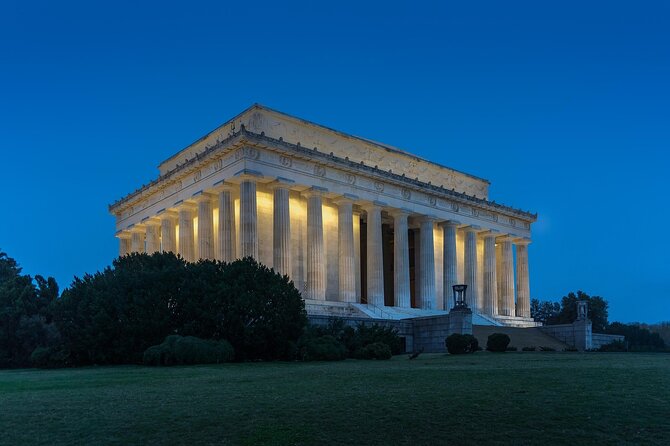
There’s a reason Washington DC feels powerful at night. Daytime crowds can flatten the mood—you see monuments, but you don’t always absorb them. At 7:30 pm, the National Mall area shifts. The memorials still carry the same meaning, but the pace feels more human. You can actually read details, spot names, and take in the scale without fighting the flow.
This tour is also designed like a good playlist: start with a cornerstone, move through war memorials in sequence, then end on open views and the big skyline centerpiece. That order matters. You go from civil rights-era symbolism to Vietnam, Korea, and World War II—then to the Capitol Reflecting Pool and the Washington Monument. Even if you know these sites already, the route helps you connect themes instead of treating each stop like an isolated photo spot.
Best of all, you’re not paying for access fees here. Every major stop on the route lists free admission, so you’re mainly paying for expert guidance, timing, and help spotting what to notice.
You can also read our reviews of more walking tours in Washington DC



Price and what you’re really paying for at $43
$43 sounds like a “tour price,” but here the money does something practical. Your ticket covers:
- a local, professional guide
- a small group (max 10)
- a guided walking route through major memorials
- photo opportunities during the walk
- a mobile ticket
The memorials themselves are free, and that changes the value equation. You’re not buying entry. You’re buying a faster way to make sense of what you’re seeing: what to look for, why a specific sculpture matters, and what to read on the walls and statues.
If you’re visiting DC for the first time, that guide time can be the difference between a quick stroll that feels like sightseeing and a walk that feels like understanding. If you’ve been before, it still helps. A good guide will point out the little decisions—materials, angles, inscriptions, and which details people usually miss—so the monuments don’t blur into one big set of landmarks.
Meet-up at Henry Bacon Drive and the pacing for a 2-hour loop
Your start is 10 Henry Bacon Dr NW, Washington, DC 20004, and the end is 1 15th St NW, Washington, DC 20004. The whole experience runs about 2 hours, starting at 7:30 pm.
Here’s what that timing means for you in real life:
- Stops are short and intentional. Some are around 10–15 minutes.
- You get enough time to step away from the group, take a photo, and come back without feeling lost.
- You should dress for walking at night and keep your eyes open for changing light on the stone and granite.
Also, this is a near public transportation stop, which matters because DC can feel spread out. Being able to plug in easily on transit reduces friction on both the start and the end.
The route is paced well if you like structure but still want room to think. The guide’s style, especially the patience mentioned with Jeff, helps avoid the “headlong sprint” feeling you sometimes get on night tours.
Stop 1: Lincoln Memorial at the end of a powerful civil rights story
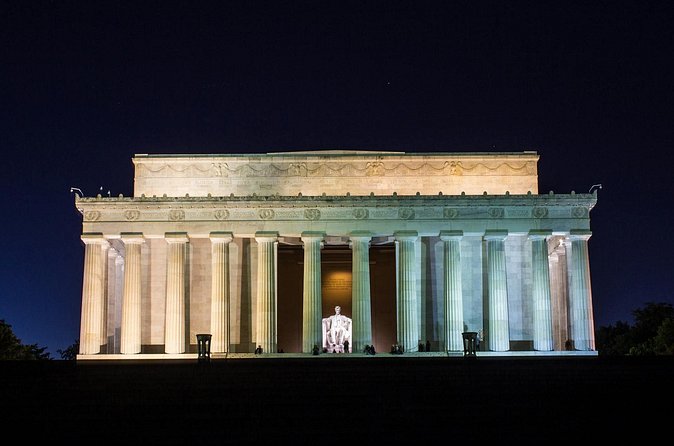
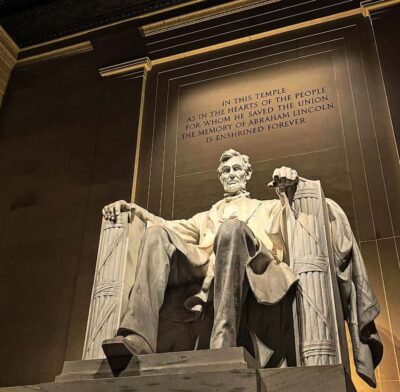
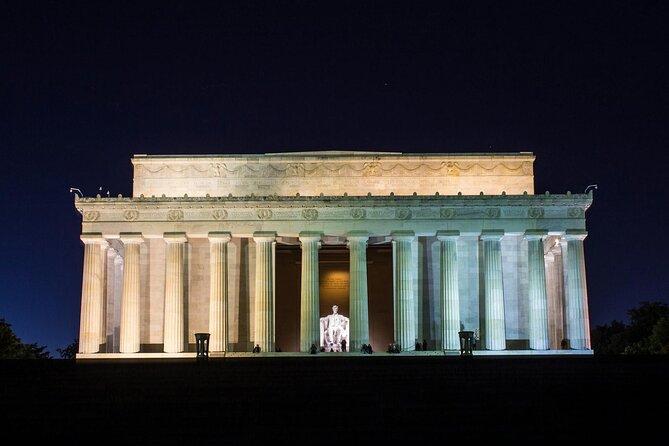
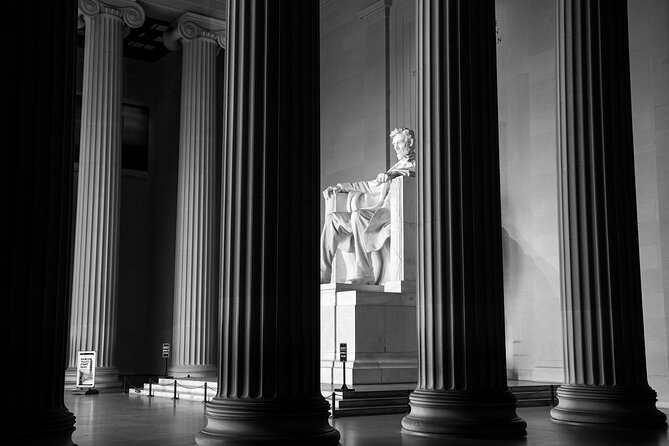
You begin at the Lincoln Memorial, and the real value here is the context the guide brings as you approach. This is not just a big statue and a grand staircase moment. It’s also a direct link to Martin Luther King Jr.’s I Have a Dream speech, which is tied to this space and its national symbolism.
Lincoln Memorial moments can go two ways:
- You admire the architecture, snap a photo, and move on.
- You actually read what the place represents in the American story.
This tour is built for option 2. With about 15 minutes at this stop, you get a chance to slow down. You’re also at the right point in the tour to set the emotional tone before moving to the war memorials, which can be heavier.
Quick consideration: if you’re expecting a long, sit-and-stare visit, you may want extra time beyond the tour. This stop is meaningful, but the evening is designed as a circuit.
Stop 2: The Three Servicemen Statue and the human meaning of bronze
Next comes The Three Servicemen Statue, honoring Vietnam War veterans. You’ll see a bronze depiction of three soldiers—White, Black, and Hispanic—standing in solidarity. The sculpture is by Frederick Hart, and the choice of multiple figures is part of why it hits.
This stop is short—around 5 minutes—but the effect can be big if you know what to look for. The statue is close enough to the Vietnam Veterans Memorial that you can feel how the story links: one memorial emphasizes human presence and camaraderie; the other emphasizes names and loss.
Here’s what you should do during your time:
- Look at the posture and spacing. It’s meant to signal unity, not just individual portraits.
- Take note of how the memorial’s physical design nudges your eye toward the next stop.
Photo note: this is a good place for one quick, well-framed image, especially if you want a strong subject before you hit the darker black granite wall.
You can also read our reviews of more evening experiences in Washington DC




Stop 3: Vietnam Veterans Memorial and the experience of reading names
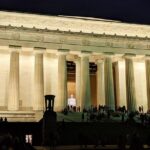
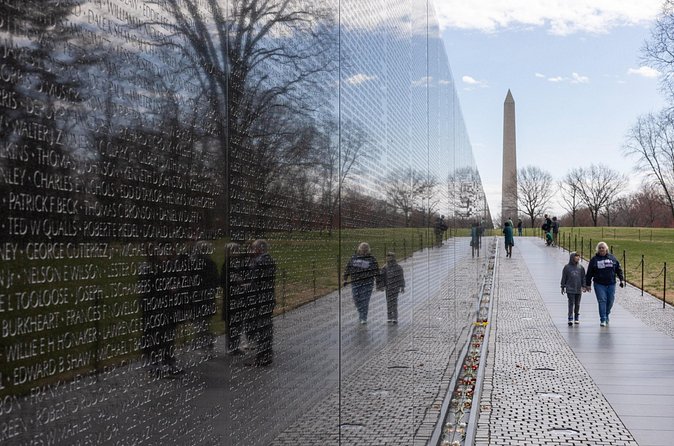
At the Vietnam Veterans Memorial, you’ll face the famous black granite wall etched with the names of fallen soldiers. The wall is often described in simple terms, but on the ground it changes how you look at it. The names feel personal even when you’re reading them quickly.
You get about 10 minutes here. That can sound brief, but it’s enough time to do one of the most important things at this site: pick out a name or two, then step back and read the wall’s overall curve and layout. That mental shift—local details to overall design—is usually what makes the stop stay with you.
Practical tip: if you come with a name in mind, plan your viewing spot. If you don’t, let the guide point out the wall’s structure and how people typically navigate it so you don’t feel rushed.
Stop 4: Korean War Veterans Memorial and the power of Freedom is Not Free
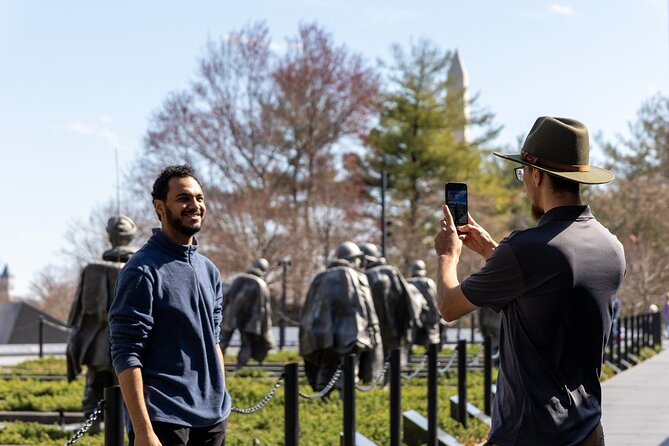
The Korean War Veterans Memorial is next, with soldier statues and the inscription Freedom is Not Free. Even if you’ve heard the line before, seeing it as part of the memorial design changes it. It reads like a slogan until you connect it to the visual language of military service—figures placed with intention, stone that holds attention, and a statement that forces you to slow down and think.
This stop is also about 10 minutes, so you’ll want to focus on the message while your feet are still fresh. If you like to linger, this may feel like you’re moving quickly at first. The guide can help by telling you what to notice so your time doesn’t evaporate into generic looking.
Consideration for your evening: memorials like this can be emotionally intense. If you need a breather, it’s okay to pause for a minute away from the main viewing line and then rejoin. The small-group format makes that easier.
Stop 5: World War II Memorial and the scale of 16 million
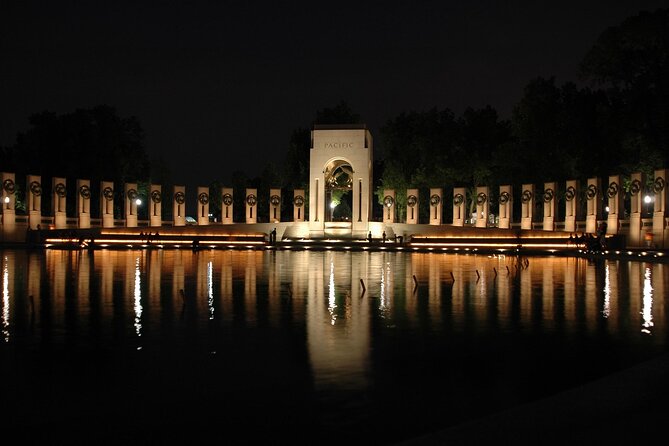
Then you arrive at the World War II Memorial, a tribute to the 16 million Americans who served in the U.S. Armed Forces during the war. The scale of WWII memorials can be hard to absorb in one quick glance. That’s where the guided pacing helps: you get help translating the big numbers into something you can actually take in while standing in front of it.
With about 10 minutes, this stop works best if you let it be a “big picture” moment. Think about the sheer size of the war’s participation, then connect that to the previous memorials. The route is moving through different conflicts, but the emotional pattern is similar: service, sacrifice, and the lasting imprint on national memory.
Photo opportunities: this is a strong stop for photos because of the wide-open viewing angles typical of this area. Keep it simple: one or two images with context, then spend the rest of your time looking at design features and inscriptions.
Stop 6: Capitol Reflecting Pool and how protest becomes part of the story
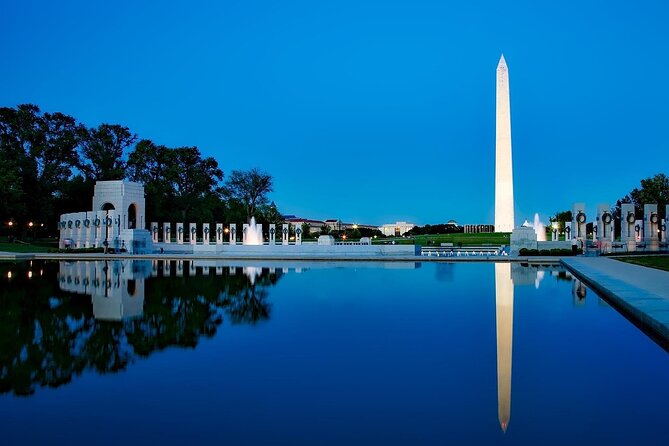
After the war memorials, the tone shifts slightly at the Capitol Reflecting Pool. You walk along this iconic waterway, which mirrors the surrounding landmarks and has echoed historic events and protests over time.
This stop is about 15 minutes, and that length matters. You need a little decompression after memorial intensity. The reflecting pool gives your eyes a break while still keeping the theme of civic life. In DC, public spaces carry meaning even when they look calm.
Use this time to:
- take in the symmetry and reflections
- reset your pace for the final monuments
- grab a photo that shows the wider setting, not just close-up memorial details
Practical note: a reflecting pool can be a little slippery or uneven near the edges. Watch your footing, especially at night.
Stop 7: Washington Monument’s height and what 555 feet feels like
You end at the Washington Monument, and it’s hard to miss. This towering obelisk reaches 555 feet tall and sits in a large open plaza with a circular pathway leading up to the entrance.
The final stop is around 10 minutes, which works because you’ve already walked the story arc. At this point, the tour shifts to meaning through perspective: the monument is about American history on a grand scale, and ending here gives your evening a natural “wrap-up view.”
If you want your ending to land, don’t spend all your time staring up. Take a quick look for the height, then rotate your focus back to the plaza and the pathway. That helps you understand how the monument is designed to be seen as part of the broader Mall space.
The guide’s real value: calm pacing and question-friendly answers
A night tour lives or dies on how the guide manages flow. The best part here is the guide style highlighted in past experiences: Jeff is noted for being patient and not rushing people. He also answers questions and gives little context nuggets you often don’t find in typical online summaries.
What that means for you:
- You can ask something when it pops into your head.
- You won’t feel dragged through like a checklist.
- You get brief “what to look for” coaching, then enough freedom to explore at the stop.
That balance is exactly what you want at memorials. You don’t just want facts; you want a way to stand in front of a wall, sculpture, or inscription and understand what your eyes are supposed to do next.
Who should book this memorial night walk
This tour fits best if you:
- want an organized way to see major memorials in one evening
- like small groups and a guide who answers questions
- want a route that connects civil rights and multiple wars in a logical order
- care about getting a few good photos without turning the memorials into a race
It can also work well for first-time DC visitors, because the stops are “big name” but the guidance adds meaning. If you are someone who gets overwhelmed by crowds, the small-group setup helps keep your evening manageable.
If you hate walking, or you need long sit-down time at each site, this may feel too compact. But if you can handle an evening stroll with short pauses, it’s a strong fit.
Should you book the Monuments and Memorials Night Walking Tour?
I’d book it if you want a high-value guided evening that keeps the big memorials from becoming blurry. The $43 price makes sense because the sites are free and you’re paying for guide-led context, timing, and pacing—especially in a small group. It’s also a great choice if you like the idea of learning what to notice at each stop, not just taking photos and moving on.
Skip it if you need long dwell time at every memorial or you prefer transportation between stops rather than walking. This is built as a walk with short, meaningful visits.
FAQ
How long is the Monuments and Memorials Night Walking Tour?
It runs for about 2 hours.
How much does the tour cost?
The price is $43.00 per person.
What time does the tour start, and where does it end?
It starts at 7:30 pm. The meeting point is 10 Henry Bacon Dr NW, Washington, DC 20004, and it ends at 1 15th St NW, Washington, DC 20004.
Are admissions included for the memorials?
The itinerary notes free admission for the stops.
Is the tour in English?
Yes, it is offered in English.
Can I cancel for a refund?
Yes. Cancellation is free up to 24 hours in advance for a full refund. If you cancel less than 24 hours before the start time, the amount paid is not refunded.