REVIEW · WASHINGTON DC
Extended Monuments & Memorials Tour
Book on Viator →Operated by Adventure DC Tricycle Tours · Bookable on Viator
A day on DC’s National Mall, but with your feet up. This private pedicab tour moves fast enough to hit the key monuments in under five hours, while your guide adds bite-size context along the way. I especially like the way you get customizable timing at the stops, plus the comfort perks that make sightseeing feel less like a grind.
One thing to plan for: the schedule is tight, so if you want long museum time or lots of off-route wandering, this is not that kind of day. Also, it runs best with decent weather, since the experience is outdoors and meant for a smooth ride.
In This Review
- Key highlights to look for
- How a private pedicab changes the Monument Day game
- The 4 hours 45 minutes that still feels like you did everything
- Jefferson Memorial to the White House: the fast start that sets the tone
- National Mall stops that layer in real context (Treasury, Bureau, and Smithsonian)
- Memorials with a story behind the stone (Sherman, Mason, and the Declaration)
- The Tidal Basin stretch: MLK, Korean War Veterans, Einstein, and FDR
- World War II and Vietnam to the Navy and beyond
- Capitol-area landmarks: Peace Monument, Congress views, Grant, and Garfield
- Using your guide time well: photos, weather gear, and smart breaks
- Price and value for a private group of up to three
- Who should book this Extended Monuments and Memorials Tour
- Should you book it? My straight answer
- FAQ
- How long is the Extended Monuments & Memorials Tour?
- What’s the group size and how much does it cost?
- Do you pick up from hotels and restaurants?
- Is the tour private?
- What language is the tour offered in?
- Is the tour mostly outdoors?
- Do I need admission tickets for the stops?
- What’s the weather requirement?
- Are mobile tickets used?
Key highlights to look for
- Private group up to 3: Your own guide, no crowd choreography
- Pedicab comfort: Sit back, relax, and cover ground quickly
- From-far and close-up moments: You’re not just rushing past everything
- Guide storytelling: Short, practical history tied to what you’re seeing
- Photo-friendly pacing: The route is built for quick picture breaks
- National Mall focus: Half-day loop that still touches Capitol-area stops
How a private pedicab changes the Monument Day game
DC’s monuments can feel endless when you’re walking them one by one. This tour is built around an easy rhythm: ride, park briefly, look, and then ride again. You kick back and let the pedicab do the legwork, which matters because the National Mall is long and spread out.
What makes this feel worth your money is the combination of comfort and control. You’re not stuck with a fixed group pace, so if one site grabs your attention, you can linger a bit longer. Your guide also uses commentary to connect the dots between monuments that might otherwise feel like separate “photo stops.”
You’ll also get a real tour feel even though it’s outdoors the whole time: quick narratives, pointers on what you should notice, and frequent chances to step in for a closer look rather than staying at a distance the entire day.
You can also read our reviews of more tours and experiences in Washington DC.

The 4 hours 45 minutes that still feels like you did everything
The whole experience runs about 4 hours 45 minutes, which is long enough to cover a lot, but short enough that you stay energized. That timing is the sweet spot for first-timers who want structure without spending the whole day in transit.
The route is heavy on the National Mall, then it widens slightly toward major landmarks near the Capitol. You’re moving through monuments like Jefferson, Lincoln, and the big war memorial sites, then you round out the day with Capitol-area stops such as the Peace Monument and the Grant/ Garfield area.
A practical note: many stops are listed as short windows, and a lot of viewing is from the outside. That’s not a flaw. It’s the point. This tour is designed for pattern recognition: you see the sights, understand what they mean, and leave with a clear mental map.
Jefferson Memorial to the White House: the fast start that sets the tone
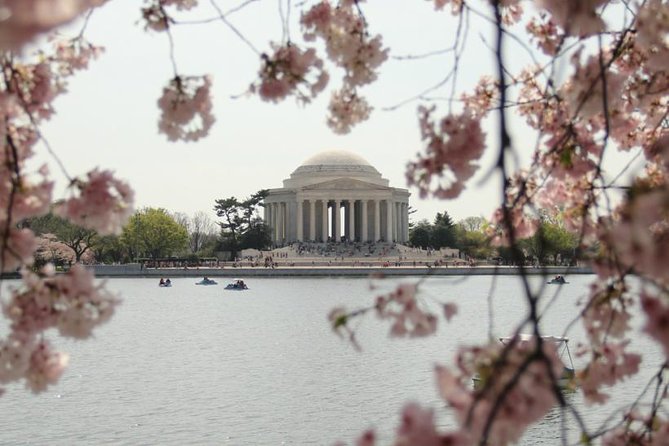
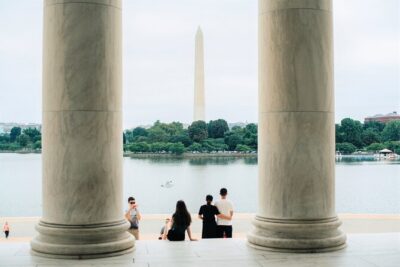
You begin at the Jefferson Memorial, starting with a look from afar and then getting the chance to see it up close. This is a smart first move because it teaches you how the memorials sit in the landscape—how the design frames the water and the wider axis lines you’ll keep seeing all day.
Next comes the White House with a short viewing window that can be a distance look, a closer look, or a bit of both depending on your timing and what’s happening around you. The value here isn’t only the icon. It’s that your guide can point out relationships between nearby buildings, routes, and the way the Mall’s layout shapes sightlines.
Then you pass the U.S. Department of the Treasury and its Alexander Hamilton statue. That brief stop helps anchor American finance and founding-era storytelling right into the center of the route, so the memorials don’t feel like random stops.
You’ll also spend time on the Washington Monument, where you get both practical discussion about the site and history tied to what you’re seeing. This early set of stops works like an orientation class, just outside.
National Mall stops that layer in real context (Treasury, Bureau, and Smithsonian)

After the early monuments, the tour keeps feeding you context while you move between major landmarks. Around the mid-Mall area, you’ll get exterior views and commentary related to institutions like the Bureau of Engraving and Printing and the National Museum of African American History and Culture (viewed as you pass and/or from outside, depending on timing). The goal is to help you understand what each place represents, not to rush you through galleries.
You’ll also pass or view the Department of Commerce area, and you’ll get a look that includes the Holocaust Memorial Museum pointed out along the route. These are good moments for your guide to connect themes: founding ideals, government structures, and the way Washington preserves memory.
A unique piece of DC “texture” shows up here too: the tour includes a stop for the InterContinental the Willard Washington D.C. by IHG, described as the oldest hotel in Washington DC. That kind of detail sounds minor, but it helps you understand the city as a living place—where decisions and history overlap with everyday architecture.
Memorials with a story behind the stone (Sherman, Mason, and the Declaration)

Once you get your bearings, you move into memorials that feel more personal. You’ll see the Three Servicemen statue with a quick from-far look and then a chance to see it up close. That stop is short, but it’s exactly the kind of moment that makes the tour more than a sightseeing checklist.
Next is the William Tecumseh Sherman Monument, where you’ll view it and hear a bit about Sherman as a figure in U.S. history. Then you move to the George Mason Memorial, framed as George Mason, the forgotten founder. This is a helpful switch from the usual biggest-names-only narrative. You’re still seeing a monument, but you’re learning why it matters.
Later, you’ll also reach the 56 Signers of the Declaration of Independence Memorial. Like the other memorials, you get a brief look from afar and then an up-close viewing window. It’s a strong pairing after earlier White House and Treasury stops because it brings the founding story into focus in a visual, walkable form.
And as the day continues, you also pass major named landmarks and institutions tied to American history and documents, which makes the route feel linked rather than random.



The Tidal Basin stretch: MLK, Korean War Veterans, Einstein, and FDR

One of the best parts of the National Mall is the way the memorials cluster in concept and theme. This tour hits the cluster along the Tidal Basin area with several key stops that share space and atmosphere.
You’ll see the Martin Luther King, Jr. Memorial, including a from-far look and an up-close viewing moment. Then it continues to the Korean War Veterans Memorial, with similar pacing: quick, clear, and designed to give you time to notice key design elements.
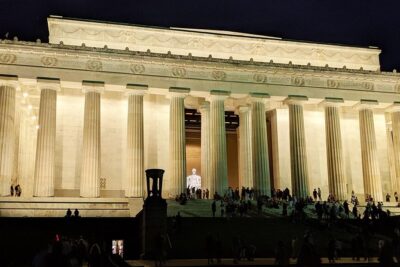
You’ll then head to the Lincoln Memorial and the Vietnam Veterans Memorial. These are two of the most photographed sites in DC, and having a guide here helps you avoid the trap of treating them like backdrops. Your stops are short by design, but the commentary can help you read what you’re seeing.
Next is the Albert Einstein Memorial, where you can climb on the statue. There’s also a well-known lore that touching Einstein’s nose can make you smarter. Even if you treat that as playful, it gives the stop a different feel than the purely solemn memorials around it.
You’ll also hear narration about the Tidal Basin itself, then you move into the Franklin Delano Roosevelt Memorial for a view from the outside.
World War II and Vietnam to the Navy and beyond
After the Tidal Basin cluster, the tour continues with war memorial themes that make the day feel cohesive. You’ll reach the National World War II Memorial, with time both for a from-far look and a chance to see it up close.
Then you pass the John Paul Jones Memorial for a from-far viewing window and get a pointer about the oldest house on the National Mall as you go by. That’s a nice break in tone: you’re not only looking at marble and bronze, you’re seeing how the area once looked before it became a monument corridor.
You also get a broader look toward the U.S. Navy Memorial and Naval Heritage Center, with commentary tied to its mission to honor and recognize service. After that, the tour brings in the Newseum as a stop on the route (described as an interactive museum experience focused on the stories of news and First Amendment freedoms).
Other military and civic landmarks show up as shorter passes or brief stops, including a memorial honoring George Meade and a look at a major national art museum. The pacing stays consistent: view, learn, photograph, and move.
Capitol-area landmarks: Peace Monument, Congress views, Grant, and Garfield
The tour widens toward the Capitol area in a way that feels logical after the National Mall. You’ll see the Peace Monument, also known as the Naval Monument or Civil War Sailors Monument, on the grounds of the United States Capitol in Peace Circle.
Then you get a look at the United States Congress and the legislative branch as the route passes through the West Side. This helps tie the memorials back to where national decisions get made.
You’ll also visit the Ulysses S. Grant Memorial, described with sculptural details like bronze reliefs of infantry and bronze representations of Union cavalry and artillery. Nearby, you’ll also see a sculptural monument to President James A. Garfield.
You’ll then get views of the United States Botanic Garden on the Capitol grounds. Toward the end, the tour includes brief glimpses of museums as you pass, each with a quick description. Even when it’s fast, that kind of narration helps you connect what you see to what each building does.
Using your guide time well: photos, weather gear, and smart breaks
What makes this experience feel smooth is how the guide manages the flow. In practice, a big difference is whether you can pause for photos without turning the day into a scramble. The pacing here supports that.
One detail that really matters: you can store water bottles and bags when you want to step down longer at a particular stop. That’s not glamorous, but it’s the kind of practical touch that keeps you from carrying everything all day.
Weather can also change fast in DC, and the tour is run outdoors. In colder or rainy conditions, a guide may add a rain cover to keep things comfortable. You should still dress for it, but the tour setup isn’t helpless when the sky changes.
Finally, keep an eye out for special viewing moments. One standout example from past tours is that a guide can sometimes provide access to a rooftop view near the White House for an extra perspective. It’s not something you should plan your entire day around, but it shows that the guide’s goal is more than just driving you past monuments.
Price and value for a private group of up to three
The price is $997 per group for up to three people. That’s steep if you’re comparing it to bus tours, but it’s easier to judge if you break it down by group size.
- For three people, it works out to about $332 per person.
- For two people, it’s about $499 per person.
- For a solo traveler, the cost is not framed as per-person pricing in the data, so the value depends on whether you want private pacing badly enough.
Where the value really comes from is control. You’re buying time-efficient sightseeing plus a guide who explains what you’re seeing in short, usable chunks. You’re also buying comfort: pedicab transport, bag storage, and the chance to adjust at the monuments where you personally want more time.
If your goal is to see a lot of DC landmarks with less walking, less confusion, and more context, the private format starts to make sense quickly.
Who should book this Extended Monuments and Memorials Tour
This tour makes the most sense if you want:
- A structured National Mall-focused day without spending hours planning stops
- A comfortable way to cover ground (especially if walking distance is a concern)
- A guide who can turn monuments into understandable stories fast
It can also be a strong pick for families and multi-generation groups because the pacing supports quick check-ins rather than long, exhausting stretches.
If you’re the type who wants a deep, slow museum day with long gallery time, you’ll probably want an add-on for museums on a separate day. This one is about the monument corridor and the key landmarks that define DC’s biggest themes.
Should you book it? My straight answer
Yes, I’d book it if you want a half-day DC plan that’s comfortable, flexible at the stops, and guided in a way that helps you actually understand what you’re looking at. The biggest payoff is that you can see a lot of sites without wearing yourself out, and you’re not stuck staring at monuments with no explanation.
If you’re traveling in rough weather, you should dress for cold or rain and treat the day as weather-dependent in practice. If you’re coming for long museum deep dives, keep expectations on the “quick view + guide context” side of the spectrum.
Bottom line: for first-time visitors, time-limited trips, and groups who want to reduce walking while maximizing understanding, this is a solid use of your day.
FAQ
How long is the Extended Monuments & Memorials Tour?
It runs about 4 hours 45 minutes.
What’s the group size and how much does it cost?
The price is $997.00 per group, up to 3 people.
Do you pick up from hotels and restaurants?
Yes. Pickup is offered at most museums, many downtown restaurants, and most other attractions generally within a mile of the White House. Hotels not listed are also included if they’re generally within a mile of the White House.
Is the tour private?
Yes. It’s a private tour/activity, and only your group participates.
What language is the tour offered in?
It’s offered in English.
Is the tour mostly outdoors?
The experience is built around viewing monuments and memorials and riding by pedicab, with short viewing windows at many stops, so yes, you should expect a lot of outdoor time.
Do I need admission tickets for the stops?
The provided stop details list admission ticket as free for the locations mentioned.
What’s the weather requirement?
The experience requires good weather. If it’s canceled due to poor weather, you’ll be offered a different date or a full refund.
Are mobile tickets used?
Yes. Mobile tickets are offered.