REVIEW · WASHINGTON DC
Public or Private DC Moonlight Tour by E-Cart or Vintage Car
Book on Viator →Operated by DC Monuments Tour · Bookable on Viator
Night lights make DC feel like cinema.
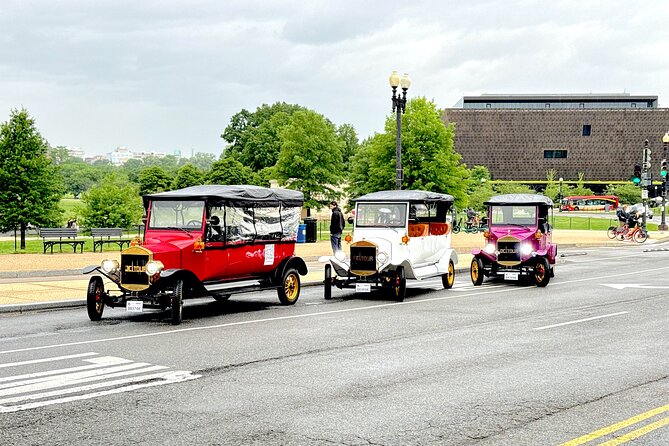
This 2-hour moonlight tour uses a vintage Model T-style ride or an electric cart to link major landmarks without turning your feet into sandpaper. I like the close-up photo time you get at stops (not just slow driving past everything), and I also like that you can ask your guide anything as you roll. One possible drawback: it runs best with good weather, and a few stops are brief, so you may want a separate daytime visit if you’re the type who reads every plaque.
You can choose a public group tour or reserve a private ride during checkout, and you can do it by night for the monument glow or by day if you want daylight photos. The meeting point is 515 15th St NW, and the tour ends back there, so you’re not stuck wandering DC afterward.
In This Review
- Key highlights you’ll actually care about
- Moonlight views without the mile-by-mile slog
- Price and value: why $53.10 can make sense
- The 2-hour plan: how a “short stop” tour stays fun
- Capitol Hill close-up from an open-side classic luxury car
- Washington Monument: a quick hit with big visual impact
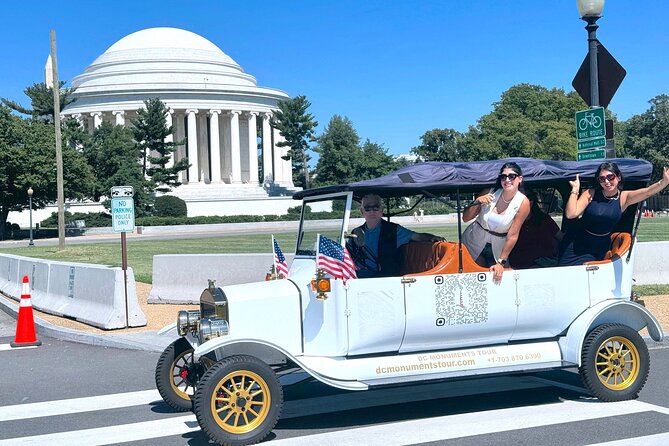
- Jefferson Memorial at the Tidal Basin: cherry-blossom scenery time
- The Franklin-era style memorial with four outdoor story spaces
- Martin Luther King, Jr. Memorial: hope and courage in stone
- Lincoln Memorial: National Mall views and a unity-focused stop
- White House viewing and what you can learn in 10 minutes
- The extra big-name stops: WWII, World War I, Natural History, and African American history
- Guides, comfort touches, and why night can feel easy
- Public vs private: which option fits your group
- Who should book this moonlight car tour?
- Should you book the DC Moonlight Tour by vintage car?
- FAQ
- How long is the DC moonlight tour?
- Is this tour public or private?
- What is included in the price?
- Are admission tickets included for all stops?
- Is the tour offered during the day as well as at night?
- Can I cancel for a full refund?
Key highlights you’ll actually care about
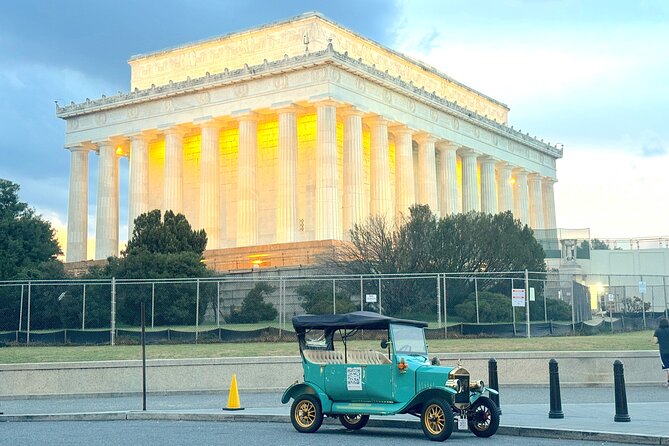
- Vintage-car comfort at monument speed: You cover more ground than walking, with a classic ride feel.
- Stop-and-explore timing: Each main stop includes time to get out, look around, and take photos.
- Public or private options: Go as a group or keep it just your party.
- Guides who answer your questions: The best moments are the story-and-context explanations.
- Cold-weather upgrades: Many rides include lap blankets, and some guides handle rain by adjusting the car setup.
- Nighttime views: Monuments look different after dark, with fewer daytime crowds.
Moonlight views without the mile-by-mile slog
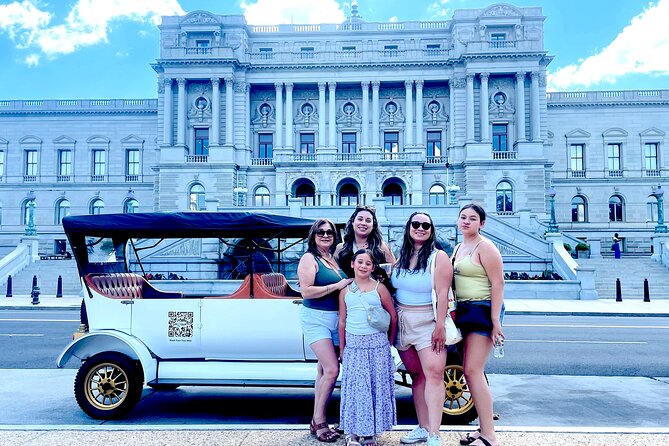
If you’re visiting DC for the first time, the hardest part is not seeing monuments. It’s fitting them into your schedule without losing an entire day to traffic lights and long walks. This tour is built for your sanity: you ride between sites, then you get short, workable windows to look up close and take photos.
The moonlight version also changes the mood. In daylight, DC can feel like a checklist. At night, the same buildings feel warmer and more dramatic, especially with the lighting bouncing off stone and glass.
You can also read our reviews of more private tours in Washington DC



Price and value: why $53.10 can make sense
At $53.10 per person, this isn’t the cheapest way to see DC. But value is about time saved and comfort gained, not just ticket math. In two hours, you hit several of the biggest names around the National Mall area, and you spend your energy on photos and photos-only moments, not on marching between distant stops.
You also get a guide. That matters because the ride isn’t just about where things are. It’s about why they’re there, and what each monument is trying to communicate. Reviews repeatedly highlight that guides keep it engaging, and that’s exactly what you want when you’re short on time.
One more value angle: you can pick day or night-time at checkout. If night is too cold for you, you can switch to a daytime option and still use the same “ride, stop, explore” approach.
The 2-hour plan: how a “short stop” tour stays fun
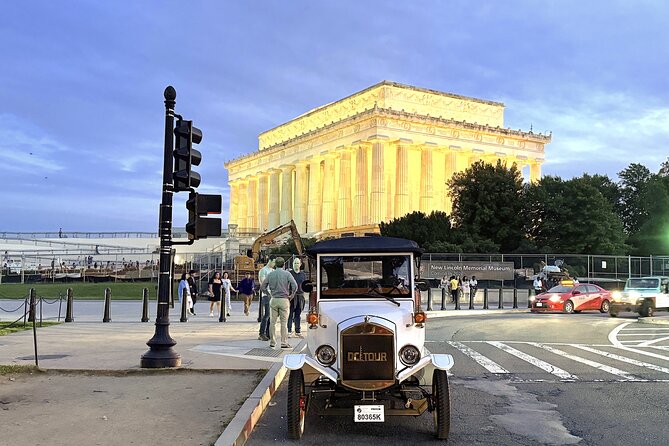
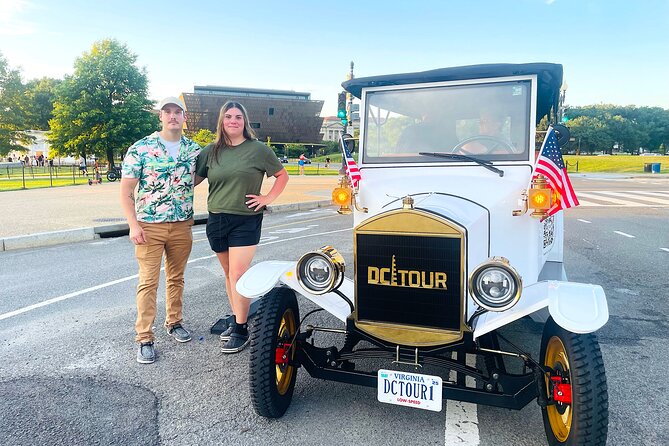
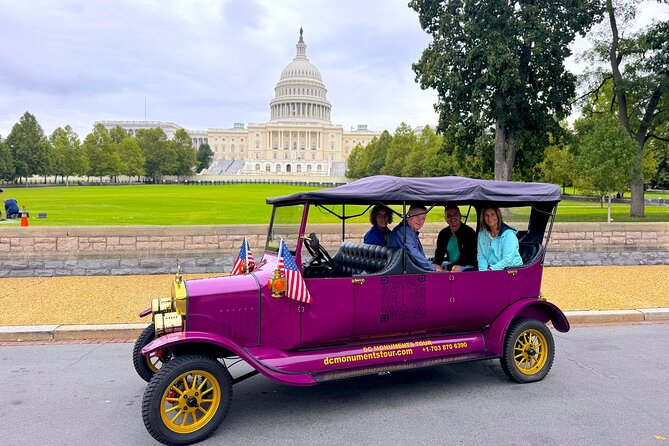
This experience is built around a simple rhythm. You roll past major sights, then you stop long enough to do three things: look closely, take pictures, and ask questions. The ride itself is part of the fun, because it’s not a dark shuttle bus experience. You’re in a luxury Model T replica or similar cart, often with open-sided views.
In practice, those stop times are what keep the tour from dragging. For example, Capitol Hill and the Jefferson Memorial get 15 minutes, while the Washington Monument is 5 minutes. So you’ll get real time where it counts, and quick photo-and-look moments where the design is more about viewing than lingering.
If you’re the type who wants to read every detail at every site, then yes, you’ll still need a separate self-guided day. But if your goal is to get your bearings fast and see the biggest landmarks in one go, this hits the mark.
Capitol Hill close-up from an open-side classic luxury car
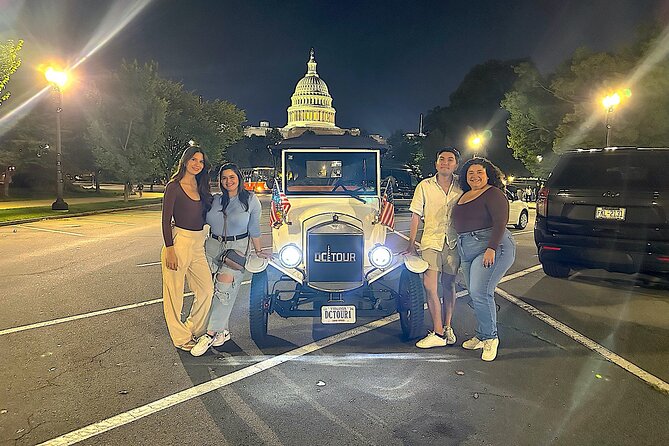
Stop 1 is Capitol Hill, with about 15 minutes to enjoy the view. The ride is described as a classic luxury car with open sides, which is a huge difference from a standard bus window view. You’re positioned for a near-straight-on look at the Capitol Building, so your photos don’t feel like distant dots on the skyline.
Your guide also uses this stop to set context. In a private tour, they share facts and background tied to why the Capitol matters, not just what it looks like. I like this kind of start because it makes the rest of the tour feel connected, instead of like unrelated “big buildings.”
Admission is listed as free for this stop, and the time is long enough that you can step out, look around, and still keep moving without feeling rushed.
Washington Monument: a quick hit with big visual impact
Next is the Washington Monument, with about 5 minutes. This is one of those places where you don’t need long time to appreciate it, because it’s bold and unmistakable. The monument’s obelisk shape symbolizes the American spirit, and it honors the nation’s first president.
The note here is practical: admission is not included for this stop. That doesn’t mean you can’t see it clearly from the outside. It just means this is an exterior and photo moment more than a ticketed attraction.
With only a few minutes, plan for one or two focused photo angles and then move on. Think of it as a visual punctuation mark in the route.




Jefferson Memorial at the Tidal Basin: cherry-blossom scenery time
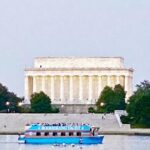
Stop 3 is the Thomas Jefferson Memorial at the Tidal Basin, scheduled for about 15 minutes. This is a strong stop choice because the memorial connects to the scenery around it. The Tidal Basin is especially known for cherry blossoms, so even when blossoms aren’t in peak season, the setting gives you a calmer, scenic feel.
You’ll get time to learn about Jefferson and take in views across the basin. The tour description also points to the basin’s past connection to shorelines and beach history, which helps the area feel less like a postcard backdrop and more like a place with layers.
Admission is listed as free here. The practical takeaway: use this 15 minutes for photos that include the waterline or surrounding landscaping, not only the memorial itself.
The Franklin-era style memorial with four outdoor story spaces
Between Jefferson and Martin Luther King, Jr., the route includes a memorial laid out in four beautiful outdoor spaces. The theme is the journey of a president who guided America through its darkest times, with a focus on hope and resilience across his four terms.
Even without getting a long lecture, this kind of layout is designed for walking and stopping to absorb scenes. That makes it a good middle stop in a 2-hour tour, because it shifts you from “big-name landmark viewing” to “story space immersion,” even if it’s brief.
Because the exact stop time isn’t listed, I’d treat this as a “watch your footing, take a few key photos, then enjoy the mood” stop rather than a full-length attraction.
Martin Luther King, Jr. Memorial: hope and courage in stone
Stop 4 is the Martin Luther King, Jr. Memorial, with about 10 minutes. You’re visiting a tribute that’s described as a giant statue made from stone, symbolizing hope and courage.
Ten minutes won’t make this a deep museum visit. But it’s enough time for two things: to see the monument’s scale, and to get the guide’s interpretation while you’re standing there. This is also the kind of stop that benefits from questions. If you ask about symbolism and meaning, your guide can help translate what you’re looking at into words.
Admission is listed as free, which helps you spend your time on the experience rather than ticket logistics.
Lincoln Memorial: National Mall views and a unity-focused stop
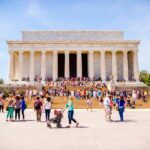
Then comes Lincoln Memorial, scheduled for 15 minutes. This is one of the best “outside landmark” moments in DC because the view stretches over the National Mall, giving you instant scale and context.
The tour description emphasizes paying tribute to Lincoln and sitting where many others have sat, then listening as guides share how his vision of unity helped shape the nation. I like that framing because it reminds you that this isn’t just a photo stop. It’s also a place designed for reflection.
Use this stop time strategically:
- Take your hero photo with the memorial and the Mall in the frame.
- If the crowd level allows it, grab one angle from slightly off-center for a different perspective.
- Ask your guide a question about what Lincoln’s message meant during the era the tour references.
Admission is free here too, and that makes the time feel even more worthwhile.
White House viewing and what you can learn in 10 minutes
Stop 6 is the White House, with about 10 minutes. Admission is listed as not included, so this is an exterior viewing and storytelling stop.
The tour notes a few timeline details that are handy if you like anchoring facts:
- George Washington selected the site in 1791, but he never lived inside the White House.
- It was designed by an Irish architect and completed in 1800.
- Presidents since then have lived there during their presidency.
- The president’s house survived attacks, near condemning, a second fire, and an effort to build a rival White House.
That’s a lot to process in ten minutes, but it’s exactly the kind of quick overview that makes the White House feel less abstract. Instead of a building you pass in a car, it becomes a place with a history you can actually point to.
In practical terms, keep your expectations aligned. You won’t get an interior visit here. But you will leave with a clearer picture of how the building and its site evolved.
The extra big-name stops: WWII, World War I, Natural History, and African American history
The tour also includes several major places on the broader National Mall circuit, described as notable outdoor spaces and museum highlights. The time for these items isn’t specified in the same way as the earlier stops, so think of them as “on the route” moments where you get to see and photograph, with your guide adding context.
Based on the tour info, expect to encounter these themes:
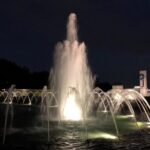
- A World War II memorial centered on service, sacrifice, unity, and victory through stone architecture and bronze statues.
- A Great War memorial honoring service and sacrifice from 4.7 million Americans.
- The world’s most popular natural history museum, dedicated to understanding the natural world and humanity’s place in it, spanning billions of years of transformation.
- The National Museum of African American History and Culture, described as the only national museum devoted exclusively to African American life, history, and culture, established by an Act of Congress in 2003.
If you want more than quick looks, this is where your “tour + self-guided time” strategy pays off. Use the moonlight ride to get oriented, then plan separate museum time based on what you actually care about most.
Guides, comfort touches, and why night can feel easy
The biggest recurring theme in the experience is how guides run the vibe. Several guide names come up in recent outings, including Paul, Lawrence, Maurice, and Vernon. The stories attached to those names point to the same thing: guides make the ride feel personal, fun, and focused on the questions people ask.
Night riding adds comfort needs. In cold weather, reviews specifically call out lap blankets as a major help, plus plastic sides being put up when needed. If it’s winter during your visit, bring warm layers and expect your face to get the cold first.
Also, pick your ideal time of day. One review notes it can be better to do the tour morning or afternoon, mainly because sunsets happen earlier in winter. That doesn’t mean night tours are bad. It just means you should dress for the temperature you’ll actually face.
Finally, don’t underestimate how much you’ll benefit from asking questions. The tour is structured so you can do it without feeling like you’re slowing anyone down.
Public vs private: which option fits your group
You can choose between a public group tour and a private tour. A private tour is described as only your group participating, which is great if you want less social noise and more time for tailored questions.
If you’re traveling with kids, a group ride can still work well because the car format is fun and the route hits key sights efficiently. For couples, a private tour can reduce waiting and make it easier to snap photos without maneuvering around strangers.
If you’re flexible and budget-minded, the public option often gives you the same core value: landmarks, short exploration windows, and a guide.
Who should book this moonlight car tour?
This works best if you:
- Want to see the National Mall highlights in about two hours
- Prefer riding in comfort instead of walking long stretches
- Want a guide to add meaning to what you’re seeing
- Are visiting for a quick trip and want your bearings fast
It’s less ideal if you’re looking for a museum day. The tour includes museum-related stops on the route, but this is not the kind of experience where you park yourself inside for hours.
If you’re traveling in winter or shoulder season, go for it, but treat warmth like a packing priority. The blankets help, but they don’t replace a real coat.
Should you book the DC Moonlight Tour by vintage car?
I think you should book it if your main goal is to see DC’s big landmarks without losing a full day. For the price, you’re buying convenience, timing, and a guide-led story line, not just transportation.
One smart move: schedule this early in your trip. You’ll leave with a mental map, better photo angles, and a clearer sense of which stops you want to revisit later at a slower pace.
If you hate cold weather and winter evenings aren’t your thing, consider the day-time option instead. You still get the “ride, stop, explore” format, and you’ll feel less rushed by early sunsets.
If you want, tell me when you’re going (month and time of day) and whether you prefer public or private. I can help you pick the best version for your exact trip.
FAQ
How long is the DC moonlight tour?
The tour lasts about 2 hours.
Is this tour public or private?
It’s offered as both. You can choose a public group tour or reserve a private tour during checkout.
What is included in the price?
The price includes a 2-hour city tour of Washington DC by a luxury Model T replica or electric cart. Day or night options are available, and you’ll have time at each stop to explore.
Are admission tickets included for all stops?
No. Some stops are listed as free (like Capitol Hill, the Jefferson Memorial, the Martin Luther King, Jr. Memorial, and the Lincoln Memorial), while others note admission is not included (like the Washington Monument and the White House).
Is the tour offered during the day as well as at night?
Yes. Day or night-time tour options are available at checkout.
Can I cancel for a full refund?
Yes. You can cancel up to 24 hours in advance for a full refund. If you cancel less than 24 hours before the start time, the amount paid is not refunded.