REVIEW · WASHINGTON DC
Socialites and Spies of Georgetown Walking Tour
Book on Viator →Operated by Off the Mall Tours · Bookable on Viator
Pretty Georgetown streets hide hard power stories. This walking tour strings together the social set and the spy world, using the actual Georgetown houses and landmark stops tied to 1950s through Cold War-era decision making. I love how it spotlights women who shaped American politics, not just the men in the spotlight. I also love the way guide Katie Kirkpatrick brings the characters to life with period-matched details, photos, and a very engaging style.
One thing to consider: you’re mostly looking at homes and neighborhood landmarks from the outside. If you want lots of indoor museum time, this is more sidewalk-and-street-story than ticketed exhibit. It’s also about 2 hours of walking in outdoors conditions, so plan for good weather and comfortable shoes.
In This Review
- Key things worth knowing before you go
- A Georgetown Tour That Connects Fashionable Power to Secret Work
- Price, Timing, and Group Size: Getting Value for $30
- Starting at Thomas Sweet and Ending near Oak Hill Cemetery
- Stop 1: The Wisner Sunday Night Supper Clubs at 3327 P St NW
- Stop 2: Mary Pinchot Meyer at 1523 34th St NW
- Stop 3: Evangeline and Ambassador David Bruce at 1405 34th St NW
- Martin’s Tavern on the Route: JFK, Press, and Albright
- The Kennedy Senator-Era House in Georgetown
- Stop 5: Pamela and Averell Harriman at 3014 N St NW
- Stop 6: Ann Caracristi, Cold War Codebreaking at 1222 28th St NW
- Who This Tour Fits Best (and Who Might Prefer Something Else)
- Should You Book Socialites and Spies of Georgetown?
- FAQ
- How long is the Socialites and Spies of Georgetown Walking Tour?
- How much does the tour cost?
- What language is the tour offered in?
- Where does the tour start and end?
- What happens at the end near Oak Hill Cemetery?
- Does the tour include stops for breaks?
- Is there a fitness requirement?
- Are service animals allowed?
- Is the tour dependent on weather?
Key things worth knowing before you go
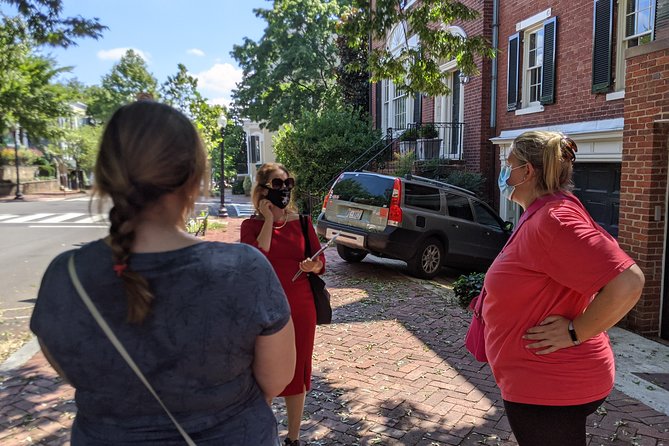
- You’ll walk a tight route through real Georgetown addresses tied to power
- The tour centers women behind policy, diplomacy, fundraising, and intelligence work
- Katie Kirkpatrick’s delivery is entertaining, inclusive, and story-driven
- You’ll see places connected to JFK and Jackie, plus figures like Mary Pinchot Meyer and Ann Caracristi
- It’s small, with a maximum of 20 people, so the guide can keep attention and pacing
- It ends near Oak Hill Cemetery, and you can enter after the tour
A Georgetown Tour That Connects Fashionable Power to Secret Work
Georgetown looks like it was built for wandering. The brick, the hill-and-street angles, the old-school residential feel—easy to romanticize. This tour keeps that charm, but it also adds sharp edges. It links social life, politics, and intelligence work through the people who lived nearby.
What I like is the framing. You’re not just learning dates. You’re learning how power actually moved: through dinner-table talk, embassy social polish, personal relationships, and covert information streams. The stops are small, but the stories are big.
The guide’s style matters here. In the best moments, Katie Kirkpatrick doesn’t just tell you who someone was. She helps you picture how they fit into the era, often with photos and period-appropriate touches. That makes the neighborhood feel like a living document instead of a brochure.
You can also read our reviews of more walking tours in Washington DC

Price, Timing, and Group Size: Getting Value for $30
At $30 per person for about 2 hours, this is strong value for a walking tour. You’re paying for interpretation and direction—where to stand, what to notice, and how each location connects to the broader political picture.
The other value piece: admission tickets at the stops are free. You’re not buying museum entry fees on top of the tour price. And because the group is capped at 20, the pace is usually manageable and it doesn’t turn into a slow shuffle behind a guide.
The main tradeoff is time and comfort. This is a moderate-fitness-friendly walk, but it’s still a walking tour. If you’re hoping for lots of sitting, plan for frequent stops and bring a little patience for outdoor conditions.
Starting at Thomas Sweet and Ending near Oak Hill Cemetery
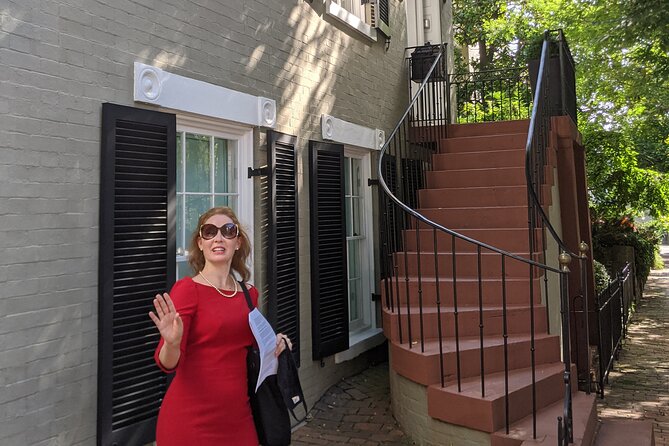
The tour starts at Thomas Sweet, 3214 P St NW in Washington, DC. It ends at 1222 28th St NW. That ending is across the street from Oak Hill Cemetery, and the tour allows you to enter the cemetery after the walk.
That end detail is more useful than it sounds. It gives you a natural “after” option instead of forcing everyone to scatter. If you like tying your history stops together, Oak Hill is an easy add-on.
Also keep in mind the tour uses a mobile ticket and is offered in English. The experience is near public transportation, which helps if you’re not starting your day by foot in Georgetown.
The route includes a cafe break for a bathroom stop. Snacks aren’t included, but you can buy water or other refreshments there.
Stop 1: The Wisner Sunday Night Supper Clubs at 3327 P St NW
Your first stop is at 3327 P St NW, the former house of Polly and Frank Wisner. This is where the tour sets its theme: social gatherings that doubled as political infrastructure.
The big idea here is the Sunday Night Supper Clubs. In the 1950s through the 1970s, these gatherings became a behind-the-scenes stage for policy making. That’s a powerful reminder that political work is often built in unofficial spaces, with informal conversation doing the heavy lifting.
From a traveler perspective, this stop works because it trains your eye. You’re not just hearing that politics happens. You’re standing in a neighborhood where people once hosted conversations that shaped outcomes. The time here is short—about 10 minutes—but it’s a strong kickoff because it explains the “how” behind the stories.
Stop 2: Mary Pinchot Meyer at 1523 34th St NW
At 1523 34th St NW, you’ll meet Mary Pinchot Meyer through the lens of tragedy and controversy. She was an artist and a bohemian figure, and the tour connects her to JFK as well.
The story turns dark at the end: she was brutally murdered on the C&O Canal, and her killer remains a mystery. That uncertainty matters, because it keeps the location from feeling like a neat “solved” chapter in history. It’s a reminder that some stories don’t wrap up cleanly.
This is one of those stops where you’ll benefit from the guide’s pacing. The marker is simple, but the context is emotional and complicated. If you’re the type who likes your tours balanced—fact with real human stakes—this is a good fit.
One practical note: the stop is only about 10 minutes, so if you want extra details, you’ll have to catch them during conversation rather than expecting a long scene.




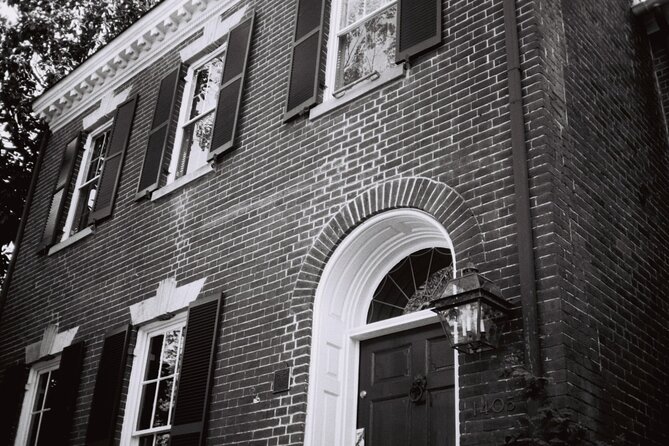
Stop 3: Evangeline and Ambassador David Bruce at 1405 34th St NW
Next you move to 1405 34th St NW, the former residence of Evangeline and Ambassador David Bruce. On the tour, she’s referred to as Vangie Bruce, described as the face of the embassy during critical Cold War postings.
This stop shifts the focus from intrigue and tragedy into diplomacy and public presence. It’s a useful angle because embassy life isn’t only about official meetings. It’s about relationships, impressions, and the social machinery that supports statecraft.
I like how the tour frames her role without making it vague. It emphasizes that Vangie Bruce wasn’t just a background figure; she served as a public-facing anchor in the most high-stakes environments.
Again, it’s around 10 minutes, so think of it as a concentrated snapshot. You get the point, and then you’re moving.
Martin’s Tavern on the Route: JFK, Press, and Albright
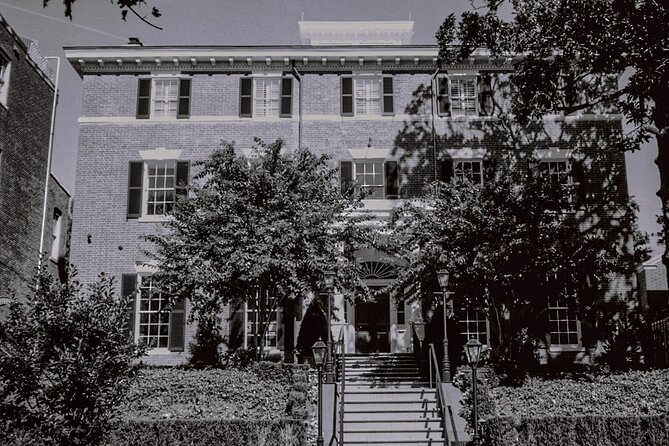
Martin’s Tavern is the neighborhood “watering hole” stop, and it’s where the tour leans into cultural memory. This is where JFK proposed to Jackie, where Bob Woodward came to get the latest story, and where Madeleine Albright still shows up occasionally.
Even if you already know the headline moments, the tour’s approach adds value by connecting journalism, politics, and celebrity social life to the same small space. It’s also a good contrast to the house stops. Houses feel private. Taverns feel public. Both matter.
This stop is about 5 minutes, but it lands because the facts are concrete and easy to picture. It also helps you mentally map the era: who gathered, why people gathered, and how information moved in the room.
If you’re a fan of American political lore, you’ll likely enjoy this one the most. If you prefer quiet reflection, the tavern stop is brief enough that it won’t overwhelm the route.
The Kennedy Senator-Era House in Georgetown
There’s also a stop at the house where John and Jackie Kennedy lived while JFK was a senator. No address is provided in the tour details, but the point is clear: this is a Georgetown home tied to their early political life, before the presidency.
What makes this stop useful is the “before” factor. It adds context to how famous people start small. You’re seeing the stepping stones, not only the end result.
This is also where the walking format shines. A landmark tour can feel like a checklist. Here, the sequence matters: supper clubs, personal tragedy, diplomacy, tavern life, then a Kennedy-era home. It’s building a timeline right in front of you.
Expect a short stop. The goal isn’t to linger; it’s to connect the dots.
Stop 5: Pamela and Averell Harriman at 3014 N St NW
At 3014 N St NW, you’ll visit the former residence of Pamela and Averell Harriman. Pamela is described with a striking nickname: the Greatest Courtesan of the Century. The tour also credits her with fundraising Bill Clinton all the way to the Presidency.
This is a fascinating angle for a walking tour because it forces you to rethink what counts as political influence. Influence doesn’t always look like a press conference or a cabinet meeting. Sometimes it’s social access, fundraising relationships, and the ability to open doors.
It’s also a stop that can spark debate in a good way. The tour presents the story clearly, and then it invites you to sit with the implications: who gets recognized in history books, and who does the behind-the-scenes work that makes others possible.
At around 10 minutes, you won’t get every side of the story in full detail, but you’ll leave with a strong thread to follow if you want to read more afterward.
Stop 6: Ann Caracristi, Cold War Codebreaking at 1222 28th St NW
Your final stop is at 1222 28th St NW, the former home of Ann Caracristi, one of DC’s famous Cold War-era codebreakers. This ending transforms the tour theme into something practical and suspenseful: the idea that power can be hidden in plain sight, coded into signals and solved with brains.
As a travel experience, it works well to finish here. Earlier stops show social influence and diplomatic presence. This one grounds the tour in intelligence work—secret labor that was essential to the era’s outcomes.
Because this is also the tour’s end point, it’s the right moment for reflection. You start with supper clubs, move through scandal and diplomacy, hit the tavern, connect to the Kennedys, trace fundraising influence, and then end with codebreaking.
If you’ve been thinking that Georgetown is only pretty storefronts, this stop is a firm correction.
Who This Tour Fits Best (and Who Might Prefer Something Else)
This tour is a great match if you like three things: neighborhood walking, political history, and women-led stories that don’t feel like an afterthought. It’s especially appealing for people who want DC beyond the Mall crowd. You get a Georgetown-focused perspective instead of the same national-poster narrative.
It also fits well if you value an engaging guide. Katie Kirkpatrick’s style is repeatedly described as fun, entertaining, inclusive, and well researched. People also mention the care she takes with photos and period-appropriate presentation, which helps the stories click fast.
Who might hesitate? If you need a lot of indoor stops, or if you struggle with moderate walking, you may find the outdoor format limiting. It’s also dependent on good weather, so cloudy and rainy days could mean rescheduling.
Should You Book Socialites and Spies of Georgetown?
I’d book this tour if you want a DC experience that mixes real addresses with a story angle. For $30, you’re getting a guided route through major Georgetown landmarks tied to politics, diplomacy, journalism, fundraising, and intelligence. The “free admission at stops” piece keeps the cost straightforward.
I’d skip or swap to a different tour if you want museum-style exhibits or you dislike sidewalk viewing. This is a neighborhood-story tour, not an indoor archive.
If you can handle a couple hours of walking and you’re curious about how power really works—through relationships, social spaces, and coded information—this is a smart use of time in Georgetown. It ends near Oak Hill Cemetery too, which gives you a clean, satisfying follow-up after the tour.
FAQ
How long is the Socialites and Spies of Georgetown Walking Tour?
It runs for about 2 hours.
How much does the tour cost?
The price is $30.00 per person.
What language is the tour offered in?
The tour is offered in English.
Where does the tour start and end?
It starts at Thomas Sweet, 3214 P St NW, Washington, DC 20007 and ends at 1222 28th St NW, Washington, DC 20007.
What happens at the end near Oak Hill Cemetery?
The tour ends across the street from Oak Hill Cemetery, and participants are welcome to enter the cemetery after the tour.
Does the tour include stops for breaks?
There is a cafe stop for a bathroom break, and you can buy water or other refreshments there.
Is there a fitness requirement?
The tour is listed as suitable for travelers with moderate physical fitness level.
Are service animals allowed?
Yes, service animals are allowed.
Is the tour dependent on weather?
Yes, it requires good weather. If it’s canceled due to poor weather, you’ll be offered a different date or a full refund.