REVIEW · WASHINGTON DC
The “Madams of DC” Guided Walking Tour
Book on Viator →Operated by Off the Mall Tours · Bookable on Viator
Every city has a side street.
Madams of DC shines a light on the capital’s forgotten red-light world, told while you walk major landmarks that now look totally normal. I especially like how this tour mixes Civil War-era detail with real DC landmarks, and I also like that the guide is story-first, not just a slideshow of monuments. One consideration: the subject matter is adult and sometimes blunt, and you’ll need to be on your feet for about two hours.
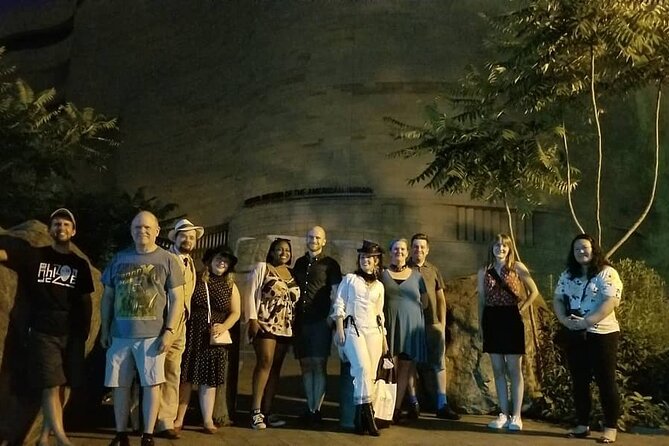
Off the Mall Tours runs this with a small group size (up to 20), which makes it easier to ask questions and keep the pace comfortable. I also appreciate the practical planning: it’s an evening start at 7:00 pm, uses a mobile ticket, and ends near the Smithsonian/Federal Center Metro area for an easy hop to dinner or your hotel. The one drawback I’d flag is logistics—if your booking comes through a third-party platform, it’s smart to have your confirmation ready in case names aren’t correctly transferred to the list.
In This Review
- Key things to know before you go
- Why this evening walk beats the usual DC monument tour
- Price and what $30 actually buys
- Timing, walking pace, and shoes you’ll thank yourself for
- The route from Freedom Plaza to the National Museum of the American Indian
- Stop 0: Freedom Plaza, where Murder Bay used to be
- Stop 1: The Waldorf Astoria area and the old 11th Street red-light strip
- Stop 2: National Archives Museum area and Civil War DC’s market life
- Stop 3: Hill Country BBQ drink break by the IOOF Temple
- Stop 4: National Gallery of Art and Marble Alley’s rival Madams
- Stop 5: The National Museum of the American Indian and the Civil War-era pleasure house
- The guide: where the story quality really shows
- Who this tour is for (and who should skip it)
- Practical tips to get the most from the experience
- Should you book Madams of DC?
- FAQ
- How long is the Madams of DC guided walking tour?
- How much does the tour cost?
- Where does the tour start and what time does it begin?
- Where does the tour end, and is public transportation nearby?
- Is admission free for the stops?
- What’s the group size limit?
- What are the physical requirements?
Key things to know before you go
- A small group (max 20) keeps the tone personal and the questions flowing
- Two and a half hours on foot means good shoes matter
- You’ll hear stories tied to real addresses, not vague “somewhere nearby” history
- Most stops are free to enter, but the drink break costs extra
- It ends at the National Museum of the American Indian, with Metro close by
Why this evening walk beats the usual DC monument tour
Washington, DC has a star-studded face. This experience shows you the side of the city that grew up alongside it—the informal economy that helped keep soldiers fed, housed, and entertained. The result is a walking tour that feels like DC is changing in real time: you start in a space that used to be notorious, and you end at a museum that now functions as a cultural anchor.
I like tours that connect the dots instead of just reciting dates. Here, the guide ties street corners and building blocks to the way the city operated—who had money, who had power, and how sex work shaped neighborhoods and reputations. It’s also a good antidote to the “same monuments, different audio app” feeling.
You can also read our reviews of more walking tours in Washington DC



Price and what $30 actually buys

At $30 per person, this isn’t trying to compete with big-ticket museum passes. You’re paying for a focused guide-led route that turns several free public landmarks into a connected story. Most stops are free to access, so your money goes mostly to interpretation and timing, not admissions.
That said, there’s one paid moment you should plan for. At the IOOF Temple Building stop, you’ll pause for a drink at Hill Country BBQ, and the cost of that beverage is not included. Budget a bit for that break so you can treat it like part of the experience, not a surprise expense.
Timing, walking pace, and shoes you’ll thank yourself for
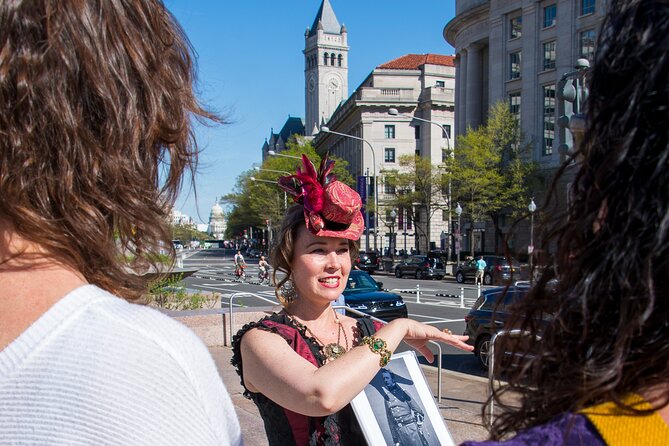
This tour runs about 2 hours 30 minutes. You’ll do short stops—typically 10 to 20 minutes each—plus a bit of walking between them while the guide talks. The requirement is clear: you need to be able to be on your feet for at least two hours, so plan accordingly.
If you’re visiting in a cold or rainy month, wear grippy shoes. The tour does require good weather, and if it’s canceled due to poor conditions, you’re offered a different date or a full refund. That’s the kind of policy you’ll appreciate if the sky decides to misbehave.
The route from Freedom Plaza to the National Museum of the American Indian

The meeting point is 1401 Pennsylvania Ave NW, and the tour starts at 7:00 pm. You’ll end at Jefferson Drive SW & 4th Street SW, right by the National Museum of the American Indian. The good news for your evening plans: the tour finishes near Metro service, including the Smithsonian and Federal Center Metro stations (Orange/Blue/Silver lines), both about two blocks away.
The route is designed to keep you moving through the same corridors people still use today, but with a different lens. Instead of asking what DC looks like now, you’ll be asking what it looked like then—and why those same streets carried tension, commerce, and control.
Stop 0: Freedom Plaza, where Murder Bay used to be
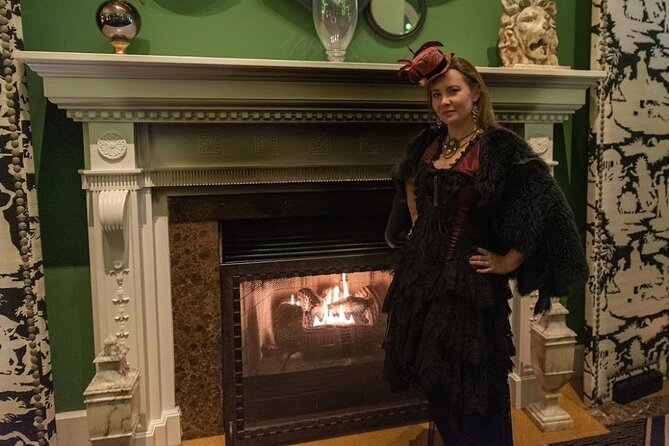
You’ll start at the spot where Freedom Plaza is today. It’s a spacious open area that hosts festivals and music events now, but it used to be tied to a notorious neighborhood known as Murder Bay. This first stop matters because it sets the tone: DC wasn’t only grand buildings and official government. It also had taverns, gambling houses, and brothels serving soldiers from the Northern Arm.
This is the moment where you’ll start seeing why the tour’s theme works. The landmarks look clean and polished now, but the guide frames the space as a “then-and-now” contrast: same city geometry, different human stories. It’s a quick stop (about 15 minutes), but it’s a strong launch.
You can also read our reviews of more guided tours in Washington DC





Stop 1: The Waldorf Astoria area and the old 11th Street red-light strip
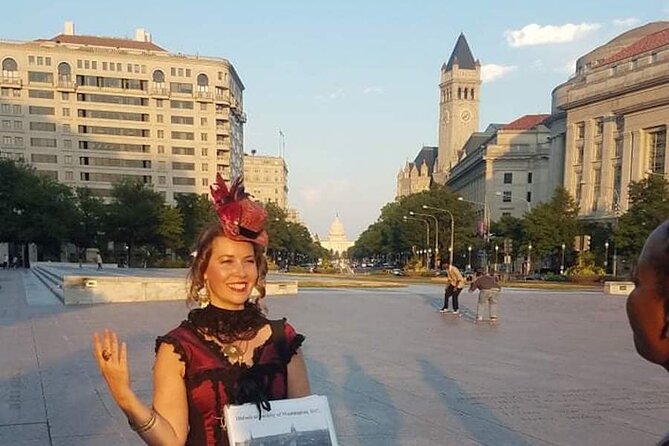
Next you’ll head to the block where the Waldorf Astoria Washington DC is located. The tour connects this area to the former 11th Street strip, part of the Red Light district on Pennsylvania Avenue. The story here includes how the Military Provost Guard harassed and arrested some of the Madams operating in the neighborhood.
One practical note: this stop sits near today’s hotel landscape, including the area where the Trump International Hotel now stands on the former Old Postal Office building. That contrast is useful. It helps you understand how quickly DC can erase what used to happen on the ground level, even when the street grid stays the same.
Admission is free at this stop, so you’re not waiting on ticket lines. You’re just listening, looking, and letting the guide’s context put history back into view.
Stop 2: National Archives Museum area and Civil War DC’s market life

At the National Archives Museum stop, the tour shifts toward how prostitution functioned as part of Civil War DC. You’ll learn about the lives of prostitutes in that era and the role they played in society, while passing by the former site of the largest central urban market in DC.
This stop gives you something more than street-corner gossip. The guide’s framing helps you see how an urban economy works: where people gather, where goods move, and how informal services cluster around crowds. It’s also a bridge between the soldier-focused red-light world and the wider city systems that supported it.
The stop is brief—around 10 minutes—and admission is free. It’s built for people who want story density without spending the whole evening indoors.
Stop 3: Hill Country BBQ drink break by the IOOF Temple
Now for a pause that’s as practical as it is narrative. You’ll stop for a drink at Hill Country BBQ, across the street from the International Order of Odd Fellows (IOOF) Temple building. The IOOF connection is where the tour gets especially interesting: the guide explains how the IOOF supported the arts and how social life could get surprisingly tangled with the pleasure economy.
This is also the point where one of the tour’s strengths really shows: the guide uses the “social ladder” angle to explain why some Madams and sex workers had access to higher-class parties. The scene described includes higher-class working girls walking into grand events hosted by the Odd Fellows, often with an Army Officer on their arm. Yes, it’s scandalous. But it’s also a clue about how power and respectability worked in real life.
Plan on paying for your own beverage here. You’ll typically be stopped for about 20 minutes at this location, giving you enough time to grab a drink and reset.
Stop 4: National Gallery of Art and Marble Alley’s rival Madams
At the National Gallery of Art area, the tour returns to street-level history with a place name you won’t see on most typical DC maps: Marble Alley. This was a site where two of DC’s highest-paid Madams had a vicious rivalry, and the guide uses it to show how competition played out geographically—who could operate where, and what that meant for money and influence.
This stop is about 10 minutes and has free admission. It’s also a great moment to do your own quiet reflection. The National Gallery area feels like art and culture today. Hearing what Marble Alley represented then makes you look at the neighborhood with different expectations.
If you’re the type who likes “small details that change your interpretation,” this is a strong stop. The rivalry theme also gives you a narrative hook you can carry to the final leg.
Stop 5: The National Museum of the American Indian and the Civil War-era pleasure house
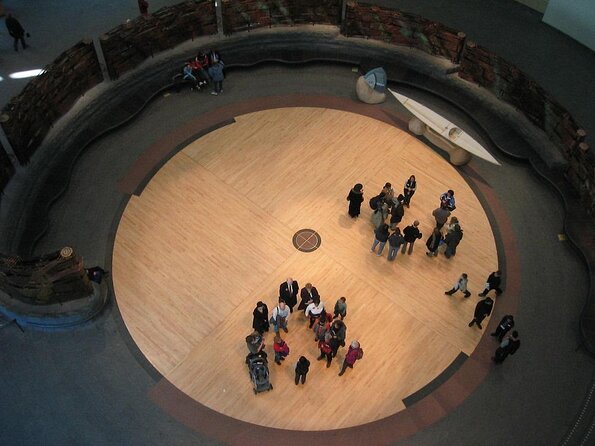
The tour ends at the National Museum of the American Indian. Historically, the tour frames this location as the site of a notorious brothel. One of the most memorable ideas is that an archaeological dig discovered the remains of DC’s most notorious—and yet charitable—Madams.
The ending also connects you back to the theme of glamour versus hardship. The guide describes the site as the most glamorous of DC’s Civil War-era pleasure houses. Ending here works well because the museum’s modern setting makes the contrast land: you’re finishing in a place that supports education and culture, after spending the evening learning about an older system that functioned under different rules.
This final stop is about 10 minutes. With Metro close by, it’s easy to keep moving after the tour.
The guide: where the story quality really shows
A big part of why this tour earns a perfect score is the guide’s delivery. The name you’ll want to remember is Katie Kirkpatrick. People highlight her as a fantastic storyteller—well-spoken, friendly, and engaged with the group.
What I find useful in that kind of guidance is how research shows up in the telling. The tour description promises facts tied to real places, and the feedback emphasizes that the guide does her own work, not just recycling common talking points. That shows up in the way the tour keeps returning to practical details: what streets were called, how districts functioned, and how power structures responded.
There’s also an accessibility-minded strength. One person noted that Katie described photos for a blind participant, which suggests the tour isn’t purely visual-only storytelling. If you like history that you can “hold in your mind,” that matters.
Who this tour is for (and who should skip it)
This is for you if you want DC history that isn’t limited to presidents, parades, and polished stone. You like seeing how cities really function—socially, economically, and sometimes uncomfortably. If you enjoy offbeat themes and you’re curious about how neighborhoods form and disappear, you’ll probably enjoy the walking format.
It’s not a great fit if you’re looking for a kid-friendly evening stroll. The content focuses on brothels, red-light districts, and the way sex work intersected with soldiers, officers, and local power. Even if you’re generally comfortable with adult history, you should go in expecting blunt themes and no sugarcoating.
Practical tips to get the most from the experience
Bring comfortable shoes. You’ll be on foot for about two hours minimum, and you’ll be stopping and standing during commentary. It’s an evening tour too, so dress for night air and plan for the possibility of temperature swings.
Arrive a few minutes early at 1401 Pennsylvania Ave NW so you can check in calmly. The tour uses a mobile ticket, and you’ll be glad you have it ready. Also, if your booking confirmation came from a third-party website, have the name on that confirmation available on your phone. A smooth start makes the whole evening better.
For the drink stop, decide ahead of time what you’re willing to spend. The Hill Country BBQ beverage isn’t included, so budgeting a small amount keeps the break feeling like a bonus instead of a cost.
Should you book Madams of DC?
Book it if you want DC from a different angle—street by street, with context tied to real buildings that still stand. The price is modest for a guided, connected walking route, and the stop pattern keeps the story moving without demanding museum time.
Skip it if you’d rather stick to official monuments, or if adult themes will make you uncomfortable. Also skip if you can’t meet the on-your-feet requirement for at least two hours.
If you’re the type who likes learning a city’s hidden operating system—how money, power, and neighborhoods interact—this is a strong match.
FAQ
How long is the Madams of DC guided walking tour?
It runs for about 2 hours 30 minutes (approx.).
How much does the tour cost?
The price is $30.00 per person.
Where does the tour start and what time does it begin?
It starts at 1401 Pennsylvania Ave NW, Washington, DC 20004, and the start time is 7:00 pm.
Where does the tour end, and is public transportation nearby?
The tour ends at Jefferson Drive SW & 4th Street SW, Washington, DC 20004. Smithsonian and Federal Center Metro stations (Orange/Blue/Silver lines) are both about two blocks away.
Is admission free for the stops?
Admission is listed as free for several stops (including the National Archives Museum and the National Gallery of Art). The drink break at Hill Country BBQ is not included.
What’s the group size limit?
The tour has a maximum of 20 travelers.
What are the physical requirements?
Guests must be able to be on their feet for at least 2 hours.