REVIEW · WASHINGTON DC
U.S. Capitol and Library of Congress Tour with Rotunda & Crypts
Book on Viator →Operated by Signature Tours of DC · Bookable on Viator
DC’s power buildings, explained fast. This guided U.S. Capitol and Library of Congress combo turns the biggest sights on Capitol Hill into a guided route with smart context and smooth checkpoint handling, ending at the Jefferson Building. You’ll also get a Capitol Hill walking stretch where the guide connects the dots between monuments, courthouses, and lawmakers’ spaces.
I especially like two things about this outing: you get real time in the Rotunda and Crypt (not just a quick peek), and the Library visit is built around iconic highlights like the Gutenberg Bible and the Main Reading Room view from above. It’s the kind of schedule that helps you spot what matters instead of getting lost in a building the size of a small town.
One drawback to keep in mind: government buildings can change plans at short notice, and the Library of Congress is closed on Mondays—on those days, the visit is swapped to the Capitol Museum. That’s rare, but it’s smart to plan with flexibility when you’re dealing with security and federal hours.
In This Review
- Key Points You’ll Care About on This Tour
- Entering the U.S. Capitol Rotunda and Crypt Without Getting Stuck
- What the Security + Orientation Film Process Actually Means for Your Day
- Library of Congress Jefferson Building: A Timed-Entry Sprint Worth Slowing Down
- What You’ll See Around the Supreme Court and Capitol Hill (No Ticket Needed)
- Guide Energy: Why People Mention Names Like Dwayne, Tyrone, and Rochelle
- Pace, Weather, and Group Size: The Practical Stuff That Changes Everything
- Price and Value: Why $56 Can Feel Either Fair or Not
- Should You Book This U.S. Capitol and Library of Congress Tour?
- FAQ
- How long is the U.S. Capitol and Library of Congress tour?
- What’s included with admission during this tour?
- Do I need tickets for the Supreme Court stop?
- Where do I meet, and where does the tour end?
- What do I see inside the U.S. Capitol?
- What are the main highlights inside the Library of Congress?
- Is this tour outdoors and walking-heavy?
Key Points You’ll Care About on This Tour

- Guide-led time inside the U.S. Capitol focused on the Rotunda, Crypt, and National Statuary Hall
- Headsets and security handled so you don’t spend your morning guessing how to join the official flow
- Timed-entry style access into the Jefferson Building for a concentrated Library of Congress highlight run
- Major “wow” stops outside like the Grant Memorial equestrian statue and the Peace Monument/Peace Circle
- Small-ish group size (max 40) helps the guide manage pacing and keep the group together
Entering the U.S. Capitol Rotunda and Crypt Without Getting Stuck
The U.S. Capitol is one of those places where the building itself is part of the lesson. This tour is structured so you go through security, get a short break, watch the orientation film, then join the official guided experience with headsets. That matters because it reduces the most common trip-killer on Capitol visits: waiting in the wrong place at the wrong time.
Once you’re inside, the payoff is concentrated. You’ll see the Rotunda, the Crypt, and National Statuary Hall as part of the guided circuit, and on some days you might also be routed into the Old Supreme Court or Old Senate Chambers. I like this “maybe, depending on the day” flexibility because you get a repeatable core experience, with extra rooms when access allows.
Two details that make the Rotunda stop feel real are scale and purpose. The Rotunda fresco The Apotheosis of Washington sits about 180 feet above the floor—so you’re looking at art that’s meant to dominate the entire room. And the Crypt was originally intended for Washington’s burial, which gives the space a weight that’s hard to pick up from photos.
You can also read our reviews of more tours and experiences in Washington DC.



What the Security + Orientation Film Process Actually Means for Your Day
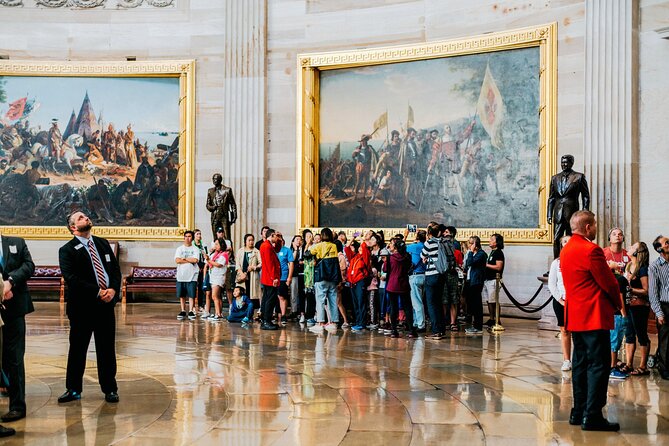
If you’re the type who hates “stand around until someone yells,” you’ll appreciate the flow here. You go through security first, then you’re not left drifting: there’s a break, then the orientation film, then the official tour component starts. The headset system also helps because you’re not constantly trying to read tiny placards or catch every word from far away.
The practical tip: wear shoes you can handle for standing and movement, even if you think of this as an “easy” sightseeing day. The buildings involve standing, guided transitions, and outdoor walking portions around Capitol Hill, which can feel long if you dress for comfort at the expense of support.
Also remember one scheduling reality: the government can close or cancel Capitol tours without advanced notice. That doesn’t mean it will happen to you, but it’s why I’d treat your appointment like something you plan around, not something you can shrug off.
Library of Congress Jefferson Building: A Timed-Entry Sprint Worth Slowing Down
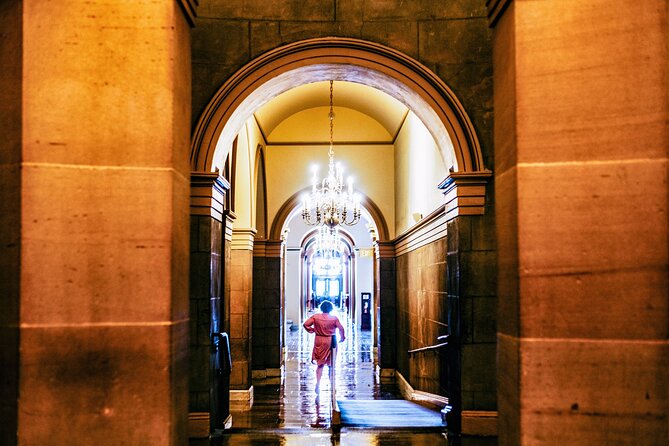
After the Capitol portion, you transition to the Library of Congress visit. You’re escorted to the tunnel, then you use timed-entry passes to walk straight into the Jefferson Building—so you’re not stuck playing “guess the line” inside one of Washington’s most complex landmarks.
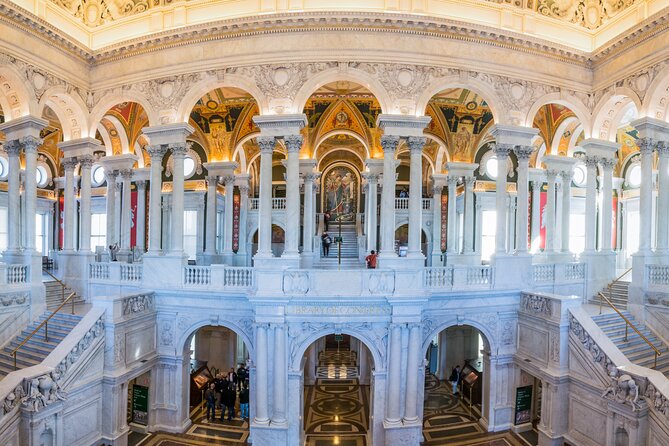
This is where the tour’s value becomes clearer. The Jefferson Building is often described as one of the most beautiful public buildings in DC, and this visit leans into that with focused stops: the Great Hall, the Main Reading Room, and the decorative details you’d likely miss on a self-guided wander.
The Gutenberg Bible is the star highlight. You’ll get to see it in person—one of only a handful of perfect vellum copies in existence (the tour notes it as 1 of only 3 perfect vellum copies in existence). Even if you don’t know much about printing history, it’s the kind of object that instantly makes the Library feel more like a living institution than a museum.
Then comes the visual moment almost everyone has seen on screen: the Main Reading Room. You view it from an upper observation deck, which is exactly how you want to do it—clear sightlines without jostling at floor level. And along the balustrades, you’ll notice putti and carvings: those cherubic figures representing the arts and sciences help tie the building’s beauty to the work that’s carried on inside.
For architecture nerds (and normal people who like getting surprised), the Jefferson Building offers concrete “firsts.” It was the first public building in DC designed for electric lighting and one of the first to use a comprehensive climate-control system. That means this stop isn’t just pretty; it’s a peek into how the Library became built for preservation.
What You’ll See Around the Supreme Court and Capitol Hill (No Ticket Needed)
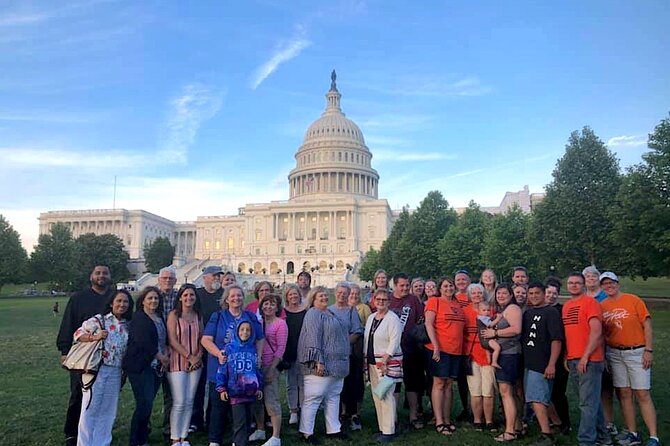
Not every landmark in this area requires admission, and this tour uses that wisely. You’ll pass the Supreme Court building (admission isn’t included there), then continue with outdoor viewing stops that help you understand where the power lives and how it’s staged for the public.
Two outside highlights are the Grant Memorial and the Peace Monument/Peace Circle. The equestrian statue is one of the largest in the world, and the sculptor reportedly spent 20 years on it—so even outside, it’s worth paying attention to the scale. The Peace Monument/Peace Circle commemorates naval deaths of the Civil War, and it features figures labeled Grief and History, which makes the memorial feel more like a story than a wall of names.
I also like the structure of the outdoor walk: you’re not only ticking off famous buildings. You’re getting a guide’s framing of how the Supreme Court, Senate offices, and House of Representatives areas relate to the Capitol’s symbolism. It’s harder to remember that stuff when you’re rushing, so the walking portion helps your brain file it away.
Guide Energy: Why People Mention Names Like Dwayne, Tyrone, and Rochelle
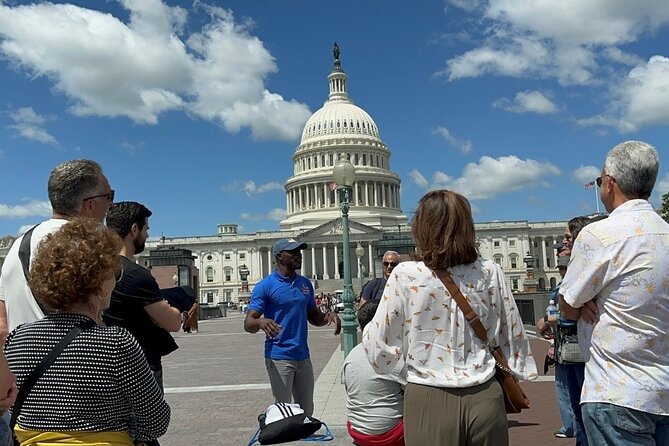
A tour like this rises and falls on one thing: the guide. Here, you’ll notice patterns in how people talk about the experience—especially praise for guides who answer questions fast, handle sensitive topics with care, and keep the group on track.
Specific names show up repeatedly, including Dwayne/Dawayne, Tyrone, and Rochelle. Dwayne (spelled a couple different ways) gets credit for passion about the Capitol’s story and for making the trip feel worth the price, not just like an access pass. Tyrone is praised for keeping the group together and for being proactive when the group’s start got thrown off by someone getting dropped at the wrong spot. Rochelle is noted for confirming the meeting location ahead of time and sharing extra context beyond what you’d likely gather from the official spaces alone.
What you should take from that, even if you don’t know which guide you’ll get: if the group moves efficiently and the guide explains what you’re looking at, your visit becomes memorable. If the guide’s attention is split or the pacing falls apart, the value can shrink fast—especially in places with timed entry and strict security.



Pace, Weather, and Group Size: The Practical Stuff That Changes Everything

This is not a sit-down tour. You’ll do standing and walking, with outdoor time because Capitol Hill is outdoors between federal buildings. The tour notes you should have a moderate fitness level and bring comfortable shoes and weather-appropriate layers. DC weather can be brutal in summer and chilly in winter, so plan like it’s a full neighborhood stroll, not a quick museum detour.
You’ll also want to know the group size max is 40 travelers. That’s large enough that you’ll be in a coordinated flow, but small enough that a guide can still manage attention and keep everyone moving toward timed entry.
If you hate surprises, consider this your checklist:
- Wear shoes you trust for long standing
- Bring a layer for indoor-to-outdoor temperature swings
- Consider an umbrella if rain is likely
- Expect waits inside security and film orientation before the guided segments start
Price and Value: Why $56 Can Feel Either Fair or Not

The price is $56 per person, and the big question is what you’re buying beyond a building entry sticker.
Here’s the honest way to think about value:
- This tour includes admission to the U.S. Capitol building with a guided experience (with headsets as part of that official system).
- It also includes admission to the Library of Congress through a timed entry format.
- The guide component is the difference-maker: you’re paying for a human to point out what matters, connect symbols, and keep your visit on schedule.
Could you DIY some parts? Likely yes—because the Capitol and Library are famous for having accessible entry options. But DIY runs into two issues in DC: timed availability and the friction of moving through security and crowded entry points with unclear pacing. For many people, paying helps them avoid wasting a half-day.
Still, balance it with risk. Because this depends on federal building operations, you should be prepared for closures or schedule adjustments. When everything runs on time, the cost can feel fair. When access changes, you’ll want to have flexibility and backup plans for the Library on closure days.
Should You Book This U.S. Capitol and Library of Congress Tour?
I’d book it if you want a guided, high-impact day with a structure that reduces guesswork: security + official headset tour in the Capitol, then a timed-entry style run through the Jefferson Building’s headline rooms. It’s a strong fit if you like learning while you walk and you don’t want to spend your trip figuring out how to access the Rotunda, Crypt, and major Library highlights efficiently.
I’d think twice if you’re visiting on a Monday (because the Library of Congress is closed and your Library portion can shift to the Capitol Museum), or if you’re extremely sensitive to schedule changes caused by security and federal operations. If you can be flexible and you care about guide-led context, this is the kind of DC experience that makes iconic buildings feel personal.
FAQ
How long is the U.S. Capitol and Library of Congress tour?
The experience is listed at about 2 hours.
What’s included with admission during this tour?
Admission to the U.S. Capitol building with the tour is included. Admission to the Library of Congress is included as well (or the Capitol Museum when the Library of Congress is closed on Mondays or 8am).
Do I need tickets for the Supreme Court stop?
No. You pass by the Supreme Court building, but admission there is not included.
Where do I meet, and where does the tour end?
The meeting point is at 101 Independence Ave SE, Washington, DC 20540, and the tour ends at the Library of Congress.
What do I see inside the U.S. Capitol?
You go through security, watch an orientation film, then join the official guided tour with headsets. You typically visit the Crypt, Rotunda, and National Statuary Hall, and sometimes the Old Supreme Court or Old Senate Chambers depending on the day.
What are the main highlights inside the Library of Congress?
You’ll visit highlights in the Jefferson Building, including the Gutenberg Bible, the Great Hall, the Main Reading Room (viewed from an upper deck), and the carved putti details. The tour also points out architectural firsts like electric lighting and climate control systems.
Is this tour outdoors and walking-heavy?
There is standing and walking, with portions outdoors around Capitol Hill. The tour recommends comfortable shoes and dressing for weather since DC can be hot in summer and cold in winter.