REVIEW · WASHINGTON DC
Washington, D.C.: U.S. Capitol & Monuments Walking Tour
Book on GetYourGuide →Operated by The Daily Trips · Bookable on GetYourGuide
Washington, D.C. can feel big and fast, but this walk keeps you grounded in it. In just 2 hours, you move from Grant’s equestrian statue to Capitol Hill’s most famous buildings, with story-time built in at every stop.
Two things I really like: the chance to see the Library of Congress interior and actually go inside, and the way the guide brings the monuments into focus without turning it into a lecture. If you get Jeff as your guide, you’ll likely notice he explains things clearly and paces the group so you’re not constantly sprinting for the next photo.
One possible drawback: it’s a standing-and-walking tour on uneven city sidewalks, so it’s not suitable for wheelchair users. If you’re sensitive to lots of walking in short bursts, this one may feel like more effort than you expected.
In This Review
- Key highlights you’ll care about
- Walking the Capitol Storyline, Not Just the Sights
- Meeting in Front of the Library of Congress (and Why That Starts You Off Right)
- Grant at the Reflecting Pool: The First Big Visual Story
- The Peace Monument: Naval Heroes and Allegory You Can Actually See
- Garfield Monument: A Brief Presidency With Long Consequences
- Outside the U.S. Capitol: Where You Learn to Read Neoclassical Power
- Supreme Court Exterior: Big Decisions, Clear Visuals
- Capitol Grounds Views: Pausing Long Enough to Make It Stick
- Inside the Library of Congress: Thomas Jefferson Building, Gutenberg, and the Declaration
- What Makes the Tour Work: Guide Style, Group Size, and Pace
- Practical Tips to Get the Most From the 2 Hours
- Price: Is $56 Good Value for What You Get?
- Who This Tour Is Best For
- Should You Book This Capitol and Monuments Walking Tour?
- FAQ
- How long is the tour?
- How much does it cost?
- Where does the tour meet?
- What’s included in the price?
- Is food or drinks included?
- What should I bring?
- Is the tour wheelchair accessible?
- Can I cancel for a full refund?
- How big is the group?
Key highlights you’ll care about
- Small group (max 10) means more time for questions and fewer people blocking your view for photos
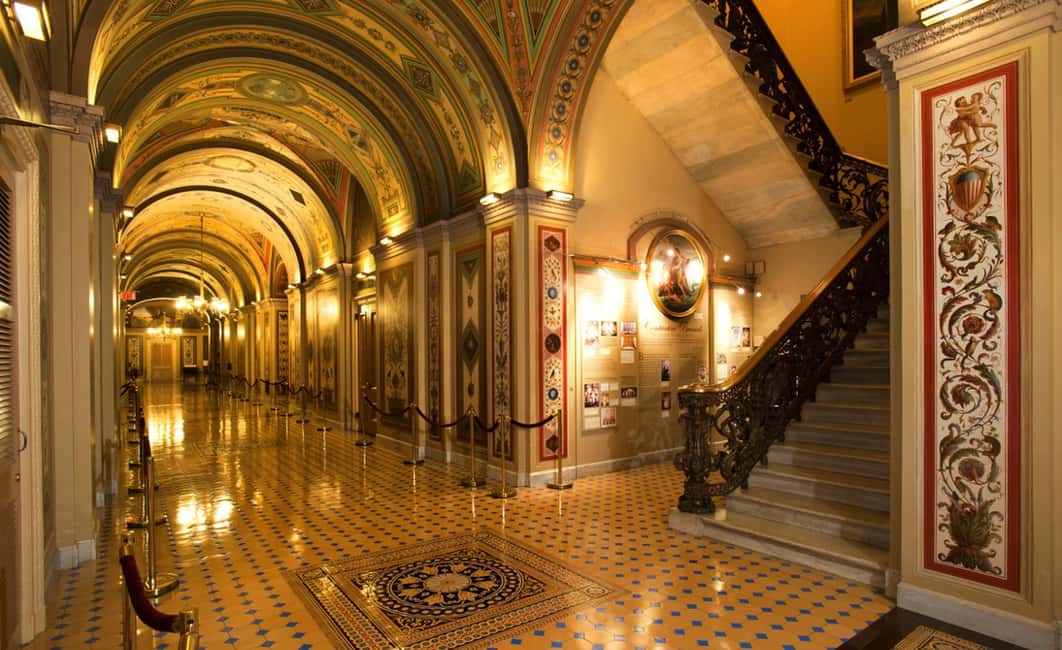
- Entry inside the Thomas Jefferson Building of the Library of Congress, not just a quick photo from outside
- Capitol Dome photo moments plus views that actually make the layout of Capitol Hill make sense
- Stop-by-stop context for Grant, Civil War naval symbolism, and Garfield’s brief term after an assassination
- Supreme Court exterior viewing with architecture and major-case context, even without going inside
- A real document payoff inside: including an original Gutenberg Bible and a draft of the Declaration of Independence
Walking the Capitol Storyline, Not Just the Sights
Capitol Hill has the kind of architecture that looks impressive even when you’re rushing. What makes this tour different is that it turns the scenery into a timeline you can follow on foot. You’re not only looking at landmarks; you’re learning why they were built, what they represent, and how they connect to real political turning points.
The format also helps. You get a professional guide, and the pace is designed for a compact route rather than a marathon. For most people, that means you finish with a clearer mental map of where everything sits and what each place is trying to say.
And yes, you’ll take pictures. You’re given multiple natural photo opportunities, including a strong Capitol Dome backdrop moment and time around the Library of Congress interior.
You can also read our reviews of more walking tours in Washington Dc



Meeting in Front of the Library of Congress (and Why That Starts You Off Right)

Your tour begins in front of the Library of Congress, which is a smart choice. It sets an expectation that the trip isn’t only about monuments and government buildings—it’s also about ideas, documents, and how the country records itself.
Before you move, you’ll get the basics to orient yourself: what you’re seeing, how the route connects, and what to watch for as you walk. This is the kind of early framing that helps later stops land better, especially when you’re looking at architecture and symbolism.
Also, starting at the Library of Congress gives you a built-in emotional payoff later. You’re basically walking toward the “main event,” then you actually step inside for it.
Grant at the Reflecting Pool: The First Big Visual Story
The tour kicks off at a striking equestrian statue of General Ulysses S. Grant, set before the Capitol Reflecting Pool. It’s hard not to feel the scale here. A statue that size doesn’t just decorate a plaza—it signals that leadership, war, and nation-building are part of the same story.
Your guide’s role matters at this stop. Grant isn’t presented as a name in a textbook; you get the connection between his Civil War leadership and his presidency. It’s a good way to start because it explains why this area feels so official and symbolic.
One practical note: this area can be bright and photogenic, but it’s also a spot where you’ll want to keep your phone/camera protected from glare. If you plan photos, wear sunglasses so you can actually keep your eyes on the dome and the statue instead of squinting the whole time.
The Peace Monument: Naval Heroes and Allegory You Can Actually See

A short walk brings you to the Peace Monument, dedicated to naval heroes of the Civil War. This is the kind of monument where the artwork matters as much as the message. The symbolism uses allegorical figures, and the goal is to show you what those figures are doing and why.
What I like about this stop is that it helps you read monuments the way you’d read a building’s facade. You’re not just hearing a story—you’re learning to notice the details that communicate national unity and sacrifice.
If monuments usually feel like guesswork to you, this is a confidence-builder. You start seeing how Washington’s public art is built to be interpreted, not just stared at.
Garfield Monument: A Brief Presidency With Long Consequences
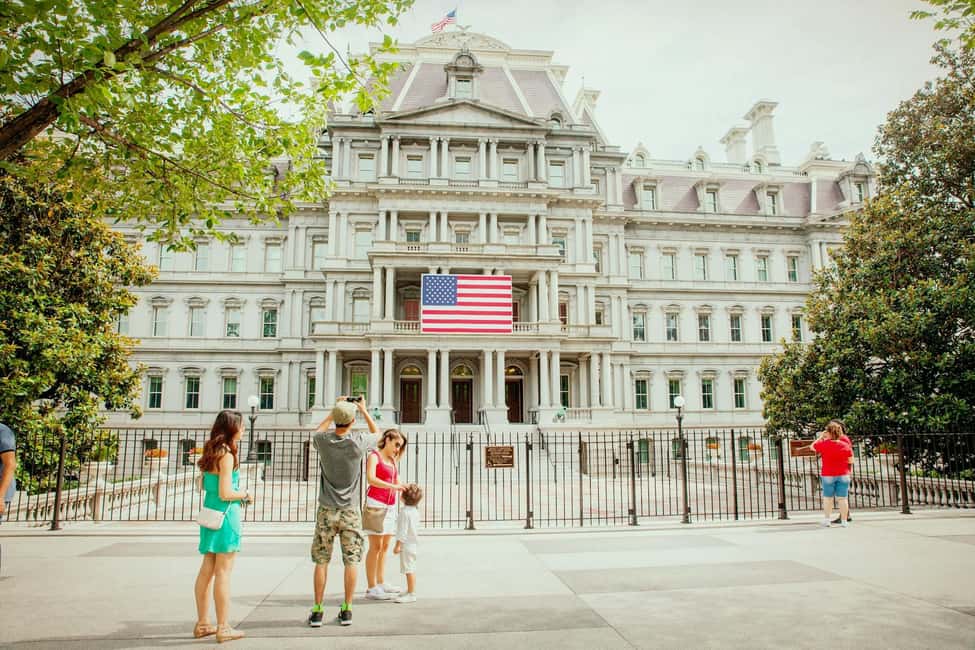
Next up is the Garfield Monument, honoring the 20th U.S. president who was assassinated just months into his term. That timing is the point: history doesn’t wait for new leaders to settle in, and political change can be abrupt.
Your guide gives you the legacy angle—how Garfield’s presidency shaped future reforms. Even if you don’t remember every detail from school, you’ll leave with the clearer takeaway: early tragedy reshaped how the country thought about leadership and governance afterward.
Also, this stop adds emotional variety. After war and peace symbolism, you pivot to real-world consequences for public service. It keeps the tour from feeling like a single theme.





Outside the U.S. Capitol: Where You Learn to Read Neoclassical Power
Stopping outside the U.S. Capitol is more than a photo break. The guide helps you connect the building’s neoclassical look to its role as the legislative branch of government. When you understand the visual language—columns, symmetry, grandeur—you stop seeing it as just a pretty structure.
This is also where the architecture starts to feel like a message. The exterior scale communicates permanence and authority, and you hear about historic events that have played out within its halls.
And yes, you’ll get a prime chance for pictures with the Capitol Dome in the background. If you like taking photos, bring your camera and set your expectations: you’re photographing a landmark from the street, not getting a view inside the rotunda.
Supreme Court Exterior: Big Decisions, Clear Visuals

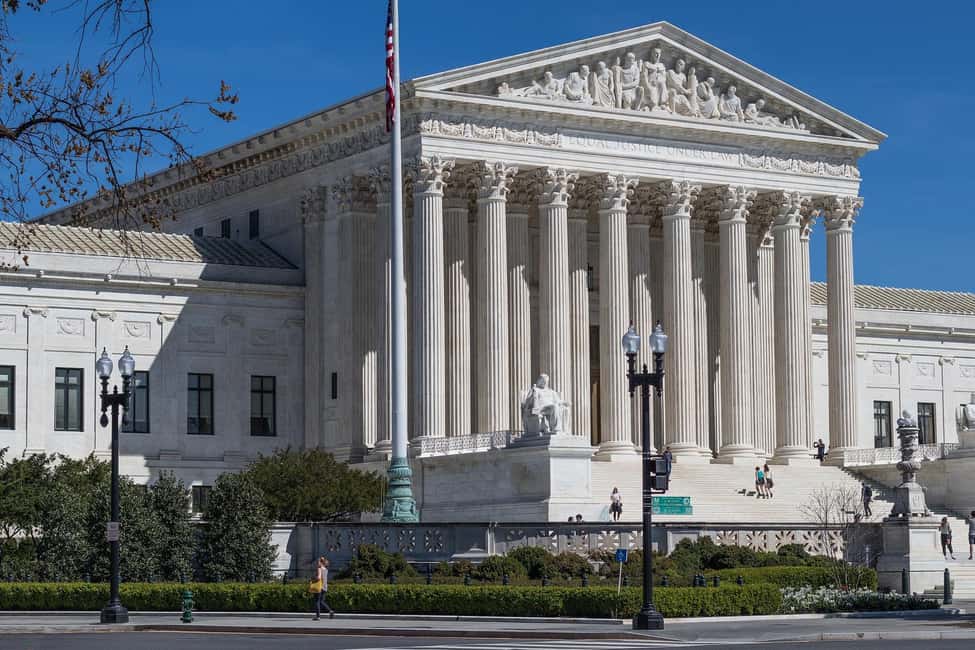
You also visit the Supreme Court building from the outside. Even without going inside, the structure makes its point. The neoclassical style signals gravitas—this is where landmark cases are decided, and the building is built to project seriousness.
Your guide explains the architecture and the significance of the institution. Then the conversation shifts toward famous rulings and the kinds of decisions that shaped the nation. The best part is that you’re not stuck with abstract legal talk. You connect the building to outcomes that affected everyday life.
If you’re the type who likes understanding why something looks the way it does, this stop delivers. It’s one thing to hear about Supreme Court cases; it’s another to stand in front of the building that represents the system making them.
Capitol Grounds Views: Pausing Long Enough to Make It Stick
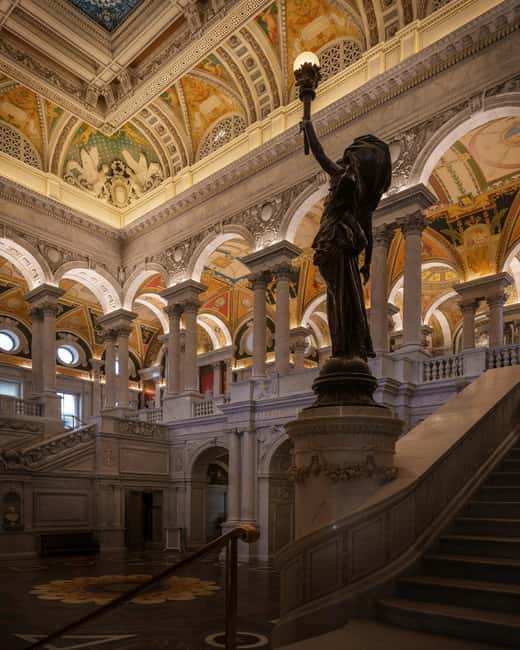
As you walk around the Capitol grounds, you’ll get breathtaking views of the dome while reflecting on the stories behind the landmarks. These pauses sound simple, but they matter. A walking tour can turn into constant motion, and you miss the meaning if you never slow down.
Here, the group is positioned to absorb the setting. You get time to look across the space, not just at the next wall. For a first-timer in Washington, that’s how the city starts to feel navigable.
If you’re traveling with a friend and you both want good photos, this is a good moment to coordinate. Pick who takes photos while the other watches the guide’s next explanation, then swap.
Inside the Library of Congress: Thomas Jefferson Building, Gutenberg, and the Declaration
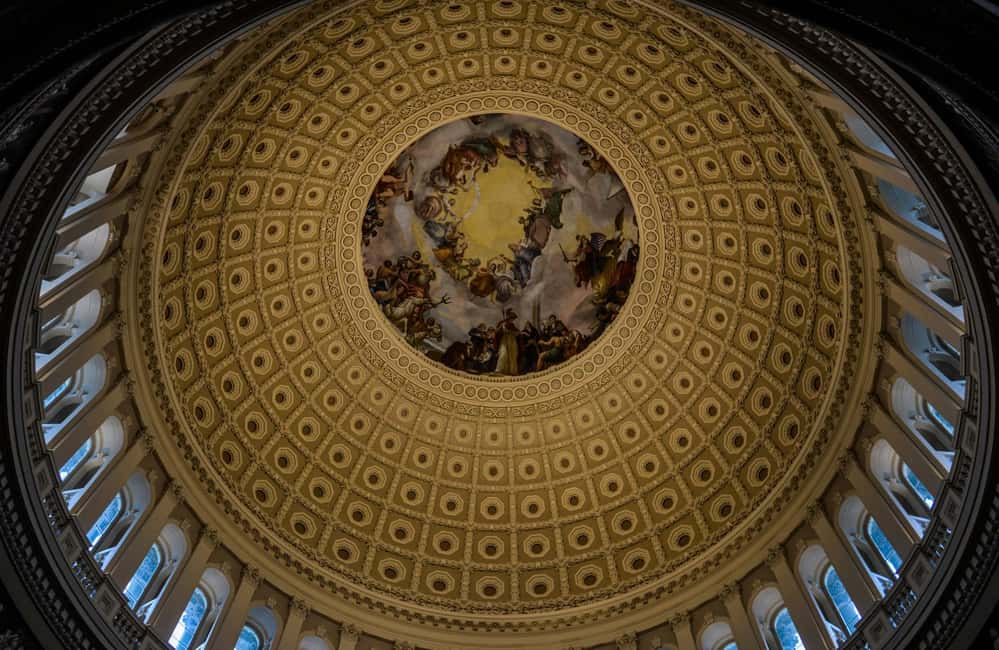
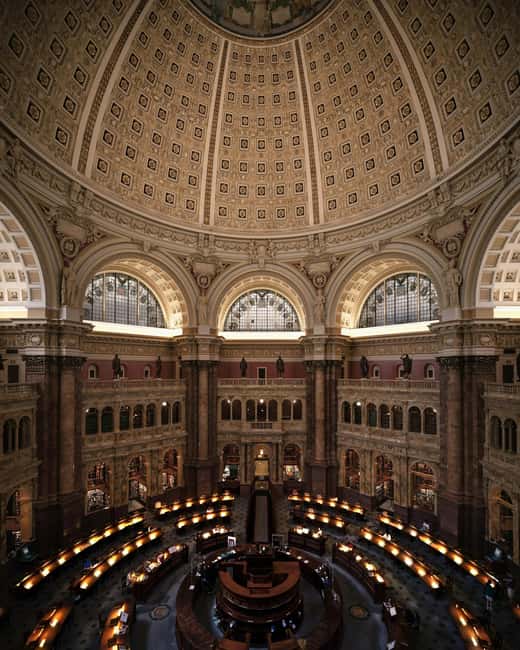
The highlight—and the reason this tour is worth your money—is stepping into the Thomas Jefferson Building of the Library of Congress. This is included in the price, and it’s the part that changes the tour from sightseeing to something more memorable.
Inside, you’ll see the breathtaking interior and have time to explore historic exhibits. You’ll also get access to rare document examples, including an original Gutenberg Bible and a draft of the Declaration of Independence.
Even if you’ve read about these items, seeing them in person is a different experience. It’s not just that they’re famous. It’s the sense of weight—how paper and printing and scribbled drafts became real shifts in law, culture, and national identity.
One thing to plan for: museum interiors can mean cool air and lots of people, so keep your camera ready but steady. You’ll want to follow your guide’s cues on where to look and when it’s worth moving closer versus stepping back to take in the room.
This is also where a careful guide makes the difference between a “quick look” and a meaningful visit. The best moments happen when you’re pointed at what to notice, not when you’re left to guess.
What Makes the Tour Work: Guide Style, Group Size, and Pace
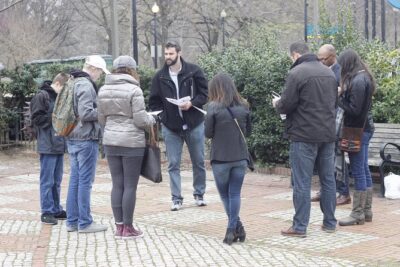
This is a small group tour, limited to 10 participants, and that shows in how the experience feels. You’re close enough to hear the explanations, and the guide can adjust when people pause for photos.
The guide-led storytelling is where the value lives. The tone stays light, but the facts stay grounded. In the accounts I’m drawing from, guides like Jeff are described as entertaining, patient, and eager to explain the “why” behind what you’re seeing.
That said, there’s one caution worth mentioning. If you strongly prefer strictly neutral historical commentary, be aware that one guide named Ricardo was criticized for adding extreme political opinions. I can’t predict who you’ll get, but it’s fair to say this kind of walking tour can reflect the guide’s personal style. Choose based on the fit you want.
Practical Tips to Get the Most From the 2 Hours
You only have 2 hours, so you’ll want to show up ready. Comfortable shoes are non-negotiable here—Capitol Hill is not made for fashion-over-function.
Bring:
- comfortable shoes
- a camera
- water (a bottle helps)
I’d also come with a simple goal: pick one stop you care about most—Grant, Garfield, the Supreme Court, or the Library—and give yourself permission to really focus on that one. When you do that, the other stops become supporting chapters instead of mental noise.
If you’re someone who hates crowds, remember this is still a popular area in peak times. The “small group” helps, but you’ll still be in the shared public space around major government buildings.
Price: Is $56 Good Value for What You Get?
At $56 per person for 2 hours, the value depends on what you’d otherwise pay for. If you’re trying to do all of this on your own, you’d still spend time figuring out routes, deciding what’s worth stopping for, and paying for entry where you actually want it.
This tour includes:
- a professional guide
- a walking route around Capitol Hill
- entry inside the Thomas Jefferson Building
- engagement and context
- group photo opportunities
That’s a lot packed into a short window, and the included interior visit is the real price driver. If your priority is government-exterior photos only, you might spend less elsewhere. If your priority is understanding what you’re looking at—and seeing the Library’s interior documents—this price is pretty sensible.
Who This Tour Is Best For
This is a great fit if you:
- want a guided route that helps you place landmarks in your head
- like monuments but also want their symbolism explained
- care about architecture and what it signals
- want a short, high-impact Washington experience
It’s also good for first-timers who don’t want to plan every stop. If you already know DC well and only want specific sites, you might find the route broad. But if you’re trying to build a solid “democracy in one afternoon” overview, it’s a strong choice.
And again: it’s not suitable for wheelchair users, so plan accordingly.
Should You Book This Capitol and Monuments Walking Tour?
If you want a focused, short Washington experience with meaningful stops—especially the Library of Congress interior—I’d book this. The price is reasonable for a guided walk plus included entry to the Thomas Jefferson Building, and the route makes sense if you care about context, not just photos.
I’d think twice if you dislike walking on city sidewalks or if you want a very strictly neutral tone from the guide. Otherwise, this is the kind of tour that leaves you feeling like you actually understand the places, not just visited them.
FAQ
How long is the tour?
The tour runs for 2 hours.
How much does it cost?
The price is $56 per person.
Where does the tour meet?
You meet in front of the Library of Congress.
What’s included in the price?
Included are a professional tour guide, the walking tour of Capitol Hill and the Library of Congress area, entry inside the Library of Congress (Thomas Jefferson Building), engaging historical insights, and group photo opportunities.
Is food or drinks included?
No. Food and beverages are not included.
What should I bring?
Bring comfortable shoes, a camera, and a water bottle.
Is the tour wheelchair accessible?
No. It is not suitable for wheelchair users.
Can I cancel for a full refund?
Yes. You can cancel up to 24 hours in advance for a full refund.
How big is the group?
The tour is a small group, limited to 10 participants.