
REVIEW · WASHINGTON DC
Castle to Capitol: Museums of the National Mall Architecture Tour
Book on Viator →Operated by DC Design Tours · Bookable on Viator
National Mall buildings teach without a textbook. This small-group walk spotlights museum architecture and design details, from the Smithsonian Castle to the US Capitol. I especially like the historian guide approach that turns big landmarks into clear, story-driven explanations you can actually use.
The only drawback to plan for is the pace. You cover a lot in about two hours, with short stops at several museums, so you should expect quick looks more than long time inside every building.
In This Review
- Key Highlights You’ll Feel on This Walk
- Why the Castle-to-Capitol Route Fits Architecture First-Timers
- Getting Oriented at the Smithsonian Castle and Garden
- Smithsonian Arts and Industries: Seeing a Museum as a Building for Work
- The Hirshhorn and Sculpture Garden: When a Museum Looks Like a Machine
- National Gallery of Art from a Distance: Neoclassical West vs Modern East
- National Museum of the American Indian: Wind, Water, and a Building with a Past
- U.S. Botanic Garden Reset: A Break in Museum-Only Focus
- Bartholdi Park and a Fountain Off the Main Line
- Wrapping Up at Capitol Hill: The View That Makes It Worth the Walk
- Price and Value: What $48 Buys You on the National Mall
- Who Should Book This Tour (and Who Might Want More Time Alone)
- Tips to Make It Run Smooth on a Busy DC Day
- Should You Book Castle to Capitol: Museums of the National Mall Architecture Tour?
- FAQ
- How long is the Castle to Capitol architecture tour?
- What does the tour cost?
- Where does the tour start and end?
- Is admission to the Smithsonian Castle included?
- What areas of the National Mall does this tour cover?
- What’s included in the tour besides museum admission?
- How large is the group?
- Do I need to bring a printed ticket?
- Are service animals allowed?
- What if the minimum number of travelers isn’t met?
- Can I cancel for a full refund?
Key Highlights You’ll Feel on This Walk
- Start at Smithsonian Castle and Garden with included admission
- Small group, max 20 people, so questions don’t get lost
- East-side National Mall focus between the Capitol and Washington Monument
- Architecture-first storytelling across major Smithsonian and National Mall buildings
- Practical photo moments, especially near Capitol Hill for a final view
Why the Castle-to-Capitol Route Fits Architecture First-Timers
Washington, DC’s National Mall can feel like a long loop of museums. This tour changes the rhythm by using the buildings as the lesson. You’re not just walking between famous stops—you’re learning why each one looks the way it does, and what that choice says about the museum inside.
I like that the focus stays practical. The guide points out design elements you can spot fast, even if you have zero architecture background. And because it’s a historian-style presentation, the facts come with context, not random trivia.
You also get built-in value for the price. At $48 per person, you’re paying for a guided walk plus included admission to the Smithsonian Castle—and most of the rest of the route is designed for efficient viewing along the Mall.
You can also read our reviews of more museum experiences in Washington DC


Getting Oriented at the Smithsonian Castle and Garden

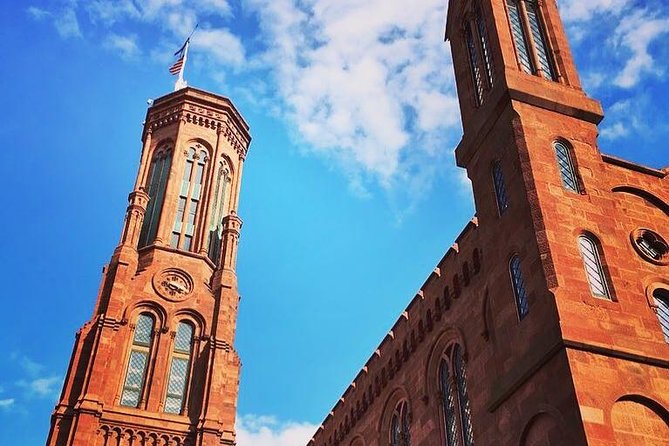
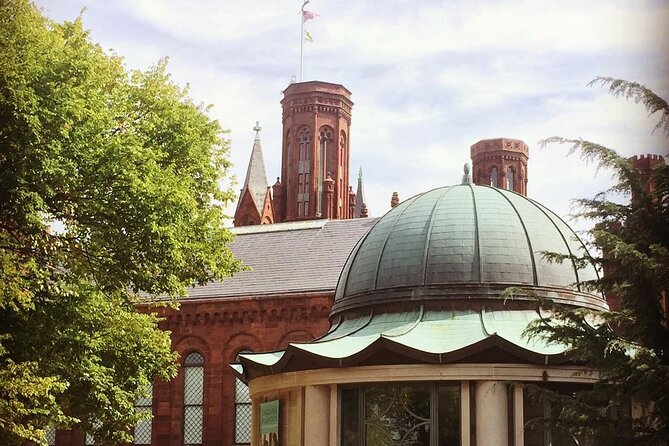
The experience begins at the Smithsonian Castle at 1000 Jefferson Dr SW. You start outside the Castle, and from there you’re led through the big idea of the Smithsonian’s role in shaping the National Mall.
This is where the tour earns its name. The Castle isn’t just a pretty starting point; it’s a headquarters and a symbol. You’ll connect the dots between the Smithsonian’s beginnings in 1847 and how the museum complex became part of DC’s public “front yard,” sometimes called Americas Attic for its role as an immense collection point.
Time-wise, this first stop is the longest on the walk—about 30 minutes—which makes sense. You need grounding before you start comparing building styles. It’s also a good place to settle in, especially if you’re traveling with kids. They tend to do better when the first stop is clear and visually interesting.
Smithsonian Arts and Industries: Seeing a Museum as a Building for Work
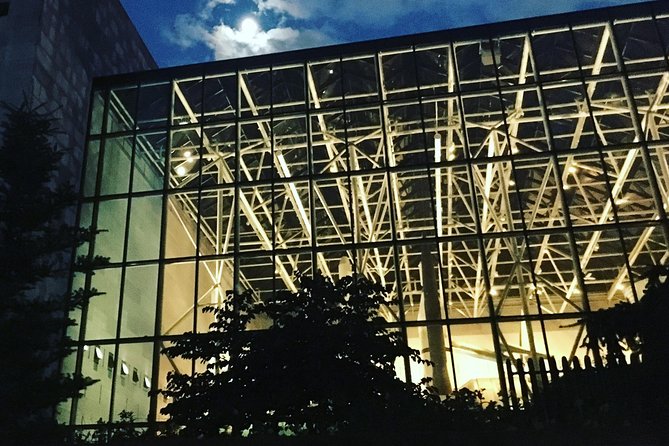
After the Castle, you head to the Smithsonian Arts + Industries Building. The stop is short (about 5 minutes), but it matters because it anchors a key theme: museum design isn’t one style. It’s a set of choices shaped by the era, the institution’s goals, and what the public should feel when they arrive.
The guide explains the building’s design in a way you can follow without studying blueprints. You’ll hear how this structure became a major home for the Smithsonian, and you’ll learn what makes it visually distinct along the Mall.
Because the stop is brief, I’d treat it as a “look and learn” moment. If you want more, the tour isn’t trying to replace museum time later in your trip. It’s setting you up to see these buildings differently for the rest of the day.
The Hirshhorn and Sculpture Garden: When a Museum Looks Like a Machine
Next is the Hirshhorn Museum and Sculpture Garden. This is another quick stop—around 5 minutes—but it’s one of the most memorable in terms of design impression.
The guide frames it like a spaceship on the Mall, and that kind of description helps you see beyond the name. You’re being taught how to look at the massing and feel of the architecture: what the building announces from far away, and how it signals a museum that’s about modern art and sculpture.
If you’re walking this route anyway, the Hirshhorn stop is worth it even if you’re not a sculpture person. The architecture lesson gives you a lens, and the effect stays with you when you move toward more formal museum designs.
National Gallery of Art from a Distance: Neoclassical West vs Modern East
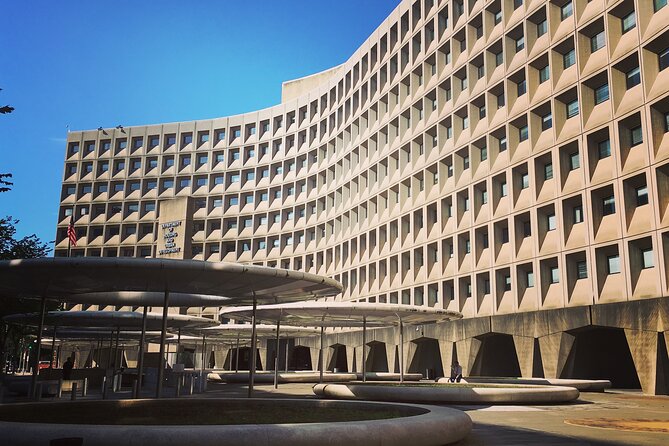
One of the smarter parts of the tour is that it includes National Gallery of Art from a distance instead of pretending you can cover it fully on a short walk. You’ll compare two different halves of the complex, focusing on a major design contrast: Neoclassical West building and the Modern East building.
This contrast is the kind of thing that can be hard to notice on your own. Close up, museums can blur together as more buildings. From a guided viewpoint, the story locks into place: older forms tend to communicate tradition and permanence, while later modern forms often push ideas of new perspectives and updated missions.
The practical benefit is that you can spot the difference quickly and then carry that attention into the next stop.
You can also read our reviews of more shopping tours in Washington DC






National Museum of the American Indian: Wind, Water, and a Building with a Past
At the National Museum of the American Indian, the design lesson turns more emotional. The building is described as meant to look sculpted by wind and water, and you’ll also hear about a tumultuous past around it.
That pairing—nature-like form plus real-world struggle—adds depth to what you see. Architecture here doesn’t feel like styling for its own sake. It becomes a visual language, and the history behind the building explains why that language had to be negotiated.
The stop is about 5 minutes, so you’re not expected to absorb everything. Instead, you get a guided moment that helps you look at shapes, surface impression, and the overall impression of motion—things you might miss if you only snap photos.
U.S. Botanic Garden Reset: A Break in Museum-Only Focus

After all the museum heavyweights, you get a pause at the United States Botanic Garden. This stop lasts about 10 minutes, which gives you enough time to actually switch gears from architecture talk to atmosphere.
The guide points out why it earns a place on this route. Even if you came to DC for museums, this garden area gives your eyes a rest, and it also offers a change of pace in the walk itself.
I like routes that don’t treat every minute as a sprint. This stop helps you recover while still staying on-theme: the tour is about design, and nature-based design counts too.
Bartholdi Park and a Fountain Off the Main Line
Next is Bartholdi Park, described as a secret spot off the National Mall. You’ll spend about 5 minutes here, focusing on a historic fountain and the story behind who sculpted it, which the guide presents as unexpected.
This is the kind of stop that makes the overall tour feel more personal. Along the National Mall, you can easily spend your time only at the headline buildings. A small detour like this reminds you that DC is full of small places that reward curiosity.
It’s also a smart “lungs and legs” break. You’re usually walking constantly, and a short off-axis stop can keep the rest of the day from feeling exhausting.
Wrapping Up at Capitol Hill: The View That Makes It Worth the Walk
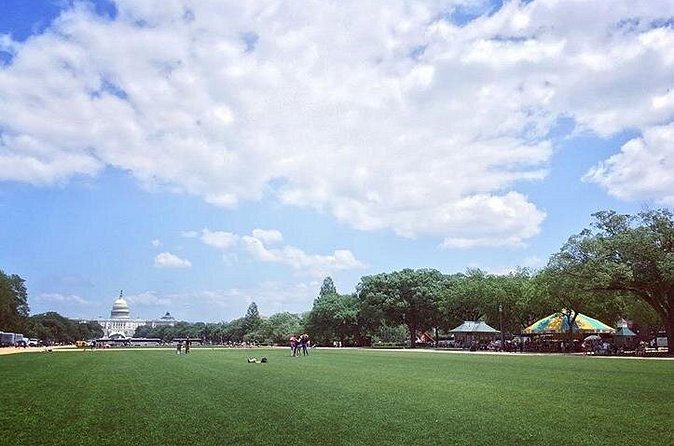
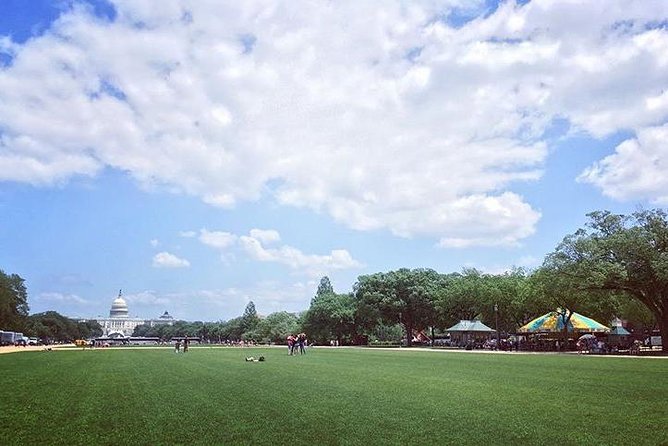
The tour ends at the foot of Capitol Hill, with the final stop positioned for breathtaking views of the US Capitol and the National Mall. You’ll get about 10 minutes here, and the tour finishes on the west lawn of the US Capitol.
This ending matters because it’s the payoff for the architecture lens you’ve been using all along. By the time you reach the Capitol area, you’re primed to notice scale, symmetry, and how monumental architecture sets the tone for the entire public space around it.
If you care about photos, this is the moment to slow down. You’ll have a coherent route behind you, and your photos won’t just look like sightseeing. They’ll show the architectural story the guide built.
Price and Value: What $48 Buys You on the National Mall
At $48 per person for about two hours, you’re paying for three things: a historian guide, a structured walking route, and museum admission where it counts.
The most obvious value is the included admission to the Smithsonian Castle. Even if you’re only casually interested, that one included entry can offset part of the cost and saves you from planning in the middle of a busy trip.
The second value is how the guide teaches you to notice architecture. A self-guided walk can be great, but it’s easy to miss the “why.” This tour adds that why, and it does it in a format that works even if you have limited time.
One small planning note: the average booking time is about 8 days in advance, so if you’re traveling around busy periods, booking earlier helps you lock in a spot. The group size stays capped at 20 travelers, which also supports a more personal feel.
Who Should Book This Tour (and Who Might Want More Time Alone)
This walk fits best if you like museums but want to see them from the outside in a smarter way. It’s a good choice for families, since it stays fun and educational without demanding long museum stays.
It also works well for architects-in-training, art lovers, and anyone who likes learning how design connects to ideas and institutions. If you’re traveling for work or have only a day for the Mall, this gives you a guided overview you can build on later.
The biggest mismatch is time expectations. If your ideal DC day is long museum hours inside galleries, you might want a different plan. Here, many stops are short, so the tour is a primer, not a full museum binge.
Tips to Make It Run Smooth on a Busy DC Day
A few practical moves can make this easier.
Wear comfortable walking shoes. The route is a true stroll between major landmarks, and you’ll be on your feet for the whole experience. Also plan to arrive with a little buffer at the starting point by the Smithsonian Castle.
Bring a charged phone for the mobile ticket. The tour doesn’t ask you to hunt down a printed pass, but you do need your ticket on hand.
Finally, double-check your start time on your confirmation before you head to the Mall. This tour operator works with third-party ticket platforms, and time mismatches can happen if a listing shows an incorrect start time. If your schedule is tight, a quick confirmation check can save a lot of stress.
Should You Book Castle to Capitol: Museums of the National Mall Architecture Tour?
Yes, if you want a smart National Mall day that turns iconic buildings into understandable stories. The architecture-first focus, the Smithsonian Castle admission, and the fact that the route stays tight and efficient make it a strong value at this price.
Skip it (or pair it with more museum time later) if you want to spend most of your trip inside exhibits. This tour is about orientation and design lessons, and it’s at its best when you treat it as the start of your National Mall understanding.
If you book, come with curiosity and wear shoes you can trust. You’ll finish the walk with a better eye for what you’ve been looking at the whole time.
FAQ
How long is the Castle to Capitol architecture tour?
The tour lasts about 2 hours (approx.).
What does the tour cost?
It costs $48.00 per person.
Where does the tour start and end?
It starts at the Smithsonian Castle at 1000 Jefferson Dr SW, Washington, DC 20560. It ends on the west lawn of the US Capitol at Capitol Hill, Washington, DC 20004.
Is admission to the Smithsonian Castle included?
Yes. Admission to the Smithsonian Castle is included.
What areas of the National Mall does this tour cover?
It focuses on the east side of the National Mall between the US Capitol Building and the Washington Monument.
What’s included in the tour besides museum admission?
A local guide is included, along with the walking route between the featured buildings and stops.
How large is the group?
The tour has a maximum of 20 travelers.
Do I need to bring a printed ticket?
No. It uses a mobile ticket.
Are service animals allowed?
Yes, service animals are allowed.
What if the minimum number of travelers isn’t met?
There is a possibility of cancellation if minimum numbers aren’t met. In that case, you’ll be offered an alternative date/experience or a full refund.
Can I cancel for a full refund?
You can cancel up to 24 hours in advance of the experience for a full refund.