REVIEW · WASHINGTON DC
Skip-the-line National Archives Building Exclusive Guided Tour
Book on Viator →Operated by Babylon Tours DC · Bookable on Viator
Founding documents in a smart, human-sized tour. This exclusive National Archives guided visit is built to get you looking at the big papers fast, with an expert storyteller directing your eyes from room to room. You’ll also see major historical letters and documents that connect the American story to older sources like the Magna Carta.
I really like the small-group feel. With a maximum of 8 people, you’re not fighting the crowd just to hear what you paid to learn, and guides such as Annemarie and Ryan are praised for keeping things moving without turning it into a lecture marathon.
My other favorite part is the up-close document focus. The tour is centered on the Declaration of Independence, the Constitution, and the Bill of Rights in the Rotunda, then expands to letters and presidential-era documents like pieces tied to George Washington and JFK, plus the Emancipation Proclamation and the Magna Carta in later galleries. One thing to consider: even with skip-the-line, security and building flow can still create waiting, and the pace may feel “planned” (less free roaming) if you love lingering in exhibits.
In This Review
- Key highlights worth your attention
- Why the National Archives works better with a guide
- Stop 1: The Rotunda and the founding documents you came for
- Public Vaults: Washington and JFK letters, plus the Emancipation Proclamation
- Rubenstein Gallery and the Magna Carta connection
- How skip-the-line really plays out in real life
- The guide experience: what makes this tour feel exclusive
- Getting there at 701 Constitution Ave NW without stress
- Price and value: what $105.73 really buys you
- Who should book this National Archives exclusive tour
- A few smart prep tips before you go
- Should you book this skip-the-line National Archives guided tour?
- FAQ
- FAQ
- How long is the National Archives guided tour?
- Where does the tour start?
- Is this tour private?
- What group size should I expect?
- What documents will I see on the tour?
- Is the museum admission included?
- Is the tour wheelchair accessible?
- What should I bring for security?
- Is there a cancellation refund if I change my plans?
Key highlights worth your attention
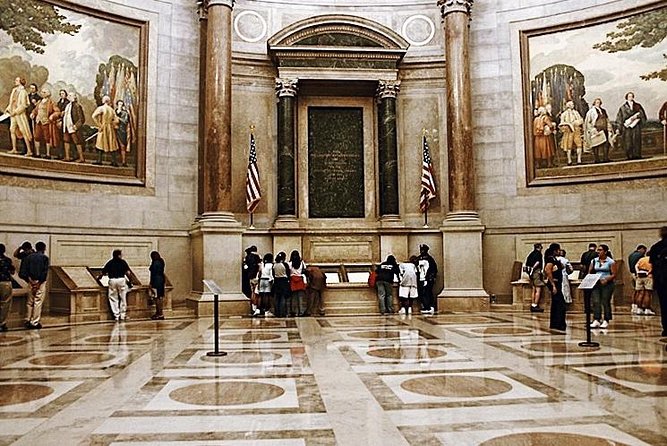
- Up-close access to America’s founding documents in the Rotunda, guided room-by-room.
- Letters and milestone documents in the Public Vaults area, including items linked to George Washington, JFK, and the Emancipation Proclamation.
- Magna Carta shows up in the Rubenstein Gallery so you see influences before the United States existed.
- Very small groups (up to 8), with a format that’s truly private for your party.
- Guides with strong storytelling and crowd-handling skills, with standouts like Annemarie, Meghan, Donna, Kate, and Ryan.
Why the National Archives works better with a guide
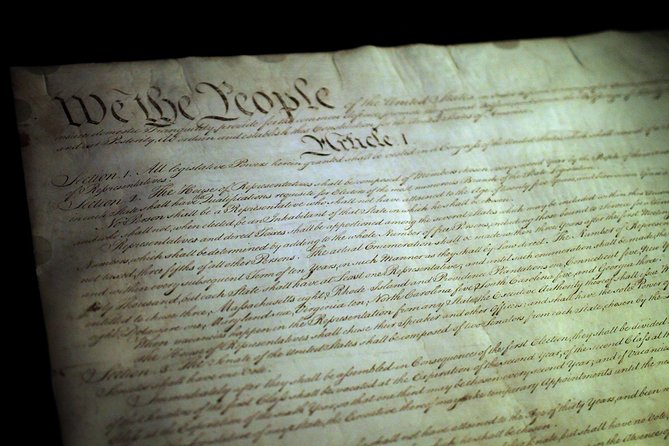
The National Archives can be a lot, even when you’re excited. There’s the building itself, the crowd energy, the strict museum rules, and then the simple fact that the most important documents are easy to miss if you don’t know where to look first.
That’s where this tour helps. You get an expert to point out what matters, connect the documents to the people and ideas behind them, and keep you from wandering into half-the-story mode. And because the tour is designed for a tight window—about 1.5 to 2 hours—you end up with a clear mental map instead of a blur of signage.
You can also read our reviews of more guided tours in Washington DC



Stop 1: The Rotunda and the founding documents you came for
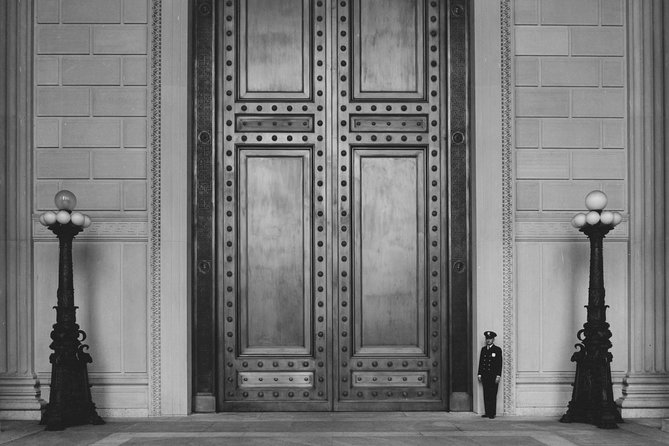
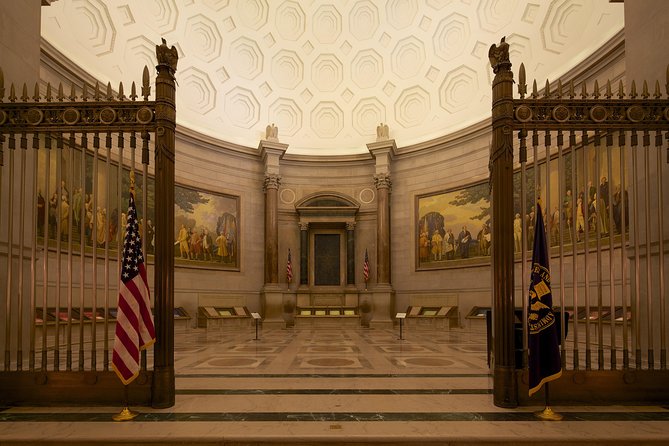
Your tour begins at the National Archives Museum at 701 Constitution Ave. NW. From there, your guide brings you into the core spaces where the “wow” factor lives. The Rotunda is treated like the tour’s heartbeat: this is where you learn how the Declaration of Independence and the Constitution relate to the Bill of Rights, while you’re looking at the originals on display.
Two things make this part especially worth it:
- You get context, not just facts. You’re not only told what the documents say—you’re shown how they fit together as part of a bigger political shift.
- You’re taught how to observe. Instead of drifting, you know what to focus on as you view each document and what themes to listen for.
If you’re a fan of the founding era, you’ll probably appreciate how the tour ties in additional foundational writings connected to early American governance, including items referred to as part of the Federalist Papers discussion. That extra thread makes the documents feel less like isolated artifacts and more like a system in the making.
Public Vaults: Washington and JFK letters, plus the Emancipation Proclamation
After the Rotunda, you shift toward the Public Vaults Exhibits. This is where the tour grows beyond the “poster-page trio” and starts showing how American history looked in real documents—letters, records, and turning points.
This is also where you’ll see historic letters tied to George Washington and John F. Kennedy. Even if you’ve read about these figures, it hits differently to see their words in a museum setting where the physical artifacts are treated with the kind of care you usually only see in serious archives.
Then comes one of the strongest emotional pivots on the tour: the Emancipation Proclamation. In 1863, it marked a major shift tied to the abolishment of slavery, and having it placed in the middle of your tour helps you understand that the founding documents aren’t the finish line—they’re part of a long, messy timeline. (And yes, it’s a lot. A guide helps you keep your footing.)
Rubenstein Gallery and the Magna Carta connection

The tour doesn’t stop at American documents. You end in the Rubenstein Gallery, where the big surprise is the Magna Carta of 1297—a document written well before the United States existed, yet influential in shaping concepts that later echoed in American legal and political thinking.
This section is a smart choice for your brain. It changes the usual “America starts here” story into a “America has roots” story. If you’ve ever wondered why the language of rights and law feels familiar across centuries, this is where you get the origin point in a way that’s easy to remember.
How skip-the-line really plays out in real life
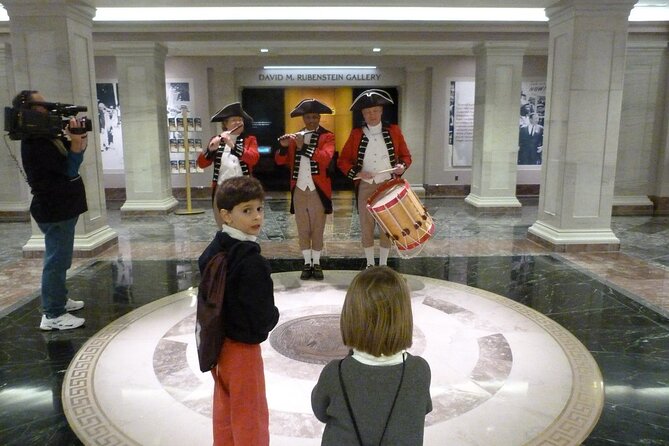
The title says skip-the-line, and that matters—because the National Archives can get crowded. This tour is set up with priority entry concepts so you spend less time stuck outside, and more time in the rooms where the documents are.
But here’s the honest part: security procedures still exist. Some lines may form even with skip-the-line style access, because that’s how museum security works. Also, there are rules you should know before you get there:
- No large bags or suitcases; only handbags or small, thin bag packs go through security.
- Some rooms have quiet or restricted speaking rules, and your guide will tell you about those before you enter.
So plan for a steady, controlled experience—not a magical zero-wait teleport. Think “time saved,” not “no delays ever.”
You can also read our reviews of more tours and experiences in Washington DC


The guide experience: what makes this tour feel exclusive
This is a private tour where only your group participates. The provider also lists a maximum of 8 people per tour, which is small enough that your guide can actually tailor pacing and answer questions without losing everyone.
The review record supports a simple pattern: the best tours here are the ones with guides who can juggle three jobs at once—explaining, keeping you moving through crowd flow, and staying calm when the building is busy. Names that come up again and again include:
- Annemarie (praised for deep knowledge and engaging storytelling)
- Ryan (praised for handling questions and keeping the tour lively)
- Meghan (praised for family-friendly attention, including keeping kids engaged)
- Donna (praised for making connections and pacing the experience well)
- Kate and Brenda (praised for presentation style and storytelling)
If you get one of these guides, you’ll likely notice something subtle but important: they don’t just say what you’re looking at. They help you understand why it matters, and where your attention should go next.
Getting there at 701 Constitution Ave NW without stress
The meeting point is straightforward: 701 Constitution Ave. NW, Washington, DC 20408. It’s also listed as near public transportation, which is useful because DC traffic and parking can turn a simple plan into a time tax.
Most people won’t need a car for this one. If you’re coming from downtown hotels, Uber or taxi is usually the easiest way to drop you close and avoid wrestling with blocks of city logistics—especially if you’re carrying a small bag only (as required).
Price and value: what $105.73 really buys you
At $105.73 per person, you’re not paying for museum admission in the classic sense. The experience is built around the guided portion and the timed access support that helps you get into the right spaces with less waiting.
So the value equation looks like this:
- If you want to see the documents but also want to understand them, a guided format makes the money feel less like a surcharge and more like paying for someone else’s expertise.
- If you’re the type who loves reading slowly and wandering freely, you might feel the guide’s structure limits your “choose-your-own-adventure” time.
Duration matters too. At about 1.5 to 2 hours, you’re paying for a concentrated experience. It’s long enough to get multiple document rooms in one go, but short enough that you can still enjoy the rest of your day in DC afterward.
Who should book this National Archives exclusive tour
This tour is a great fit if you:
- Want the big-ticket founding documents with context, not just photos.
- Prefer a small group over a large bus-tour shuffle.
- Travel with kids and want a guide who can keep attention and explain without dumbing things down. (Meghan is a name that shows up for that kind of family-friendly engagement.)
- Appreciate accessibility support. The tour format is listed as wheelchair friendly, and it’s designed as a museum visit that can work for different mobility needs.
It may be less ideal if you:
- Want lots of free time to wander every corner on your own.
- Get frustrated when tours are paced and you’re asked to stand where the guide wants you to see something specific.
A few smart prep tips before you go
This one is practical, not glamorous, because it affects your time inside:
- Pack light: small bags only. If you show up with a bigger bag, you’ll lose time to security friction.
- Wear comfortable shoes. Even with a guided route, you’ll be moving through museum spaces and standing in viewing areas.
- Bring your curiosity. This tour works best when you let the guide’s connections lead you, especially the Magna Carta-to-America thread.
Also, a heads-up that’s easy to miss: museums in DC can have occasional closures. If delays happen beyond about an hour from start time, the provider says they’ll offer an alternative, but refunds or discounts aren’t available in those cases. So, book with the mindset that you’re buying a guided museum experience, not an ironclad guarantee that every room will operate exactly as planned.
Should you book this skip-the-line National Archives guided tour?
If your goal is to see the Constitution, Declaration, and Bill of Rights with real context—and then connect them to other major documents—you should book this. The tour’s strengths are practical: small group size, expert storytelling, and a tight route that makes the most of limited time.
I’d especially recommend it if you’re short on DC days and want your “National Archives time” to feel focused and satisfying. On the other hand, if you hate structured pacing and want to linger everywhere, consider whether a self-guided visit would suit you better.
FAQ
FAQ
How long is the National Archives guided tour?
It runs about 1.5 to 2 hours.
Where does the tour start?
The meeting point is at National Archives Museum, 701 Constitution Ave. NW, Washington, DC 20408.
Is this tour private?
Yes. It’s listed as a private tour/activity, with only your group participating.
What group size should I expect?
The maximum group size listed is 8 people per tour.
What documents will I see on the tour?
You’ll view the U.S. Constitution, Declaration of Independence, and Bill of Rights in the Rotunda, plus additional items including letters associated with George Washington and JFK, the Emancipation Proclamation, and the Magna Carta (1297) in the Rubenstein Gallery.
Is the museum admission included?
The National Archives Museum admission is listed as free, while you pay for the guided experience and the access support.
Is the tour wheelchair accessible?
It’s listed as wheelchair friendly (with a note that this does not apply if you choose a specific semi-private option).
What should I bring for security?
Large bags and suitcases aren’t allowed inside. The guidance says only handbags or small thin bag packs can go through security.
Is there a cancellation refund if I change my plans?
Yes—there is free cancellation. You can cancel up to 24 hours in advance for a full refund; within 24 hours, refunds aren’t available.