REVIEW · WASHINGTON DC
Embassy Row Spy History Tour with a Former CIA Officer
Book on Viator →Operated by Spyher · Bookable on Viator
DC turns into a code-cracking playground. With a former CIA officer, the Embassy Row Spy History Tour strings together real Washington locations and real spy themes, then caps it with a hands-on dead-drop exercise you can try. I love the former CIA officer perspective and how the experience stays interactive, not a sit-and-stare lecture.
One thing to consider: it’s an outdoor walking tour, and the provider notes it runs best in good weather. Bring comfortable shoes and dress for DC conditions, since you’ll be outside for most of the ~1 hour 30 minutes.
In This Review
- Key highlights you’ll feel right away
- Why Embassy Row Spy History Feels Like a Puzzle
- Meeting at the Rear Admiral Samuel Francis Dupont Memorial (and staying oriented)
- Stop 1: Dupont Circle Hotel and the suspicious death thread
- Stop 2: Revolutionary War spy activity and a pre-deployment tradition
- Stop 3: Sheridan Circle and the Orlando Letelier assassination
- Stop 4: Impersonal communication, signals, and dead-drop practice
- The guide experience: former CIA officer plus Rosanna’s engaging delivery
- Price and value: is $75 for 90 minutes fair?
- What to bring (and how to make the most of the interactive parts)
- Who should book this Embassy Row spy tour?
- Should you book it?
- FAQ
- How long is the Embassy Row Spy History Tour?
- How much does the tour cost?
- Where does the tour start and end?
- Is the tour offered in English?
- Is bottled water included?
- What is the cancellation policy?
Key highlights you’ll feel right away
- Four specific Washington stops that connect Dupont Circle, Revolutionary War espionage, Sheridan Circle, and the Orlando Letelier assassination
- A practical tradecraft segment where you practice impersonal communication, watching for a signal and unloading a dead drop
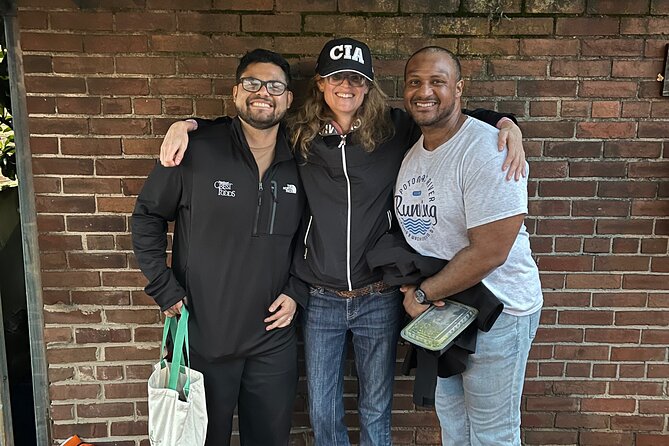
- Former CIA officer-led storytelling with Rosanna’s personable, engaging style
- Small group size (25 max), which makes the role-play portion easier to participate in
- Central start and easy logistics near public transportation, starting at the Rear Admiral Samuel Francis Dupont Memorial
Why Embassy Row Spy History Feels Like a Puzzle
Spy tours can go one of two ways: trivia on repeat, or a sense that you’re reading the city like a map of clues. This one goes for the second approach. You’re walking embassy-row-adjacent streets, but the stories are built like case files—dates, places, and motivations that tie together instead of floating around as random facts.
What I like most is that the tour doesn’t treat tradecraft like a myth. You get practice with the idea of impersonal communication, including a moment where you’re asked to spot a signal and participate in a dead-drop scenario. It’s not just history; it’s history plus a bit of role-play that helps everything stick in your head.
Also, the tour uses DC’s geography in a smart way. Dupont Circle and Sheridan Circle aren’t just scenic dots—they’re where real events happened, and the guide can point at the surrounding streets with context.
You can also read our reviews of more walking tours in Washington DC



Meeting at the Rear Admiral Samuel Francis Dupont Memorial (and staying oriented)
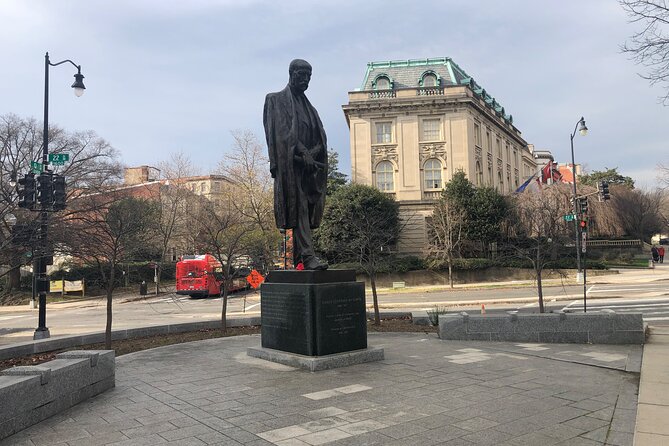
The tour starts and ends at the Rear Admiral Samuel Francis Dupont Memorial in Washington, DC 20009. That matters more than you might think. A loop that returns to the same spot keeps your evening simple, especially if you’re planning a dinner afterward.
A mobile ticket is provided, so you’re not scrambling for printouts on your phone battery. And since the meeting point is described as near public transportation, you can usually get there without turning it into a whole travel project.
The group is capped at 25 people. In practice, that means you’re less likely to get lost in the crowd during the interactive portions. If you hate being “one of forty faces,” this size is a relief.
One practical note: the tour calls for moderate physical fitness. That doesn’t mean it’s a hike, but you should expect enough walking to keep you moving for the full ~90 minutes. Wear shoes you can stand and walk in for a bit.
Stop 1: Dupont Circle Hotel and the suspicious death thread
The first stop centers on a suspicious death that took place at the Dupont Circle Hotel. This is a good opening location because it pulls you into the theme fast: in spy work, uncertainty isn’t a side detail—it’s the whole atmosphere.
You’ll talk about what makes a death suspicious and how those kinds of events can turn into questions people can’t ignore. Instead of focusing only on headlines, the guide frames it as a pattern: why certain deaths raise alarms, and how rumors or missing context can matter in intelligence work.
I like the pacing here. Starting with something local and unresolved feels more real than beginning with broad espionage talk. You’re primed to notice how the tour connects later episodes back to themes like secrecy, warning signs, and who benefits from confusion.
If you prefer tours that start with big famous names only, this might feel a little darker than expected at first. Still, it sets up the logic of the rest of the walk.
Stop 2: Revolutionary War spy activity and a pre-deployment tradition
Next, the tour shifts back in time to spy activity during the Revolutionary War. That change of era can go awkward if the guide doesn’t connect the dots. Here, the point is to show that intelligence work isn’t new—it changes costumes, but the fundamentals keep showing up.
You’ll also learn about a tradition of CIA officers before they deploy. The key thing for your expectations: you’re not being sold movie-style secrecy. You’re hearing about a real-world practice linked to readiness and mindset, framed as something officers do before they go out on assignment.
This stop helps you see a pattern: secrecy relies on discipline, and discipline relies on routines. Even when the stories move across centuries, the tour keeps pointing back to the human process behind espionage—planning, preparation, and communication habits.
This is also where the tour’s “former CIA officer” angle matters. The tradecraft framing tends to feel practical rather than purely dramatic, which is what I look for in a spy history experience.
Stop 3: Sheridan Circle and the Orlando Letelier assassination
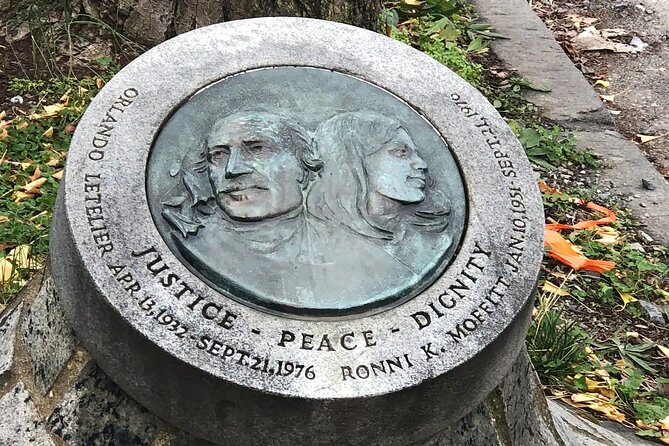
At Sheridan Circle, the tour covers the assassination of Orlando Letelier. This is one of the heavier moments in the itinerary, and it changes the tone from puzzle to gravity.
The main value of this stop is how it shows DC as more than a postcard capital. Specific events happened right in the streets you can stand on today. When a guide grounds the story in a visible location, it’s easier to understand why intelligence communities treat certain incidents as signals rather than isolated tragedy.
If you don’t like politically charged stories, you might find this segment emotionally intense. It’s not presented as sensationalism—more like a structured case discussion—but it is about an assassination, so the subject matter comes with weight.
Still, it’s also why this tour feels useful. Spy history isn’t only about gadgets and codes. It’s also about consequences, networks, and the costs of operating in the shadows.
You can also read our reviews of more historical tours in Washington DC





Stop 4: Impersonal communication, signals, and dead-drop practice
The tour ends with practice in impersonal communication—plus a dead drop scenario where you try to spot the signal and unload the dead drop. This is the part where many spy tours win or lose. Too often, “interactive” is just a photo-op.
Here, the interaction is tied to the core concept: how communication can be separated from the person carrying it. You’re learning by doing, even if what you do is a simplified exercise built for a group walking tour.
You can expect instructions, then a moment where your attention matters. The guide guides you through what to watch for, and you’ll try the action sequence. It’s the kind of mini-experience that sticks with you later because your brain remembers what it had to look for.
Also, this is where the smaller group size pays off. With a max of 25, the role-play doesn’t feel like a crowded school play. You’re more likely to hear instructions clearly and participate without feeling lost.
If you’re the type who loves puzzles and pattern recognition, this final segment is likely to be the best use of your time.
The guide experience: former CIA officer plus Rosanna’s engaging delivery
The tour is hosted by Spyher and led by a former CIA officer. In addition, I’m glad the delivery style seems to land well with people—Rosanna comes through as personable and engaging, which matters a lot for a topic that can otherwise feel heavy or abstract.
A spy-history tour has a tricky job: it has to make tradecraft readable without turning it into sci-fi. When the guide’s style is engaging, you’re more likely to stay with the story from stop to stop instead of zoning out during explanations.
You’ll also likely appreciate that the tour uses conversation to move along. People tend to enjoy questions and back-and-forth, and this tour is structured so the group isn’t just receiving information on rails.
In short: the experience feels tuned for both history buffs and casual curiosity. You don’t need to be a former intelligence professional to follow it.
Price and value: is $75 for 90 minutes fair?
At $75 per person for about 1 hour 30 minutes, this is a mid-range DC experience. The big question is value: what are you getting besides a walk and a handful of stops?
Here’s the value math I’d use:
- You’re paying for a former CIA officer perspective, which is the rare ingredient that changes the tone.
- You get four distinct locations tied to recognizable spy themes and specific incidents.
- You also get hands-on practice with impersonal communication and a dead-drop scenario, which is more than most history tours include.
The tour includes all fees and taxes, which helps avoid the usual “plus surprise” feeling. Bottled water is not included, so plan to bring your own or be ready to buy it nearby.
If you’ve done lots of walking history tours in DC that are mostly narration, this one has a stronger “active” element. If you hate interactive components and want quiet, straight museum-style storytelling, you might prefer a traditional DC history tour instead.
What to bring (and how to make the most of the interactive parts)
Since bottled water isn’t included, I suggest carrying a small bottle or reusable water you can refill elsewhere. You’ll be walking and focusing for about 90 minutes, and it’s nice not to run dry halfway through.
Dress for the weather. The provider notes the tour requires good weather, and DC can change fast. A light layer helps, and comfortable shoes are a must given the moderate physical fitness requirement.
If you enjoy these topics, bring a curious mindset rather than expecting deep technical detail. The tour aims to teach concepts you can understand and then turn into action during the dead-drop practice.
And if you want to get the most out of the final exercise, watch closely during the setup. The signal moment rewards attention, not confidence. If you miss something, the guide-style is likely to keep things moving so you still get to participate.
Who should book this Embassy Row spy tour?
This tour is a strong match if you like:
- DC history that’s tied to real locations, not just big-picture dates
- spy themes across time, from the Revolutionary War to modern tradecraft-style ideas
- interactive elements where you do something, not just hear about it
- small group experiences (25 max) that keep you from being lost in a crowd
It might be less ideal if you:
- want a purely visual, museum-like experience with no walking
- prefer light, comedy-first touring and don’t want assassination-related subject matter
- dislike structured role-play or practice exercises
Should you book it?
I’d book the Embassy Row Spy History Tour if you want DC to feel like a living intelligence story—four real sites, a former CIA officer perspective, and a hands-on dead-drop practice that makes the concepts memorable. The $75 price feels more justified here because you’re getting both place-based history and an activity that actually uses your brain.
If you’re on the fence, think about what you enjoy most: watching other people act out ideas, or understanding the idea yourself by trying it. If your preference is the second one, this tour has a good chance of being your kind of DC night out.
FAQ
How long is the Embassy Row Spy History Tour?
It runs about 1 hour 30 minutes.
How much does the tour cost?
The price is $75.00 per person.
Where does the tour start and end?
It starts at the Rear Admiral Samuel Francis Dupont Memorial (Washington, DC 20009, USA) and ends back at the same meeting point.
Is the tour offered in English?
Yes, the tour is offered in English.
Is bottled water included?
No. Bottled water is not included.
What is the cancellation policy?
Free cancellation is available. You can cancel up to 24 hours in advance of the start time for a full refund, and cancellations within 24 hours are not refundable. The experience also requires good weather, and if it’s canceled due to poor weather you’ll be offered another date or a full refund.