
REVIEW · WASHINGTON DC
Georgetown Spy History Tour with a Former CIA Officer
Book on Viator →Operated by Spyher · Bookable on Viator
Georgetown has more hidden stories than you’d guess. This 1.5-hour walking spy history tour takes you to select Georgetown locations through the lens of a former intelligence officer, mixing real tradecraft concepts with the neighborhood you think you know. I like that it’s interactive, with lots of chances to ask questions, and I also like how the guide ties everyday details in Georgetown to how covert work actually reduces risk. The main thing to consider: it’s a walking tour, so you’ll want comfortable shoes and a moderate fitness level.
You get a fun mix of atmosphere and technique. The tour isn’t just name-drops and dates; it’s built around how spies think—especially around impersonal communication—and even includes a practical-style moment where you read a signal site and learn how dead drops are supposed to work. If you’re expecting a purely dramatic storytelling experience with no technical side, this may feel more practical than cinematic.
In This Review
- What Makes This Georgetown Spy Tour Different
- Setting Off in Georgetown: Oak Hill Cemetery to Martin’s Tavern
- Stop 1: Georgetown Spy Sites and the Mindset Behind Espionage
- What you’ll actually see
- Why the tradecraft lessons matter
- The interactive, Q&A rhythm
- Walking Tour Reality Check: Pace, Fitness, and Weather
- Price and Value: Why $85 Can Make Sense Here
- Who This Tour Fits Best (and Who Might Skip It)
- Practical Tips to Get the Most Out of Your 90 Minutes
- Seamless DC Pairings After the Tour
- Should You Book This Georgetown Spy History Tour?
- FAQ
- How long is the Georgetown Spy History Tour?
- Where does the tour start and end?
- What is included in the price?
- Is food included?
- What language is the tour offered in?
- What should I do if weather is poor?
What Makes This Georgetown Spy Tour Different
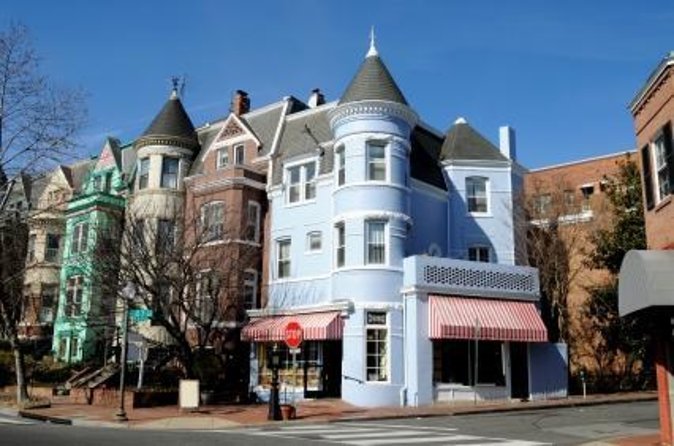
Here’s what you’re really buying with this tour, beyond the spy theme.
- A former intelligence officer runs the show: You get firsthand perspectives on how communication and risk management shaped operations.
- Question time is part of the format: You’re not stuck with a one-way lecture. You can ask follow-ups as you walk.
- WWII and Cold War stories connect to specific places: You’ll see Georgetown as a living map of earlier international intrigue.
- Tradecraft gets explained in plain language: The tour tackles impersonal communication and why it matters.
- You practice the idea, not just the story: The guide tests the theory with signal-site and dead-drop concepts as you go.
- Small group size keeps it personal: With a maximum of 25 travelers, the pace stays conversational.
Setting Off in Georgetown: Oak Hill Cemetery to Martin’s Tavern

The tour begins outside Oak Hill Cemetery at 3001 R St NW and ends about 0.7 mile away outside Martin’s Tavern on Wisconsin Ave NW. That end point matters: it’s close to the action, so you can roll right into lunch, a snack, or a slow walk around Georgetown afterward.
The timing is straightforward: plan on about 90 minutes of walking and stops. This isn’t a quick drive-by. You’ll be on your feet enough to notice how the neighborhood layout shapes sightlines, how people used spaces, and how routes can matter when someone is trying to stay unseen.
One practical note: wear weather-appropriate layers. This kind of tour depends on good sightlines and steady walking, and it’s easy to get cold when you’re standing around for explanations.
You can also read our reviews of more historical tours in Washington DC


Stop 1: Georgetown Spy Sites and the Mindset Behind Espionage

This is the entire “engine” of the experience. You’ll visit select Georgetown spy sites with a former intelligence officer, and along the way the guide shares personal anecdotes from overseas and connects them to what you’re seeing on the street.
What you’ll actually see
Even without a long list of named addresses, the tour format is clear: you’ll get directed looks at places that played roles in intelligence history, including the kind of locations tied to leaders, heroes, and traitors across the WWII and Cold War eras. The guide also helps you interpret how local residents shaped espionage history, so you’re not only watching the architecture—you’re learning why certain spaces were useful.
If you like neighborhood walking tours where the guide points out clues you’d otherwise miss, this fits that style well. You’ll be encouraged to pay attention to small details that become meaningful in context.
Why the tradecraft lessons matter
A big part of the tour is the mindset of the profession: how spies tried to reduce risk through impersonal communication and why that idea changes the way people act and choose connections.
That theme comes up in two especially practical ways:
- The guide discusses why using indirect communication reduces exposure and error.
- You then test the theory with a hands-on-style moment: reading a signal site and learning the concept behind unloading a dead drop.
Now, don’t expect Hollywood theatrics. The value is in the logic. You learn how systems are designed so one person’s mistake doesn’t instantly compromise everything. Even if you’re new to espionage topics, the tour is built to make these concepts understandable while staying grounded in real operational concerns.
The interactive, Q&A rhythm
The tour highlights “lots of opportunities to ask your guide questions,” and that’s a big deal. Spy history can get abstract fast—names, agencies, and events can blur together. When you can ask direct questions, you clarify the “why” behind the story: why a certain approach was used, why it was risky, and how the neighborhood’s layout helped or hindered operations.
This is also where the tour feels social in a positive way. If you enjoy espionage-lovers energy—people who want to compare notes and go deeper—this format tends to attract that crowd.






Walking Tour Reality Check: Pace, Fitness, and Weather
This experience is a walking tour, so your comfort matters more than you might think.
- You should have a moderate physical fitness level. The tour is not described as strenuous, but you’ll be covering distances between points while listening and stopping for explanations.
- Bring water. It’s an easy add-on, and Georgetown can feel deceptively tiring on a cool day when you’re standing outside for stretches.
- Dress for the weather. The tour operates in the real world: if weather is poor, it can be rescheduled or refunded.
The biggest “drawback” I’d plan for is the cold or wet factor. One review note specifically praised the tour even while it was very cold, which tells me the experience goes on through typical DC weather swings. If you get uncomfortable in low temperatures, pack for it like you’re going to be outside longer than you think.
Price and Value: Why $85 Can Make Sense Here

At $85 per person for about 1.5 hours, this isn’t a budget stroll. But it also isn’t just a generic neighborhood tour with a spy costume layer.
You’re paying for three things that raise the value:
- A former intelligence officer’s perspective, which changes the quality of the explanations. Even people with basic interest get something more credible than secondhand storytelling.
- Interactivity. Tours with real Q&A often reduce confusion and make you feel like the time is working for you, not against you.
- Tradecraft moments that turn concepts into something you can picture. The signal-site and dead-drop theory test is a big part of why this doesn’t feel like a standard lecture.
Also, the group size cap of 25 helps. Smaller groups usually mean more back-and-forth and less time waiting for a guide to reset the conversation.
If you’re comparing options in DC, ask yourself what you want most: a broad overview of Georgetown, or a focused spy-focused walk with practical explanations. If it’s the second, this price is easier to justify.
Who This Tour Fits Best (and Who Might Skip It)

This is a strong match if you:
- enjoy real-life spy stories and international intrigue
- like walking tours where you can spot details you’d otherwise miss
- want explanations that include how and why, not just who and when
- meet people who are genuinely interested in espionage topics
It’s less ideal if you:
- hate walking tours or get uncomfortable standing outdoors for explanations
- prefer only high-level history with no tradecraft concepts
- want a purely light entertainment experience with no practical theory component
If you’re a casual history tourist, you’ll still find plenty to enjoy, but you’ll likely appreciate it most if you’re the type who likes thinking about systems, risk, and communication.
Practical Tips to Get the Most Out of Your 90 Minutes
A good tour can be wasted by small mistakes. Here’s how to make your time count.
- Bring water and a light snack plan for before or after. The tour doesn’t include snacks.
- Wear walking shoes. You’re doing a route from Oak Hill Cemetery area to Martin’s Tavern.
- Dress for DC weather. Layers beat one thick coat because you’ll be moving and stopping.
- Plan to talk to the guide. If you like learning, show up with one question ready, like how communication changes risk in real operations.
- Keep your phone charged. The tour uses a mobile ticket, and you may want maps as you reconnect to Georgetown streets afterward.
If you tend to get quiet in Q&A settings, that’s okay. You can still listen, but try to ask at least one question. That’s where the tour’s “most people love this” element tends to happen.
Seamless DC Pairings After the Tour
Because the tour ends outside Martin’s Tavern, you’re well-positioned to keep exploring Georgetown right away. This is a good time to slow down and look at what the guide pointed out, then connect those ideas to what you see around you.
If you like to keep your days efficient, treat this as a “Georgetown chapter” that sets context for the rest of your neighborhood time. You’ll likely start noticing details differently on your next walk—street layout, sightlines, and how places can feel ordinary until someone tells you why they mattered.
Should You Book This Georgetown Spy History Tour?
Yes, you should book if you want Georgetown with a purpose: not just charm, but context. This tour has a near-perfect rating and the most praised elements line up with what matters most—a former intelligence officer, plenty of Q&A, and a walking format that makes spy history feel concrete. If you’re comfortable walking for 90 minutes and you like the idea of learning tradecraft concepts like signal sites and dead drops (in a guided, educational way), you’ll probably leave with a new way to read the neighborhood.
If you hate cold weather walking or you’d rather stick to traditional sightseeing with minimal theory, then you might prefer a different Georgetown tour. But for the right match, this is a highly focused, question-friendly way to see DC beyond the usual highlights.
FAQ
How long is the Georgetown Spy History Tour?
The tour runs for about 1 hour 30 minutes.
Where does the tour start and end?
It starts outside Oak Hill Cemetery at 3001 R St NW, Washington, DC 20007, and ends about 0.7 mile away outside Martin’s Tavern at 1264 Wisconsin Ave NW, Washington, DC 20007.
What is included in the price?
The tour includes a 1.5 hour walking tour focused on WWII spy sites and Georgetown spy history.
Is food included?
No. Snacks are not included.
What language is the tour offered in?
The tour is offered in English.
What should I do if weather is poor?
This experience requires good weather. If it’s canceled due to poor weather, you’ll be offered a different date or a full refund. Service animals are allowed, and the tour requires a moderate physical fitness level.