REVIEW · WASHINGTON DC
Private Monuments At Night Tour
Book on Viator →Operated by Capital City Tours · Bookable on Viator
Nightfall turns DC into one big story. This private 3-hour route strings together the most famous monuments and memorials, with a guide keeping the pace moving and explaining what you’re looking at as the sky darkens. I especially like the private-group flexibility—your guide can shift a little time between stops—and I love that the admission is free at each location on the route, so you’re mostly paying for the guide and timing, not entry fees.
One thing to plan for: the stops are brief. You’ll get a solid look at each site, but if you want to linger for a long time at just one memorial, you’ll probably need a second outing on your own.
In This Review
- Key highlights at a glance
- Why do DC at night: the lights and the quieter mood
- Private tour perks: pickup, mobile ticket, and a guide who manages the clock
- U.S. Capitol and the White House Exterior: architecture hits at dusk
- World War II, Jefferson, and MLK: memorials that teach while you walk
- National World War II Memorial (about 20 minutes)
- Thomas Jefferson Memorial (about 20 minutes)
- Martin Luther King, Jr. Memorial (about 15 minutes)
- Korean War and Lincoln: duty, democracy, and the weight of names
- Korean War Veterans Memorial (about 20 minutes)
- Lincoln Memorial (about 20 minutes)
- Marine Corps (Iwo Jima) and Vietnam: the most emotional stretch
- U.S. Marine Corps War Memorial (Iwo Jima) (about 15 minutes)
- Vietnam Veterans Memorial (about 20 minutes)
- Price and value: what you’re really paying for
- Who should book this tour (and who might want a different plan)
- Should you book this Private Monuments At Night Tour?
- FAQ
- What’s the duration of the tour?
- What time does the tour start?
- Is this a private tour?
- Are admission tickets required for the stops?
- Can I cancel and get a refund?
- Is this tour suitable for most people and service animals?
Key highlights at a glance
- Private night route: only your group, so you’re not squeezed into a crowd rhythm
- Pace that can adjust: time per stop isn’t rigid, and the guide manages the clock
- Free admission at each stop: Capitol, White House exterior, and major memorials along the way
- A guided tour that connects the dots: you’ll get context for what each memorial honors
- Classic photo time: monuments look sharp after dark, with better contrast and calmer streets
Why do DC at night: the lights and the quieter mood
Washington, DC by day is impressive. DC at night feels more personal. The buildings and monuments don’t just look famous—they look intentional, like someone turned the volume down on the noise and turned the spotlight up on meaning.
For this tour, the biggest win is the way the route matches the vibe. You start near political power, then move through major American “why we built this” moments: World War II, civil rights, multiple wars, and the people these memorials honor. With a guided pace, you don’t end up doing the usual thing—speed-walking past plaques and hoping you’ll remember everything later.
You’ll also appreciate the photo conditions. Night lighting makes stonework and statues look crisp, and it’s generally easier to compose shots than in peak midday crush. I like that you’re not just looking—you’re stopping long enough to actually see details: names, inscriptions, and the layout that shapes how you feel when you stand there.
You can also read our reviews of more private tours in Washington DC

Private tour perks: pickup, mobile ticket, and a guide who manages the clock
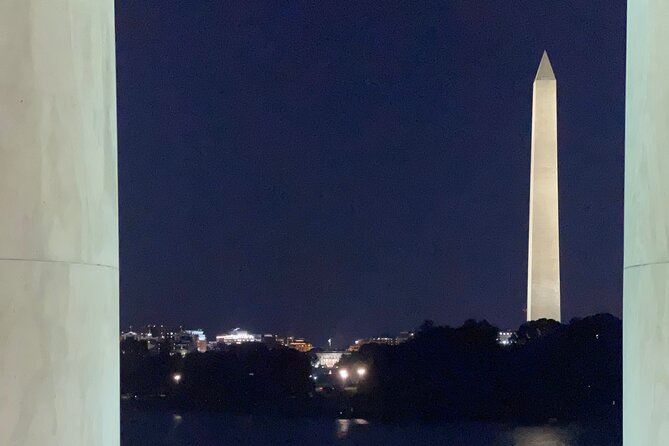
This is a private tour, so your group controls the energy. That matters at night, when walking speeds vary and people may want a photo, a closer read of a wall, or one more minute to look up at the shape of a building.
The tour also includes a mobile ticket, which keeps things simple when you’re moving from stop to stop. And pickup is offered, which is useful when you don’t want to fuss with where to park after dark or how to piece together transit with limited evening time.
The stand-out praise here is how the guide runs the evening. One highlight that came through clearly is that the guide, Brittany, is reported to be early, communicative, and flexible with how long you spend at each stop. That flexibility is a real quality-of-life upgrade. You’re not trapped in a “now or never” schedule where a quick detour means you lose something important.
U.S. Capitol and the White House Exterior: architecture hits at dusk
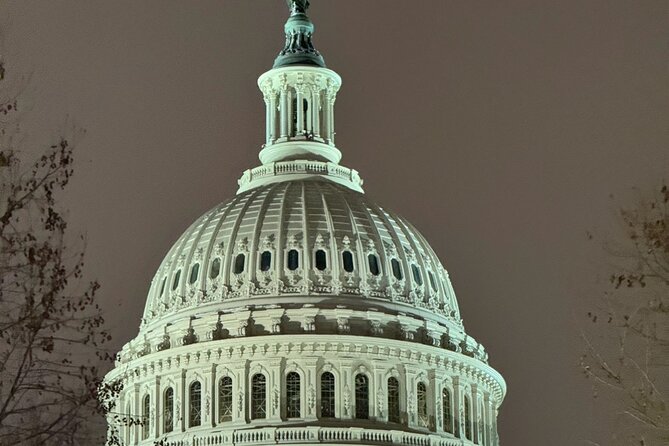
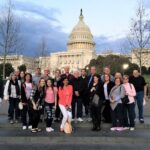
You’ll kick things off around the U.S. Capitol area with time for a walk on the grounds. Even if you’ve seen photos, the Capitol’s scale is hard to grasp until you’re there and the details start snapping into place—statues, formal buildings, and landscaped areas that feel designed for ceremony. You get about 15 minutes here, which is just enough to take in the big picture and catch a few key views without feeling rushed in every direction.
This is also a good warm-up stop. Starting at the Capitol grounds sets your mental baseline for the rest of the evening. You’re moving from government itself into the memorials that explain the stakes behind it.
Then the tour shifts to the White House for exterior viewing. You’ll have around 15 minutes, which is plenty for photos and a close look at the façade—without promising you anything beyond what’s practical at night. The exterior stop is a smart way to include the most iconic U.S. building on an evening schedule while keeping the tour flowing.
Practical tip: if you want the best shots, pay attention to where you can safely stand and what’s in the background (streetlights, crowd lines, and angles). Your guide can help you position quickly so you don’t burn your short time.
World War II, Jefferson, and MLK: memorials that teach while you walk
Next comes the part of the tour that often hits hardest: the memorials. The evening works well here because the lighting turns “a list of names” into something more human. You’re not reading in a textbook setting—you’re standing where the tributes were designed to be felt.
National World War II Memorial (about 20 minutes)
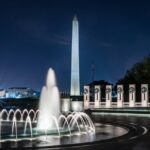
You’ll spend about 20 minutes at the National World War II Memorial. It’s described as moving and educational, honoring the bravery and sacrifice of the Greatest Generation. In practice, what makes this stop work on a night tour is the emotional pacing: you arrive ready to absorb, and the memorial’s design encourages you to slow down even if the itinerary is time-limited.
Look for the details that communicate both scale and personal weight. If you only give yourself a quick glance, you’ll miss why the memorial lands. Even with a time constraint, you can still read the central messages and take in the overall layout before moving on.
You can also read our reviews of more evening experiences in Washington DC



Thomas Jefferson Memorial (about 20 minutes)
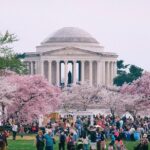
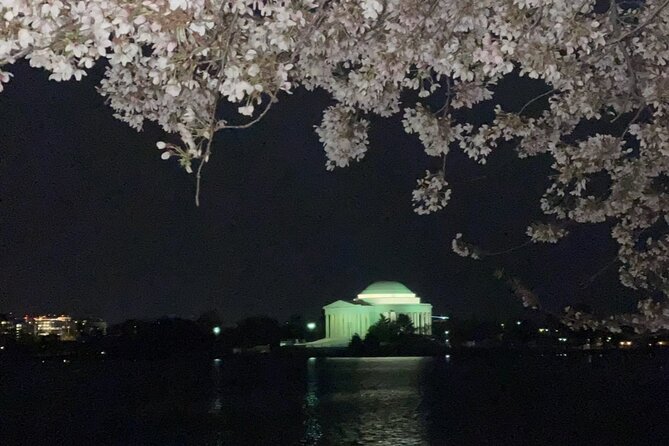
The Thomas Jefferson Memorial comes next, with about 20 minutes and an easy focus on the connection to American history and democracy. It’s located at the Tidal Basin, and that location can affect how the space feels—especially at night when the water and open views give the building a different presence than during daytime traffic.
With limited time, your best move is to decide what you want to understand first. Is it Jefferson’s role in shaping political ideas, or is it more about the memorial’s “place in the city” feel? Either way, 20 minutes is enough time to absorb the main message and still capture a couple of photo angles.
Martin Luther King, Jr. Memorial (about 15 minutes)
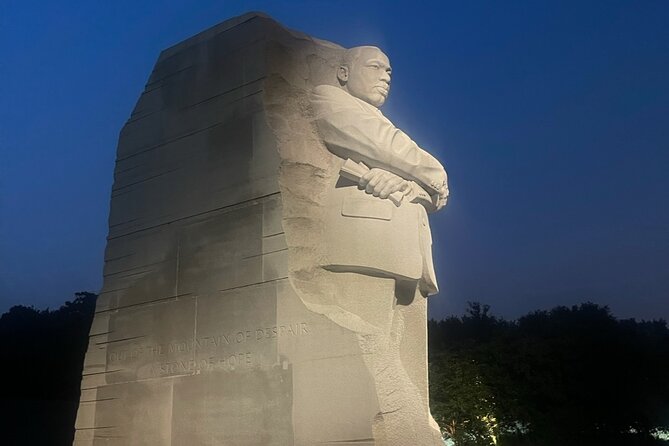
Then you’ll reach the Martin Luther King, Jr. Memorial for about 15 minutes. It’s framed around nonviolence, equality, and social change, and it’s meant to keep his message of hope and justice in view. This is one of the stops where a guide’s context makes the difference between seeing a structure and understanding why it was built.
Try to give yourself a full moment rather than skimming. Even if you’re short on time, you’ll feel the intention more clearly when you stop and let the symbolism land before you move on.
Korean War and Lincoln: duty, democracy, and the weight of names
After the civil-rights-focused stop, the route continues into other eras of service and sacrifice. These are memorials that don’t ask for hype. They ask for attention.
Korean War Veterans Memorial (about 20 minutes)
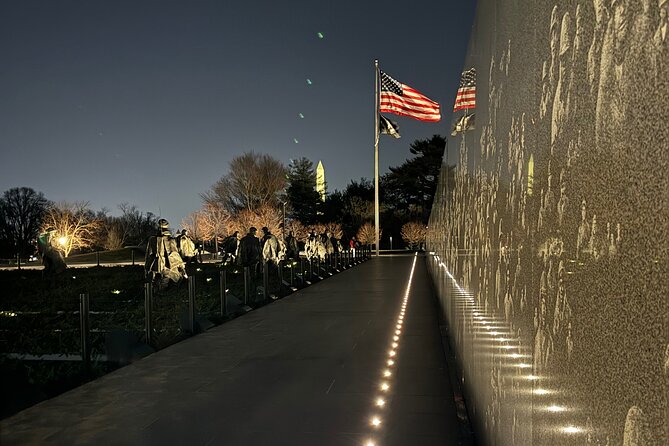
You’ll spend about 20 minutes at the Korean War Veterans Memorial. The focus is courage, dedication, and service in defense of freedom and democracy. This stop can feel quieter than some of the larger, busier landmarks nearby, and that’s a good match for a night tour—there’s less distraction, so the tribute reads more clearly.
Take a breath here. If you’ve been snapping photos at every stop, try switching gears for just a few minutes and read the messages carefully. That’s where the stop becomes more than another stop on a route.
Lincoln Memorial (about 20 minutes)
Next is the Lincoln Memorial, with about 20 minutes. It’s described as a powerful symbol of democracy, equality, and freedom. You’ll see why it’s so photographed—Lincoln’s presence and the monument’s layout create strong “stand and look” moments.
Even on a short schedule, you can get a lot out of Lincoln by choosing one quote or message to focus on. Then match it to what you’ve already seen this evening—World War II sacrifice, civil rights ideals, and wartime service. The stop becomes a kind of “big picture” anchor.
Photo tip: night can create glare on certain surfaces depending on where lights fall. If your camera struggles, adjust your angle slightly rather than just trying more settings.
Marine Corps (Iwo Jima) and Vietnam: the most emotional stretch
By this point, you’ve moved from government to memorials to the long arc of modern American conflict. The final stretch often feels like the emotional core of the tour.
U.S. Marine Corps War Memorial (Iwo Jima) (about 15 minutes)
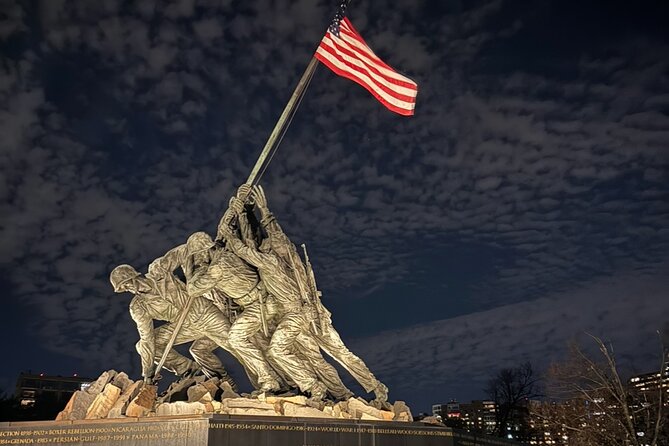
You’ll visit the U.S. Marine Corps War Memorial, commonly associated with the Iwo Jima tribute. The description calls it poignant and significant, honoring U.S. Marines and all service members who have served and sacrificed.
Even with only about 15 minutes, this is usually a stop where people naturally slow down. It’s not just about getting the photo. It’s about standing in the moment the memorial was designed to create—respect, reflection, and a clear visual reminder of service.
Vietnam Veterans Memorial (about 20 minutes)
Finally, the Vietnam Veterans Memorial for about 20 minutes. It’s portrayed as powerful and moving, focused on remembrance, healing, and gratitude. This stop is the one I’d treat as “read first, photos second.” If you do photos first, you might miss the emotional impact of the inscriptions.
A night tour can be intense at the end of a short walk-and-guide route. Give yourself permission to spend those 20 minutes quietly. You don’t need to perform enthusiasm. Just stand, read, and let it settle.
Price and value: what you’re really paying for
There’s no price listed here, so I’ll focus on value logic you can use. This tour includes free entry at every stop, so your money is mainly going toward:
- the guide’s time and interpretation
- the private route structure and timing
- pickup being offered (depending on what you choose)
- the convenience of a mobile ticket
For Washington, DC at night, convenience is real value. Transit and parking can turn an evening plan into a headache. By bundling nine major sites into a controlled 3-hour window, you get a tight “greatest hits” education without spending your whole trip figuring out timing between landmarks.
Is it perfect value if you want to spend an hour at one memorial? Maybe not. The itinerary is set for a full overview, not deep study. But if your goal is to see the big monuments and leave with a clearer understanding of what they honor, it’s a strong match.
Also, the private format helps you get more from each minute. If your group is slower or faster, your guide can shift. That’s not a small difference when you’re moving at night.
Who should book this tour (and who might want a different plan)
You should book this if:
- you want a 3-hour overview of major DC monuments and memorials after dark
- you prefer a guided route over planning a self-walk at night
- you value free admissions and want your costs to stay predictable
- your group wants flexibility rather than a fixed crowd schedule
You might choose something else if:
- your top priority is long reflection at one specific memorial
- you dislike walking short distances between stops
- your group can’t handle a brisk, evening pace
This tour fits families and mixed-age groups fairly well because the sites are free and the time per stop is limited. It’s also a good option for couples who want an easy plan with a meaningful storyline.
Should you book this Private Monuments At Night Tour?
If you want the best kind of DC night experience—memorials, context, and a smooth route in about three hours—this is a very sensible booking. The private format and the reported flexibility (plus guide Brittany’s early, communicative style) make it feel less like a checklist and more like a guided evening that respects your time.
I’d book it when you have one limited evening and you want to cover the major monuments in a way that actually helps you understand them. I’d skip it only if you’re the type who wants to camp out at memorials for long stretches. In that case, you can still visit these places—but you’ll likely want a slower plan with more time at the sites that matter most to you.
FAQ
What’s the duration of the tour?
It runs about 3 hours.
What time does the tour start?
The start time is 7:00 pm.
Is this a private tour?
Yes. Only your group participates.
Are admission tickets required for the stops?
Admission tickets are listed as free for each of the stops on the route.
Can I cancel and get a refund?
Yes. You can cancel up to 24 hours in advance for a full refund.
Is this tour suitable for most people and service animals?
Most travelers can participate, and service animals are allowed. The tour is also near public transportation.