
REVIEW · WASHINGTON DC
Smithsonian Air & Space Museum Guided Tour Semi-Private 8ppl Max
Book on Viator →Operated by Babylon Tours DC · Bookable on Viator
Space history is easier with a guide.
This semi-private Smithsonian Air and Space Museum tour is built for people who want the big stories fast, without being stuck in a wandering loop across the National Mall. I like the small group cap of 8, which keeps questions moving and helps the guide steer you through the museum efficiently. I also like the way the route threads together early flight and U.S. space milestones, so you leave with a clearer sense of how technology evolved into the moon landings.
One key consideration: the Air & Space Museum is under major construction for years, and that can affect which exhibits you see. The tour is adjusted based on what’s available that day, but if you’re chasing one specific object, it’s smart to check the museum’s current listings before you go.
In This Review
- Key highlights at a glance
- Entering The Smithsonian Air & Space Museum With a Game Plan
- The Morning-Off, Ticket-On Reality: Getting There and Getting In
- The Guided Route: From the Wright Flyer to Apollo Hardware
- The “first flight” start and why it works
- Spirit of St. Louis and what Lindbergh represents
- The moon landing era hits: Buzz Aldrin, Apollo 11, and real moon rocks
- “What it means to be an astronaut today”
- What You’ll Actually See During Renovation (and How to Plan for It)
- Why This Semi-Private Setup Feels Better Than DIY
- Price and Value: Is $89.67 Worth It?
- End of Tour: Keep Exploring (or Grab the Freeze-Dried Treat)
- Who This Tour Suits Best (And Who Might Want Another Plan)
- Should You Book This Tour?
- FAQ
- How many people are in the group?
- How long is the Smithsonian Air & Space Museum guided tour?
- Where does the tour start?
- Is museum admission included in the tour price?
- What are some of the big exhibits you might see?
- How does the renovation at Air & Space affect what I’ll see?
- Is hotel pickup included?
- Are there bag and dress rules at the museum?
- Is this tour wheelchair accessible?
- What is the cancellation policy?
Key highlights at a glance
- Max 8 people keeps the tone personal and the pacing under control.
- 2.5 hours (approx.) is enough time for a curated route without burning a full day.
- Big-name originals and artifacts are built into the story, from early flight to Apollo hardware.
- Renovation-aware routing means the guide adapts when galleries are unavailable.
- Freeze-dried ice cream is a fun, low-key finale option at the gift shop.
Entering The Smithsonian Air & Space Museum With a Game Plan

Washington, DC is great for museums. The problem is you can easily lose hours just figuring out where to start. This tour solves that with a guided route designed to hit the museum’s central themes in a compact amount of time.
The tour begins at 600 Independence Ave SW near the National Mall, and you meet your guide with a small group (up to 8). From there, you follow a specially-designed path through the museum—starting with the earliest aircraft history and then moving toward the U.S. space program. That structure matters because the Air & Space Museum is huge, and it can feel like information overload if you try to read every placard on your own.
Another plus: you can choose a morning or afternoon start time. That flexibility helps if you’re juggling other DC plans like Capitol Hill, the Smithsonian lineup, or an evening activity.
You can also read our reviews of more guided tours in Washington DC



The Morning-Off, Ticket-On Reality: Getting There and Getting In
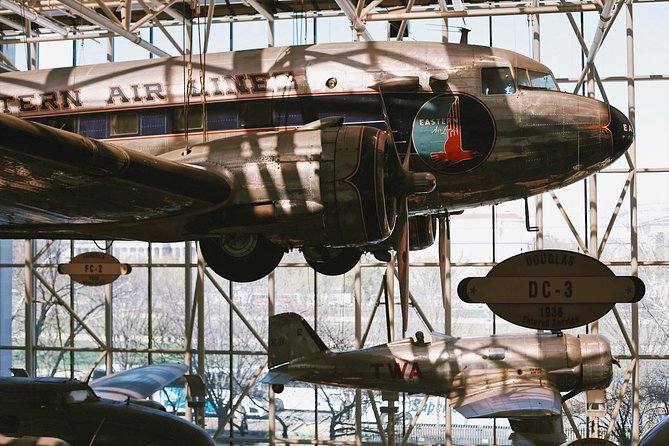
This is not a complicated logistics tour, but a few practical details will make your day smoother.
First, there’s no hotel pickup or drop-off. If you’re staying central, you’ll likely use Uber or a taxi. The museum is also near public transportation, so you have options.
Next, you’ll need to provide a mobile phone number (with country code). That’s important because it helps coordinate your meeting, especially when museums and tours can shift around.
Once you arrive, expect security. The museum’s security rules are specific:
- No large bags or suitcases
- Only handbags or small, thin bag packs through security
Dress matters too—some sites inside require appropriate dress. If you’re traveling in warm weather, plan for that too: DC can be hot and humid, and you’ll be moving through multiple galleries.
Finally, lines can still happen. Even if there’s no guaranteed skip-the-line access, having a guide helps you avoid the worst bottlenecks by choosing an efficient flow.
The Guided Route: From the Wright Flyer to Apollo Hardware
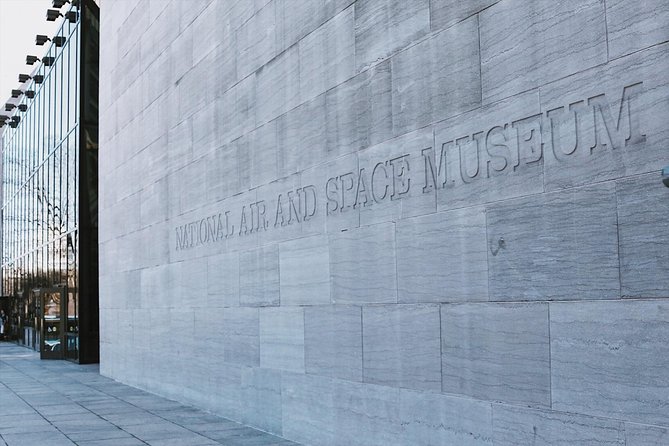
This tour is set up like a timeline you can actually follow. Instead of bouncing randomly from room to room, you get a story arc: early aircraft history, then the jump to aviation innovations that feed into spaceflight thinking.
The “first flight” start and why it works
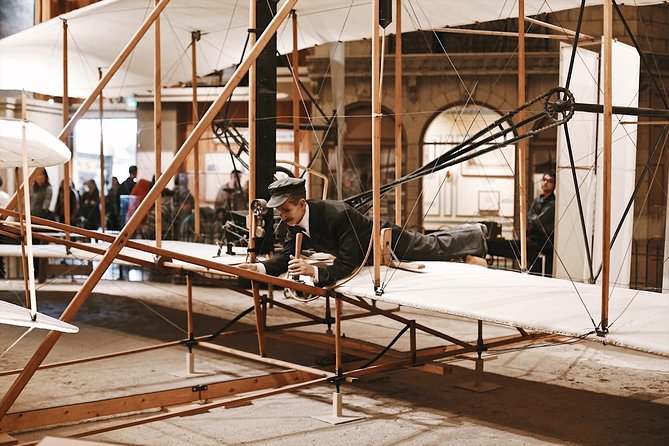
The tour begins at the beginning of aviation history—essentially the moment powered flight moved from idea to reality. It’s not just a trivia stop. Starting here gives you context for why the U.S. space program looked the way it did later: engineering questions about thrust, materials, and control don’t appear out of nowhere.
You’ll typically see highlights such as the Wright Flyer (original) as part of this opening stretch (and the tour generally includes the earliest plane to take flight).
Spirit of St. Louis and what Lindbergh represents
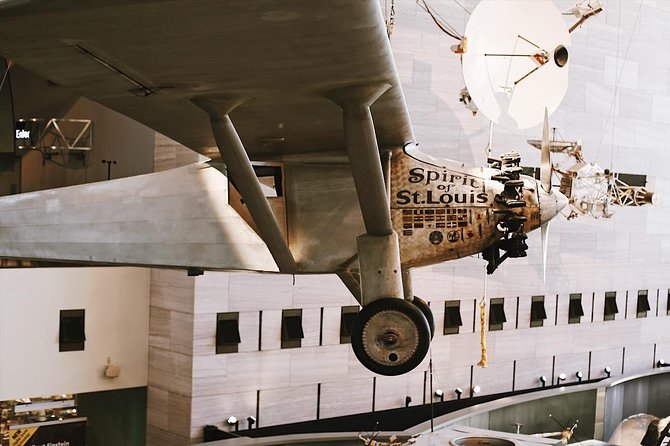
Then you shift to aviation’s big leap in global reach: the solo transatlantic story. The Spirit of St. Louis is the anchor here, tied to aviator Charles Lindbergh and the 1927 flight from New York to Paris.
Why this matters for your visit: Lindbergh’s flight wasn’t only about bravery. It was about navigation, reliability, and planning—skills and engineering habits that show up again in how humans tried to solve longer and harder missions.
You can also read our reviews of more private tours in Washington DC






The moon landing era hits: Buzz Aldrin, Apollo 11, and real moon rocks
After you’ve built the aviation foundation, the tour pivots hard into space. This is the portion most people remember because it’s physical, not abstract.
You’ll see items linked to U.S. lunar missions such as:
- Buzz Aldrin’s spacesuit and moon boots
- Apollo 11 Command Module
- Moon rocks brought back from the lunar landing
These objects are powerful because they make the space race feel real. A spacesuit isn’t just a costume—it’s life support, heat management, pressure systems, and hardware designed for a one-of-a-kind environment. Seeing it close-up changes how you read the story.
“What it means to be an astronaut today”
The tour doesn’t stop at landing. It also connects the historical achievements to what astronauts do now—how training, technology, and mission planning keep evolving.
This is where having a guide helps. Instead of you trying to connect dots from signage, the guide turns the exhibits into a coherent explanation.
What You’ll Actually See During Renovation (and How to Plan for It)
Here’s the honest part: the Air & Space Museum is under massive construction for multiple years. That means some galleries and exhibits may be closed, and not everything described for a typical tour may be on display on your exact date.
The good news is the tour is adjusted based on changing renovation stages and the exhibits available to the group that day. The route is meant to keep you moving toward the museum’s big themes, even if a specific gallery is temporarily unavailable.
In practice, the tour highlights include a mix of primary and backup items depending on what’s open. Examples of objects that are commonly listed as highlights include:
- Neil Armstrong Apollo 11 spacesuit (original)
- Lunar Module (backup)
- John Glenn’s Mercury capsule (original)
- Chuck Yeager’s Bell X-1 (original)
- Hubble Telescope (test vehicle)
- Skylab (backup)
- Space Shuttle’s mid deck (model)
My planning advice: if there’s one exhibit you absolutely do not want to miss, check the museum’s current exhibition status right before you go. Renovation doesn’t mean a bad tour—it means you should show up with flexible expectations and a willingness to follow the guide’s route.
Why This Semi-Private Setup Feels Better Than DIY
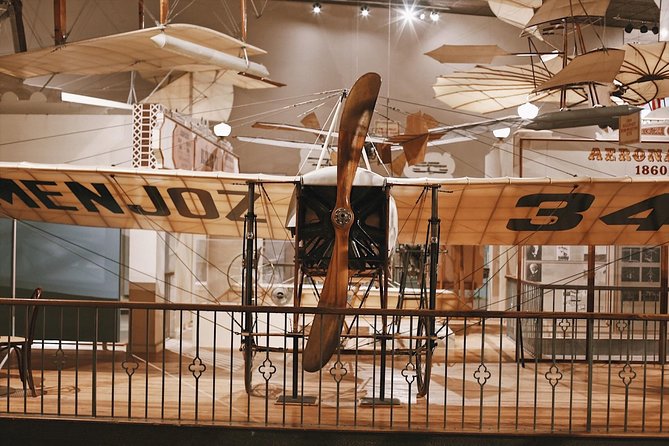
You’re paying for more than someone pointing at objects. The value is in how the guide turns a giant museum into a usable experience.
With a group limited to 8, you’re more likely to get:
- Better pacing (so you don’t spend your time trapped by photo lines)
- More direct answers to questions
- A route that aims for the museum’s strongest, most teachable stops
That’s especially useful for families. A couple of guides tied to this tour have been praised for keeping teenage kids interested, which is no small feat in a museum full of text. And for adults, the tour often shines by pulling out details that aren’t obvious at a glance—like the smaller story threads behind famous hardware.
If you prefer museums where you can ask questions freely and move with purpose, this format is a good match.
Price and Value: Is $89.67 Worth It?
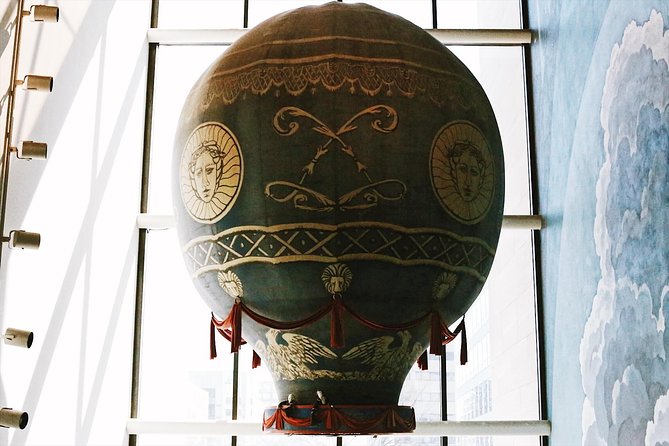
The tour price is $89.67 per person for about 2 hours 30 minutes (approx.). Admission to Smithsonian museums is generally free, so you’re mostly paying for the guide and the structured route—not for museum entry.
So is it worth it? In most cases, yes, if you’re the type of visitor who wants:
- A clear storyline
- Less wandering
- Help navigating crowds and timed museum flow
- Context you can’t get from labels alone
But there’s a fair warning. If renovation limits access heavily on your date, you may feel the experience is not delivering the full list of showstoppers. That’s why it’s smart to check what’s currently open and to keep your expectations flexible.
Also note: there’s a 100% satisfaction guarantee under specific conditions (you must contact within 24 hours after the tour, and you should allow the provider a chance to make it right before posting about the issue). That policy is there to protect you if something truly went wrong.
End of Tour: Keep Exploring (or Grab the Freeze-Dried Treat)
The tour ends back at the meeting point area after your guided walk through the museum highlights. The payoff is that you don’t feel finished after the tour.
Once you’re done, you can keep exploring on your own. Many people also like to visit the gift shop afterward—there’s freeze-dried ice cream mentioned as part of the “full experience.”
That simple add-on is worth something. It’s a fun way to end a tour about space food and astronaut life support in a very low-stakes, silly way.
Who This Tour Suits Best (And Who Might Want Another Plan)
This tour is a strong fit if you:
- Want a time-efficient visit to a huge museum
- Prefer a semi-private group size over large crowds
- Like aviation history plus U.S. space exploration in one coherent route
- Are traveling with mixed ages and want help keeping younger visitors engaged
It’s less ideal if:
- You need wheelchair access or have significant walking limitations (the tour is noted as not available for those with walking disabilities or wheelchair use)
- You only want a long, independent “read everything” museum day
- You’re extremely sensitive to the possibility of renovation-related exhibit changes
Should You Book This Tour?
Book it if you want the Air & Space Museum to feel like a story, not a maze. The small group of up to 8, the guided route, and the focus on major aircraft and Apollo-related artifacts make it a practical way to get the most from a 2.5-hour visit—especially if you’re fitting this museum into a broader DC itinerary.
Skip or double-check before booking if your must-see list is narrow and you can’t tolerate renovation changes. In that case, verify what’s currently on display and decide whether you’d rather schedule later for a fuller pass.
FAQ
How many people are in the group?
The tour is limited to a maximum of 8 people per tour. It’s designed as a small-group, semi-private experience.
How long is the Smithsonian Air & Space Museum guided tour?
The duration is listed as about 2 hours 30 minutes.
Where does the tour start?
The meeting point is 600 Independence Ave SW, Washington, DC 20560. The activity ends back at the meeting point.
Is museum admission included in the tour price?
The tour price covers the guided tour and guide, while admission is described as free for the museum in the provided information. In other words, you’re paying for the tour itself.
What are some of the big exhibits you might see?
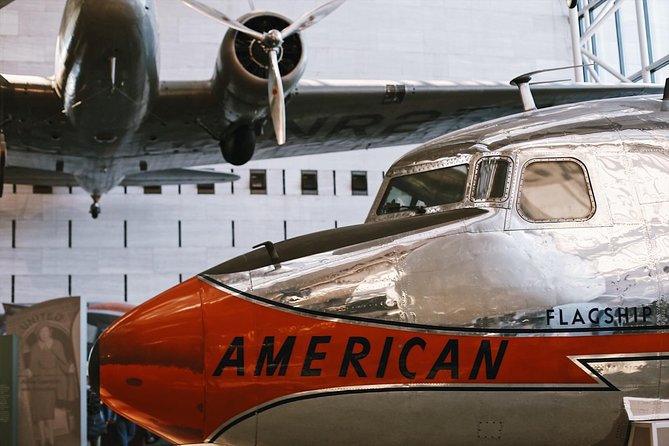
The tour highlights commonly include the Wright Flyer (original), Charles Lindbergh’s Spirit of St. Louis, Buzz Aldrin’s space suit and moon boots, the Apollo 11 Command Module, and moon rocks brought back from the moon landing. Other named highlights may include Mercury, Bell X-1, Hubble test vehicle, Skylab, and shuttle mid-deck model.
How does the renovation at Air & Space affect what I’ll see?
The museum is under major construction and that can mean some exhibits are not on display. The tour is adjusted based on what’s available, so what you see may vary by day.
Is hotel pickup included?
No. The tour does not include hotel pickup or drop-off. Using Uber or taxi is recommended.
Are there bag and dress rules at the museum?
Yes. No large bags or suitcases are allowed inside. Only handbags or small thin bag packs are allowed through security. Appropriate dress is required for entry into some sites.
Is this tour wheelchair accessible?
No. The tour is not available for those with walking disabilities or using a wheelchair.
What is the cancellation policy?
You can cancel for free up to 24 hours in advance for a full refund. If you cancel less than 24 hours before the start time, the amount paid is not refunded.