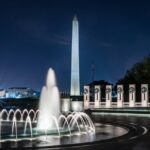
Spies, betrayal, and real addresses. This 1 hour 30 minute walk turns Washington into a live map of covert-era stories you can actually stand beside. You’ll stop at landmark locations tied to the CIA, Cold War handovers, and wartime tradecraft, with time to ask questions as you go.
I especially like the small-group format. With a maximum of 8 people, the guide can answer your questions without rushing you along, and you can swap interests with fellow espionage fans along the way. I also like that the guide helps with photo stops, so you’re not just watching from the sidewalk.
One watch-out: you’re outside for much of the tour, and each stop is brief. If you want extra time inside specific spots, note that the first location’s entry isn’t included, so you may need to plan for that.
In This Review
- Key things to know before you go
- The 90-Minute Format: How This Spy Walk Stays Fun
- Meeting at 2025 E St NW and Ending Near Dupont Circle
- Stop 1: The Exchange Saloon (Capitol Couples) and a 1970s CIA Twist
- Stop 2: 918 16th St NW and Air America’s CIA-Lined Shadows
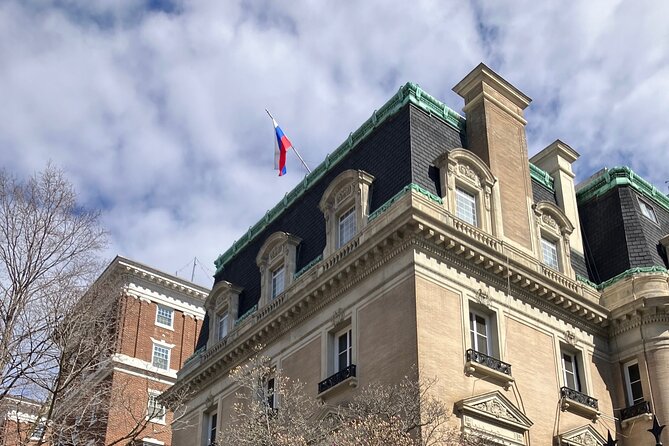
- Stop 3: 1125 16th St NW, the Soviet Embassy, and Cold War Handovers
- Stop 4: The Mayflower Hotel (Autograph Collection) and WWII-Era Tradecraft
- Stop 5: Dupont Circle Hotel and a Suspicious Putin-Era Death
- Value Check: Is $49.99 Worth It for Five Spy Stops?
- Who This Tour Fits Best (and Who Might Want Something Different)
- Should You Book This DC Spy History Walking Tour?
- FAQ
- How long is the DC Spy History Walking Tour?
- How much does the tour cost?
- What language is the tour offered in?
- How many people are in the group?
- Where does the tour start?
- Where does the tour end?
- Is bottled water included?
- Is admission included for all stops?
- Is transportation to the meeting point included?
- Is free cancellation available?
Key things to know before you go
- Max of 8 people keeps the conversation going and the pace calm
- Guide-led photo help at several political landmarks means better pictures and clearer viewpoints
- Five real addresses with CIA, Soviet, and WWII-era connections
- Most stops are free for entry, with one exception where admission isn’t included
- Central starting and ending points make it easy to continue exploring after the walk
The 90-Minute Format: How This Spy Walk Stays Fun
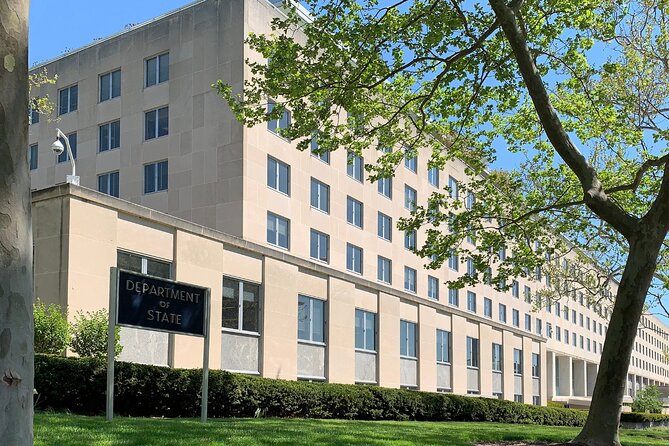
This tour is built for a specific sweet spot: enough time to connect the dots, without turning into a long slog. At about 1 hour 30 minutes, you get five major stops, each handled with a short, focused explanation and a chance to ask follow-ups.
The small group matters more than you might think. With up to 8 travelers, it’s easier to get your personal questions answered, whether you’re curious about Cold War spycraft or just want the big-picture story. It also makes the experience more social in a low-key way—you can talk shop with like-minded people without the usual tour chaos.
I also like how the pace respects attention. The overall feel is not rushed, and the stops are spaced so you can absorb what you’re seeing rather than just sprint to the next corner. You do end up walking, though, so wear shoes you trust.
And yes, you’ll be taking photos. The guide helps you snap pictures at multiple political landmarks, which is a practical detail. In DC, the right angle can be the difference between a postcard and a blurry memory.
You can also read our reviews of more walking tours in Washington DC



Meeting at 2025 E St NW and Ending Near Dupont Circle
Your tour starts at the Dunkin’ at the American Red Cross building, 2025 E St NW. That’s a convenient spot in central DC, and it sets you up to move through the city without complicated logistics.
You’ll end in front of the Embassy of Ireland at 2234 Massachusetts Ave NW, with the Dupont Circle metro station a short walk away. This is a nice finish point because you can keep going—grab coffee, browse nearby streets, or head back to the metro without feeling stranded at the far end of nowhere.
Transportation is not included either way. So if you’re planning how to get there and leave afterward, factor that in. The good news is that the tour is near public transportation, so you’re not dependent on a ride-share.
Also, you’ll have a mobile ticket, and you get confirmation at booking. That keeps things simple on the day—no printed ticket hunt, just your phone and time to arrive a few minutes early.
Stop 1: The Exchange Saloon (Capitol Couples) and a 1970s CIA Twist
Stop one is the Exchange Saloon, a site formerly known as Capitol Couples. This is where a married couple famously used the location to infiltrate the CIA in the 1970s. It’s a great way to start because it immediately reframes DC as a place where everyday settings can hide high-stakes operations.
You should know the timing and the entry detail. This stop is about 5 minutes, and it uses an admission ticket you’re not given automatically as part of the tour. In other words, you may want to bring a little extra cash or confirm how you plan to handle the admission at that point.
Why this first stop works: it gives you a baseline for how these stories operate. The tour isn’t just listing famous names and dates. It’s showing patterns—people using the city’s routines and public places to move unseen.
What to watch for here: treat it like a scene-setting moment. You’ll likely get the core story, but because time is limited, don’t expect a full museum-style presentation. If you’re especially interested in the 1970s thread, ask your guide a targeted question before you move on.
Stop 2: 918 16th St NW and Air America’s CIA-Lined Shadows
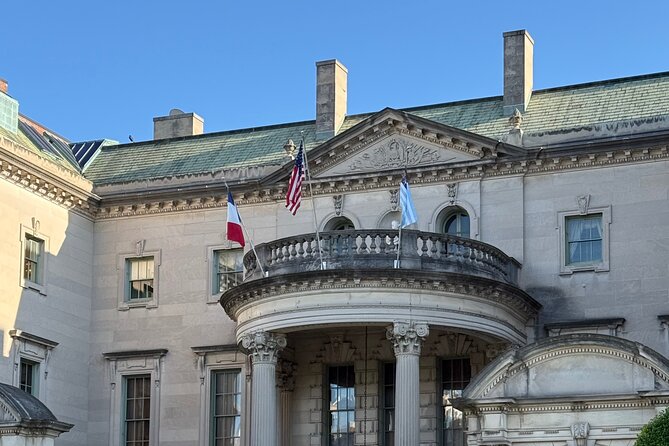
Next up is 918 16th St NW, the former headquarters of Air America—a clandestine airline operated by the CIA. The idea is simple but sharp: you don’t have to be in a trench coat to run a covert operation. Sometimes you just need paperwork, routes, and plausible deniability.
This stop also runs about 5 minutes. The admission is listed as free, which makes it a friendly stop for anyone who doesn’t want to juggle extra tickets mid-walk. It’s one of the easiest places on the route to say yes to, especially if you’re on a schedule.
This stop is valuable because it broadens the definition of espionage. Many people only picture secret meet-ups and coded messages. Air America highlights how logistics and cover stories can do a lot of the work—moving people and information while staying just believable enough.
If you’re into photo angles, this is the kind of location where the guide’s pointing and framing help. You’ll get political landmark views, but you’ll also want a sense of the building context. The guide’s photo support can help you capture the right street-facing perspective without wasting time.
Stop 3: 1125 16th St NW, the Soviet Embassy, and Cold War Handovers
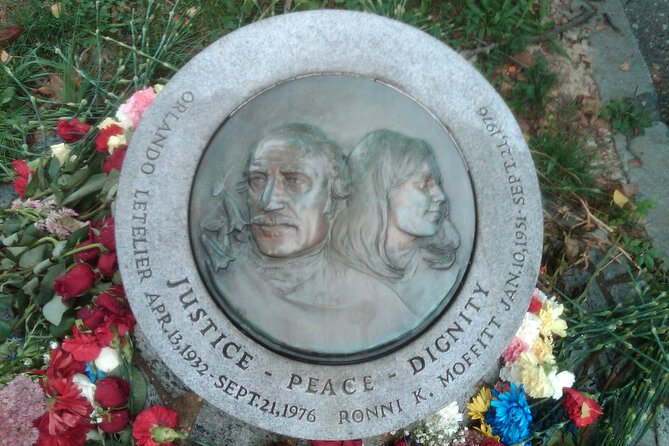
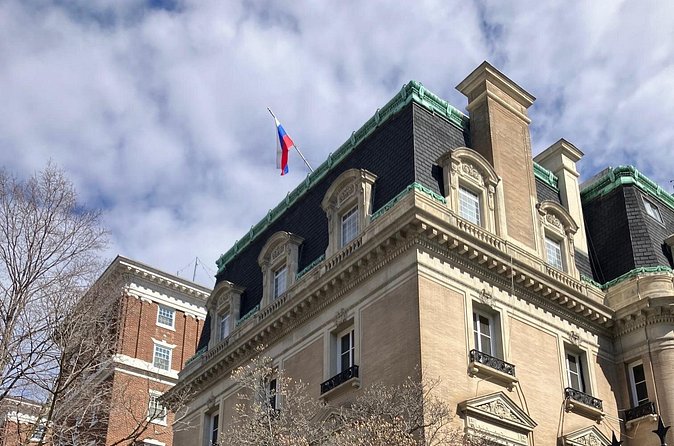
At 1125 16th St NW, you’re at the former Soviet Embassy. Today it serves as the current residence for the Russian Ambassador. The Cold War connection here is direct: it’s famously tied to where many American spies handed over secrets.
Again, expect a 5-minute stop with free admission. This layout keeps the pacing steady while still giving you a meaningful story. And it’s a strong mid-tour anchor because it shifts from one style of covert operation to another—state-level diplomacy turning into intelligence exchange.
Why this part feels real: the setting is not gone. The building is still in use. Standing nearby makes the Cold War feel less like an old TV season and more like a living political timeline. It also helps you understand how DC becomes a stage where messages move through official spaces.
Practical tip for you here: listen for the guide’s explanation of the handover concept, then look at the surrounding streets like you’re mapping a route. Even if you don’t memorize every detail, your brain starts connecting “how” and “where,” which makes the next stops click.
If you want to go further after the tour, this is the stop that usually gives people a new reading list. The story hints at networks, not just isolated events.
You can also read our reviews of more historical tours in Washington DC




Stop 4: The Mayflower Hotel (Autograph Collection) and WWII-Era Tradecraft
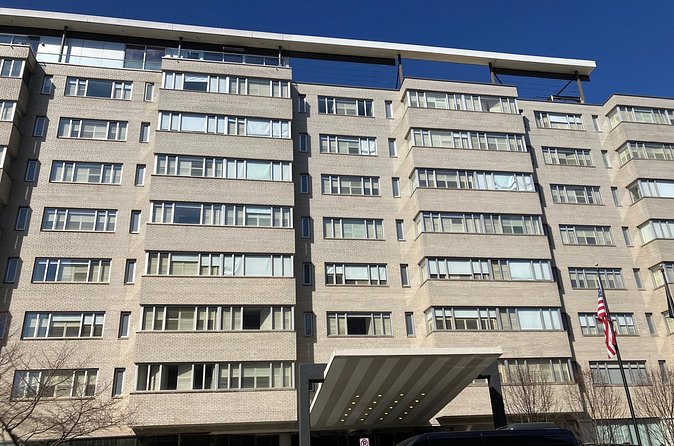
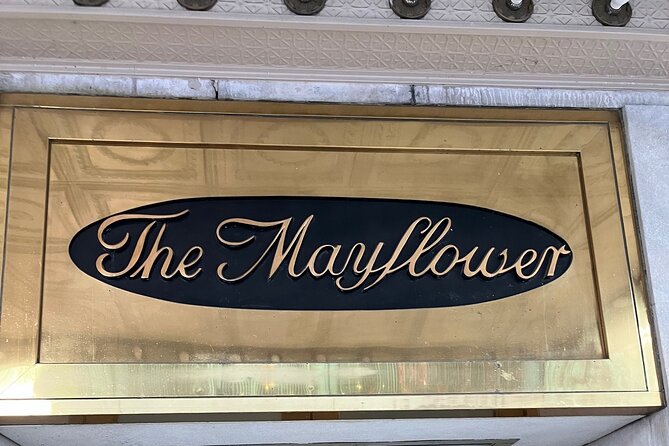
Stop four is the Mayflower Hotel, listed as the Autograph Collection. This is where CIA agents practiced their craft, and it also connects to a German operation during WWII. It’s a reminder that intelligence work didn’t start or stop with the Cold War. The methods have older roots.
This stop is another 5-minute stop with free admission. That matters because you don’t want to pay attention twice—once to the story and again to logistics. Here, you can focus on what the guide explains and take in the architectural presence of the building as part of the storytelling.
This is a stop that tends to click for people who like the human side of spy history. Hotels and similar civic spaces are where people meet, talk, and move between public and semi-public rooms. Even without details of particular agents, you can sense how a setting like this would support covert practice.
The photo support can help here, too. Big DC buildings can be hard to frame. With the guide’s help, you’re more likely to capture the right view rather than getting stuck shooting at awkward angles.
One more consideration: because the stop is short, you may want to ask a question that ties WWII-era practices to later CIA methods. If you ask well, the whole tour starts feeling like one connected timeline instead of five separate stories.
Stop 5: Dupont Circle Hotel and a Suspicious Putin-Era Death
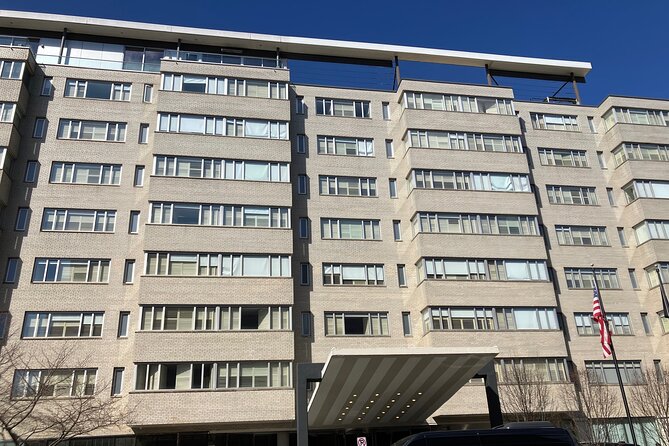
The final stop is the Dupont Circle Hotel. The location is tied to a suspicious death of an aide to Vladimir Putin. By the end, the tour has moved from Cold War handovers and covert airlines to more modern, politically charged intrigue.
This is also about 5 minutes and marked as free admission. That keeps the last segment easy to participate in without extra stop-and-start planning.
This ending works well because it shows that espionage and political mystery are not locked in the past. DC continues to serve as a hub where diplomacy and intelligence overlap, and the stories can feel contemporary even when you’re talking about specific events.
If you’re a photo person, this is a good moment to get one last strong shot before you head off. Also, use this stop as your cue to stay curious after the tour. Your guide hands you patterns; you’re the one who decides how far you want to go.
Value Check: Is $49.99 Worth It for Five Spy Stops?
At $49.99 per person for about 90 minutes, this tour is priced like a focused specialty walk rather than a long, multi-hour city history program. The value comes from a few clear things you actually feel on the street.
First, you’re paying for a guided story thread tied to five specific locations, not a general lecture. Second, you get bottled water, which sounds basic, but on a walking tour it removes one small “figure it out yourself” headache. Third, you get photo help at multiple landmarks, which is the kind of practical benefit that improves the experience right away.
The one cost wrinkle is admission at the first stop. The Exchange Saloon entry is not included, while the other stops are listed as free. For value, that means your real all-in cost depends on whether you plan to enter that first location during the stop.
If you want a quick recommendation approach: this is worth it if you like real addresses, you enjoy asking questions, and you don’t need a long museum-style visit. It’s less ideal if you want extensive time at each location or if you’re hoping for interior access at multiple stops.
Who This Tour Fits Best (and Who Might Want Something Different)
You’ll probably like this tour if you’re the type who enjoys political history with a plot. If Cold War stories, covert operations, and the idea of hidden methods inside public settings grab you, this route is made for you.
It also fits well if you like structure. With five stops and a predictable pace, you get a full arc without having to plan a DIY route. And if you want social time, the small group gives you a natural way to talk with others who care about the same theme.
This isn’t the best match if you want lots of interior time or a slow, take-your-time wandering experience. Each stop is about 5 minutes, so you’re mostly looking at the outside of these sites while the guide gives context. If you want deeper museum access at multiple points, you might prefer a different kind of history tour.
That said, it’s a strong way to build curiosity fast. Even if you start with only a casual interest in espionage, the format is designed to make the subject feel like a live story, not a dusty timeline.
Should You Book This DC Spy History Walking Tour?
Book it if you want a tight, guided walk through DC’s covert-era addresses, with small-group Q&A and real photo moments at landmark sites. The route covers a range—CIA-linked operations, Soviet-era connection points, WWII-era tradecraft, and a more modern political mystery—so you’re not stuck in one time period.
Skip it or pair it with other plans if you need lots of time inside buildings, or if paying extra for the first location’s admission would feel like a deal-breaker. Also, plan for walking since most of the time is outdoors and each stop is short.
If you’re curious what DC looks like when you learn to see the city as a set of coded stages, this is an easy yes. It gives you enough story to move beyond trivia and enough structure to make it feel worth the price.
FAQ
How long is the DC Spy History Walking Tour?
It runs for about 1 hour 30 minutes.
How much does the tour cost?
The price is $49.99 per person.
What language is the tour offered in?
The tour is offered in English.
How many people are in the group?
The tour has a maximum of 8 travelers.
Where does the tour start?
It starts at the Dunkin’ American Red Cross Building, 2025 E St NW, Washington, DC 20006.
Where does the tour end?
It ends in front of the Embassy of Ireland, 2234 Massachusetts Ave NW, Washington, DC 20008, a short walk to the Dupont Circle metro station.
Is bottled water included?
Yes, bottled water is included.
Is admission included for all stops?
No. The Exchange Saloon stop notes admission is not included. The other listed stops are listed as free.
Is transportation to the meeting point included?
No. Transportation to and from the tour start and end points is not included.
Is free cancellation available?
Yes. You can cancel up to 24 hours in advance for a full refund.