
REVIEW · WASHINGTON DC
The Escape Game DC: 60-Minute Adventure in Georgetown
Book on Viator →Operated by The Escape Game DC · Bookable on Viator
Locked doors, clever clues, and teamwork. This Escape Game DC adventure in Georgetown turns your group into a puzzle-solving crew for a timed mission. I love the way it keeps the mood fun, not scary, with themes that feel adventurous without going dark or creepy.
Two things I really like are how you choose the scenario (not a one-size-fits-all room) and the fact that the group stays small, with a maximum of 10 players. In the same building, you might get a guide like Star, full of upbeat energy, or Matt, who was especially helpful when people were working through tougher moments like the Titanic game.
One thing to plan for: the clues can be genuinely challenging, and you might not escape in every run. Also, unless you book every spot for your game, other players could join your team, so it won’t always be a private experience.
In This Review
- Key things to know before you go
- Choosing a Game: Pirate, Mummy, Titanic, and More
- Entering the Locked-Room Experience: How the Hour Actually Runs
- Working With Your Game Guide: Hints, Energy, and Real Help
- Small-Group Magic: What a Max of 10 Really Means
- Price and Value: Is $38.15 Worth One Hour?
- Georgetown Logistics: Where to Meet and How to Plan Your Arrival
- What This Activity Feels Like for Different Types of Groups
- Practical Tips to Have a Better Chance (and a Better Time)
- Should You Book the Escape Game DC?
- FAQ
- How long is the Escape Game DC in Georgetown?
- How much does it cost per person?
- Do I choose which escape scenario to play?
- Are the games scary or dark?
- How big is the group in the room?
- Is there a guide during the game?
- Can I leave the locked room during the game?
- What are the age requirements?
Key things to know before you go

- Pick from multiple missions: Pirate, Mummy, Doctor Dr. Whack, Titanic, The Cabin, and The Depths
- Timed action, built for real teamwork: you solve puzzles to finish within the game clock
- Not scary or dark by design, so it’s more accessible for a wide range of people
- Small-group format (max 10) keeps the room manageable and the guide engaged
- Exit button available: you can leave the locked room if needed
- Guide support when you get stuck, with hints available throughout the mission
Choosing a Game: Pirate, Mummy, Titanic, and More
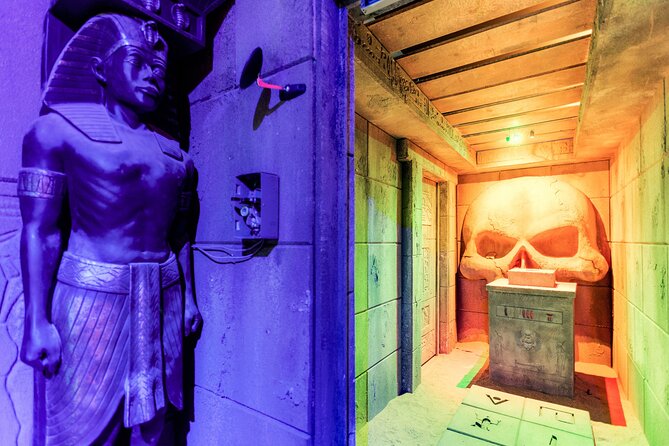
Escape Game DC is built around choice. When you arrive, you’re not just walking into a generic “solve what’s on the wall” experience. You select one mission from several storylines, each with a clear objective and a set time to complete it.
Here are the scenarios and how they typically run:
- A Pirate’s Adventure: 60 minutes to break the curse
- The Curse of the Mummy: 60 minutes to escape the tomb
- Dr. Whack’s Elixer of Life: 60 minutes to retrieve the secret
- Titanic: 45 minutes to save yourself and your team
- The Cabin: 45 minutes to get inside the cabin
- The Depths: uncover the lab’s secrets
What I find smart here is the mix of lengths. If you want a longer puzzle sprint, go for a 60-minute theme. If you’re squeezing this into a day with other Washington DC stops, the 45-minute games can feel easier to schedule.
Also, these are not horror-style rooms. The games are designed to avoid scary elements and dark settings. That matters in a city where a lot of “spooky” attractions can be hit-or-miss for mixed groups. This setup aims for excitement and problem-solving instead of fear.
One extra tip from real experience: Titanic can be tough. If your group likes a serious challenge, that’s a good pick. If you’re newer to escape rooms, you might still choose Titanic, but come in ready to communicate fast and ask for help early.
You can also read our reviews of more tours and experiences in Washington DC.



Entering the Locked-Room Experience: How the Hour Actually Runs

The rhythm of the experience is a big part of why it works. You’re not just dropped into a room and told good luck. A dedicated game guide brings you into the adventure and helps when you need it.
Here’s the timing structure to keep in mind:
- Plan on about 15 minutes before each game for preparation and briefing
- The game itself is about 45 to 60 minutes depending on your chosen scenario
- Plan on 15 minutes after the game for debriefing and photos
So even though the core mission is roughly an hour, your full experience time is about 1 hour 15 minutes. That matters when you’re trying to line this up with dinner or another Georgetown activity.
Inside the room, doors are locked. That can sound intimidating until you know the rules: every door has an exit button. If you ever feel you need to step out, you can. I like that this removes the “trapped” fear for people who don’t love confined spaces.
And because the group max is 10, the pacing stays human. You’re not fighting over every clue with 25 people. You can actually talk, compare notes, and cover more ground.
Working With Your Game Guide: Hints, Energy, and Real Help
In a lot of escape rooms, the “guide” mostly watches. Here, the guide is part of the experience. You’ll have a dedicated game guide who supports you as needed while you work through the mission.
If your team gets stuck, the guide can help you move forward. That’s important. Escape rooms often turn into silent frustration when people refuse hints. This format is more about teamwork and problem-solving than stubborn pride.
The review details make it clear guides can also bring the right tone. Star’s help, for example, stood out for friendly energy and responsiveness. Matt’s guidance was especially noted when people were working through Titanic’s difficulty, even when the team didn’t manage to escape before the clock ran out.
Translation for you: go into this as a collaboration, not a puzzle contest you have to win alone. If you’re spinning your wheels for a while, ask for help. You’ll get more value out of the hour that way.
Small-Group Magic: What a Max of 10 Really Means
A maximum of 10 travelers doesn’t sound like much, but it changes the whole feel of the game. In a small group, you can:
- assign roles without chaos
- keep the conversation flowing
- spread out to check clues
- avoid the bottleneck of only two people doing all the work
There’s also a practical wrinkle: unless you book all the spots in your game, it can become a shared experience. That means other players could join your team. For some groups, that’s great. For others, you might prefer a tighter, fully planned group.
If you’re celebrating something like a birthday or going as a close-knit party, it’s worth thinking about how many people you’re bringing and whether you want a private team. If privacy matters, aim to secure all spots.
Price and Value: Is $38.15 Worth One Hour?

At $38.15 per person, this isn’t a bargain-basement activity, but it also isn’t wildly priced for Washington DC. The main value is what you get for that money: admission to one adventure, a dedicated game guide, and a timed mission you can’t replicate at home.
Your time is the real currency here. You’re getting:
- a structured briefing and mission flow
- a full puzzle challenge with a story objective
- post-game debrief and photos
Compared to many “one-off” attractions where you’re paying for admission but not a guided experience, this feels closer to a ticket to an activity you participate in. And because it’s only about 1 hour 15 minutes total, it’s easier to fit into a day than longer tours.
One practical note: hotel pickup and drop-off aren’t included. That can be fine, since the meeting spot is in Georgetown and near public transportation, but it does mean you’re planning your own arrival.



Georgetown Logistics: Where to Meet and How to Plan Your Arrival
Meet at: The Escape Game DC (Georgetown), 3345 M St NW, Washington, DC 20007.
The activity ends back at the meeting point. So you don’t need to figure out a second location for timing your next stop.
Because it’s near public transportation, you’ll likely have an easier time getting there without a car. And since there’s no hotel pickup, you’ll want to arrive with enough buffer to handle parking or transit delays.
My advice: don’t show up right at the start time. You’ll feel rushed during the pre-game briefing, and you’ll want your team warmed up mentally before the countdown begins.
What This Activity Feels Like for Different Types of Groups
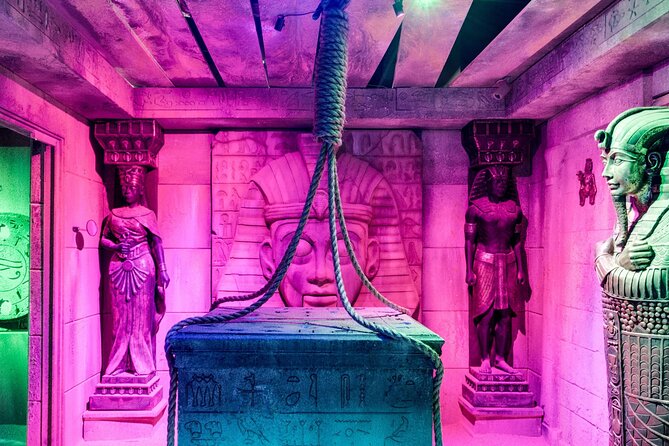
This kind of escape room experience is best when your group has at least one person who enjoys puzzles and talking things through. But you don’t need to be a math wizard.
Here’s who tends to enjoy it most:
- Friends and mixed-age groups who want a shared challenge with a light, fun tone
- Families with older kids who like games that reward attention
- Teams looking for a structured collaboration activity
Age guidance is straightforward. Games are recommended for ages 13 and up. Younger players may be allowed, but some content can be difficult for them. If anyone is 14 or under, an adult age 18 or older must participate with them. Anyone under 18 also needs an adult to sign a waiver.
Service animals are allowed. If your group includes someone who relies on one, that’s good clarity for planning.
And if anyone in your party dislikes scary settings, this is designed to avoid dark or frightening themes. That lowers the chance of someone sitting out due to fear.
Practical Tips to Have a Better Chance (and a Better Time)
You don’t need fancy gear. You do need good group habits. Here’s how I’d set you up for a smoother hour.
Communicate early, not after you get stuck. Pick up every clue, then say it out loud. If one person sees something and doesn’t share, you lose time.
Assign quick roles. For example, one person scans areas for hidden items, one person focuses on reading and matching clues, and one person tracks time. In a max-10 room, this is realistic.
Use the guide as a tool. The game guide is there to support you. If your team hits a wall, ask for help rather than burning minutes.
Stay calm about the clock. Escape rooms aren’t meant to be leisurely. They reward teams who keep moving even when a solution isn’t instant.
Take advantage of the debrief and photos. You’ll learn what you missed and how the clues fit together. It’s also a fun keepsake, especially for birthdays and group trips.
Finally, set expectations gently. Even great teams might not escape before time runs out. The value is in the puzzle teamwork.
Should You Book the Escape Game DC?
Book it if you want a hands-on Washington DC activity that feels like an actual experience, not just sightseeing. The timed missions, the variety of storylines, and the no-scary approach make it a strong option for groups that want fun plus problem-solving in a short window.
Skip it (or think hard about which scenario to choose) if your group hates clue-based games or if you’re expecting a guaranteed escape. Some missions can be tricky, and unless you secure all spots for your game, you could share your team with other players.
If your goal is a memorable hour with teamwork built in, this is a solid choice in Georgetown.
FAQ
How long is the Escape Game DC in Georgetown?
The overall experience is about 1 hour 15 minutes, with time for briefing, the game itself (about 45 or 60 minutes depending on the scenario), and time afterward to debrief and take photos.
How much does it cost per person?
It costs $38.15 per person.
Do I choose which escape scenario to play?
Yes. You select one of the available game scenarios.
Are the games scary or dark?
No. The games are designed to avoid being too scary or dark, and they focus on adventurous puzzle-solving.
How big is the group in the room?
There is a maximum of 10 travelers. If you do not book all spots in a game, other people may join and your group may be shared.
Is there a guide during the game?
Yes. A dedicated game guide takes you into the adventure and helps as needed while you work toward your mission.
Can I leave the locked room during the game?
Yes. Even though the room has a locked door, every door has an exit button, and you can leave if needed.
What are the age requirements?
Games are recommended for ages 13 and up. Younger players may be allowed, but some content may be too difficult. An adult (18 or older) must participate with anyone 14 and under, and participants under 18 will need an adult to sign their waiver.