
REVIEW · WASHINGTON DC
Veteran-Led Arlington National Cemetery Walking Tour
Book on Viator →Operated by Veteran-led Personalized Tours of Arlington National Cemetery · Bookable on Viator
Arlington hits different with a good guide. This veteran-led walking tour turns five major stops into a clear story of the people and decisions behind them, and I especially like how Eric Hommel connects the big moments to real human lives—and how the small group format keeps the pace calm enough for questions.
The only real catch is the physical side: it’s about a 3-mile walk over roughly 3 hours, so plan on steady walking and comfortable shoes. If you can’t comfortably do that distance, skip it.
What makes it an easy yes for many people is that the key sites are all free to enter, yet you still get a guided, respectful route that helps you understand what you’re looking at—plus a mobile ticket and a tour limited to your group (max 12).
In This Review
- Key highlights you’ll actually feel on the ground
- Arlington with Eric Hommel: veteran storytelling over quick facts
- Meeting point, pace, and whether 3 miles fits your day
- Stop 1: Military Women’s Memorial and the history behind service
- Stop 2: John F. Kennedy gravesite—how to look and what to notice
- Stop 3: Arlington House and the meaning of Robert E. Lee
- Stop 4: Space Shuttle Challenger Memorial—Christa McAuliffe remembered
- Stop 5: Tomb of the Unknown Soldier and the Changing of the Guard
- How the guide’s background shapes the way you move through Arlington
- What makes this tour good value when entry to sites is free
- Should you book this tour at Arlington National Cemetery?
- FAQ
- How long is the Arlington National Cemetery walking tour?
- How far do I walk during the tour?
- Is this tour private?
- What stops are included?
- Is admission required at the stops?
- Is the tour offered in English?
- Is the tour suitable for people with moderate fitness only?
- Can I bring a service animal?
- What happens if weather is poor?
- Is free cancellation available?
Key highlights you’ll actually feel on the ground

- Eric Hommel’s veteran background shapes the tone: practical, respectful, and personal without getting preachy.
- A small group up to 12 keeps the cemetery from feeling like a race or a cattle drive.
- Five big stops in one walk: Women’s Memorial, JFK, Arlington House, Challenger, and the Tomb with the Changing of the Guard.
- He’s flexible with pacing, including slowing down for a guest with joint limitations (so long as the route still fits your mobility).
- Etiquette help, especially around the Changing of the Guard, so you know where to stand and when to be quiet.
Arlington with Eric Hommel: veteran storytelling over quick facts

Arlington is famous for its stillness. The trouble is that if you go alone, you can end up with lots of marble and not enough meaning. This tour helps you read the place—what’s ceremonial, what’s historical, and what’s personal—without drowning you in dates.
I also like that the guide’s style is built around “why this matters,” not just “what happened.” The cemetery isn’t just a museum you walk through. It’s a working memorial, with traditions that deserve your attention, and Eric’s approach makes that clear.
You’ll also notice the tone: respectful, occasionally emotional, but grounded. People come for a moment of reflection; you’ll likely leave with both context and a stronger sense of the sacrifices involved.
You can also read our reviews of more walking tours in Washington DC



Meeting point, pace, and whether 3 miles fits your day
The tour starts at 1 Memorial Ave, Fort Myer, VA 22211 and returns to that same meeting point. Expect about 3 hours and roughly 3 miles of walking, with stops built in along the way.
The group is private—meaning only your party participates—with a maximum of 12 guests. That size matters. It’s big enough to feel like you’re on a proper tour, but small enough that you won’t be stuck at the back trying to hear through a crowd.
You’ll be walking on the cemetery grounds and moving between key stops. The tour asks for moderate physical fitness, and it’s explicitly not recommended if you can’t walk 3 miles in 3 hours. If you’re used to sightseeing on foot and you plan for breaks, you’ll likely be fine.
Practical note: it’s offered in English, and it’s near public transportation. Service animals are allowed, too. And since the experience requires good weather, the operator will usually offer a different date or a full refund if conditions make it unsafe.
Stop 1: Military Women’s Memorial and the history behind service

Your first stop is the Military Women’s Memorial and education center. This is a smart opener because it frames the cemetery experience beyond the usual “war stories” lens. It centers the commitment and contributions of servicewomen, which helps you understand the broader scope of military service before you move deeper into the grounds.
You’ll spend about 15 minutes here. Admission is free, so it’s not about ticketed access—it’s about having someone point out what you might otherwise overlook in a quick visit.
One reason I like this as a first stop: it gently sets expectations. The tone of Arlington can feel solemn fast. Starting with this memorial gives you grounding and context before the tour moves to presidential and national-level landmarks.
Stop 2: John F. Kennedy gravesite—how to look and what to notice

Next is the John F. Kennedy gravesite, with about 25 minutes at the stop. This is one of those locations where you can easily treat it like a landmark and move on. The value here is slowing down long enough to notice the meaning behind the setting.
You’ll learn what you’re seeing, but more importantly, you’ll get context that connects the gravesite to Arlington’s larger story. The guide’s background and storytelling approach help the site feel less like a stop on a checklist and more like a chapter in the national narrative.
Because admission is also free, there’s no barrier to entry—your “ticket” is really your time and attention. That’s where a guide pays off.
Stop 3: Arlington House and the meaning of Robert E. Lee

Then you move to Arlington House, the Robert E. Lee Memorial, with about 45 minutes planned. Arlington House isn’t only about architecture or famous names. It’s a place where you’re asked to think about some of the hardest parts of American history.
This is where the tour’s “storytelling, not just sights” method becomes clear. Arlington House can be emotionally complicated on your own. With a veteran-led perspective and a guide who’s respectful about difficult history, the visit tends to land with more clarity.
Spending 45 minutes here is generous. That extra time matters because Arlington House can’t be read in a rush. You need at least a bit of breathing room to understand what the space is meant to represent.






Stop 4: Space Shuttle Challenger Memorial—Christa McAuliffe remembered
After that, you’ll head to the Space Shuttle Challenger Memorial, also with about 45 minutes. This memorial honors the seven crew members lost on January 28, 1986, including Christa McAuliffe, the high school teacher selected from more than 11,000 applicants to become the first teacher in space.
This stop broadens the tour in a useful way. Arlington often anchors your mind on battlefield sacrifice, but the Challenger story reminds you that national tragedy doesn’t only come from war. It comes from risk, ambition, and the cost of pushing into the unknown.
The memorial is free to access, but the guide helps you connect the names and the moment to why people still feel it. Expect a mix of emotion and context—handled carefully, not theatrically.
Stop 5: Tomb of the Unknown Soldier and the Changing of the Guard
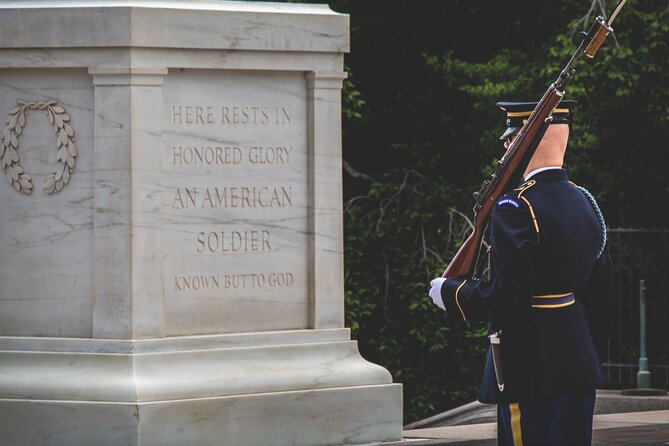
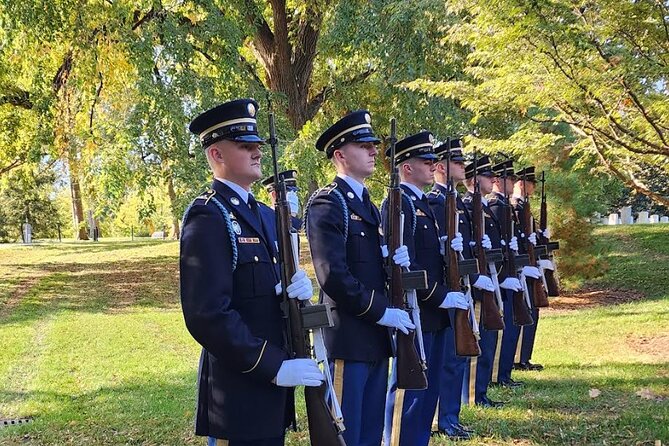
The last major stop is the Tomb of the Unknown Soldier, including the Changing of the Guard. Plan on about 50 minutes here, and yes—the ceremony is the centerpiece.
This is another stop where knowing where to stand and how to watch changes everything. A guide helps you follow the rhythm of the ceremony and understand the etiquette around it, so you’re not guessing or accidentally turning your attention into a distraction.
The tour also builds in enough time that you’re not stuck sprinting for the best view. That’s a real practical win. Arlington is crowded, and the last thing you want is to arrive late and frustrated.
Admission is free, but the experience depends on timing and quiet attention. This stop rewards patience.
How the guide’s background shapes the way you move through Arlington
The star of the tour is Eric Hommel. Multiple guests highlight the same pattern: he’s engaging, he connects dots, and he stays respectful of the solemn nature of the cemetery.
One of the most useful parts of a veteran-led guide is how the military details land naturally. Eric’s service background helps him speak about roles, traditions, and the realities behind the terms you see carved into stone. That means you’re not just reading plaques. You’re learning how people think, train, and carry duty.
You’ll also pick up on a broader range of stories than you might expect from a “cemetery tour.” Reviews point to connections such as Challenger, the Tomb of the Unknown Soldier, and even topics like Joe Louis and DESERT One. Those aren’t random additions—they’re the kinds of references that give Arlington’s names more life.
Another big plus: pacing. Guests specifically mention that Eric doesn’t rush people, and he has adjusted the pace for walkers with joint limitations. That matters because a 3-mile tour on cemetery paths can feel tougher if you’re constantly trying to keep up.
Finally, he’s described as patient and approachable with questions. That’s important at Arlington, where visitors often want to ask something that doesn’t fit into a standard script.
What makes this tour good value when entry to sites is free
Here’s the math that makes this tour appealing: the listed stops all have free admission. You’re not paying to get into each building or memorial. So what you’re actually paying for is interpretation—someone guiding you through what to look for, how to understand it, and how to fit it into the bigger story.
That’s where the private, small-group format adds value. With max 12 guests, you get less waiting and more time where it counts. And since it’s private—only your group is included—you can ask questions without feeling like you’re interfering with a packed schedule.
It also helps that the tour duration is long enough to avoid the “see it, forget it” problem. At about 3 hours, you get time at each stop, especially the ceremony-heavy Tomb of the Unknown Soldier segment.
Should you book this tour at Arlington National Cemetery?
I’d book it if you want more than photos and plaque reading. This is a strong choice if you care about context, respectful etiquette, and stories that help the names and memorials make emotional and historical sense.
It’s also a good fit for first-timers. Arlington’s scale can confuse you fast, and a veteran-led route keeps you from zig-zagging across the grounds with no plan. Families often do well with this format too because it balances emotion with clear explanations and a steady walking pace.
Don’t book it if walking 3 miles in 3 hours is unrealistic for you. That’s not a “minor inconvenience” distance—it’s the core of the experience. If mobility is limited, you’ll spend too much energy coping instead of reflecting.
If you’re the kind of traveler who likes to understand what you’re seeing—names, ceremonies, and why they’re arranged the way they are—this tour earns its spot near the top of a Washington, DC itinerary.
FAQ
How long is the Arlington National Cemetery walking tour?
It lasts about 3 hours.
How far do I walk during the tour?
The tour covers about 3 miles.
Is this tour private?
Yes. It’s a private tour, and only your group participates.
What stops are included?
The tour includes the Military Women’s Memorial, the John F. Kennedy gravesite, Arlington House (the Robert E. Lee Memorial), the Space Shuttle Challenger Memorial, and the Tomb of the Unknown Soldier with the Changing of the Guard.
Is admission required at the stops?
Admission to the listed stops is free.
Is the tour offered in English?
Yes, it’s offered in English.
Is the tour suitable for people with moderate fitness only?
It’s best for travelers with moderate physical fitness, and it’s not recommended if you can’t walk 3 miles in 3 hours.
Can I bring a service animal?
Yes. Service animals are allowed.
What happens if weather is poor?
The experience requires good weather. If it’s canceled due to poor weather, you’ll be offered a different date or a full refund.
Is free cancellation available?
Yes. You can cancel up to 24 hours in advance for a full refund. If you cancel less than 24 hours before the start time, the amount paid is not refunded.