
REVIEW · WASHINGTON DC
Capitol Hill Guided Tour with Entry Tickets (Early Access)
Book on GetYourGuide →Operated by Empire Tours and Productions LLC (DC) · Bookable on GetYourGuide
You go for the buildings, stay for the behind-the-scenes stories. This 3-hour small-group walk pairs early access to two of DC’s biggest landmarks with a docent-led route that connects what you see above ground to what lawmakers used below ground.
I especially love how the tour tackles the U.S. Capitol through the Rotunda, Crypt, and Statuary Hall, not just a quick exterior pass. I also like the Library of Congress stop for the Main Hall and the chance to see standout paper treasures like Lincoln’s Gettysburg Address draft and handwritten Sound of Music lyrics.
One thing to consider: the Library of Congress is closed on Mondays, so those dates swap in the U.S. Botanic Garden and a pass by the Bartholdi Fountain instead.
In This Review
- Key Highlights You’ll Notice Fast
- Early Access Starts at the Supreme Court Steps
- Step Into the Supreme Court’s Marble Palace
- Inside the U.S. Capitol: Rotunda, Crypt, and Statuary Hall
- Rotunda: American symbolism under the dome
- Crypt: Built-in memory you can walk through
- Statuary Hall: Politics told through art and placement
- The Tunnels That Change How You See Capitol Hill
- Library of Congress Main Hall: Mosaics, Sculpture, and Real Originals
- Jefferson’s Library and the feeling of private study
- The handwritten and draft treasures
- The rotating Treasures exhibit
- What to Expect When the Library of Congress Is Closed on Mondays
- How the Pace Works for a 3-Hour Small-Group Route
- Who This Tour Is Best For (and Who Might Skip It)
- Price and Value: Why $70 for 3 Hours Can Make Sense
- Should You Book This Capitol Hill Early Access Tour?
- FAQ
- Where is the meeting point for this tour?
- What time should I arrive before the tour starts?
- How long is the tour?
- Does the tour include entry to the U.S. Capitol?
- Does the tour include the Library of Congress?
- Is the Library of Congress accessible on Mondays?
- What famous items can you see at the Library of Congress stop?
- Are pets allowed?
Key Highlights You’ll Notice Fast
- Supreme Court start point near the marble steps, making the whole morning feel timed and efficient
- Reserved entry to the U.S. Capitol with a docent tour through major interior spaces
- Underground tunnels linking Capitol landmarks for a rare, practical look at how the hill works
- Rotating Treasures exhibit at the Library of Congress, plus big-name originals like the Gutenberg Bible and Lincoln draft
- Guides with real energy (names like Evelyn, Robert, and Paul come up often, and the delivery style matters on this one)
Early Access Starts at the Supreme Court Steps
This tour begins at the Supreme Court, at the bottom of the front steps on the west side, near the sidewalk. It’s a smart move because you’re in position before crowds fully form, and you’re already looking at the marble façade that makes the building feel like a monument to big decisions.
Plan to arrive 15 minutes early for check-in. That buffer matters here because you’re not just sightseeing; you’re about to move through reserved-entry security and guided access points smoothly.
You can also read our reviews of more tours and experiences in Washington Dc



Step Into the Supreme Court’s Marble Palace
Your first stop is the Supreme Court, often called the Marble Palace for its white marble and neoclassical grandeur. The guide sets the tone by connecting the architecture to the kinds of landmark cases that shape the country—big ideas, explained in a way you can actually hold onto while you’re walking.
What I like most is that this isn’t treated like a history lecture from the curb. You get stories that help you understand why the building is so symbolic, and you get enough context that the rest of the route makes sense when you reach the Capitol.
Inside the U.S. Capitol: Rotunda, Crypt, and Statuary Hall
The main event is your reserved entry to the U.S. Capitol with a docent-led tour. This is where the early access pays off: you’re aiming to beat waiting and instead spend time in the rooms that matter.
Here’s what you should be prepared for at the Capitol:
Rotunda: American symbolism under the dome
The Rotunda is the signature chamber. You’ll look up at the architecture and then down at the stories the guide connects to the space—how the symbolism was shaped by survival, sacrifice, and political decisions.
Crypt: Built-in memory you can walk through
The Crypt adds a different mood. It’s not just pretty stone—it’s a reminder that institutions endure even when they get damaged. You’ll hear about survival during the Burning of Washington, which helps the building feel less like a postcard and more like a living record.
You can also read our reviews of more guided tours in Washington Dc






Statuary Hall: Politics told through art and placement
Statuary Hall brings the national story into view through art and how figures are positioned. You’ll also learn the meaning behind choices like the Statue of Freedom placed on the dome during the Civil War—details like that turn a room full of statuary into a place with an argument.
The Tunnels That Change How You See Capitol Hill
One of the most compelling parts is the walk through underground tunnels connecting historic Capitol landmarks. This isn’t about spooky Hollywood vibes; it’s about practicality.
These tunnels were built to protect lawmakers and keep operations running smoothly. When you hear that, you start thinking differently about the hill. Instead of seeing it as a set of isolated buildings, you see it as a connected system—people, schedules, movement, and security all tied together.
This is also the kind of stop that makes a guided tour worth it. You’d never guess the depth of connection from street-level alone.
Library of Congress Main Hall: Mosaics, Sculpture, and Real Originals
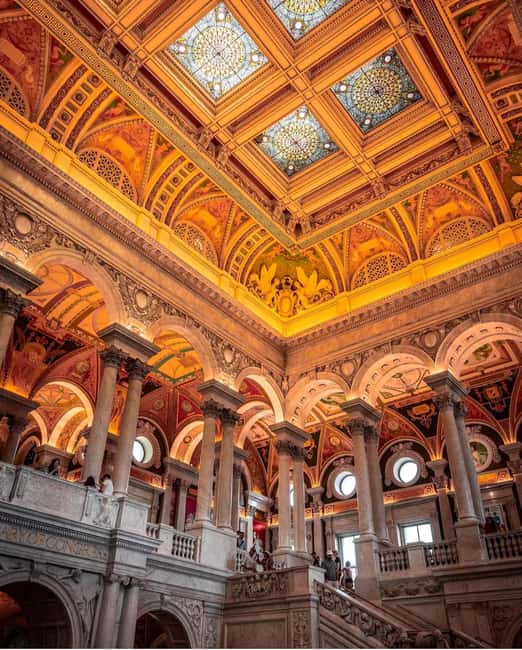
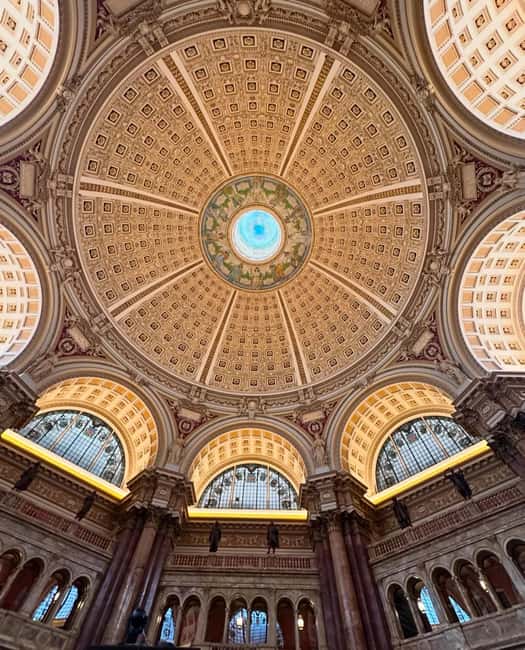
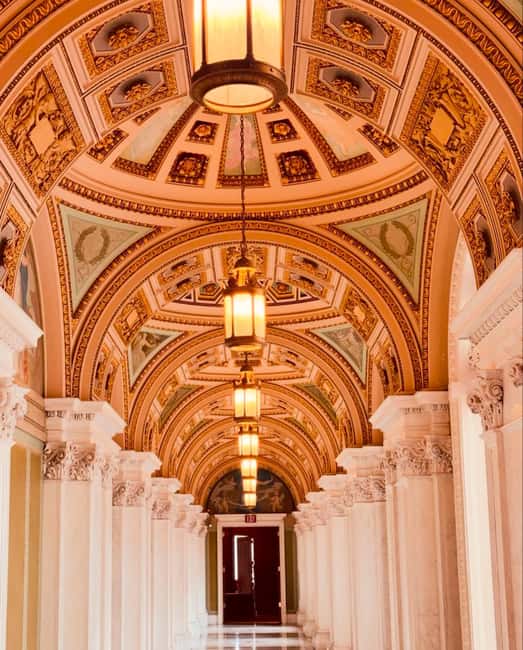
The tour ends at the Library of Congress, the largest library in the world, with reserved entry and a guided visit. If you’re the type who likes museums that take their artifacts seriously, you’ll appreciate how the Main Hall feels both grand and purposeful, with ornate mosaics and sculptures that frame the collections.
Jefferson’s Library and the feeling of private study
One highlight is Thomas Jefferson’s personal library. The idea isn’t just that he owned books—it’s that you’re getting a physical sense of how a mind at work looked and sounded through paper and spines.
The handwritten and draft treasures
This stop stands out because it’s not only about monuments. You’ll see treasures tied to specific moments of history, including:
- Gutenberg Bible
- Abraham Lincoln’s draft of the Gettysburg Address
- the original handwritten lyrics to The Sound of Music
- James Madison’s crystal flute
- Spider-Man comic artwork by Stan Lee and Steven Ditko
That mix is the point. You’re not only tracking political power—you’re seeing how culture, writing, and invention move alongside it.
The rotating Treasures exhibit
Don’t skip the rotating Treasures exhibit. It’s the part that keeps the Library feeling alive instead of locked into one permanent display. If your visit lines up with a strong rotation, you’ll get extra wow-factor without needing another ticket or another tour.
What to Expect When the Library of Congress Is Closed on Mondays
If your timing lands on a Monday, the Library of Congress won’t be accessible. On those tours, you’ll visit the U.S. Botanic Garden instead.
The Botanic Garden’s glass-domed conservatory gives you a different type of grandeur—still impressive, just softer around the edges. You’ll also see the First Ladies Water Garden, and you’ll pass the Bartholdi Fountain, right by the Capitol. It’s a good substitution because it keeps you in the Capitol Hill zone and keeps the walk from turning into a weird detour.
How the Pace Works for a 3-Hour Small-Group Route
This experience runs about 3 hours, and the format is built for moving efficiently between key spaces while still giving you enough time to understand what you’re seeing. You’re not stuck for hours in one room, which helps if you’ve got limited time in DC.
A practical reality: you’re touring interior spaces and walking between them, so wear shoes that can handle uneven indoor thresholds and outdoor pavement. Also, arrive early. When the start time slips, you feel it later.
Who This Tour Is Best For (and Who Might Skip It)
This is a great match if you want a guided story that connects institutions: Supreme Court → U.S. Capitol → Library of Congress. It’s also ideal if you like tours that explain symbolism and context, not just dates and facts.
It can work well for mixed groups too. People have specifically called out the experience as enjoyable for a range of ages, which is a good sign that the pacing and storytelling don’t feel too heavy or too shallow.
You might consider a different option if you’re trying to do DC on a very minimalist schedule with only one major interior stop. This tour is packed with access points, and you’ll get the most if you’re in a learn-and-walk mood.
Price and Value: Why $70 for 3 Hours Can Make Sense
At $70 per person for a 3-hour, guided, early-access outing, you’re paying for three things that are hard to DIY efficiently:
- Reserved entry to the U.S. Capitol with a docent tour of major interior spaces
- Reserved entry and guided access to the Library of Congress (when open)
- A guided storyline that connects multiple institutions plus rare details like the underground tunnels
If you tried to stitch this together yourself, you’d likely spend time figuring out timing, managing separate entries, and missing some of the “why” behind the building choices. Here, the value is in how quickly the guide helps you make connections across the route.
So yes, it’s not a budget deal—but it’s also not just paying for entry. You’re paying for interpretation plus access.
Should You Book This Capitol Hill Early Access Tour?
If you’re visiting DC for the first time and want a smart hit list that includes the Capitol’s key interior spaces and standout Library of Congress originals, I’d book it. The early access angle helps you spend more time learning and less time waiting, and the tunnel component gives the tour a rare twist.
If your trip includes a Monday, check whether the Botanic Garden swap fits your interests, since the Library portion won’t be available that day. If you’re flexible and you want a guided, connected tour of power, paper, and symbols in one go, this is an easy yes.
FAQ
Where is the meeting point for this tour?
Please meet your guide at the bottom of the front steps of the Supreme Court, near the sidewalk.
What time should I arrive before the tour starts?
Arrive 15 minutes before the scheduled start time to check in.
How long is the tour?
The tour duration is 3 hours.
Does the tour include entry to the U.S. Capitol?
Yes. You get reserved entry to the U.S. Capitol for a docent-led tour that includes the Rotunda, Crypt, and Statuary Hall.
Does the tour include the Library of Congress?
Yes. You get reserved entry and a guided tour of the Library of Congress, when it is open.
Is the Library of Congress accessible on Mondays?
No. The Library of Congress is closed on Mondays, so Monday tours visit the U.S. Botanic Garden instead.
What famous items can you see at the Library of Congress stop?
The tour highlights include Thomas Jefferson’s personal library, the Gutenberg Bible, Abraham Lincoln’s draft of the Gettysburg Address, and handwritten lyrics from The Sound of Music, among other treasures named for the experience.
Are pets allowed?
Pets are not allowed. Assistance dogs are allowed.