REVIEW · WASHINGTON DC
Washington DC Capital Sites Bike Tour
Book on Viator →Operated by Unlimited Biking formerly Bike and Roll DC · Bookable on Viator
DC hits different when you pedal. This Washington DC Capital Sites Bike Tour is an easy way to stack major sights in one run, from the National Mall stretch to the Supreme Court and the Capitol. I like that it’s built for moving efficiently without turning the trip into a marathon of sidewalks and traffic lights.
Two things I really liked: I love the photo-ready viewpoints from the right spots, like the White House south-side look (with a guide explaining why there is no front or back). And I love that your local guide keeps the ride lively with history plus current pointers, including Smithsonian exhibit updates and other on-the-ground tips that help you plan what to do next.
One drawback to consider: you’re mostly viewing from the outside. The tour explicitly notes you don’t go into places like The Castle (Smithsonian’s original building), the U.S. Capitol, the Washington Monument, or the White House, so if you want lots of indoor time, you’ll need to plan that separately.
In This Review
- Key highlights to expect on this bike tour
- Why this Washington DC Capital Sites Bike Tour works when you have limited time
- Meeting point and start-time reality: get there early and you’ll have a better ride
- The guide experience: fast stories, real local tips, and solid safety habits
- Stop-by-stop: what you’ll see and what to look for
- Smithsonian Institution area: The Castle exterior without the museum detour
- National Gallery of Art: those mini glass pyramids and the Louvre connection
- U.S. Capitol (from the outside): east-side views plus a photo moment
- Library of Congress: a fast stop with a big institutional feel
- Supreme Court: exterior views and a quick legal-history primer
- Smithsonian Natural History area: ride past, then choose your own indoor adventure
- Washington Monument: notice the color differences and why they exist
- White House: south-side viewing and what presidents changed
- National World War II Memorial: symbols, stars, and a very specific “look for it” clue
- Dwight D. Eisenhower Memorial: a newer stop that keeps the story moving
- Ulysses S. Grant Memorial: a resting-place moment that feels personal
- National Archives Museum: records scale you can’t fully picture
- FBI Headquarters: what the agency does, not just the address
- Bike choice, comfort, and what “easy ride” means in DC
- Price and value: why $55 can be a bargain or a miss (depending on your plan)
- Weather, timing, and cancellations: the practical rule for booking DC outdoors
- Who this tour suits best
- Should you book? My quick take
- FAQ
- How long is the Washington DC Capital Sites Bike Tour?
- How much does the tour cost?
- Is a helmet included?
- Do you enter the U.S. Capitol or the White House?
- Are admission tickets included?
- What happens if weather is unsafe for riding?
Key highlights to expect on this bike tour
- A tight two-hour route that covers major “must-see” DC sites without endless walking
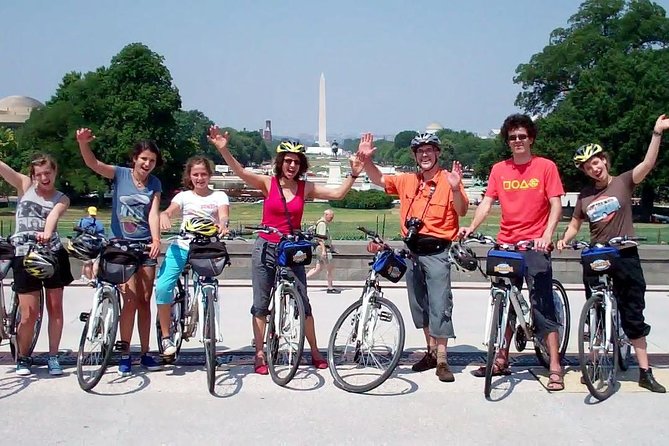
- Helmet and bike included, and the tour caps the group at 15 riders
- Smithsonian and National Gallery area stops that help you understand what you’re looking at
- Memorial details that are easy to miss, like WWII Memorial symbolism and other small “spot it” moments
- Guide-led timing and pacing so you can ride at an easy, comfortable speed
- Family-friendly ride options, including trailer carriages for kids who need them
Why this Washington DC Capital Sites Bike Tour works when you have limited time
If DC is your first stop on a trip, you quickly learn two things. One: the sights are close enough to see in a day, but only if you don’t waste time. Two: DC history is everywhere, and it gets better when someone explains what you’re actually looking at.
This tour hits that sweet spot. It’s only about two hours, but it strings together a large chunk of the core sights people come to DC for. You cover ground without the stop-and-start fatigue of walking through crowds, and you get a guide who turns big landmarks into stories you can remember.
The ride itself is set up to feel manageable. The tour is described as suitable for all levels of riders, and the physical requirement is framed as moderate fitness rather than “race pace.” If you’re coming from a hotel and want an efficient, confidence-building first experience, biking is a smart choice here.
You can also read our reviews of more cycling tours in Washington DC

Meeting point and start-time reality: get there early and you’ll have a better ride
The tour begins at 801 D St NW, Washington, DC 20004, and it ends back there. That’s a practical setup because you’re not negotiating a complicated end-point on foot.
The schedule detail that matters most: check in 15 minutes early. DC can be slow going around rush hour, and the instructions say late arrivals might not be accommodated. In plain terms, show up early, park your worries, then enjoy the ride.
One more logistics point that can surprise people: security at the meeting location means you can’t hold luggage while you’re on tour. If you’re traveling with a bag, plan to keep it with you or make other arrangements before you arrive at the start.
The guide experience: fast stories, real local tips, and solid safety habits
What makes this tour worth it isn’t just the list of famous places. It’s how the ride is guided. Multiple guides are mentioned in past tours, and their approach seems consistent: safety first, then short, clear context at each stop.
You’ll see names like Greg, Wally, Adrian, Joseph, Paul, James, Nicole, and Joe in the feedback. The common thread is that guests felt well looked after and that the guides used their local perspective to keep the ride interesting.
Some groups also mention pacing tweaks based on the day. One family noted that their guide adjusted the tour to keep kids engaged during chilly weather. Another guest loved how the ride felt “human Google” friendly, with plenty of patience for questions. If you like learning in small chunks while still moving, that’s what you’re likely to get here.
Stop-by-stop: what you’ll see and what to look for
Smithsonian Institution area: The Castle exterior without the museum detour
The tour starts near the Smithsonian area at the original building known as The Castle. You don’t go into it, but that outside intro helps you connect the dots about how the Smithsonian got started. It’s a useful warm-up before you roll deeper into the National Mall zone.
If you’re the kind of traveler who likes the “why it matters” version first, this helps. If you were hoping for an immediate museum entry, you may feel it’s more of a orientation stop than a destination stop.



National Gallery of Art: those mini glass pyramids and the Louvre connection
Next you pass between the East and West sides of the National Gallery of Art. You’ll see the small glass pyramids erected by the same designer associated with the Louvre’s glass pyramid.
Even if you skip the museum interior, it’s a good visual moment. The pyramids are a quick way to understand how architecture can create a new kind of entry point to a familiar collection-style space.
U.S. Capitol (from the outside): east-side views plus a photo moment
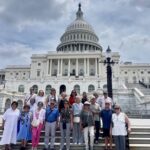
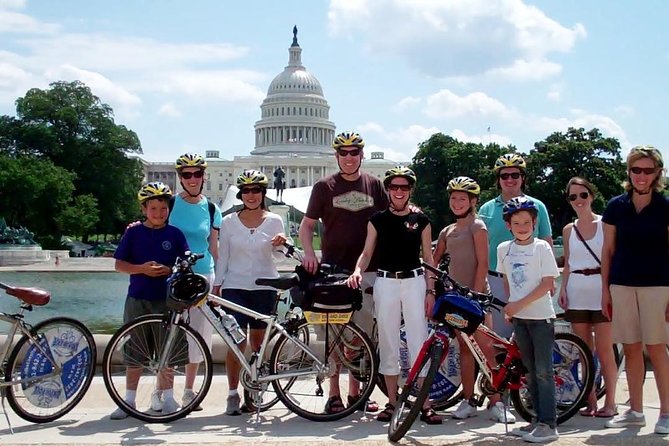
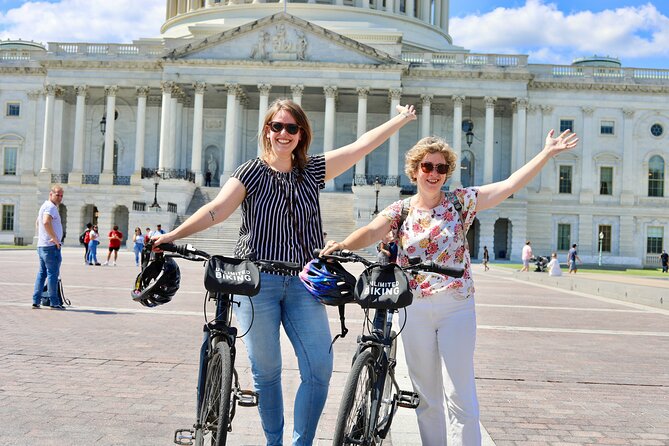
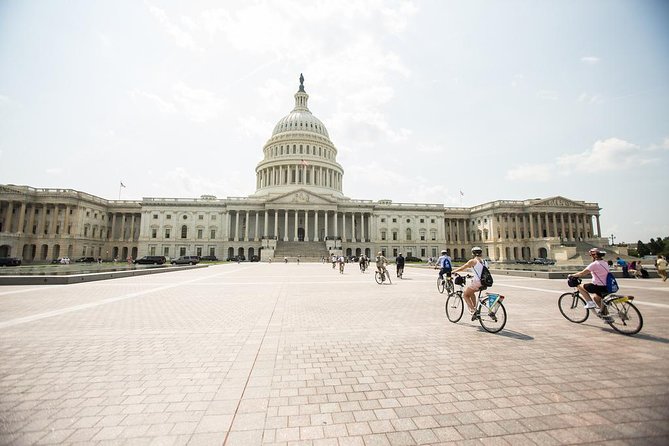
Then it’s up and around toward the east side of the U.S. Capitol. This is one of those “DC postcard” locations where viewpoint choice matters. From the right angle, you can get photos that look dramatic without needing to fight for prime space on foot.
You won’t enter the Capitol on this ride. Still, the guide’s explanation about where the House and Senate convene gives that exterior scene context, so it doesn’t just look like a building you’ve seen on stamps.
Library of Congress: a fast stop with a big institutional feel
From there, you pass the Library of Congress, which sits just east of the Capitol. The tour lists this as a longer stop (about 10 minutes) and notes admission is free.
Even if you don’t go inside, seeing it from the right time window can help you place it within the DC civic story. It also works well for stretching legs for a moment before continuing.
Supreme Court: exterior views and a quick legal-history primer
Next is the Supreme Court from the east side of the Capitol area. Admission is listed as free for this stop.
This is another “look up, absorb, move on” moment. If you want the legal system story in plain language, your guide’s role matters here. A 10-minute stop is short, but it’s enough to get the essentials without dragging the ride.
Smithsonian Natural History area: ride past, then choose your own indoor adventure
You’ll ride past the Smithsonian National Museum of Natural History. The tour specifically recommends that you consider visiting the Hall of Gems and the Hope Diamond.
That’s a smart suggestion, because it turns a passing moment into a decision. If you’re deciding whether to spend your museum time on something flashy and memorable, those names give you a clear direction. On the downside, you’re still on a schedule, so this isn’t the stop where you’ll spend the whole afternoon.
Washington Monument: notice the color differences and why they exist
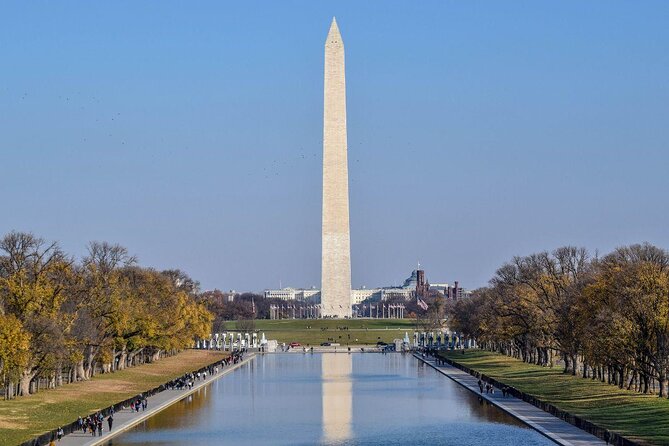
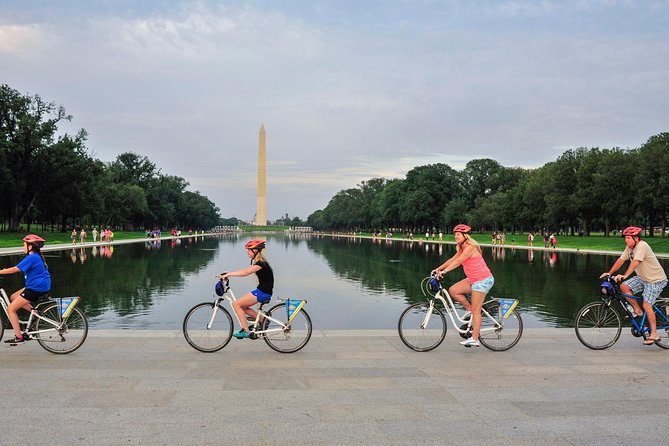
You get a viewpoint toward the Washington Monument. The tour calls out that it looks like it’s two colors, and the guide will explain why.
This is exactly the kind of detail that makes a guided ride feel worth it. On your own, you might notice the monument and move on. With a guide, you learn to see the clue instead of just admiring the silhouette.
White House: south-side viewing and what presidents changed
Then you reach the White House, viewed from the south side. The tour notes that there is no true front or back, and the guide shares information about renovations made by various presidents.
That’s the difference between a famous building and a lived-in political space. If you’ve only ever seen the White House from certain angles in photos, this framing helps you understand why DC photos can look different depending on where you stand.
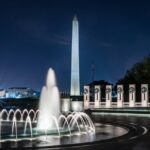
National World War II Memorial: symbols, stars, and a very specific “look for it” clue
The National World War II Memorial stop is designed to make you pay attention. The guide explains the symbolism in the pillars, stars, and pavilions.
Even better, the tour includes a small scavenger-style challenge: ask your guide to point out the only graffiti on any memorial on the National Mall. That’s the kind of detail you’d never catch on a quick self-walk unless someone tells you to hunt for it.
Dwight D. Eisenhower Memorial: a newer stop that keeps the story moving
The next stop is the Dwight D. Eisenhower Memorial, described as new. The guide will share facts about Eisenhower here.
Because it’s later in the route, it also helps your trip feel like a timeline rather than a random list. It’s not only about famous buildings—it’s about how different eras shaped DC.
Ulysses S. Grant Memorial: a resting-place moment that feels personal
You’ll stop at the Ulysses S. Grant Memorial. It notes his role as an American military officer who became the 18th president, plus that his body is laid to rest at the memorial.
This is one of those moments where a short stop can still feel meaningful if the guide gives you the right connection between person, place, and national memory.
National Archives Museum: records scale you can’t fully picture
Next comes the National Archives Museum, with a highlight fact that it holds over 13.28 billion pages of textual records.
That number is big enough to feel unreal. In a guided format, you’re more likely to actually retain it as a concept: these aren’t just exhibits, they’re the kind of place where history stays filed and accessible.
FBI Headquarters: what the agency does, not just the address
Finally, you reach the FBI Headquarters. The tour frames it as a stop to learn about what the organization does.
It’s a good end note because it connects government power to everyday work. The ride finishes back at the meeting point, so it’s not a “drop you off and good luck” situation.
Bike choice, comfort, and what “easy ride” means in DC
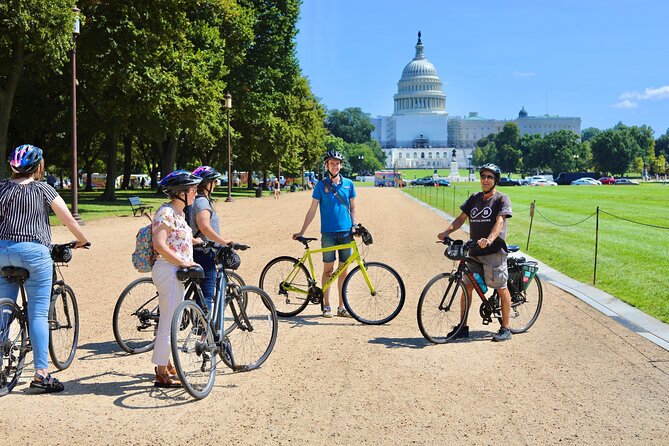
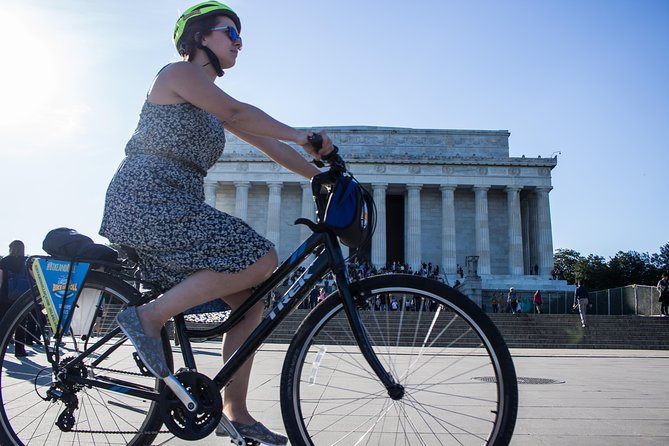
This tour includes use of a bicycle and a helmet, and the helmet is mandatory. The setup also says you can find the perfect fit bike for your ride.
Comfort matters on DC paths, because a small wrong fit can turn a relaxing ride into a nagging distraction. If you’re between sizes, ask for the right adjustment early. A well-fitted bike makes everything smoother, especially if you’re not used to riding in city traffic.
For power and hills: one family mentioned they did an e-bike option during their visit and felt it helped them cover more since the ride included uphill parts they wouldn’t want to fight on a regular bike. If your booking offers e-bikes, it’s worth considering for anyone who wants an easy-feeling ride from start to finish.
If you’re coming with kids, trailer carriages and trailer tandems are available for children not comfortable on their own bike. The child needs to hold up their head and wear a helmet in the trailer, which is a practical safety requirement.
Price and value: why $55 can be a bargain or a miss (depending on your plan)
At $55 per person for about two hours, this tour is priced like a “high value, low time” activity. The math is simple: you’re paying for guided interpretation, bike rental, and helmet, which takes care of multiple small costs at once.
When it feels like a bargain:
- You want a fast overview of DC’s biggest hits.
- You’re tired of guessing what to look for.
- You value a guide who can help you plan the next day with insider exhibit and event pointers.
When it might feel like a miss:
- You mainly want indoor time and museum entry.
- You prefer slow wandering and don’t care about explanations.
- You’re hoping for extended access to the Capitol, White House, or monument interiors, because the tour explicitly says those are not entered.
Weather, timing, and cancellations: the practical rule for booking DC outdoors
This is a good weather ride. The tour can be canceled if weather makes riding dangerous, and the policy says you’ll be offered a different date or a full refund. That’s the right kind of approach for an outdoor bike tour.
Also keep in mind that it’s non-refundable and can’t be changed once booked. That means you should book when your schedule is stable enough that you won’t be tempted to swap dates last minute.
Who this tour suits best
This bike tour is a strong match if you fall into any of these groups:
- First-timers to Washington DC who want a guided “hits” loop
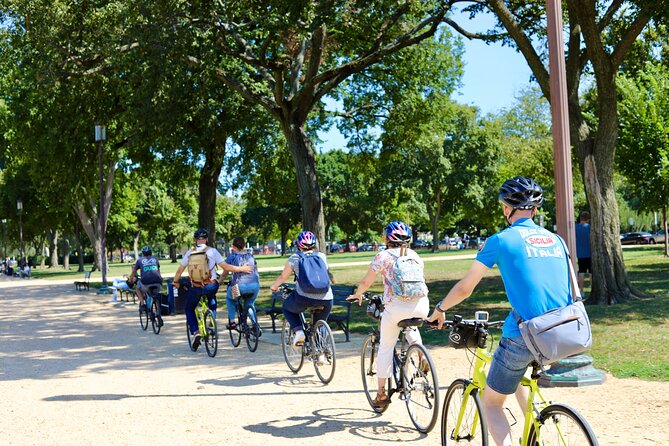
- Families with kids around school-age who want education without boredom
- Visitors who hate spending vacation time walking long distances
- Anyone who wants a smoother first day, then chooses specific museums later
It’s also a good choice if you’re traveling during busy seasons and want to avoid crowd bottlenecks—your ride gives you a different pacing.
Should you book? My quick take
I’d book this tour if you want an efficient, guided way to see DC’s top landmarks in a short window. The combination of guided storytelling, bikes included, and a route that focuses on the National Mall core makes it a smart “starter” experience.
I’d skip or pair it differently if you’re mainly chasing interior access. Since the tour is built around outside viewing at key sites like the Capitol, White House, and monument, you’ll likely need separate plans for museums and ticketed indoor stops.
If you do book, pick your day carefully for weather, arrive early for check-in, and bring your curiosity. A good guide can turn a two-hour ride into the part of your trip you keep talking about—especially when you catch those small details you’d otherwise miss.
FAQ
How long is the Washington DC Capital Sites Bike Tour?
It runs for about 2 hours.
How much does the tour cost?
The price is $55.00 per person.
Is a helmet included?
Yes. Helmets are provided and wearing one is mandatory.
Do you enter the U.S. Capitol or the White House?
No. The tour notes that it will not enter the U.S. Capitol and it will not enter the White House.
Are admission tickets included?
Admission tickets are not included for some stops. The tour also lists some stops as free, such as the Library of Congress, Supreme Court, National History, World War II Memorial area, Eisenhower Memorial, Grant Memorial, National Archives, and FBI Headquarters.
What happens if weather is unsafe for riding?
If the tour is canceled due to dangerous riding conditions from weather, you’ll be offered a different date or a full refund.