REVIEW · WASHINGTON DC
Washington DC: Capitol Hill Guided Tour with Entry Tickets
Book on GetYourGuide →Operated by Empire Tours and Productions LLC (DC) · Bookable on GetYourGuide
Capitol Hill hits different with reserved entry. This 3-hour small-group tour strings together the big DC icons you want, using U.S. Capitol and Library of Congress access you can’t casually count on. It also adds the kind of behind-the-scenes details most people never see, like underground tunnels under Capitol Hill.
I especially like the docent-led Capitol access to the Rotunda, Crypt, and Statuary Hall, because you get the symbolism and survival stories right in the rooms, not just from the outside. I also like the Library of Congress stop, with its Main Hall and standout treasures such as Jefferson’s personal library, Lincoln’s Gettysburg Address draft, and even handwritten Sound of Music lyrics.
One consideration: this is a walk-first route and it’s not suitable for wheelchair users, so you’ll want decent stamina.
In This Review
- Key points I’d center on
- Reserved access to the Capitol and Library of Congress: what you gain
- Meeting at the Supreme Court steps: get your bearings fast
- Supreme Court, Senate buildings, and the House Triangle: the corridor of government
- Inside the U.S. Capitol: Rotunda, Crypt, and Statuary Hall
- The Capitol’s underground tunnels: the Washington side most people miss
- Library of Congress treasures: Main Hall, Jefferson’s Library, and more
- Monday problem solved: the U.S. Botanic Garden substitution
- Photo stops and timing: National Mall stretch, fountains, and walking rhythm
- Price and value for $70: what you’re actually buying
- Who this tour suits (and who should skip it)
- Should you book Washington DC Capitol Hill guided tour with entry tickets?
- FAQ
- Where does the tour start?
- What does the tour include for the U.S. Capitol?
- Does the tour help with lines?
- What does the tour include for the Library of Congress?
- Is the Library of Congress open every day on this tour?
- What hidden feature is part of the experience?
- How long is the tour?
- Is it suitable for wheelchair users?
- Are pets allowed?
- Do I have to pay right away?
- Can I cancel and get a refund?
Key points I’d center on

- Reserved tickets that help you skip the ticket line and plan around Capitol security.
- Capitol docent experience with time in the Rotunda, Crypt, and Statuary Hall.
- Underground tunnels that connect historic spaces in a way most visitors never get.
- Library of Congress treasures ranging from Gutenberg Bible and Lincoln drafts to Sound of Music lyrics.
- Museum-like variety: Main Hall mosaics, Jefferson’s Library, and rotating Treasures exhibit.
- Monday substitution: the Library of Congress closure is handled with a U.S. Botanic Garden visit.
Reserved access to the Capitol and Library of Congress: what you gain
In Washington, the trick is not just seeing the famous buildings. It’s getting inside and getting the story in the right place. This tour is built around that idea: you’re paying for reserved entry and guided access to two of the most important federal landmarks, the U.S. Capitol and the Library of Congress.
The U.S. Capitol portion matters because the Rotunda, Crypt, and Statuary Hall aren’t just “pretty interiors.” They’re where the symbolism of American governance is made physical—how the nation remembers, who gets honored, and how the building endured when Washington itself was threatened. You’re guided through those meanings as you move through the spaces.
Then you transition to the Library of Congress, which is more than a library museum. It’s a working national institution with serious archival power and some surprisingly pop-culture artifacts too. The tour spotlights items like Lincoln’s Gettysburg Address draft and the Gutenberg Bible, plus items that feel almost impossible to believe—like handwritten Sound of Music lyrics and Spider-Man comic artwork connected to Stan Lee and Steven Ditko. That mix is a big part of why this format works so well: the tour gives you context, then puts iconic artifacts in front of you.
You can also read our reviews of more tours and experiences in Washington Dc



Meeting at the Supreme Court steps: get your bearings fast
The tour starts at the bottom of the front steps of the Supreme Court, on the west side, near the sidewalk. You’ll want to arrive about 15 minutes early for check-in, because Capitol-area security and crowd flow can be unpredictable.
This starting point is a smart choice. From there, you’re already in the zone where the marble façade of the Supreme Court gives you an instant sense of how power looks in Washington—white stone, big columns, and that grand “Marble Palace” feel. It also positions you to walk naturally into the Capitol complex rather than doubling back.
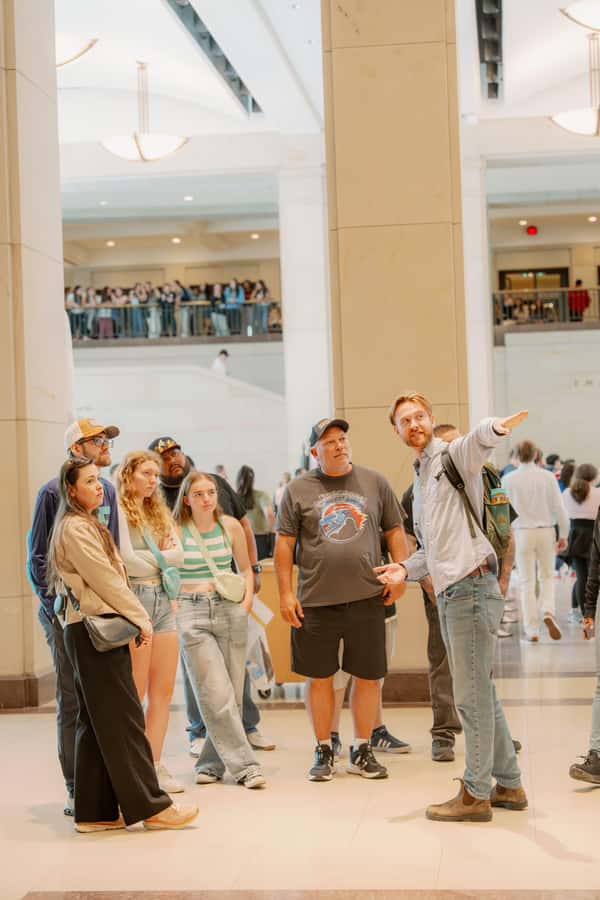
Your guide is the one who keeps the day from turning into a basic sightseeing shuffle. Many people underestimate how much time you lose without a guide on Capitol Hill. When there are queues and timed entry windows, having a person who can manage the sequence makes a difference. In at least one instance, the guide helped keep a delayed entry plan moving so the day still works.
Supreme Court, Senate buildings, and the House Triangle: the corridor of government

From the Supreme Court, the walk continues through the DC government core—Dirksen Senate Office Building and the House Triangle areas—before you reach the Capitol Visitor Center zone. These are the stretches where most tours either rush you through photos or skip the context entirely.
Here, you’re not just looking at buildings. You’re hearing how the Supreme Court connects to the nation’s major decisions, and you’re picking up architectural and institutional cues that help everything later “click.” The Supreme Court gets framed as more than a landmark postcard; it’s a case-study in how design and authority work together.
As you move through the Senate and House surroundings, the goal is to help you see Capitol Hill as a working system, not isolated monuments. That framing matters once you reach the Capitol interior and then the underground tunnels. You’ll start noticing patterns: where lawmakers need access, where flow is controlled, and how the campus is shaped for both politics and operations.
A practical tip: wear shoes that can handle uneven sidewalk edges and plenty of standing. Even though it’s only around 3 hours, you can feel it by the end.
Inside the U.S. Capitol: Rotunda, Crypt, and Statuary Hall
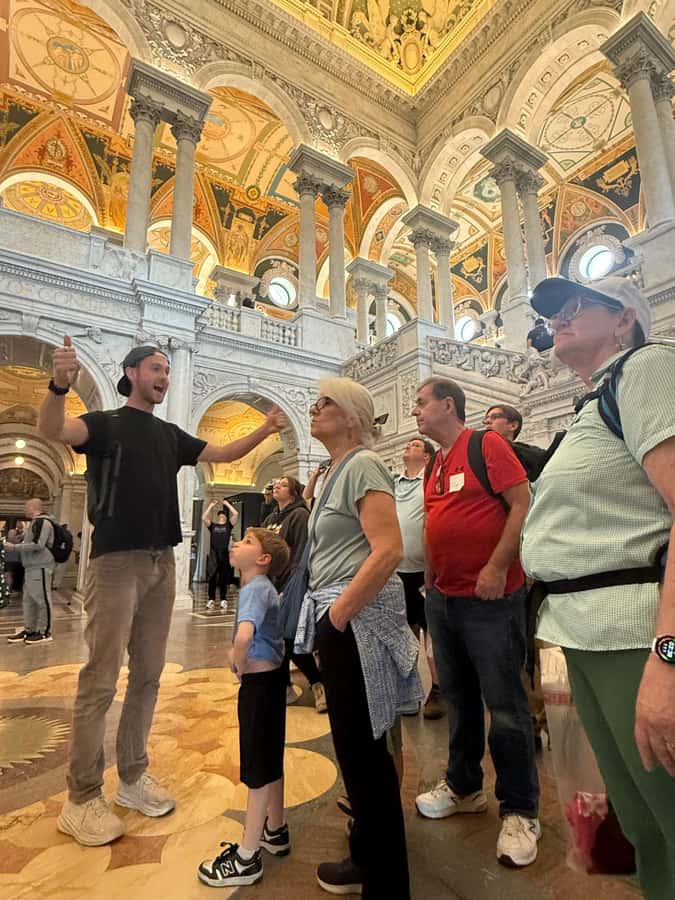
The best part of the U.S. Capitol segment is that you go in with a docent-led focus. You don’t just wander. You’re guided through three distinct spaces that each tell a different story.
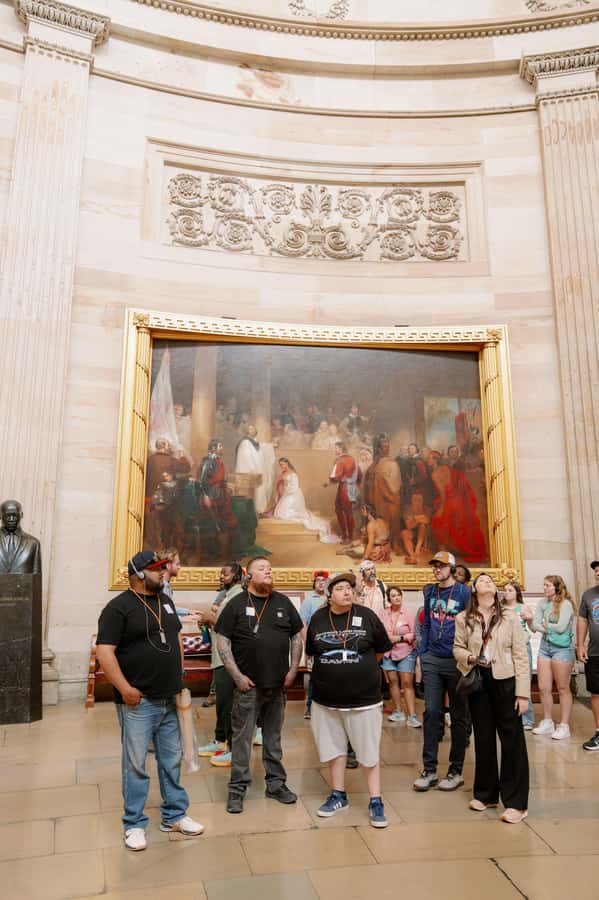
In the Rotunda, the architecture does the talking first. This is where you learn how the building’s symbolism is planned to be seen and remembered. The guide helps connect what you’re seeing to how American democracy portrays itself—through art, placement, and the way visitors are channeled through meaning.
The Crypt is where the tone shifts. Instead of grand speeches and ceremonial space, you get the endurance story of the Capitol. You hear how the building survived during the Burning of Washington, which gives new weight to the word preservation. It’s a strong reminder that icons are built to last, not just to look good.
Then there’s Statuary Hall. Here, the guide’s interpretation turns statues into information—why certain figures were chosen, and what the placement says about national priorities at the time. You also get the Civil War-era symbolism angle, including the idea of the Statue of Freedom topping the dome and what that meant.
One more detail: after your Capitol docent tour, you’re typically handed off to official Capitol guides once inside. That can be excellent if you’re the type who likes accuracy in every room, even if it means slightly different speaking styles mid-stream.
The Capitol’s underground tunnels: the Washington side most people miss
The tour’s underground tunnels are the “wait, what?” element. You get a glimpse of rarely seen connections between historic Capitol Hill landmarks, and you hear why they were built.
These tunnels were originally designed to protect lawmakers and help keep government operations functioning smoothly. In other words, this isn’t just spooky basement architecture. It’s a safety-and-operations network built into the campus long before modern security tech.
Even if you only get brief moments in the tunnel areas, the payoff is big: you’ll understand the Capitol grounds as an engineered system. Above ground you see symbols and ceremonies. Below ground you see logistics—movement, protection, and continuity. Once you’ve got that framing, the rest of the day makes more sense.
This is also one of the most memorable parts of the tour because it’s hard to self-source. Most people walking around the Capitol grounds simply don’t have a way to understand these links without a structured visit.
You can also read our reviews of more guided tours in Washington Dc





Library of Congress treasures: Main Hall, Jefferson’s Library, and more
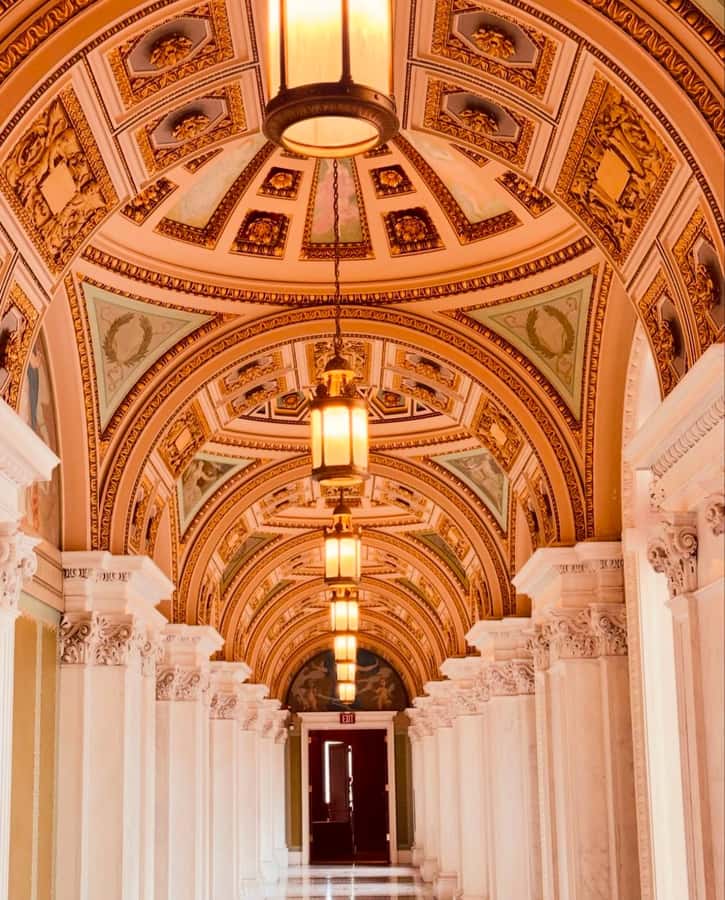
The Library of Congress stop is often the emotional high point of the day, mainly because it feels like walking into multiple eras at once. You start with the Main Hall, known for ornate mosaics and sculptures, and then you move into the spaces tied to Jefferson’s Library and curated treasures.
You’re pointed toward major items that most people only ever see in books or documentaries. The tour includes highlights like the Gutenberg Bible, Lincoln’s draft of the Gettysburg Address, and Thomas Jefferson’s personal library. Seeing those objects with a guide’s context is what turns them from impressive to meaningful.
Then the tour goes further into the “how is this here?” zone. You’ll hear about special artifacts and even entertainment-era items, including:
- handwritten lyrics for The Sound of Music
- James Madison’s crystal flute
- Spider-Man comic artwork connected to Stan Lee and Steven Ditko
The guided approach matters here. Without it, you might just admire the items. With it, you learn why the Library collects across time and genres, and how a national library becomes a national cultural memory.
Also keep an eye out for the rotating Treasures exhibit. That rotating element gives repeat visitors something different and gives first-timers a reason to pay attention beyond the headline objects.
Monday problem solved: the U.S. Botanic Garden substitution
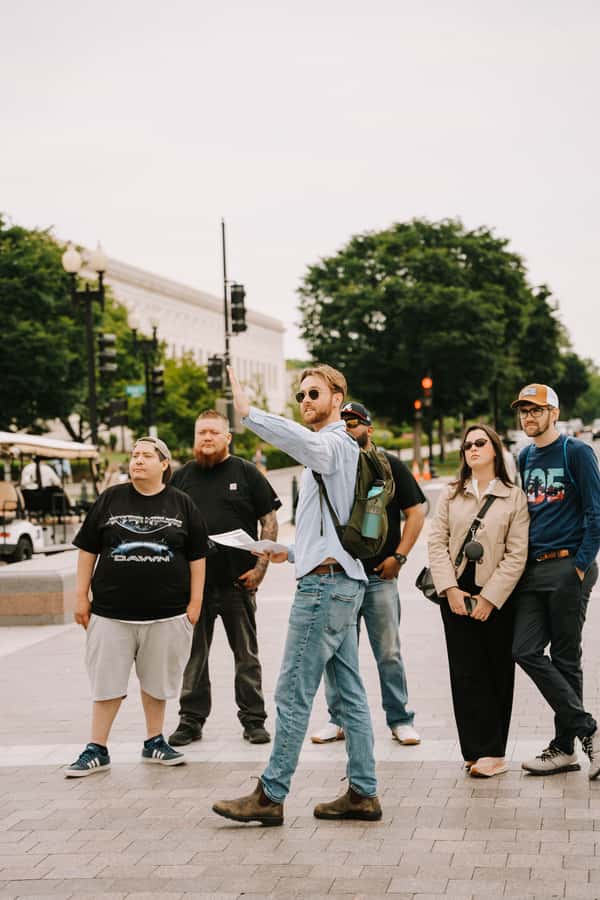
There’s one built-in wrinkle you need to know: the Library of Congress is closed on Mondays. If your tour date lands on a Monday, the Library portion is replaced.
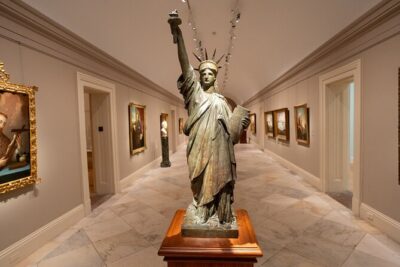
Instead, you visit the U.S. Botanic Garden, where you can see a glass-domed conservatory and lush tropical canopies, plus the First Ladies Water Garden. You’ll also pass by the Bartholdi Fountain, created by the designer of the Statue of Liberty, right near the Capitol.
This swap is practical. It keeps the tour anchored in a major landmark area without wasting your time on a closed building. It also gives you a different kind of visual payoff—glass architecture, greenery, and a calmer pace than the marble-and-security parts of the day.
Photo stops and timing: National Mall stretch, fountains, and walking rhythm

Between the big indoor moments, you’ll have outdoor photo stops and guided sightseeing stretches. You’ll pass through the National Mall area, with a Neptune Fountain stop for photos along the way, and you’ll visit the Capitol Visitor Center region during the transition into Capitol access.
This outdoor time is useful because it breaks up the day. Without those breaks, the Capitol interiors plus Library spaces could feel like back-to-back rooms. With them, you get a rhythm: look outward, then learn inward.
That said, the day is still walking-focused. You’re moving between buildings, standing during exterior segments, and doing timed entry movement. If you’re planning DC around this tour, I’d avoid scheduling a second intense activity right after. Save yourself the next-day energy.
Weather matters too. In warm months, you’ll feel the sun during the outdoor stretches. A small bottle of water helps.
Price and value for $70: what you’re actually buying
$70 for about 3 hours sounds steep until you look at what you’re getting. You’re not paying for generic narration. You’re paying for reserved access and guided entry into two major institutions that otherwise involve lines, complicated planning, or limited availability.
Here’s what your money covers in practical terms:
- reserved entry that helps you skip the ticket line
- docent-led Capitol time inside the Rotunda, Crypt, and Statuary Hall
- guided Library of Congress access with a strong focus on major treasures
- extra value moments like the underground tunnels
If you’ve ever tried to piece together Capitol + Library on your own, you know the friction is real. Timed entry constraints and security checks can turn planning into a part-time job. This tour packages those constraints into one guided flow.
The small-group structure also supports value. With a smaller group, you spend less time stuck behind strangers deciding where to stand. In the end, the tour feels like a guided route through important places rather than a checklist.
Who this tour suits (and who should skip it)
This tour is a strong fit if you like structured access and you want context you can’t easily get from just looking at buildings. It’s also great if you enjoy oddball details—like the Library’s unexpected mix of classic history and modern pop culture artifacts.
It’s not a fit if:
- you need wheelchair-accessible routing (the tour is not suitable for wheelchair users)
- you’re traveling with pets (pets aren’t allowed, though assistance dogs are allowed)
If you’re traveling with teens or older kids, this can work well because it connects famous American documents to real objects you can see. If you’re the sort of person who likes asking questions, guides like Evelyn and Robert have a reputation for keeping things lively while staying on topic.
Should you book Washington DC Capitol Hill guided tour with entry tickets?
I’d book it if you want the best version of Capitol Hill: inside access at the Capitol, a curated Library of Congress experience, and a tunnel component that makes the whole day feel more like a tour of how Washington actually functions.
I’d think twice if you dislike walking or you need mobility support the route can’t provide. But if you’re comfortable with walking, this is one of the cleanest ways to turn a 3-hour window into two iconic interiors plus behind-the-scenes surprises.
If you can choose dates, avoid Mondays if you specifically want the Library of Congress. If Monday works best for your schedule, the Botanic Garden substitution still gives you a fulfilling landmark stop.
FAQ
Where does the tour start?
Meet your guide at the bottom of the front steps of the Supreme Court, near the sidewalk, on the west side of the building. Plan to arrive 15 minutes early for check-in.
What does the tour include for the U.S. Capitol?
You get reserved entry for a docent-led Capitol tour with access to the Rotunda, Crypt, and Statuary Hall, plus time connected to the Capitol Visitor Center area.
Does the tour help with lines?
Yes. The experience includes skip-the-ticket-line entry for the included sites.
What does the tour include for the Library of Congress?
You get reserved entry and a guided tour of the Library of Congress, including highlights from the Main Hall and major treasures. The tour also references a rotating Treasures exhibit.
Is the Library of Congress open every day on this tour?
No. The Library of Congress is closed on Mondays, so Monday tours visit the U.S. Botanic Garden instead.
What hidden feature is part of the experience?
You get access to hidden underground tunnels connecting historic Capitol Hill landmarks, with an explanation of why they were built.
How long is the tour?
The duration is 3 hours.
Is it suitable for wheelchair users?
No. It is not suitable for wheelchair users.
Are pets allowed?
Pets are not allowed. Assistance dogs are allowed.
Do I have to pay right away?
No. You can reserve now and pay later.
Can I cancel and get a refund?
Yes. Free cancellation is available up to 24 hours in advance for a full refund.