REVIEW · WASHINGTON DC
Washington DC Museums self-guided walking tour & scavenger hunt
Book on Viator →Operated by Tourist Scavenger Hunt · Bookable on Viator
A museum scavenger hunt with real orientation value. This self-guided walk strings together the east half of the National Mall with a puzzle format that gets you noticing details you’d otherwise skip, starting at the National Museum of African American History and Culture and ending at the Washington Monument. I like that it keeps 30+ challenges moving you forward, and I especially like how it can turn a museum day into something your teen actually wants to do. One drawback to expect: some clue text may have typos or occasional inaccuracies, so you’ll want patience if you hit a confusing step.
You also get flexibility built in. You pick your start date and time, and it’s a private group experience (up to 6 people), so you’re not herded with strangers. Just note the big practical catch: you need internet access on your device to complete the activity, so plan for data or a strong connection.
In This Review
- Key takeaways
- Walking the East National Mall at your own pace
- Price and value for groups up to 6
- Where you start and how the 3-hour loop feels
- How the puzzles work (and why internet access matters)
- Stop-by-stop: museums and monuments across the Mall’s east side
- Film-location moments and photo stops you can plan around
- Dealing with typos, confusing clues, and cold weather
- Should you book this National Mall museum scavenger hunt?
- FAQ
- How long is the Washington DC Museums self-guided walking tour & scavenger hunt?
- Where does the tour start and end?
- Is this activity self-guided?
- How much does it cost?
- How many challenges are included?
- Do I need internet access?
- What languages is it available in?
- Are service animals allowed?
- What is the cancellation policy?
- Are there time windows for when I can start?
Key takeaways
- A self-guided loop across the east National Mall with a clear museum-to-monument flow
- 30+ challenges plus 6 major film-location moments that add variety to sightseeing
- You choose when to start, so you can match the walk to your energy and lighting
- Built to engage teens and puzzle-lovers, not just museum fans
- Internet access is required to finish the hunt, and WiFi isn’t provided
- Expect a few typo-y or confusing clues, so bring a calm problem-solving mindset
Walking the East National Mall at your own pace
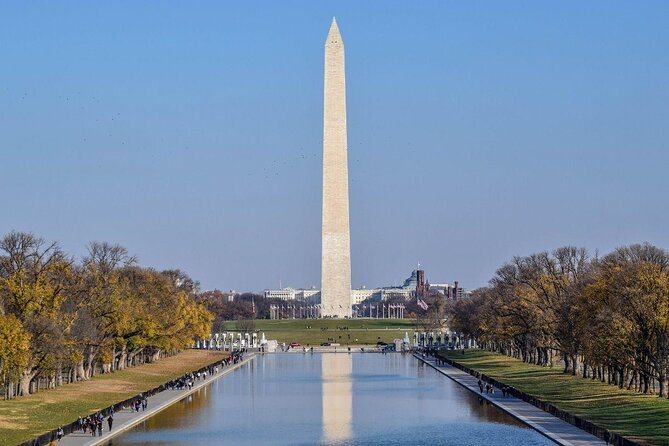
This is not a lecture-style tour. It’s a self-guided walking route that uses a scavenger hunt to get you from major Smithsonian-area buildings to big DC landmarks, finishing at the Washington Monument. The route is designed to cover a lot of ground in about 3 hours, while still letting you control the pace.
What makes that approach work is simple: the National Mall can feel like a long straight line if you’re just looking for attractions. The hunt gives you reason to stop, look up, and read things you might normally walk past. You’re also looping around major anchor points, including the front of the U.S. Capitol area and the United States Botanic Garden zone, so you get that “I’m getting my bearings” feeling without needing a guide constantly steering you.
The starting point is also smart for first-timers. Beginning at the National Museum of African American History and Culture puts you near one of the Mall’s most important modern landmarks, and it sets a thoughtful tone as the route continues through other Smithsonian-heavy stops. By the time you reach the Capitol and then keep heading toward the Washington Monument, you’ll have a clearer mental map of how everything lines up.
If you’re the kind of traveler who likes structure but hates being tied to a group schedule, this format fits. You’re not stuck waiting for anyone else’s pace, and you can linger when something catches your eye.
You can also read our reviews of more walking tours in Washington DC



Price and value for groups up to 6
The price is $44.85 per group (up to 6 people). That matters, because the cost works like a shared activity instead of paying per person. For families or a small group of friends, it can be a good value compared with per-person tours that cover fewer stops.
Why? Because you’re getting:
- a route that covers many major sites along the Mall corridor
- 30+ challenges that keep you engaged
- 6 major film-location moments that add a fun layer beyond “museum photo, move on”
If you’re traveling as a pair, it can still be reasonable, but the best value shows up when you actually fill the group limit. Think of it like this: the hunt is doing the work of “organizing” your day. You still pay attention and choose how long to stop at each place, but you’re not building an itinerary from scratch.
A small budgeting note: because internet access is required to complete the activity, plan for that cost in how you handle data. It’s not included, and you’ll want your phone to cooperate for the puzzles.
Where you start and how the 3-hour loop feels
You meet at 1500 Constitution Ave. NW, Washington, DC 20004, and the activity ends back at the same meeting point. That round-trip setup is practical in a city where it’s easy to misjudge distance or timing. It also means you can plan dinner or the next activity without worrying about getting to a distant pickup location.
The experience runs about 3 hours, on average. That timeline is tight enough to keep momentum, but long enough that you won’t feel like you’re power-walking the entire time. Still, DC weather can change fast, and the Mall can feel colder than you expect—especially if you pause often to solve clues.
The schedule windows are wide, but they vary by date range:
- Mon–Fri: 8:00 AM to 8:00 PM (for the earlier period shown)
- Mon–Sun: 7:00 AM to 7:00 PM (for the later period shown)
That flexibility is handy because you can time your walk for better light, fewer crowds, or just when your group is in the right mood to problem-solve outdoors.
Also, it’s a private activity. Only your group participates, which is a real quality-of-life advantage on the Mall. You get the fun of shared decision-making without the “don’t be late” tension that can come with larger group tours.
How the puzzles work (and why internet access matters)
This is a scavenger hunt you complete independently. The experience includes more than 30 challenges, so you’re never just doing one or two stops—you’ll keep using the puzzles as your guide through the route.
Here’s the practical part: WiFi isn’t included, and you need internet access to complete the activity. That means your phone is doing more than navigation. If your signal is weak or your data plan is tight, the hunt may slow down—or stop—right when you’re most excited.
Before you start, do two things:
- Make sure your phone is charged enough for a 3-hour walk
- Confirm you’ll have workable internet access where you’re headed
If you run into trouble, there’s also a help contact you can reach. In one account, the person contacted with questions was helpful and got the group moving again. So while you’re self-guided, you’re not left completely alone.
One more thing: some clue content may include errors or confusing directions. That doesn’t ruin the day, but it does mean you should bring a mindset of gentle troubleshooting. Think: pause, sanity-check your location, and keep going rather than spiraling.
Stop-by-stop: museums and monuments across the Mall’s east side
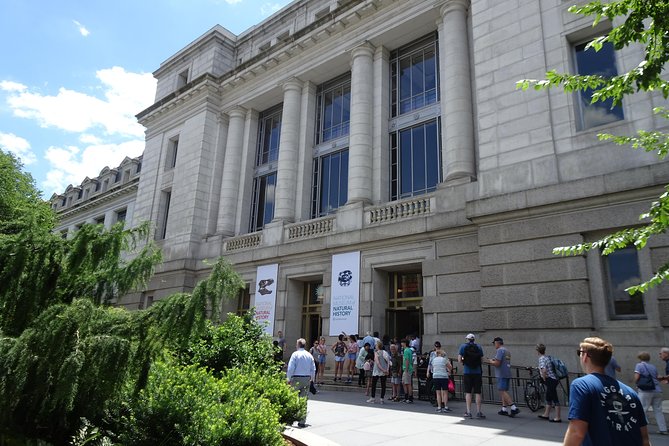
You’ll hit a run of major landmarks, many of them Smithsonian-adjacent. The hunt is designed so you’re learning as you walk, not just “checking boxes.” Here’s what each major stop adds, and what you should keep in mind.
Stop 1: National Museum of African American History and Culture
Your starting anchor. Even if you don’t go inside (the hunt focuses on the walking route), this museum sets the tone of the day and makes the rest of the Mall feel like more than just sightseeing. You’ll complete your first challenge here, so plan to arrive with enough energy to concentrate.
Stop 2: National Museum of American History
You’ll move from one Smithsonian heavyweight to another. This stop is great for perspective: it’s a reminder that the Mall isn’t only memorials and monuments—it’s also about how stories are presented through artifacts and exhibits.
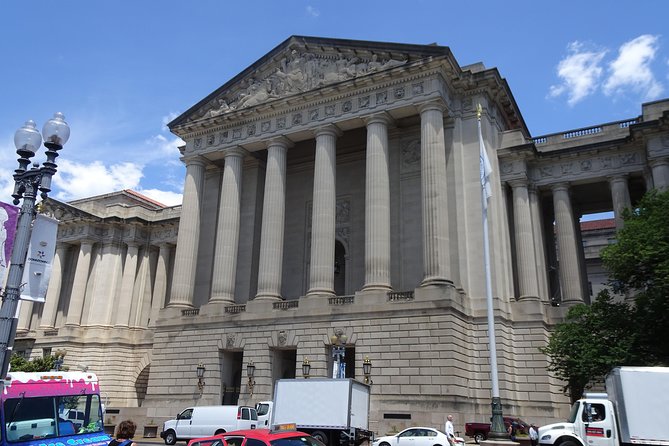
Stop 3: Andrew W Mellon Auditorium
This is more of a civic/performing-arts landmark in the route. In a hunt like this, stops like this matter because they give variety—your brain isn’t stuck only on museums. They’re also useful “orientation points” for recalibrating your location if a clue doesn’t make sense.
Stop 4: Robert F. Kennedy Department of Justice Building
A government-building stretch. These parts of DC can look very similar if you’re just passing by, which is why a clue-based approach helps you slow down and notice. If you get off track here, backtracking carefully usually helps you recover and continue.
Stop 5: National Archives Museum
A classic history stop by name, with the added benefit that it pulls you deeper into the official-government vibe of the Mall corridor. If your group is newer to DC, this is where the hunt starts to feel like a guided tour of themes: history, records, institutions.
Stops 6 and 7: National Gallery of Art (twice)
You’ll encounter the National Gallery area in two different phases. That repetition is useful: it encourages you to move around rather than treating one façade as the whole story. You also get built-in flexibility—if one spot feels crowded or cold, the next clue can steer you to a nearby variation.
Stop 8: Embassy of Canada to the United States
This is a welcome shift from museums and monument talk. It’s a reminder that the Mall is surrounded by institutions and international presence, not only U.S. landmarks. It also makes the puzzle route feel more like a DC “day walk” than a single-theme march.
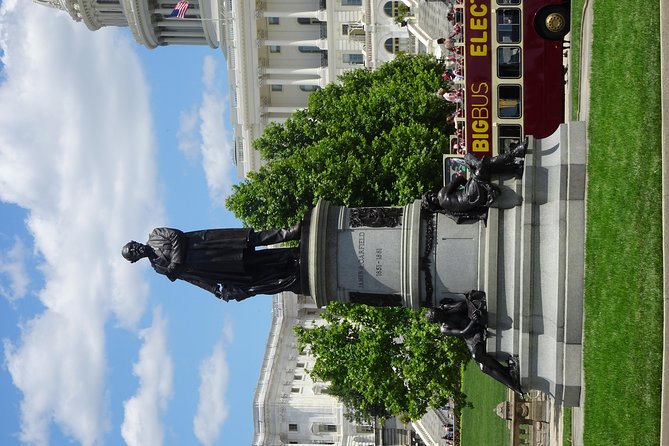
Stop 9: Ulysses S. Grant Memorial
A major monument stop. The hunt nudges you to slow down in front of big statues and memorials, which is where DC starts to feel real and not just photographed. If you like monuments, this is a high-payoff point.
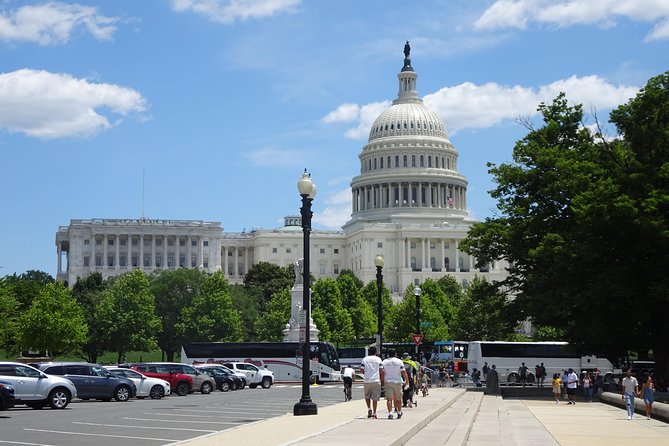
Stop 10: United States Capitol
You loop around the front area. The payoff here is scale and presence. Even if you don’t tour inside, you’ll get a clearer sense of how the Capitol sits within the overall Mall layout.
Stop 11: The National Mall
This is the wide-open centerpiece. In a scavenger hunt format, the open space is useful because it lets you reset. If your group got confused earlier, this is where you can refocus and get back on track with the next clue.
Stop 12: United States Botanic Garden
A green break from stone and monuments. The garden area helps you cool down visually and mentally. It’s also a natural waypoint in the hunt that signals you’re moving toward more Smithsonian stops again.
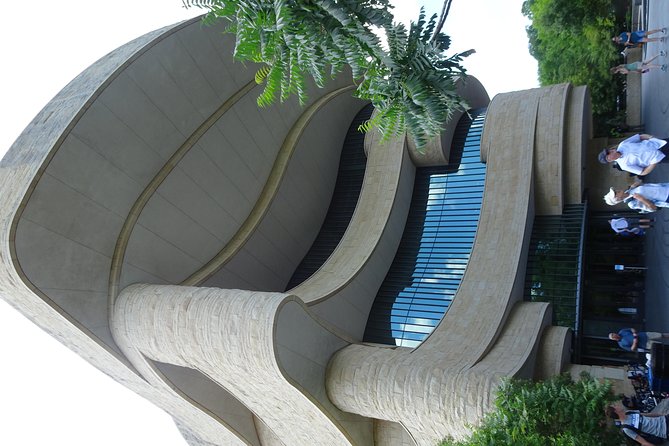
Stop 13: National Museum of the American Indian
Another Smithsonian stop with a strong identity. This is where you’ll start feeling the “museum corridor” quality of the east Mall, and the hunt format will likely feel more rewarding if you enjoy comparing different museum styles.
Stop 14: Hirshhorn Museum and Sculpture Garden
A modern-art and sculpture-focused stop in the route. Even without spending long inside, the outdoor sculptural elements are ideal for clue-based walking because the shapes and sight lines help you locate yourself in the city.
Stop 15: Smithsonian Arts + Industries Building
This building adds variety to the Smithsonian scene. It’s another orientation point that helps you keep track of where you are as the route stretches toward the Castle and Washington Monument.
Stop 16: Smithsonian Castle
A classic “I’m in the Smithsonian zone” stop. In a hunt, it’s especially useful because recognizable landmarks make it easier to confirm you’re still on course when clue wording is imperfect.
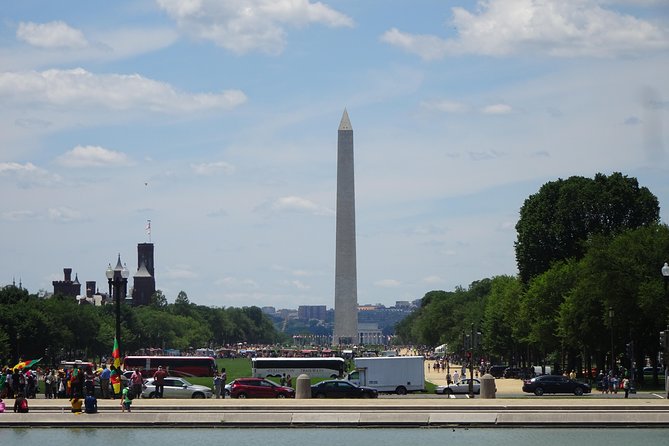
Stop 17: Washington Monument
Your finish line. Ending here is satisfying because it’s visible from far away and makes the whole walk feel like a coherent story—start with a major museum, build through institutions, then close with the landmark everyone came to see.
You can also read our reviews of more guided tours in Washington DC




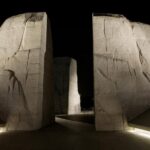

Film-location moments and photo stops you can plan around
One of the included perks is 6 major film locations. The nice thing about film-location stops is that they give you a different way to see famous places. Instead of only asking what you can learn from museum exhibits, you’re also asking what made filmmakers pick this view.
That matters on the National Mall because many spots feel familiar from TV and movies. With the hunt, you get guided moments to pause and look at the setting as if you’re the camera operator. You might not get cinematic results with your phone photos, but you will get a clearer sense of sight lines and how buildings frame each other.
For best results, bring a little photo strategy:
- Assign one person in your group to handle puzzle reading while another scouts for the exact spot
- Take photos quickly, then move on to keep the hunt flowing
This isn’t a photo-only walk, but it’s also not a “no-camera allowed” situation. The trick is using photos to support the hunt, not derail it.
Dealing with typos, confusing clues, and cold weather

Here’s the honest part: some clue text can have mistakes. Examples that have come up include confusion between dates or presidents, and even direction issues in the puzzle wording. That’s not the kind of thing you want on a first-time DC day when you’re already trying to figure out where everything is.
So build in a simple plan:
- Treat the hunt as guidance, not absolute truth
- If a clue doesn’t match what you see, use nearby landmarks to re-orient
- Keep moving until the next challenge gives you a clearer anchor
Also, clue difficulty can vary. If your group is brand-new to DC and you’re expecting “broad overview” prompts, some clue styles may feel too specific or obscure. When the weather is cold, that can turn into a frustration loop, because you don’t want to stand around staring at your phone.
My practical tip: if it’s freezing, reduce how long you spend stuck on any one puzzle. Solve what you can, move to the next stop, and come back only if you still have time and patience.
The flip side is that a well-paced scavenger hunt can be a huge morale boost. One of the biggest wins noted in real-world use is how quickly the hunt can engage teens—and keep them smiling instead of dragging behind. If you want your group to feel like they’re doing something together (and not just walking), this format can deliver.
Should you book this National Mall museum scavenger hunt?
Book it if you want a self-paced way to see a lot of the east National Mall in about 3 hours, especially if you’re traveling with teens or anyone who likes puzzles. It’s also a smart choice if you’re comfortable using your phone for an internet-dependent activity and you like the idea of turning sightseeing into a game.
I’d think twice if:
- your group hates screen-based tasks or you don’t want to rely on internet access
- you’re expecting perfectly polished clue writing with no hiccups
- you want a slow, in-depth museum day rather than a fast, route-focused experience
If you’re the flexible type—walk, look, solve, and adjust—you’ll likely enjoy the day. You get a lot of recognizable landmarks in one coherent loop, and the puzzles give you a reason to pay attention along the way.
FAQ
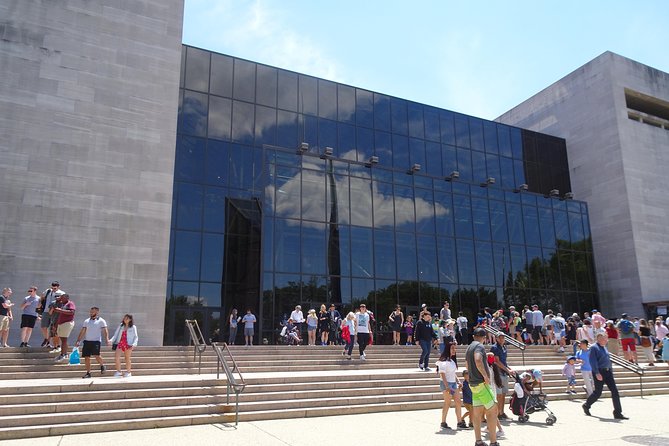
How long is the Washington DC Museums self-guided walking tour & scavenger hunt?
It’s listed as approximately 3 hours.
Where does the tour start and end?
It starts at 1500 Constitution Ave. NW, Washington, DC 20004, USA and ends back at the meeting point.
Is this activity self-guided?
Yes. It’s a private, self-guided walking tour/activity where you solve the scavenger hunt puzzles independently.
How much does it cost?
The price is $44.85 per group, for groups of up to 6 people.
How many challenges are included?
You’ll solve 30+ challenges during the activity.
Do I need internet access?
Yes. Internet access is required to complete the activity, and WiFi is not included.
What languages is it available in?
It’s available in English and French.
Are service animals allowed?
Yes, service animals are allowed.
What is the cancellation policy?
You can cancel for a full refund up to 24 hours in advance. Canceling less than 24 hours before start time is not refunded.
Are there time windows for when I can start?
Yes. The listed opening hours vary by the date range shown, including daytime hours on weekdays and weekends depending on the period.